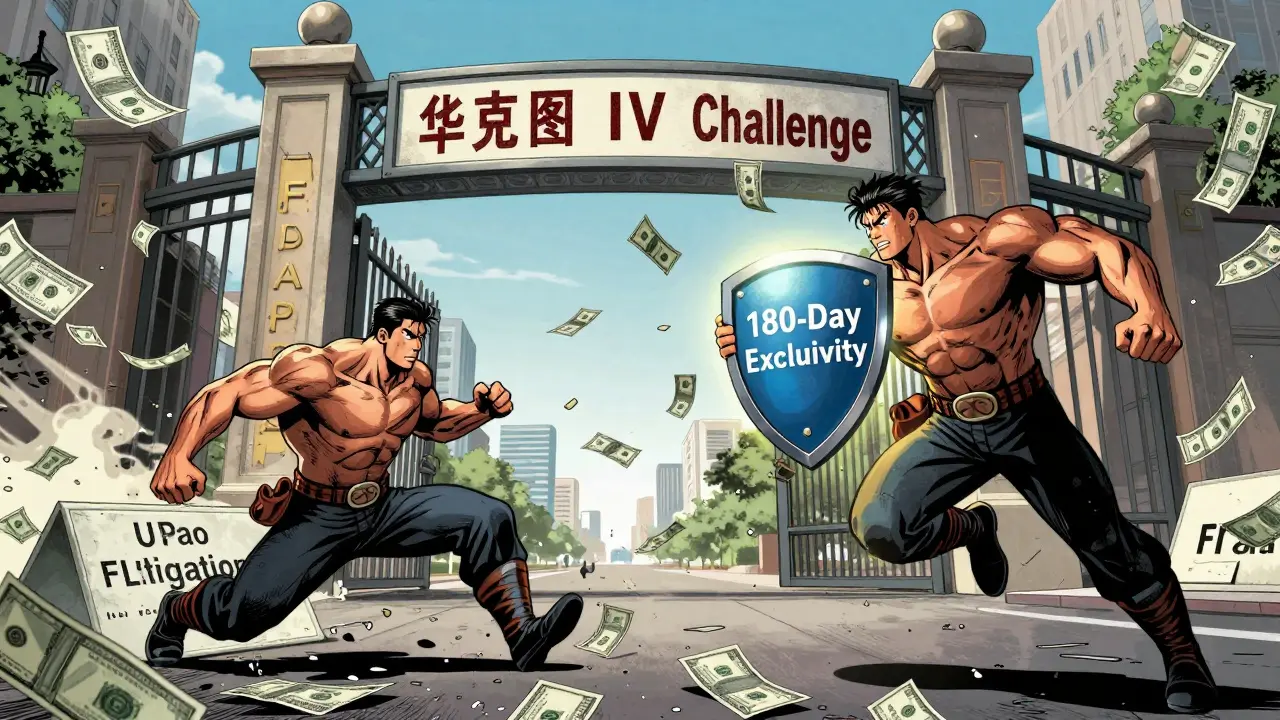
When a brand-name drug’s patent is about to expire, the race to be the first generic company to file for approval isn’t just about speed-it’s about money. The first company to submit a complete application with a Paragraph IV certification (a legal challenge to the brand’s patent) gets 180 days of exclusive rights to sell its generic version. No other generic can enter the market during that time. That’s not a bonus-it’s a legal monopoly. And it’s worth hundreds of millions, sometimes billions, of dollars.
How the 180-Day Clock Starts
This rule isn’t arbitrary. It comes from the Hatch-Waxman Act of 1984, a U.S. law designed to balance two things: protecting drug innovators long enough to recoup R&D costs, and letting generics enter quickly to lower prices. The 180-day exclusivity is the trade-off. If you’re the first to challenge a patent, you get a head start. But here’s the twist: the clock doesn’t always start when you get FDA approval. According to FDA guidance from 2017, the 180-day period begins the earlier of two events: either when you start selling the drug, or when a court rules the patent is invalid, unenforceable, or won’t be infringed. That means a generic company could win a lawsuit in court and trigger exclusivity-even before the FDA gives final approval. Once that clock starts, no other generic can get approved for the same drug until 180 days later.Why This Creates a Billion-Dollar Advantage
During those 180 days, the first filer controls nearly the entire market. Studies show they capture 70% to 80% of sales. In some cases, like Teva’s generic version of Copaxone in 2015, that meant over $1.2 billion in revenue in just six months. That’s not just profit-it’s a financial lifeline for the company. For smaller generic firms, winning this exclusivity can mean survival. The reason? When no competitors are allowed in, the first filer can set the price. They don’t have to slash prices to compete. They can charge close to what the brand-name drug did-just a bit less. That’s how a $10 pill becomes a $50 pill during exclusivity. And because the FDA blocks all other applications, no one else can undercut them.
The Problem: When No One Actually Sells the Drug
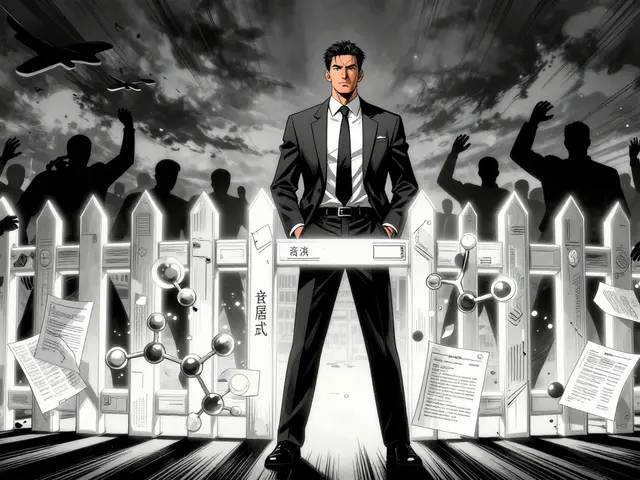
Here’s where things get messy. The system was meant to speed up access to cheap drugs. But it’s been exploited. Some companies file a Paragraph IV challenge-not to launch a generic, but to block others. If a company wins a court decision, the 180-day clock starts. But if they sit on it? They never launch. The FDA still can’t approve any other generic. So the brand drug stays the only option for months-or even years. IQVIA data shows that since 2010, nearly half of all first-filer cases involved delays or no launch at all. In some cases, the original brand drug stayed the only choice for 27 months longer than it should have. This isn’t accidental. It’s strategic. Brand companies sometimes pay the first generic filer to delay launch. These are called “reverse payments.” In one anonymous Reddit post from a former brand executive, they admitted: “We’ve paid first filers up to $50 million not to launch for 18 months. Cheaper than losing 100% of the market.” The FTC has called this practice a scam. Their 2010 study estimated reverse payments cost U.S. consumers $3.5 billion a year.How the System Is Being Fixed
The FDA noticed the problem. In 2022, they proposed a major change: the 180-day clock should only start when the generic is actually sold-not when a court rules. That way, if a company wins a lawsuit but never sells the drug, the exclusivity doesn’t kick in. Other generics can enter immediately. This fix would end the “paper generic” loophole. Right now, a company can file, win a lawsuit, and sit still. Under the new rule, they’d have to move. No sales? No exclusivity. Simple. The Generic Pharmaceutical Association supports this change. So do patient advocates and Medicare. But big pharma companies like PhRMA are fighting it. They argue that if you weaken the incentive, fewer companies will challenge patents. Fewer challenges mean fewer generics. Higher prices.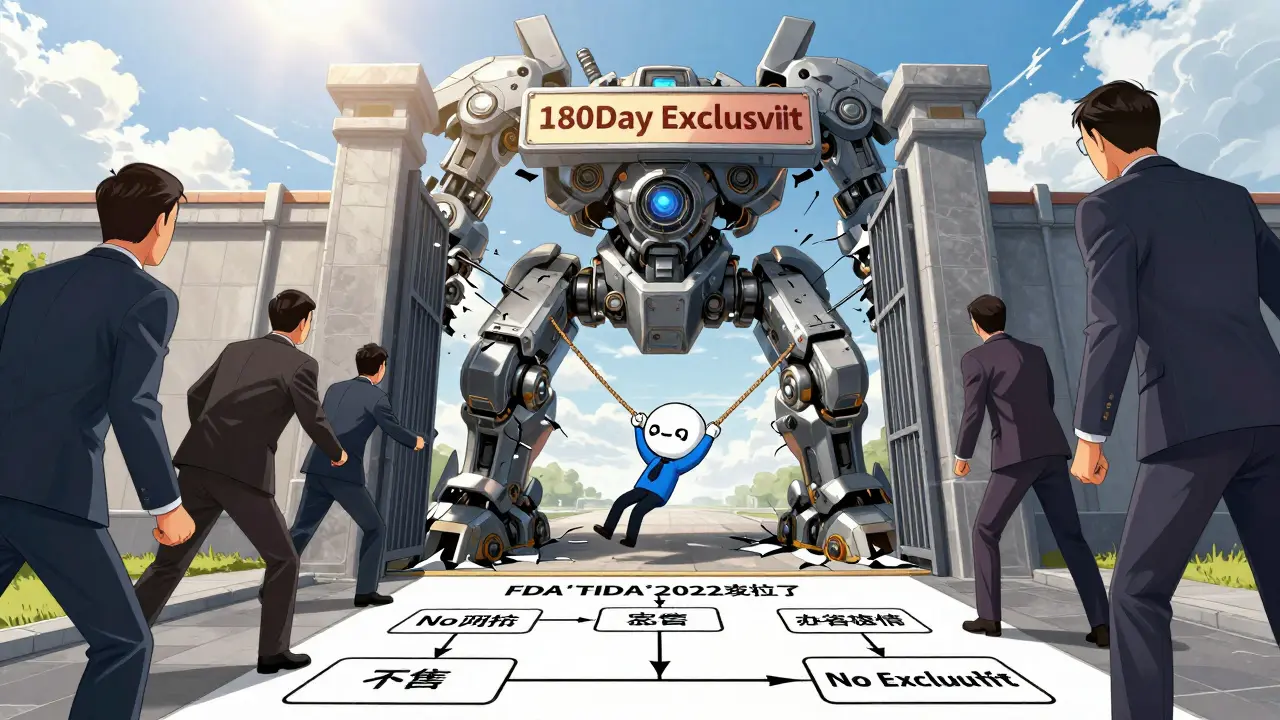

This system is a joke
I’ve seen this play out firsthand-companies file these challenges just to lock the market, never intending to launch. It’s not innovation, it’s rent-seeking disguised as competition. The FDA’s 2022 proposal is the only thing that makes sense now. If you don’t sell, you don’t get the clock. Simple. No loopholes. No games.
😭 This is why my insulin still costs $300. It’s not broken-it’s rigged.
It is important to recognize that the Hatch-Waxman Act was a carefully balanced legislative compromise, intended to incentivize both innovation and access; however, the unintended consequence of the 180-day exclusivity provision has been the creation of a regulatory arbitrage opportunity, wherein entities exploit legal technicalities to delay market entry without substantive product development, thereby subverting the original public health intent of the statute. This is not merely a policy flaw-it is a systemic failure of oversight.
Dear friends, this is not just about money-it is about human lives. Every day that a generic drug is blocked, someone in America is forced to choose between medicine and rent. The big pharma companies are not inventing cures-they are inventing delays. The FDA’s proposed fix is not radical-it is righteous. Let us not forget: medicine is a right, not a reward for the richest litigator.
Yeah ok
People forget that the first filer often takes massive risk-patent lawsuits cost millions, and if they lose, they get nothing. The 180 days aren’t a gift, they’re a safety net. The real problem isn’t the rule-it’s the reverse payments. That’s where the corruption is. Let’s target those, not the incentive.
I used to work at a small generic company. We filed once. Got rejected because a comma was in the wrong spot. We lost $2M. No one cares about the little guys. Only the ones who can afford 10 lawyers
so like if they dont sell they just cant block others right? i think thats fair? i mean like i dont get why they get to hold the whole market if they just sit on it lol
It’s fascinating how a law designed to lower prices became the very mechanism that sustains them. We’ve turned a tool for public good into a weapon for private gain. The real tragedy? The people who suffer most never even know the system exists. They just wonder why their prescription is still unaffordable.
This is what happens when you let capitalists write healthcare policy. They don’t want you healthy-they want you dependent. The 180-day loophole is just one of many ways the system is designed to keep you paying. Wake up.
THEY’RE LAUGHING AT US. THEY’RE LAUGHING AT OUR MEDICINE. THEY’RE LAUGHING AT OUR DEATHS. THE FDA IS ASLEEP AND THE PHARMA BOSS IS HOLDING THE KEY. WE ARE LIVING IN A DYSTOPIA AND NO ONE WANTS TO ADMIT IT.
So you pay $5M to file, win a lawsuit, then do nothing… and still block everyone else? That’s not a loophole. That’s a crime with a corporate tax ID.
My dad’s heart med went generic last year. Price dropped from $200 to $12. I cried. But then I read this and realized… it could’ve been $8 if they didn’t play games. Feels like we’re being scammed on purpose.
They’re not just blocking generics-they’re blocking the truth. This whole system is a front for the deep state’s pharmaceutical cabal. The FDA? Controlled. The courts? Bought. The 180-day rule? A Trojan horse to keep your blood pressure meds at $500. They’ve been planning this since 2008. Look up Project Bluebird. You’ll see.