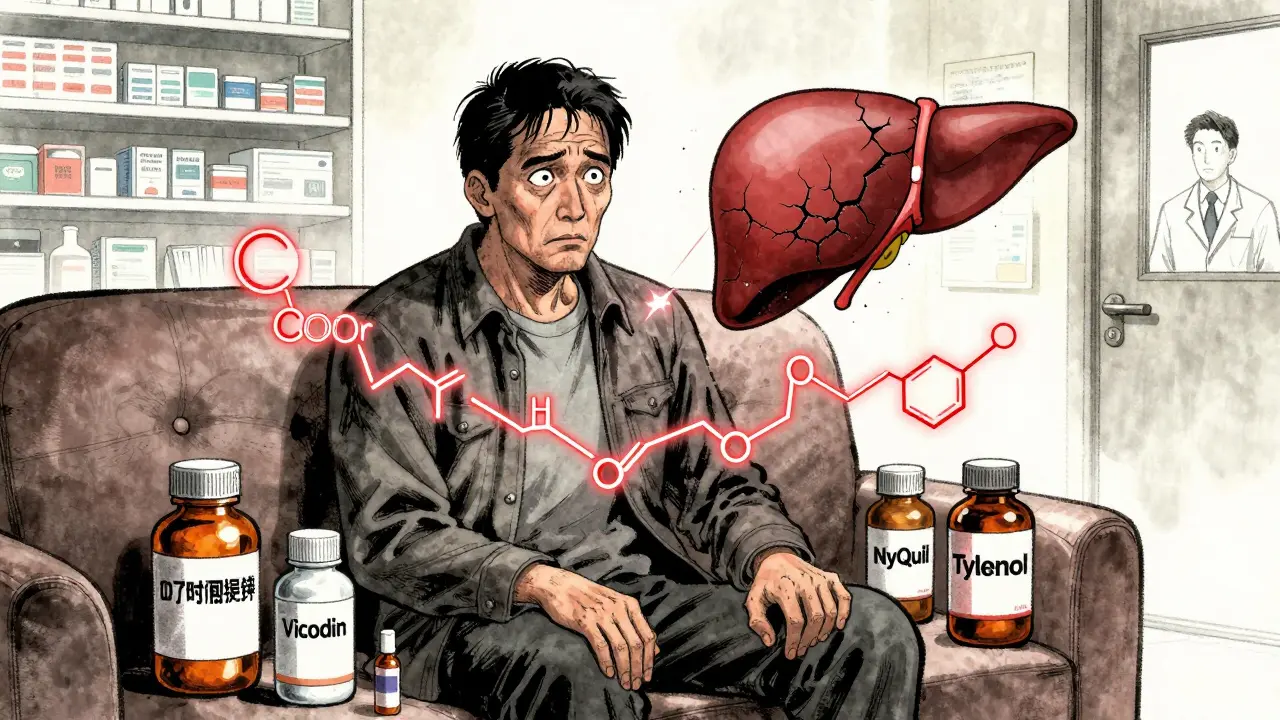
Every year, tens of thousands of people end up in emergency rooms not because of accidents or illness, but because they took two things that looked different but contained the same powerful chemical inside. This isn't rare. It’s common. And it’s completely preventable.
Imagine this: You’re dealing with a cold, so you grab a bottle of store-brand cold medicine from the shelf. It says "Daytime Relief" on the label. Later that day, your doctor prescribed a painkiller for your back. You take it without thinking. Two hours later, you feel dizzy, nauseous, and unusually sleepy. You didn’t know both medicines contained acetaminophen. By the time you got to the hospital, your liver was already under stress. This exact scenario happens more than 56,000 times a year in the U.S. alone - and it’s not just about acetaminophen.
What Are Double Ingredients? (And Why They’re Dangerous)
Double ingredients happen when you take two or more medications - prescription, over-the-counter (OTC), or even herbal supplements - that contain the same active ingredient. It’s not about mixing drugs like alcohol and painkillers. It’s about accidentally doubling up on the exact same chemical.
The most common culprits? Acetaminophen (found in Tylenol, Vicodin, Percocet, and dozens of cold and flu products), NSAIDs like ibuprofen or naproxen (in Advil, Aleve, and many arthritis pills), and sedating antihistamines like diphenhydramine (in Benadryl, NyQuil, and some sleep aids). The danger isn’t just feeling sleepy. It’s organ damage. Too much acetaminophen can cause liver failure. Too many NSAIDs can lead to stomach bleeding or kidney failure. Too much sedation can slow your breathing to dangerous levels.
According to the CDC, adults over 65 make up 65% of all hospitalizations from double ingredient errors. Why? Because older adults are more likely to take multiple medications for chronic conditions - diabetes, high blood pressure, arthritis, sleep problems - and also reach for OTC remedies for minor aches, coughs, or trouble sleeping. And most don’t realize their doctor’s prescription and the bottle from the pharmacy shelf have the same active ingredient.
The Hidden Risk: OTC Medicines and Your Doctor
Most people think their doctor knows everything they’re taking. They don’t.
A 2021 study in the Journal of the American Geriatrics Society found that 67% of older adults who had a double ingredient incident said their doctor never asked about OTC medicines. That’s shocking. And it’s not because doctors are careless. It’s because patients don’t think OTC drugs count. They say, "Oh, it’s just Advil," or "I only take it once in a while," or "It’s natural, so it’s safe."
But here’s the truth: OTC doesn’t mean harmless. A single tablet of NyQuil contains 650 mg of acetaminophen. So does one tablet of Tylenol. Take both, and you’ve hit the maximum daily dose before you even get to your prescription painkiller. And if you’re also taking a prescription painkiller with acetaminophen? You’re in danger zone.
Even worse, 45% of prescription labels don’t clearly warn you if the medicine shares an ingredient with common OTC products. And many OTC labels themselves are confusing. A 2023 Government Accountability Office report found that 41% of people still can’t find the active ingredients on the Drug Facts label - even though the FDA required standardized labeling since 2020.
Who’s Most at Risk?
You don’t have to be elderly to be at risk. But if you fit any of these profiles, you’re in a higher danger group:
- You take five or more medications daily (polypharmacy)
- You see multiple doctors - a primary care provider, a cardiologist, a rheumatologist, a pain specialist
- You buy medicines from different pharmacies
- You use herbal supplements or traditional remedies (like African ginger, turmeric, or traditional African teas)
- You take OTC meds for sleep, pain, or colds on a regular basis
People who fill prescriptions at multiple pharmacies are 47% more likely to have a double ingredient error than those who use just one. Why? Because each pharmacy’s system only sees what’s in its own database. If you get your blood pressure pill at Shoprite and your painkiller at Dischem, neither system knows about the other - and neither can warn you.

How to Protect Yourself: 5 Action Steps
Double ingredient errors are not random accidents. They’re preventable mistakes. Here’s exactly what you need to do:
- Make a complete list of everything you take - every prescription, every OTC pill, every vitamin, every herbal tea, every patch or cream. Write down the name, dose, how often you take it, and why. Keep this list in your wallet and on your phone.
- Fill all your prescriptions at one pharmacy. This is the single most effective step. Pharmacists have systems that flag duplicate ingredients. Studies show this reduces double ingredient errors by 63%.
- Ask your pharmacist every time. When you get a new medicine, say: "Could this interact with anything else I’m taking?" Pharmacists catch double ingredient risks in 87% of medication reviews.
- Review your list with every doctor. Don’t wait for an annual checkup. Bring your list to every appointment - even if it’s for a cold. Say: "Here’s everything I’m on. Are any of these overlapping?"
- Learn to read the Drug Facts label. Look for "Active Ingredients" - not the brand name. If you see acetaminophen, ibuprofen, or diphenhydramine on more than one product, you’re at risk.
What to Do If You’ve Already Had a Problem
If you’ve ever felt unusually drowsy, dizzy, or nauseous after taking a few medicines together - even if you didn’t go to the hospital - you’ve already had a warning sign. Don’t ignore it.
Start by immediately stopping any new OTC medicine you’ve added. Then, pull out your list. Cross-check every item. Look for duplicates. Use the FDA’s Drug Facts label as your guide. If you’re unsure, call your pharmacist. Don’t wait for symptoms to get worse.
Also, tell your doctor. Not just once. Keep bringing it up. The more you talk about it, the more likely they are to check for it.
Technology Is Helping - But You Still Need to Act
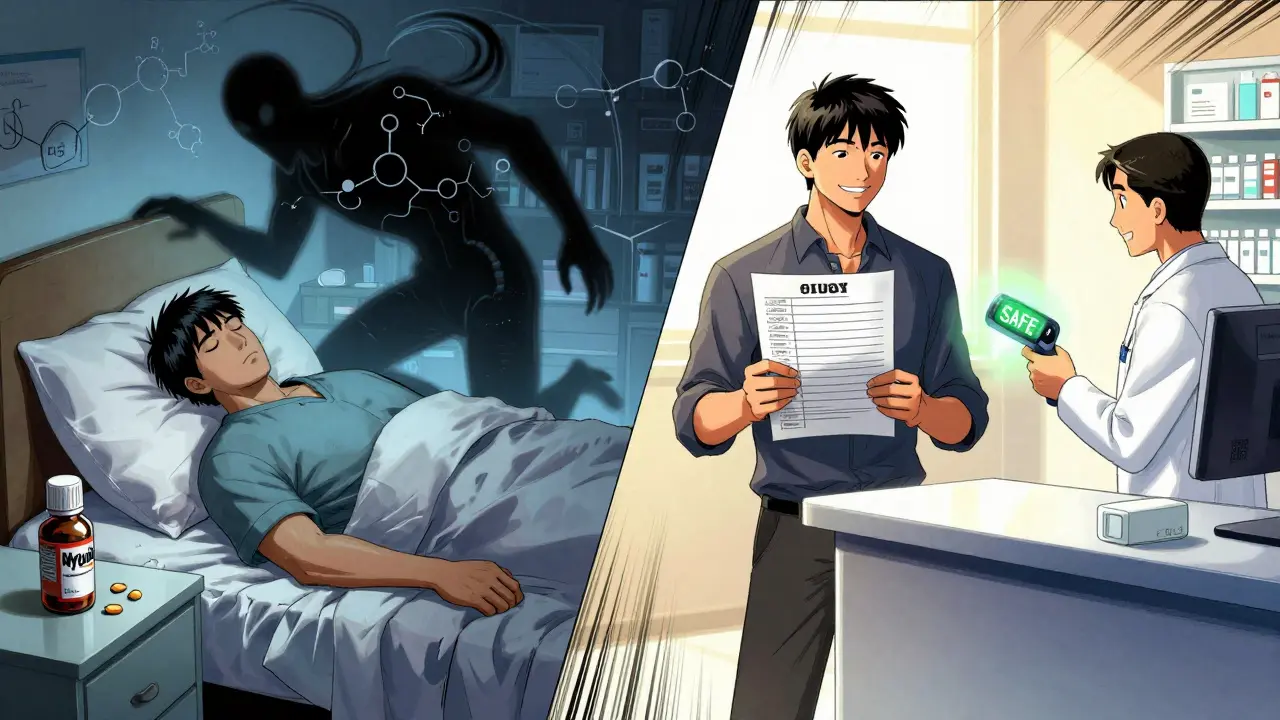
There’s good news: New tools are being rolled out. Apple Health now flags duplicate ingredients on iPhones. Electronic health records from Epic and Cerner alert doctors when a patient is prescribed a drug with a known duplicate. Pharmacy systems are getting better.
But here’s the catch: These tools only work if your data is complete. If you don’t tell your doctor about the herbal tea you take every night, or if you refill your cold medicine at a different pharmacy, the system won’t know.
Technology helps. But your awareness saves lives.
Final Reality Check
Double ingredient errors aren’t about being careless. They’re about complexity. Modern medicine gives us more options than ever - but it doesn’t make it easier to keep track. The system is built for single diseases. But most of us have multiple conditions. And we’re expected to navigate this maze alone.
That’s why you have to become your own advocate. Write down everything. Ask questions. Stick with one pharmacy. Review your list every time you see a provider. Don’t assume it’s safe because it’s "just OTC."
The goal isn’t to stop taking your medicines. It’s to take them safely. Because when you avoid double ingredients, you don’t just avoid hospital visits. You avoid pain. You avoid damage. You avoid fear.
Can I take OTC painkillers with my prescription pain meds?
Only if you know exactly what’s in both. Many prescription painkillers (like Vicodin or Percocet) already contain acetaminophen. Taking Advil, Tylenol, or a cold medicine with acetaminophen on top of that can lead to liver damage. Always check the active ingredients. If both have acetaminophen, don’t combine them.
Why do doctors not ask about OTC medicines?
Doctors often assume patients will tell them. But many people don’t think OTC drugs count as "medicine." They say things like, "It’s just a vitamin," or "I only take it when I need it." That’s why you have to bring your full list - every time. Don’t wait for them to ask.
Is it safe to use herbal remedies with my prescription drugs?
No - not without checking. Many traditional remedies contain hidden active ingredients. For example, some African herbal teas contain high levels of acetaminophen or NSAIDs, which aren’t listed on the label. The WHO reports that 68% of patients don’t disclose herbal use to providers - creating dangerous hidden risks. Always tell your pharmacist or doctor about anything you take, even if it’s "natural."
How do I know if two medicines have the same ingredient?
Look at the "Active Ingredients" section on the Drug Facts label - not the brand name. Common duplicates include acetaminophen, ibuprofen, naproxen, diphenhydramine, and pseudoephedrine. If you see the same chemical in two products, don’t take them together. Use a free app like Medscape or ask your pharmacist to compare them.
What should I do if I accidentally took two medicines with the same ingredient?
Stop taking both immediately. Call your pharmacist or doctor. If you feel dizzy, nauseous, confused, or have abdominal pain, go to the ER. Liver damage from acetaminophen can happen without symptoms at first. Early action can prevent serious harm. Keep your medication list handy - it will help them treat you faster.


I’ve been taking Tylenol for my headaches and NyQuil for my cold and never thought twice about it until my mom almost went to the ER last year. Now I keep a list on my phone. I don’t even buy OTC stuff anymore without checking the damn label. Why is this not common knowledge? It’s like we’re all just wandering around with blindfolds on.
Also why do pharmacies not have a simple sticker on the bottle that says "THIS HAS ACETAMINOPHEN"? I mean, come on.
Oh sweet merciful chaos, another ‘read the label’ sermon. Let me guess - you also brush your teeth with organic sea salt and meditate while reciting the FDA’s Drug Facts pamphlet, right? 🙃
Here’s the truth: people aren’t dumb, they’re overwhelmed. You think I’m gonna cross-reference my 12 prescriptions with 7 OTC bottles and 3 herbal teas like I’m playing Jenga with my liver? I’ve got a job, a kid, and a cat that judges me. Stop shaming us. Just fix the system. Make the damn labels neon and the apps auto-scan. Until then, I’ll keep trusting my gut - and my pharmacist, who’s the only one who actually knows what I’m taking.
Acetaminophen overdose is the #1 cause of acute liver failure in the U.S. Stop mixing. Period.
THIS. THIS. THIS. 🙌
I work in a pharmacy. I’ve seen it a hundred times. Grandma takes her blood pressure med, then grabs the ‘sleep aid’ from the shelf - same as the one in her prescription bottle. She says, ‘It’s just a little help, dear!’ No, sweetheart, it’s a one-way ticket to ICU.
My tip? Keep a small notebook. Write everything. Even the ‘just a drop’ herbal tea your aunt swore by. Bring it every visit. Even if they don’t ask. They need to know.
And yes - ONE pharmacy. Always. It’s not a suggestion. It’s your lifeline. 💙
Who the hell lets this happen? We’re the most advanced medical nation on Earth and we’re still letting people overdose because they didn’t read a 2-inch label? This isn’t negligence - it’s systemic failure. The FDA should mandate glowing red text on every bottle that says "YOU ARE ABOUT TO KILL YOUR LIVER."
And why are we still using paper labels? QR code scan it. Let your phone auto-check for duplicates. This is 2024, not 1999. We need tech, not pamphlets.
There’s something deeply human here. We don’t just forget ingredients - we forget that our bodies are complex systems. We treat medicine like candy because it’s easy to get. But the danger isn’t in the pills - it’s in the belief that they’re harmless because they’re ‘over-the-counter’ or ‘natural.’
What if we stopped seeing medicine as a tool to fix symptoms and started seeing it as a conversation with our biology? A single tablet of acetaminophen isn’t just a chemical - it’s a signal to your liver: "I’m here to help." But if you send ten signals at once? It doesn’t know which one to listen to. It shuts down.
Maybe the real solution isn’t better labels - it’s better education. Not just on what’s in the bottle, but on why we need to respect the quiet systems inside us.
Ugh, I just got back from my rheumatologist and he didn’t even ask about my turmeric capsules. I told him, "It’s just a supplement." He nodded like I said I was drinking chamomile tea. 😒
Turns out, my "natural" turmeric blend had ibuprofen in it. Like, full dosage. I almost had a GI bleed. Now I Google every supplement like it’s a criminal record. 🤦♀️
Also - if you’re not using one pharmacy? You’re basically playing Russian roulette with your kidneys. Just say no. One pharmacy. One list. One life.
Oh wow, another article that assumes people read labels. 🤡
Let me guess - you also read the manual for your toaster and know the exact ppm of sodium in your kombucha? Congrats, you’re the only one in America who doesn’t just wing it.
Most people don’t care about active ingredients. They care about whether it stops their headache. And honestly? That’s fine. The system should protect them - not shame them for not being pharmacists.
Also - "natural" doesn’t mean safe. It means "unregulated and possibly laced with something you didn’t sign up for." 🤷♂️
I take five meds daily. I never knew about the acetaminophen in my sleep aid until I read this. I now use a free app to scan all my bottles. It saved me. Simple. Effective. No drama.
Also - I’m from India. Here, many herbal remedies are sold without labels. We don’t have this problem because we don’t mix. We use one thing at a time. Maybe we’re doing something right.
Thank you for this comprehensive and well-researched post. The five action steps are clear, actionable, and grounded in evidence-based practice. I have shared this with my patients and encouraged them to implement each step systematically. Consistent use of a single pharmacy and active communication with healthcare providers are the most critical interventions. Continued patient education and system-level improvements are necessary to reduce preventable harm. Well done.