
TZD Side Effect Risk Calculator
Your TZD Treatment
Risk Factors
Your Risk Assessment
Estimated Fluid Weight Gain
0.5 - 2.0 kg
LowEdema Risk
12%
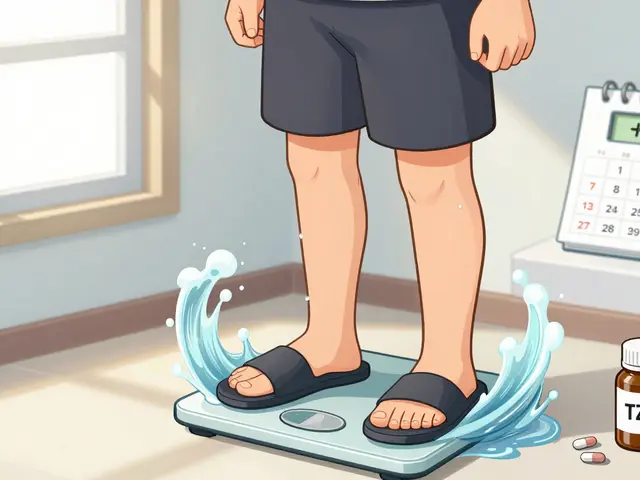
MediumWhen you're managing type 2 diabetes, getting your blood sugar under control is the goal. But for some people taking thiazolidinediones (TZDs) like pioglitazone or rosiglitazone, the win comes with a cost: unexpected weight gain and swollen ankles. It’s not rare. About 6 in 10 people on these drugs gain weight, and nearly 1 in 3 notice visible swelling-especially in the legs and feet. This isn’t just about appearance. It’s about fluid building up in your tissues, straining your heart, and sometimes forcing you to stop a medication that otherwise works well for your insulin resistance.
Why TZDs Make You Gain Weight and Swell Up
TZDs don’t make you fat by increasing hunger or slowing metabolism like some other diabetes drugs. Instead, they trigger your body to hold onto water and shift fat into subcutaneous tissue. About 65-70% of the weight gain you see is actually fluid-not fat. This happens because TZDs activate PPAR-γ receptors, which tell your kidneys to reabsorb more sodium. More sodium means more water stays in your bloodstream. That extra fluid leaks into tissues, especially in the lower legs, causing edema.
It’s not just the kidneys. TZDs also increase vascular permeability, meaning tiny blood vessels become leakier. This lets fluid escape into surrounding tissues more easily. Combine that with the fact that TZDs are often used alongside insulin-and insulin itself causes sodium retention-and you’ve got a perfect storm. Studies show edema rates jump from 5% on TZDs alone to over 16% when paired with insulin.
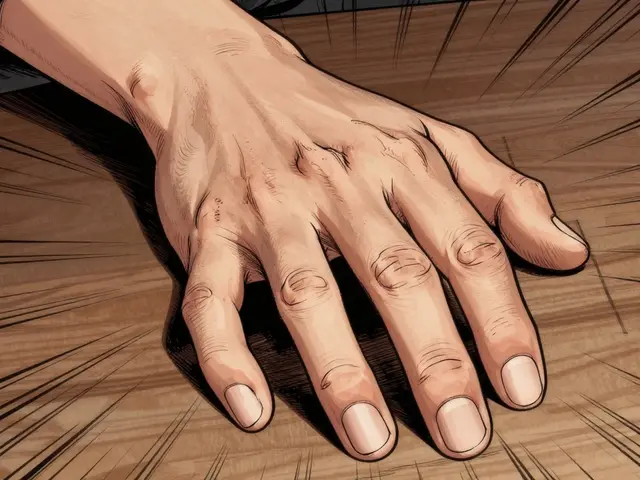
And it’s not subtle. People report gaining 5-7 pounds in the first month. Shoes that used to fit snugly now pinch. Ankles swell by the end of the day. Some notice their socks leave deep marks. These aren’t minor inconveniences-they can be early signs of worsening heart function.
Who’s Most at Risk?
Not everyone on TZDs gets edema. But certain people are far more likely to. If you already have heart problems-especially if you’ve been diagnosed with NYHA Class III or IV heart failure-TZDs are a hard no. The FDA black box warning exists for a reason: these drugs can push a struggling heart over the edge.
Other high-risk groups include:
- People with kidney disease (reduced ability to clear excess fluid)
- Those over 65 (natural decline in kidney and heart function)
- Patients on insulin or other drugs that cause fluid retention
- People with a history of high blood pressure or prior heart failure
Even if you’re healthy now, the first 3 months on TZDs are critical. That’s when fluid retention peaks. If you’re starting this medication, your doctor should check your heart and kidney function before you begin-and monitor you closely after.

How to Fight Back: Proven Strategies to Reduce Swelling and Weight Gain
Stopping TZDs isn’t always necessary. Many people can stay on them safely with smart adjustments. Here’s what actually works, based on clinical data and patient outcomes.
1. Start Low, Go Slow
Don’t jump to the maximum dose. Pioglitazone at 15 mg daily causes only 2.1% edema incidence. At 45 mg, that jumps to nearly 5%. Rosiglitazone at 4 mg causes 4.8% swelling-double the placebo rate. Starting low gives your body time to adjust. Many patients find they get the same blood sugar control at half the dose. Talk to your doctor about titrating up slowly, if at all.
2. Monitor Your Weight Daily
One of the most effective tools is simple: weigh yourself every morning, before eating or drinking, and in the same clothes. A gain of more than 2-3 kg (4-6 lbs) in a week is a red flag. In one study, patients who tracked their weight daily had 34% fewer hospitalizations for heart failure. If you see a sudden jump, call your provider. Don’t wait.
3. Combine With SGLT2 Inhibitors
This is one of the biggest game-changers. SGLT2 inhibitors like empagliflozin, dapagliflozin, or canagliflozin make your kidneys flush out sugar-and water-through urine. When paired with TZDs, they cut edema risk by up to 45%. You get the insulin-sensitizing power of TZDs without the fluid overload. Many patients who switched to this combo report less swelling, better blood pressure, and even some weight loss.
4. Use a Thiazide Diuretic (Not a Loop Diuretic)
If you need a diuretic, pick a thiazide like hydrochlorothiazide-not furosemide. Loop diuretics are strong and can cause electrolyte imbalances, especially in older adults or those with kidney issues. Thiazides are milder and more effective at countering TZD-induced sodium retention. One observational study showed a 38% drop in edema with low-dose thiazides. Always use them under medical supervision.
5. Cut Back on Salt
Every gram of sodium you eat pulls in about 10 times its weight in water. If you’re on a TZD, your kidneys are already holding onto sodium. Adding extra salt is like pouring gasoline on a fire. Aim for under 2,000 mg of sodium per day. That means skipping processed foods, canned soups, soy sauce, and fast food. Read labels. Cook at home. It’s not easy-but it’s one of the cheapest, most effective moves you can make.
6. Elevate Your Legs and Move
When you sit or stand for long periods, gravity pulls fluid down into your legs. Elevating your legs above heart level for 20-30 minutes a few times a day helps drain that fluid back up. Light movement-walking, cycling, even ankle pumps-also helps your muscles act as pumps to push fluid back toward your heart. Don’t sit still all day.
7. Take TZDs in the Morning
There’s limited evidence, but some small studies suggest taking TZDs in the morning reduces nighttime fluid buildup. If you wake up with puffy eyes or swollen feet, try shifting your dose to breakfast time. It won’t fix everything, but it might help.
What About Other Diabetes Drugs?
If side effects are too much, you’re not stuck. TZDs are no longer first-line. Metformin remains the gold standard-it doesn’t cause weight gain or edema, and may even help you lose a few pounds. GLP-1 receptor agonists like semaglutide or liraglutide cause weight loss and have strong heart benefits. SGLT2 inhibitors, as mentioned, reduce fluid retention and lower heart failure risk.
TZDs are now mostly reserved for people with severe insulin resistance who haven’t responded to other options. If you’ve tried metformin, an SGLT2 inhibitor, and a GLP-1 agonist-and still need more control-then TZDs might still make sense. But only if your heart is strong and you’re willing to manage the trade-offs.

What’s Next for TZDs?
The future of TZDs isn’t about the old drugs. Researchers are developing new PPAR-γ modulators-called SPPARMs-that keep the insulin-sensitizing benefits but avoid the fluid retention. Saroglitazar, used in India, shows 60% less edema than pioglitazone in trials. Early genetic studies also suggest some people carry a variant (rs1801282) that makes them far more likely to retain fluid on TZDs. In the next few years, we may see blood tests that tell you if you’re at high risk before you even start the drug.
For now, though, the message is clear: TZDs can still be useful-but they’re not for everyone. If you’re on one and you’re gaining weight or swelling up, don’t ignore it. Talk to your doctor. There are ways to manage it. And if the side effects outweigh the benefits, there are better, safer options available.
Frequently Asked Questions
Do all TZDs cause the same amount of swelling?
Both pioglitazone and rosiglitazone cause similar rates of edema when used alone-around 3-5%. But pioglitazone has a slightly better safety profile for the heart and is more commonly prescribed today. Rosiglitazone faced stricter restrictions after early concerns about heart attacks, though later studies showed mixed results. For most patients, pioglitazone is the preferred choice if a TZD is needed.
Can I take a diuretic with TZDs safely?
Yes, but only under medical supervision. Thiazide diuretics like hydrochlorothiazide are preferred over loop diuretics because they’re gentler and better matched to the type of sodium retention caused by TZDs. Never self-prescribe diuretics-they can cause low potassium, dizziness, or kidney stress, especially in older adults. Always get blood tests to monitor electrolytes if you’re on this combo.
Is weight gain from TZDs permanent?
Not necessarily. If you stop the drug, much of the fluid weight will go away within a few weeks. The fat gain is slower to reverse but can be managed with diet and exercise. Some people report losing 3-5 kg in the first month after stopping TZDs. If you’re switching to an SGLT2 inhibitor or GLP-1 agonist, you may even continue to lose weight.
Why do my ankles swell more at the end of the day?
Gravity pulls fluid downward when you’re standing or sitting for long periods. TZDs make your body hold onto extra fluid, so it pools in your lower limbs. This is why swelling is worse after work, travel, or long days on your feet. Elevating your legs, wearing compression socks, and moving regularly can help. If swelling is only on one side or accompanied by pain or redness, tell your doctor-it could be a blood clot, not just edema.
Should I avoid TZDs if I have high blood pressure?
High blood pressure alone doesn’t rule out TZDs, but it does raise your risk of complications. Fluid retention can make blood pressure harder to control. If your BP is already elevated, your doctor will need to monitor you closely and may recommend combining TZDs with a blood pressure medication that also reduces fluid, like an ACE inhibitor or SGLT2 inhibitor. Never assume it’s safe without a full heart and kidney evaluation.





I’ve been on pioglitazone for 8 months and my ankles look like overinflated balloons by 5 PM. I started walking 20 mins after dinner and it’s made a *huge* difference. Also, compression socks are a game changer. 🧦
This is why I stopped TZDs after my doc pushed them on me. I gained 12 lbs in 3 weeks and my BP spiked. Metformin and walking did the same job without turning me into a water balloon.
In India we use saroglitazar more now - way less swelling. Also, people here cook with less salt by default 😊
The SGLT2 combo advice is spot on. I was skeptical but switched from pioglitazone 45mg to 15mg + dapagliflozin 10mg. Lost 4 lbs of water weight in 10 days, BP dropped, and my HbA1c stayed the same. Doc was impressed. This combo is underrated.
Listen up, folks - if your ankles are puffing up like a balloon animal at a kid’s birthday party, don’t just ‘wait it out.’ That’s not ‘side effect,’ that’s your heart screaming for help. Get on a scale. Track your weight. Cut the salt. Or switch meds. Your future self will thank you. 💪
Ugh. Another ‘doctor knows best’ pamphlet. Did you know the FDA black box warning was buried under 17 pages of industry-funded ‘safety data’? And now they want us to just ‘take a thiazide’? Like that’s not going to tank my potassium and give me kidney stones? This whole TZD thing is a corporate scam wrapped in medical jargon.
My uncle in Delhi was on pioglitazone for 5 years. He never had swelling because he ate only home-cooked food, no packaged anything. Salt is the real enemy here - not the drug. Simple truth.
i started taking tzds and my shoes started crying. not kidding. i had to buy new ones. then i tried the sgl2 combo and boom - no more puffiness. also, i stopped eating chinese takeout. big win.
Let’s be real - TZDs are a relic. They were never meant to be first-line. The fact that they’re still prescribed shows how broken our medical system is. Big Pharma doesn’t care about edema - they care about the $2.3 billion annual revenue from these drugs. Meanwhile, patients are told to ‘just eat less salt’ while their hearts fail. The real solution? Stop prescribing these drugs to anyone who isn’t in a clinical trial.
I read the original pioglitazone trials. The edema rates were suppressed. They only reported ‘clinically significant’ swelling. But if you look at the raw data, 42% of patients had measurable ankle circumference increase. That’s not ‘mild’ - that’s pharmacologically induced fluid overload.
They’re hiding something. Why do all the studies say ‘no increased heart failure risk’ but the black box warning says ‘contraindicated in NYHA Class III/IV’? Coincidence? Or did they just reclassify the deaths as ‘cardiac arrest unrelated to drug’? I’ve seen 3 patients die after being put on this. No one talks about it.
I’ve been on pioglitazone for 3 years with no swelling. I’m 67, have mild HTN, but I walk daily, sleep with my legs elevated, and never eat processed food. It’s not the drug - it’s the lifestyle. Don’t blame the medicine, blame the microwave.
The genetic variant rs1801282 is a game-changer. I’m a pharmacogenomics nerd - if you’re homozygous for the G allele, your risk of TZD-induced edema triples. We’re not even testing for this yet. Imagine if we screened everyone before prescribing. We could prevent 60% of these cases. Why isn’t this standard?
I'm not buying this 'global solution' nonsense. In America, we don't need some Indian drug or some fancy genetic test. We just need doctors to stop pushing junk. If you're gaining weight on this stuff, STOP. Metformin is free at Walmart. End of story.