Medication Document Finder
Enter your prescription drug name to check for available patient information resources.
Next Steps
Always ask your pharmacist for these documents when filling prescriptions.
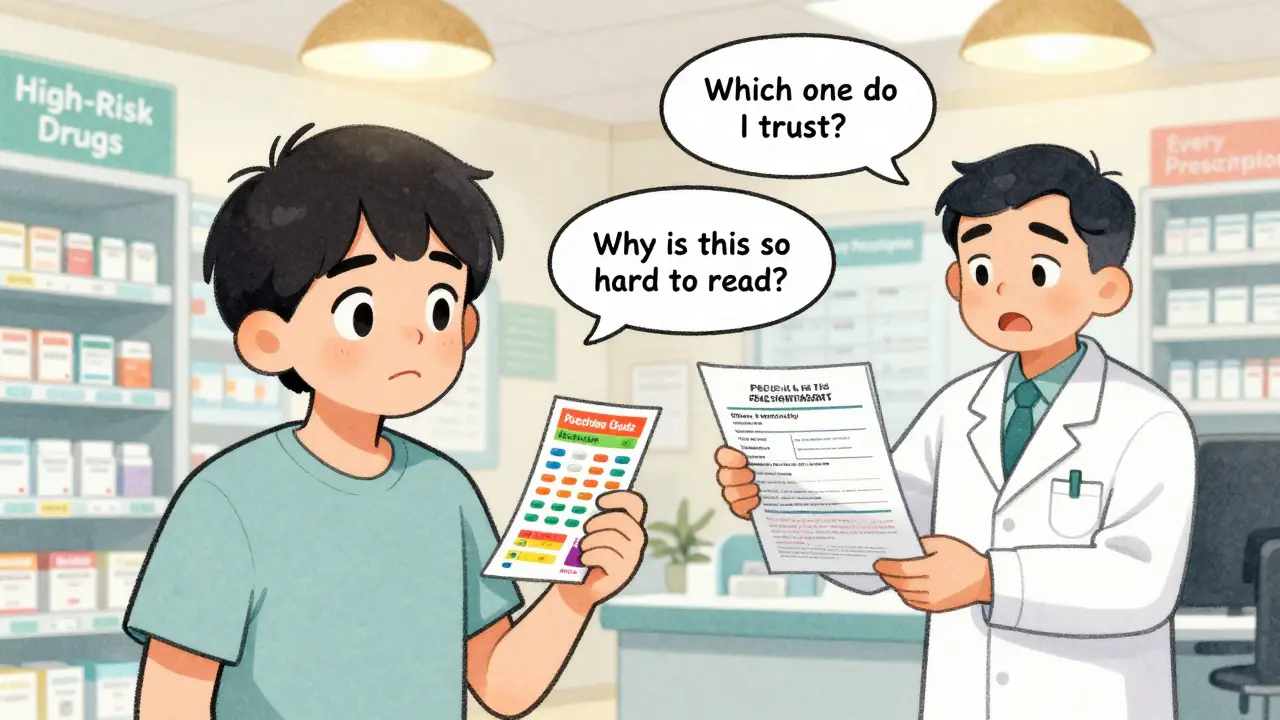
When you pick up a new prescription, you might get a small paper booklet. Or maybe a thick, stapled document that looks like it came from a hospital lab. Both are meant to tell you about side effects - but they’re not the same thing. And most people don’t know which one to trust, or even where to find the full picture.
Let’s cut through the confusion. If you want to know what could go wrong with your medicine, you need to understand two documents: the Medication Guide and the Package Insert. One is made for you. The other is made for doctors. And neither is always handed to you - even when it’s required by law.
What Is a Medication Guide?
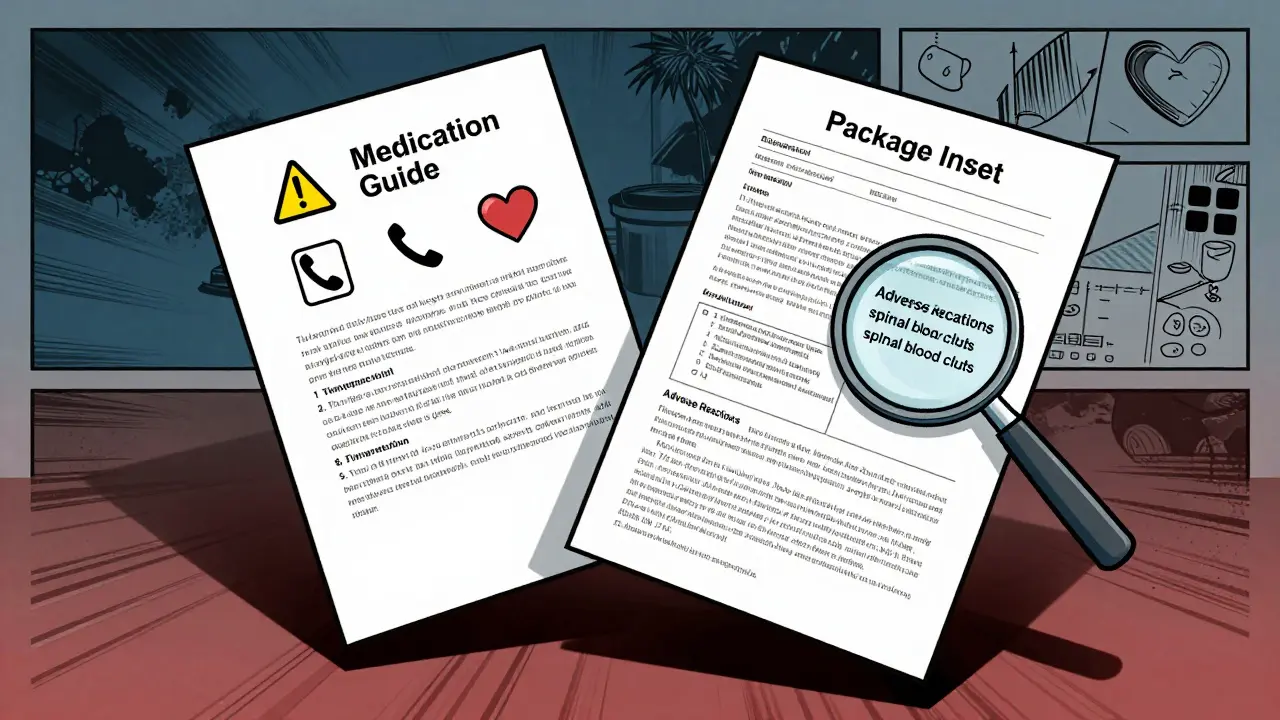
A Medication Guide is a short, plain-language handout the FDA requires for certain high-risk drugs. It’s designed to be read by patients, not doctors. Think of it as a warning label written in real human language.
It’s not given out for every drug. Only about 250 out of over 20,000 prescription medications in the U.S. need one. Why? Because the FDA decided some drugs carry risks so serious that patients must be warned in clear terms. Examples: blood thinners like Xarelto, acne medicine like Accutane, or schizophrenia drugs like clozapine.
By law, these guides must be given to you the first time you fill the prescription - and again if the guide changes. They’re supposed to be easy to read: no more than a 6th- to 8th-grade reading level. That means short sentences, no jargon, bold headers. You’ll see sections like:
- What is the most important information I should know?
- What are the possible or reasonably likely serious side effects?
- What should I do if I experience these side effects?
For example, the clozapine Medication Guide tells you to call your doctor immediately if you get a fever or sore throat - because it can cause a dangerous drop in white blood cells. That kind of warning can save lives.
But here’s the problem: many pharmacies don’t give them out. A 2018 FDA study found only 37% of pharmacists consistently handed out required guides. Patients report getting them once, then never again - even after years of use. If you don’t get one at the pharmacy, you can find all 250+ guides on the FDA’s website: fda.gov/medicationguides.
What Is a Package Insert?
The Package Insert - also called Prescribing Information - is the full technical manual for the drug. It’s written for doctors, pharmacists, and researchers. It’s long. It’s dense. And it’s the most complete source of side effect data you’ll find.
Every single prescription drug in the U.S. must have one. It’s not optional. It’s required by law since 1962.
Inside, you’ll find 23 detailed sections:
- Boxed Warning (the most serious risks)
- Indications and Usage
- Dosage and Administration
- Contraindications
- Warnings and Precautions
- Adverse Reactions (this is the side effect list)
- Drug Interactions
- Use in Specific Populations (pregnant women, elderly, kids)
- Overdosage
- How it works (pharmacokinetics)
- Clinical trials data
For example, the Package Insert for Xarelto lists every single side effect seen in clinical trials - from common ones like nosebleeds to rare ones like spinal blood clots. It includes numbers: "1 in 100 patients experienced severe bleeding." It even lists side effects seen in animals.
But here’s the catch: the average readability score? 12.7 grade level. That’s college-level reading. Most patients can’t understand it. And you won’t get it at the pharmacy unless you ask.
Where to Find Each One
You can get a Medication Guide three ways:
- At the pharmacy - when you pick up your prescription. If they don’t give it to you, ask: "Is there a Medication Guide for this drug?"
- On the FDA website - go to fda.gov/medicationguides and search by drug name.
- On the drugmaker’s website - Most manufacturers are required to post them. Try searching "[Drug Name] Medication Guide PDF".
For Package Inserts, you have fewer options:
- DailyMed - This is the free, official database run by the National Library of Medicine. Go to dailymed.nlm.nih.gov, type in the drug name, and download the full insert. It’s updated in real time.
- Ask your pharmacist - They have access to digital inserts. Just say: "Can I get a copy of the full prescribing information?"
- Manufacturer website - Look under "Drug Information" or "Prescribing Information" on the company’s site.
Don’t rely on Google or WebMD. Those sites summarize - and sometimes miss details. DailyMed and the FDA site are the official sources.
Why Both Exist - And Why It’s Confusing
The system was built with good intentions. Doctors need the full science. Patients need clear warnings.
But reality is messy. Only high-risk drugs get Medication Guides. That means if you’re on a common antibiotic like amoxicillin, you get nothing. But if you’re on a blood thinner, you get a guide - even though the antibiotic might cause just as many common side effects (like nausea or diarrhea).
Meanwhile, Package Inserts are buried. A 2022 survey found only 19% of patients ever received a Medication Guide consistently. And only 11% knew where to find the full Package Insert.
Patients end up searching online. A study in Patient Education and Counseling found 68% of people go to Google first. Why? Because they’re confused. They think the small guide is the whole story. Or they think the thick insert is for doctors only - and not meant for them.
Dr. Helen Iyer, a medication safety expert, put it bluntly: "The current system creates confusion. Patients don’t know which document to trust, or where to find the full picture."
What’s Changing in 2026
The FDA is about to overhaul this entire system.
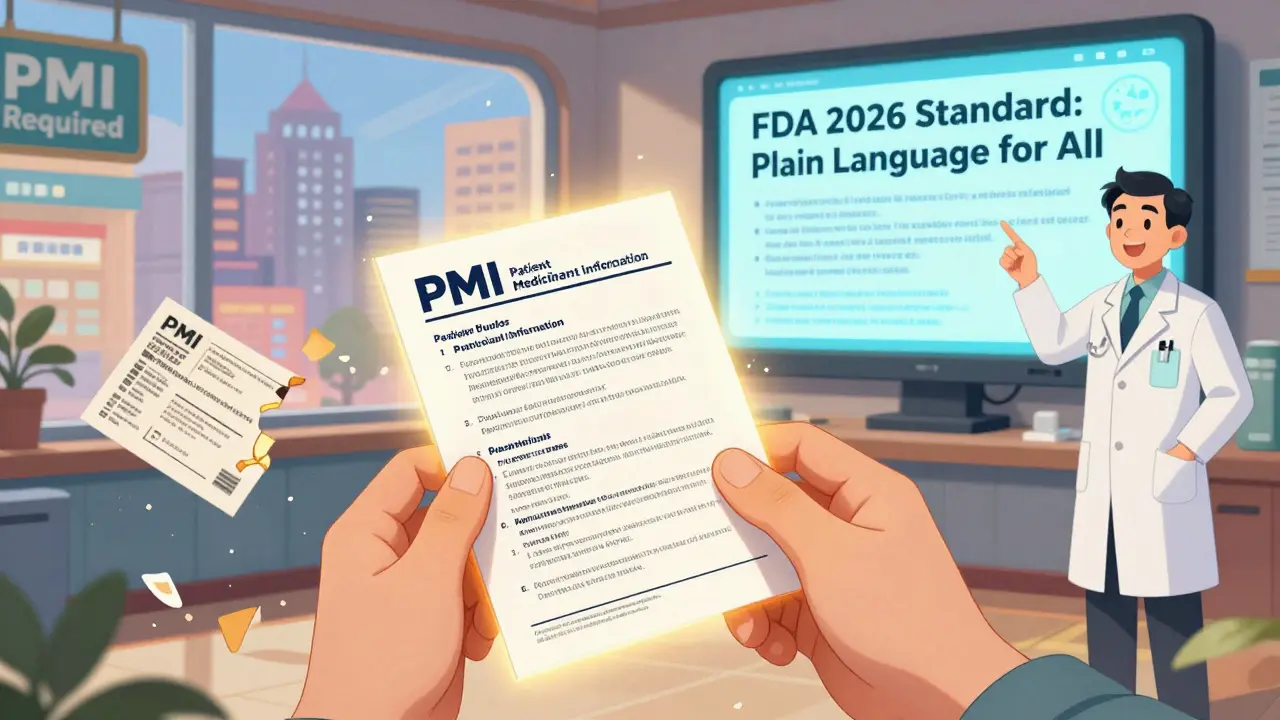
In May 2023, they proposed a new standard called Patient Medication Information (PMI). Starting in 2026, every prescription drug will come with a single, one-page, plain-language summary - replacing both Medication Guides and Patient Package Inserts.
This new document will:
- Be required for all prescription drugs - not just high-risk ones
- Be written at a 6th-grade reading level
- Include the most important side effects, how to recognize them, and when to call a doctor
- Be given at the pharmacy every time - no exceptions
It’s a huge shift. Right now, 8% of prescriptions involve a Medication Guide. In five years, it’ll be 100%. The FDA says this will cut medication errors and save lives.
For now, though, you still have to navigate the old system. And that means knowing where to look - and asking for what you need.
What You Should Do Today
Here’s your simple action plan:
- Ask for the Medication Guide every time you get a new prescription. If they say no, ask why. It’s your right.
- Check the FDA website for your drug. Search "Medication Guide [Drug Name]". Download and print it.
- Go to DailyMed and look up your drug. Find the full Package Insert. Read the "Adverse Reactions" section. You’ll find side effects the guide doesn’t mention.
- Keep both documents - the guide for quick reference, the insert for deep understanding.
- Ask your pharmacist if they can explain any side effect you don’t understand. They’re trained to do this.
Don’t wait for the system to fix itself. You have the power to get the information you need - if you know where to look and how to ask for it.
Are Medication Guides required for every prescription?
No. Only about 250 out of more than 20,000 prescription drugs in the U.S. require a Medication Guide. These are drugs with serious risks - like birth defects, life-threatening bleeding, or severe immune reactions - where patient awareness can prevent harm. Common drugs like antibiotics, blood pressure pills, or antidepressants usually don’t have one.
Can I get a Package Insert from my pharmacy?
Yes - but you have to ask. Pharmacies don’t hand them out automatically. The Package Insert is meant for healthcare providers, so most don’t keep physical copies on hand. Call ahead or ask the pharmacist when you pick up your prescription: "Can I get a copy of the full prescribing information?" They can print it or email it to you.
Why don’t Medication Guides list all side effects?
They’re designed to focus on the most serious or likely side effects that require patient action - not every possible reaction. For example, a Medication Guide for a blood thinner might warn about major bleeding, but not mention minor bruising or headaches. The full list - including rare side effects - is only in the Package Insert. Think of the guide as a safety alert, not a complete medical report.
Is the FDA changing how side effect info is provided?
Yes. Starting in 2026, the FDA will replace both Medication Guides and Patient Package Inserts with a single, standardized one-page document called Patient Medication Information (PMI). This new format will be required for all prescription drugs, written in plain language, and given to patients every time they fill a prescription. The goal is to end confusion and make sure everyone gets clear, consistent risk information.
What if I don’t understand the side effects listed?
You’re not alone. Both documents can be hard to read - especially the Package Insert. Don’t guess. Call your pharmacist or doctor. Ask them to explain what the terms mean. For example, if it says "transaminitis," ask: "Does that mean my liver is affected?" Most pharmacists are happy to break it down. You don’t need to understand medical jargon to be safe - you just need to know what to watch for and who to call.