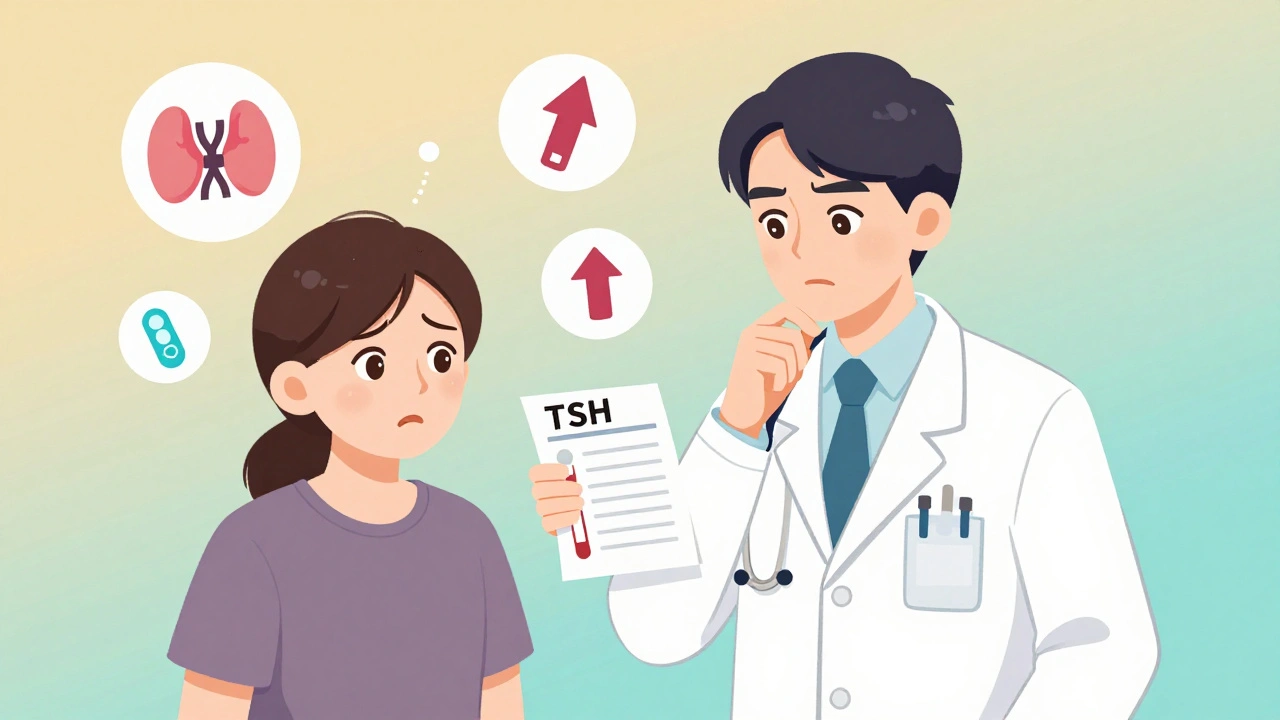
Most people think if your TSH is high, you need thyroid medicine. But that’s not always true. In fact, for many people with slightly elevated TSH and normal thyroid hormone levels, treatment might do more harm than good. This condition is called subclinical hypothyroidism-and it’s one of the most debated topics in endocrinology today.
What Exactly Is Subclinical Hypothyroidism?
Subclinical hypothyroidism means your thyroid-stimulating hormone (TSH) is higher than normal, but your free T4 (the main thyroid hormone) is still in the normal range. You don’t have the classic symptoms of an underactive thyroid-like extreme fatigue, weight gain, or dry skin-yet. Your thyroid is struggling, but not failing. It’s a gray zone.
This isn’t a new discovery. Doctors started noticing it in the 1970s after better blood tests came out. Today, about 4% to 20% of adults have it, depending on age and how labs define "normal." The older you are, the more likely you are to have it. For people over 65, a TSH of 6 or 7 might be normal. For someone in their 30s, even a TSH of 5 could be a red flag.
When Is a High TSH Actually a Problem?
The big question isn’t just "Is TSH high?" It’s: How high? And who are you?
If your TSH is above 10 mIU/L, most guidelines agree: treat it. The risk of progressing to full-blown hypothyroidism jumps to about 70% within four years. Plus, your cholesterol may rise, your heart function could be affected, and symptoms like brain fog or fatigue often start showing up.
But what if your TSH is between 4 and 10? That’s where things get messy. Some doctors treat it. Others wait. And both sides have solid science backing them.
A 2017 JAMA study followed 737 older adults with TSH between 4 and 10. After a year on levothyroxine, they didn’t feel better. Their energy, mood, or memory didn’t improve. Another study found that for people over 65, treating TSH below 10 actually increased the risk of death by 12%. That’s not a small number.
But here’s the flip side. A 2020 study of 1,241 people under 50 with TSH between 7 and 10 and positive thyroid antibodies saw a 32% drop in symptoms after starting low-dose thyroid hormone. One patient, a 38-year-old teacher with chronic fatigue and a TSH of 8.2, said her energy returned within three months of starting 25 mcg of levothyroxine.
Thyroid Antibodies: The Hidden Clue
If you have subclinical hypothyroidism, the first test your doctor should order isn’t another TSH. It’s thyroid peroxidase antibodies (TPOAb).
Positive antibodies mean your immune system is attacking your thyroid. That’s Hashimoto’s disease-even if you don’t have symptoms yet. And if your antibodies are positive, your chances of progressing to overt hypothyroidism go up by 2.3 times.
That’s why many endocrinologists recommend treatment for TSH above 7 mIU/L if antibodies are positive. It’s not about the number alone. It’s about the trajectory. You’re not just waiting for a number to climb-you’re watching a slow autoimmune process unfold.
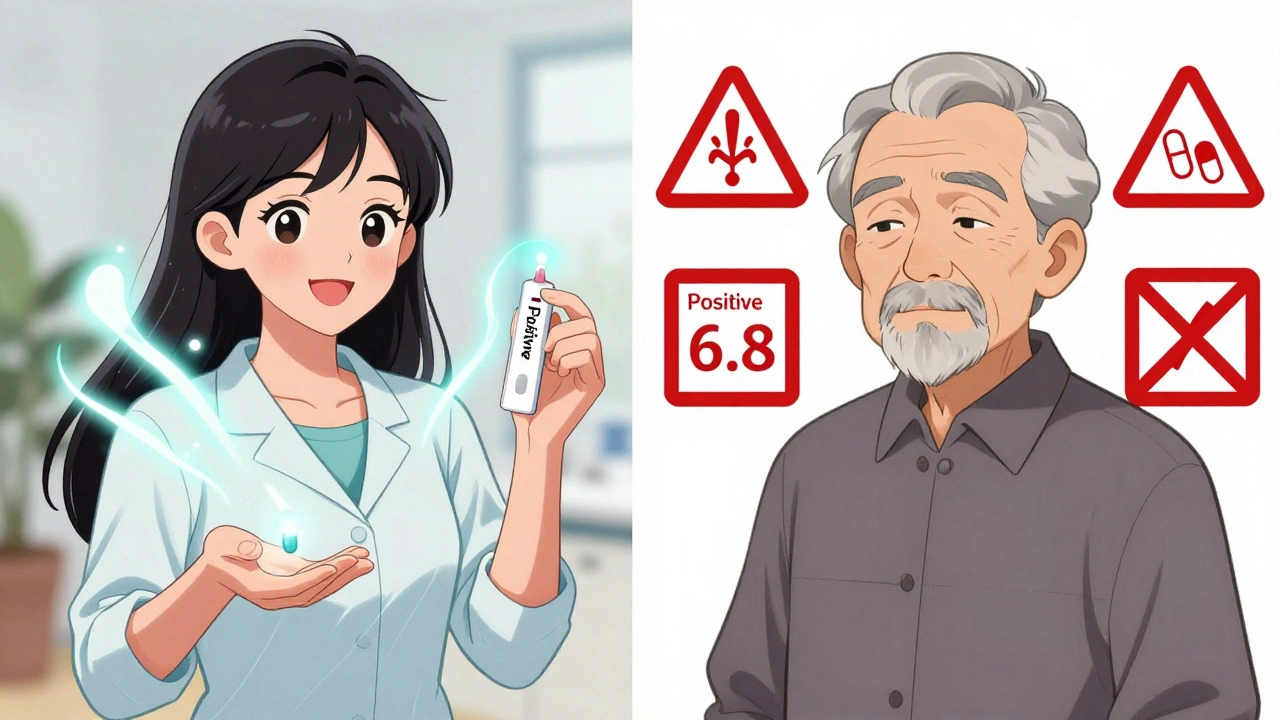
Who Should Be Treated? The Real Rules
There’s no one-size-fits-all answer. But here’s what the evidence supports:
- TSH >10 mIU/L: Treat, no matter your age. The benefits outweigh the risks.
- TSH 7-10 mIU/L with positive TPO antibodies: Strongly consider treatment, especially if you’re under 50. You’re likely headed toward overt disease.
- TSH 7-10 mIU/L without antibodies: Watch and wait. Most won’t progress. Monitor every 6-12 months.
- TSH 5-7 mIU/L: Usually no treatment. Unless you’re pregnant, trying to conceive, or have heart disease.
- Over 65 with TSH <10: Avoid treatment. The risks of atrial fibrillation, bone loss, and death are real.
Pregnant women or those trying to get pregnant need special attention. Even a TSH above 2.5-3.0 during pregnancy can affect fetal brain development. Guidelines recommend treating pregnant women with TSH >2.5 mIU/L and positive antibodies.
What About Symptoms?
Many patients say: "I feel awful. My TSH is 6.5. Why won’t you treat me?"
It’s a fair question. But here’s the hard truth: 30-40% of people with "hypothyroid symptoms"-fatigue, weight gain, cold intolerance-have them even when their thyroid is perfectly normal. Aging, stress, sleep problems, and depression can mimic thyroid issues.
That’s why doctors use tools like the Thyroid-Related Quality of Life Patient-Reported Outcome (ThyPRO) questionnaire. It’s not just about how you feel. It’s about measuring it. If your score is high and your TSH is above 7 with antibodies, treatment makes sense. If your score is normal? Maybe it’s not your thyroid.
How Is It Treated? And What Are the Risks?
If treatment is needed, it’s usually low-dose levothyroxine-25 to 50 mcg daily. That’s less than what most people with full-blown hypothyroidism need. The goal isn’t to crush your TSH. It’s to bring it back into the normal range (usually 0.5-4.0 mIU/L, depending on the lab).
Monitoring is key. Check TSH every 6-8 weeks after starting. Once stable, every 6-12 months is enough.
But here’s where things go wrong:
- Taking levothyroxine with iron, calcium, or coffee? Absorption drops by up to 39%. Take it on an empty stomach, 30-60 minutes before breakfast.
- Over-treating? You can end up with hyperthyroid symptoms-racing heart, anxiety, bone loss. Especially dangerous in older adults.
- Ignoring other causes? Low vitamin D, adrenal fatigue, or sleep apnea can look like thyroid problems.
One patient, a 72-year-old man with TSH of 6.8, was started on levothyroxine. Six months later, he developed atrial fibrillation. His doctor didn’t realize he was over-treated. His TSH had dropped to 0.2.
Why Are Doctors So Divided?
Because the science isn’t settled.
The American Thyroid Association says: treat only if TSH >10. The American Association of Clinical Endocrinologists says: treat if TSH >7, especially with antibodies. The Royal Australian College of General Practitioners says: don’t treat at all for TSH 4-10.
And then there’s the money. A 2019 study estimated $1.2 billion a year is spent in the U.S. on unnecessary levothyroxine prescriptions. That’s billions for pills that don’t help-and potential harm.
Some experts believe pharmaceutical companies pushed for lower treatment thresholds to sell more drugs. Others say they’re just trying to catch disease early.
The truth? We’re still learning. The SHINE trial, a five-year study tracking 1,000 people with TSH 4-10, is expected to release results in late 2024. It might finally answer whether treating mild cases prevents heart attacks or strokes.
What Should You Do?
If you’ve been told your TSH is high but your T4 is normal:
- Get your TPO antibodies tested.
- Ask for a lipid panel-high cholesterol is a silent sign of thyroid trouble.
- Use a symptom checklist like ThyPRO. Don’t just say "I feel tired." Rate it.
- If you’re under 50 and antibodies are positive? Discuss starting treatment.
- If you’re over 65 and TSH is under 10? Push back. Ask why you need medication.
- Get retested in 6 months if you’re not treated. TSH can creep up slowly.
Don’t let a number dictate your health. Let your age, your antibodies, your symptoms, and your risk factors guide the decision.
The Future of Subclinical Hypothyroidism
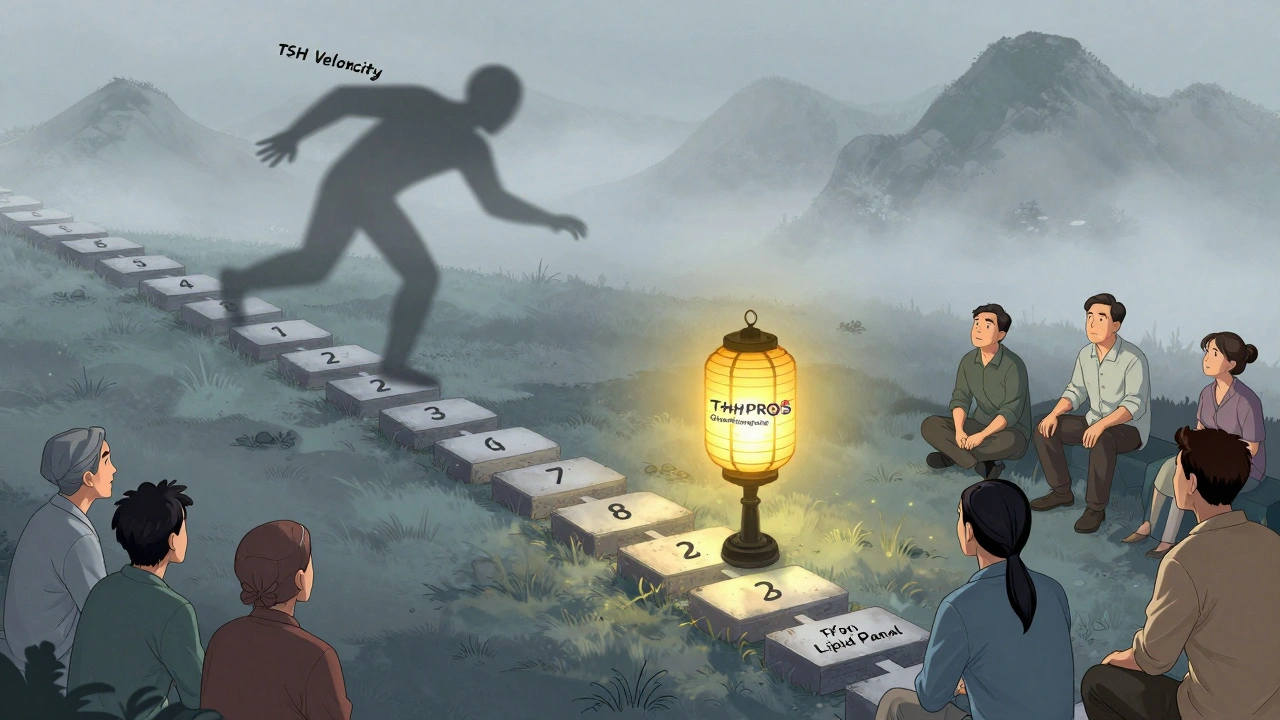
Doctors are starting to look beyond a single TSH number. New tools track "TSH velocity"-how fast your TSH is rising. If it’s climbing more than 1 mIU/L per month, your risk of progression jumps 1.8 times. That’s a game-changer.
Some labs are even suggesting age-adjusted normal ranges. For people under 50, maybe the upper limit should be 2.5, not 4.1. If that’s true, nearly 1 in 4 adults would be labeled with subclinical hypothyroidism. Would that help-or just create more anxiety and unnecessary pills?
Right now, the safest path is caution. Don’t rush to treat. Don’t ignore it either. Watch. Test. Understand the why behind the number.
Thyroid health isn’t about fixing a lab value. It’s about protecting your heart, your brain, your energy-and your future.
Is subclinical hypothyroidism the same as Hashimoto’s?
No. Subclinical hypothyroidism is a lab finding-elevated TSH with normal T4. Hashimoto’s is an autoimmune disease where your immune system attacks your thyroid. Many people with subclinical hypothyroidism have Hashimoto’s (especially if TPO antibodies are positive), but not all. You can have Hashimoto’s with normal TSH and T4, too. The antibodies tell you the cause; the TSH tells you the current function.
Can subclinical hypothyroidism go away on its own?
Yes, in about 20-30% of cases, especially if TSH is only slightly elevated (5-7 mIU/L) and antibodies are negative. Stress, illness, or temporary inflammation can raise TSH. Retesting after 3-6 months often shows it’s returned to normal. That’s why doctors don’t treat immediately-they wait to see if it’s persistent.
Should I take levothyroxine if I have no symptoms?
If your TSH is between 4 and 10 and you have no symptoms, most guidelines say no-unless you’re pregnant, have heart disease, or your antibodies are strongly positive. Treating someone without symptoms who won’t progress just exposes them to medication risks without benefit. The goal is to treat those who will benefit, not to treat every high number.
How often should I get my TSH checked if I’m not being treated?
If your TSH is mildly elevated (5-10 mIU/L) and you’re not on medication, get it checked every 6 to 12 months. If it’s stable, you might extend it to every 1-2 years. But if it’s rising quickly-say, from 6 to 8 in 6 months-your doctor should reassess sooner. Speed matters more than the number alone.
Can diet or supplements fix subclinical hypothyroidism?
No. While selenium and iodine play roles in thyroid health, supplements won’t reverse subclinical hypothyroidism caused by Hashimoto’s or age-related decline. In fact, too much iodine can make autoimmune thyroid disease worse. The only proven treatment is levothyroxine when indicated. Don’t waste money on thyroid "cleanses" or miracle supplements-stick to evidence-based care.
Is it safe to stop levothyroxine if I was started on it for subclinical hypothyroidism?
If you were started on levothyroxine for TSH between 4 and 10 with no antibodies and no symptoms, it’s often safe to stop under medical supervision. Your doctor can gradually reduce the dose and retest TSH in 6-8 weeks. If it stays normal, you likely don’t need it. But if you have antibodies and TSH was above 7, stopping could lead to rapid progression. Always consult your doctor before stopping.

bro i had a TSH of 8.5 and no symptoms... doc put me on levothyroxine and i started sweating like i was in a sauna at 6am. turned out i was over-treated. now i’m off it and my TSH is back to 6.2. who needs this drama?
This is such an important conversation. So many people get labeled with a number and told they’re broken, when really their body’s just adapting. I’ve seen patients with TSH 7.8 who felt fine-until we tested antibodies and found Hashimoto’s. Then it made sense. It’s not about the lab. It’s about the person behind the numbers.
I'm sorry, but this article is dangerously misleading. 🚨 The American Thyroid Association guidelines are outdated. The 2020 study showing 32% symptom reduction in patients under 50 with positive antibodies? That's not "flip side"-that's clinical evidence. If you're not treating TPO+ patients with TSH >7, you're not practicing evidence-based medicine. 🤦♀️
i read this and just cried a little. i was told my tsh was "fine" for years even though i was exhausted, cold all the time, and losing my hair. finally got tested for antibodies and they were through the roof. took 5 years. please, if you feel off-push for tpoab. you deserve to feel better.
The key takeaway here is that medicine isn’t a checklist. It’s a conversation between a patient’s lived experience and clinical data. TSH alone is like judging a car’s performance by the fuel gauge. You need the whole system: antibodies, symptoms, age, trajectory. This post nails it.
I’ve been reading up on this for months because my mom has subclinical hypothyroidism and they’re debating whether to treat her. She’s 71, TSH is 8.1, no antibodies, no symptoms. I found this 2023 meta-analysis from The Lancet that said in elderly patients without antibodies, treatment doesn’t improve quality of life or reduce cardiovascular events, but it does increase the risk of atrial fibrillation by 22%. That’s huge. So yeah, watch and wait. But also, get the antibody test. It’s cheap and tells you so much more.
Let’s be real. This whole thing is a pharmaceutical scam. They lowered the "normal" TSH range to turn healthy people into patients. Now we’re all on levothyroxine like it’s vitamin D. My cousin’s doctor prescribed it because her TSH was 5.3. She’s 28, runs marathons, eats clean. What’s next? Prescribing statins for cholesterol at 190?
if you're not treating everyone with tsh over 4 you're literally letting people die. my friend's mom died of heart failure because they "waited". now she's dead and her tsh was 6.7 for 3 years. you people are so lazy and scared to do the right thing. just give the pill. it's not that hard.
Thank you for emphasizing the ThyPRO questionnaire. So many doctors skip it. I filled mine out after months of fatigue-scored 87/100. My TSH was 6.1. We started low-dose levothyroxine. Within 6 weeks, I could get out of bed without crying. 🌿 It’s not just a number. It’s your life.
i had tsh 5.9 and no symptoms. doc said "wait." i waited 18 months. then i had a miscarriage. they found out i had hashimoto’s. my tsh had climbed to 11.2. if they’d treated me earlier, maybe... i don’t know. i just wish someone had listened. please, if you’re trying to conceive-get tested. don’t wait.
I think Big Pharma paid off the endocrinologists. Why else would they push treatment for TSH 7? My cousin’s doctor told her to take pills for her "subclinical" TSH. She’s 45, hikes every weekend, eats kale. Now she’s on meds and her TSH is 0.1. She’s jittery, losing weight, and can’t sleep. This isn’t medicine. It’s a factory.
My TSH was 6.8 last year. No antibodies. No symptoms. I didn’t treat it. Retested 6 months later-still 6.7. Then I got sick with COVID and it jumped to 8.9. After I recovered, it went back to 6.5. That’s when I realized: sometimes it’s not the thyroid. It’s the body under stress. I’m just monitoring now. Peaceful.