
Antihistamine Selection Guide
Find Your Best Allergy Medication
This tool helps you identify which second-generation antihistamine might work best for your specific allergy symptoms and health profile. Based on information from the article, your results will consider symptom effectiveness, drowsiness risk, and drug interactions.
If You've Ever Felt Drowsy After Allergy Meds, This Explains Why
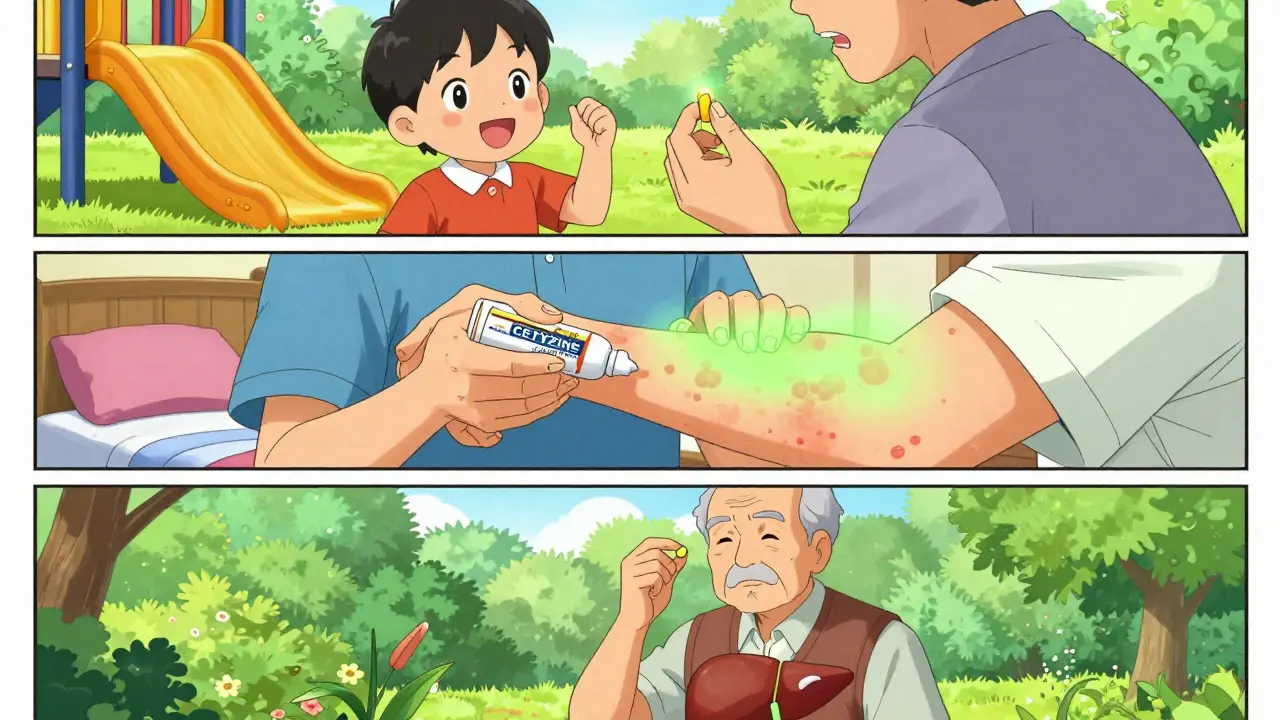
second-generation antihistaminesare H1-receptor antagonists developed to reduce sedation compared to first-generation antihistamines. If you've ever felt drowsy after taking an allergy medication, you've probably experienced the side effects of first-generation antihistamines. These older drugs, like diphenhydramine (Benadryl), are effective but often leave you too sleepy to drive or work. That's why second-generation antihistamines became such a game-changer-they deliver allergy relief without the heavy drowsiness.
What Exactly Are Second-Generation Antihistamines?
They're modern allergy medications designed specifically to avoid the biggest problem of older options: excessive sleepiness. Developed in the late 1980s, they target histamine receptors only in your body's tissues (like your nose and skin), not in your brain. This precision is why they're called "non-drowsy" allergy meds. Three main options dominate today: loratadine (Claritin), cetirizine (Zyrtec), and fexofenadine (Allegra). Each has unique strengths but shares the same goal: effective symptom control without making you crash.
How Do They Work Differently?
First-generation antihistamines easily cross the blood-brain barrier because they're small and fat-soluble. This lets them block histamine receptors in your brain, causing drowsiness. Second-generation versions are larger and more polar (water-attracting), so they can't slip through this barrier. As explained in a Nature Communications study by Wang et al. (2024), these drugs bind specifically to histamine H1 receptors in peripheral tissues while avoiding brain receptors. For example, fexofenadine has a molecular weight of 503 daltons and a high polar surface area, making it too large and polar to pass through the blood-brain barrier. In contrast, first-generation antihistamines like diphenhydramine have lower molecular weights (around 250 daltons) and easily slip into the brain, causing sleepiness.
Comparison with First-Generation Antihistamines
| Feature | Second-Generation | First-Generation |
|---|---|---|
| Sedation Rate | 6-14% | 50-60% |
| Duration of Action | 12-24 hours | 4-6 hours |
| Nasal Congestion Relief | Limited | Better |
| Blood-Brain Barrier Penetration | Low | High |
| Common Side Effects | Headache, dry mouth | Drowsiness, dizziness |
Meet the Top Three Options
Each second-generation antihistamine has unique traits:
loratadine (Claritin): Available over-the-counter, it's known for minimal side effects. Most people take a 10mg tablet once daily. It has a half-life of 8-18 hours, making it effective for 24-hour symptom control. According to WebMD reviews, 78% of users report "excellent" or "good" effectiveness for allergies. It's metabolized by the liver, so those with liver issues might need lower doses.
cetirizine (Zyrtec): Slightly more likely to cause drowsiness than loratadine (about 14% of users), but it's very effective for itching and hives. Its half-life is 8.3 hours, so it works well for 12-24 hours. A Reddit user in r/Allergies noted: "Zyrtec works great for my seasonal allergies without making me sleepy like Benadryl did, but I still need Flonase for congestion." It's also available in chewable tablets and liquid form for kids.
fexofenadine (Allegra): This one is least likely to cause drowsiness (under 6% of users) and has a half-life of 11-15 hours. It's also the only second-generation antihistamine that doesn't rely on liver metabolism-most of it passes through the body unchanged. This makes it safer for people with liver issues or those taking other medications. Available in 60mg, 120mg, and 180mg doses, it's often taken once or twice daily.

Real Benefits and Limitations
Second-generation antihistamines shine in reducing drowsiness-clinical trials show only 6-14% of users experience sedation compared to 50-60% with older antihistamines. They're also longer-lasting, so you don't need to take them multiple times a day. However, they're not great for nasal congestion. As Dr. Paul S. Muether from Johns Hopkins University pointed out in his 2001 study, "second-generation antihistamines do not suppress sneezing in viral upper respiratory infections." If you have a stuffy nose, you might need a decongestant like pseudoephedrine or a nasal spray like Flonase.
Another limitation? Some people experience headaches or taste disturbances. On Drugs.com, one user reported: "Loratadine gave me severe headaches for 3 days straight until I stopped taking it-switched to cetirizine which works fine." But these side effects are rare compared to the sedation from first-generation options. Market data shows second-generation antihistamines command 85% of the $3.2 billion global antihistamine market, with cetirizine holding 35% share, loratadine 30%, and fexofenadine 20%.
How to Use Them Effectively
For best results, take your second-generation antihistamine 1-2 hours before allergen exposure. A Journal of Allergy and Clinical Immunology study (2019) found this approach reduces symptoms by 40-50% more than taking it after symptoms start. Also, check for drug interactions: while fexofenadine has minimal interactions, loratadine and cetirizine are processed by the CYP3A4 enzyme. Taking them with certain antibiotics or antifungals could increase side effects. Always consult your doctor if you're on other medications.
Most people find the right antihistamine after trying 2-3 options. A 2023 Mayo Clinic survey showed 35% of users need to experiment before finding one that works for them. Keep track of your symptoms and side effects to identify patterns. Apps like the AAAAI Allergy Tracker can help you monitor how each medication affects you over time. The FDA updated labeling requirements in 2021 to include clearer warnings about rare cardiac risks and interactions with other medications.
Frequently Asked Questions
What is the main difference between first and second-generation antihistamines?
The key difference is that second-generation antihistamines are designed to not cross the blood-brain barrier significantly, which reduces drowsiness. First-generation antihistamines like diphenhydramine cross the barrier easily, causing sedation. Second-generation options like loratadine and cetirizine maintain effectiveness for allergies without the same level of sleepiness.
Do second-generation antihistamines work for cold symptoms?
Not really. While they're great for allergy symptoms like sneezing and itchy eyes, they don't effectively treat cold-related symptoms like nasal congestion or runny nose. First-generation antihistamines might help with some cold symptoms due to their additional effects on acetylcholine receptors, but they also cause more drowsiness. For colds, decongestants or saline sprays are better options.
Can I take second-generation antihistamines with other medications?
It depends. Fexofenadine (Allegra) has very few drug interactions because it's excreted mostly unchanged. However, loratadine and cetirizine are metabolized by the CYP3A4 enzyme, so taking them with drugs like erythromycin or ketoconazole could increase side effects. Always check with your doctor or pharmacist before combining medications.
Which second-generation antihistamine is best for me?
There's no one-size-fits-all answer. If you're sensitive to drowsiness, fexofenadine is your safest bet. For itching and hives, cetirizine is often more effective. Loratadine is a good all-around option with minimal side effects. Most people need to try 2-3 options before finding the best fit-track your symptoms to see what works.
Are second-generation antihistamines safe for long-term use?
Yes. Studies show they're safe for daily use over years. Unlike first-generation antihistamines, they don't cause cognitive decline or increase fall risk in older adults. However, if you have severe kidney or liver disease, consult your doctor first. Always follow the recommended dose-more isn't better.
Why were some second-generation antihistamines withdrawn?
Early second-generation options like terfenadine and astemizole were pulled from the market in the late 1990s due to rare heart rhythm issues when combined with certain antibiotics. Current options like loratadine, cetirizine, and fexofenadine have much safer profiles. The FDA's post-marketing surveillance through 2023 shows minimal cardiac risk with today's formulations when used as directed.



Second-gen antihistamines like Claritin and Zyrtec don't cross the blood-brain barrier, so no drowsiness.
Absolutely agree. I've used Zyrtec for years and it's never made me sleepy. Just effective relief.
First-gen antihistamines work better for congestion Second-gen are overrated and shouldn't be pushed
Second-gen antihistamines are great 🌟 No drowsiness But they don't help much with congestion 😔
Second-gen antihistamines are designed for non-drowsy relief. First-gen have their place but second-gen are safer for daily use. No need to overcomplicate.
Second-gen are not safer They have cardiac risks First-gen are actually better 😒
For nasal congestion, combining second-gen antihistamines with a nasal spray like Flonase works best. I've seen many patients get great results this way. It's a simple solution.
Second-gen antihistamines are part of a pharmaceutical conspiracy to push drugs with hidden cardiac risks.
The FDA's 2021 warnings are just cover-ups.
They don't work for colds either.
Just a scam.
Pharmaceutical industry influence is concerning However clinical evidence does not support conspiracy theories Further research warranted
Second-gen antihistamines are widely used because they are safer. The conspiracy theories are baseless. People should rely on evidence not fear.
Second-gen antihistamines are great No drowsiness But sometimes i get headackes 😊
Second-gen antihistamines are controlled by big pharma They're not safe I've read about heart issues They're just hiding the truth
Big pharma is pushing second-gen antihistamines because they're profitable not because they're better. The FDA's warnings are ignored. They're all in on it.