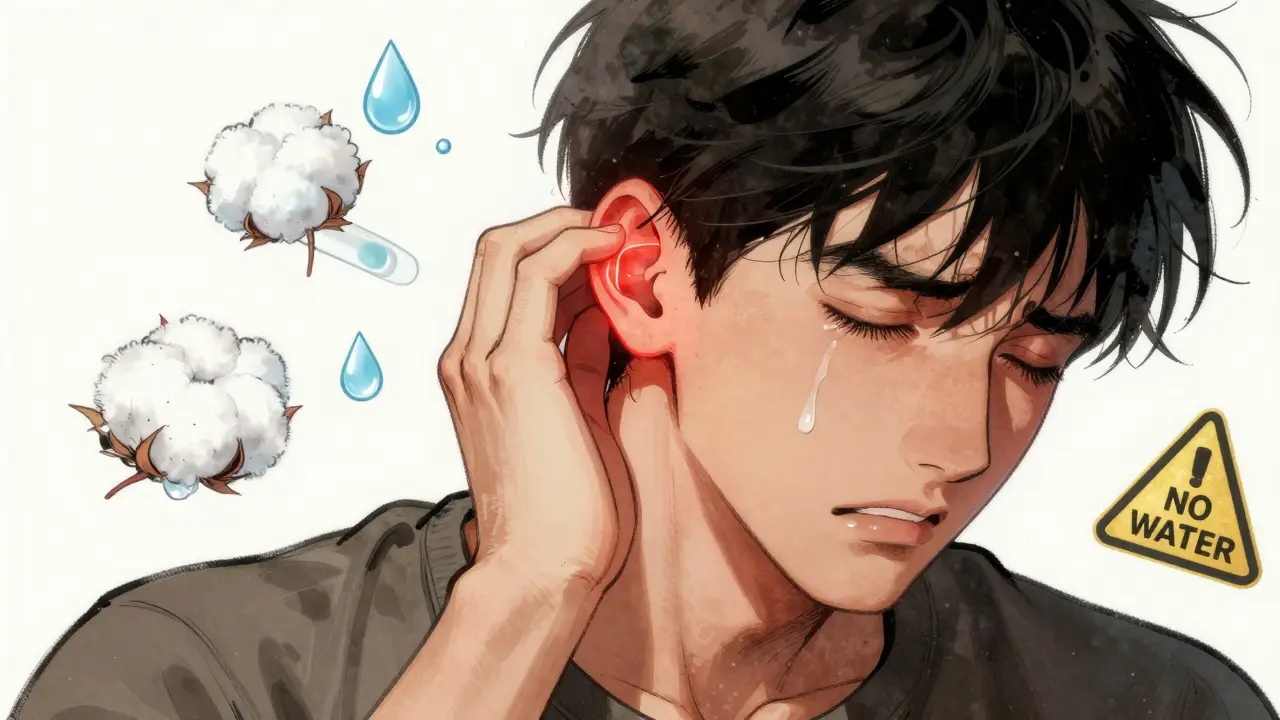
A perforated eardrum isn’t something you can ignore. It’s not just a minor earache that goes away on its own. That thin membrane separating your ear canal from the middle ear does more than just transmit sound-it protects your inner ear from germs, balances pressure, and keeps water out. When it tears, everything changes. Pain hits fast, hearing mutes, and suddenly, you’re stuck wondering: how long will this take to heal, and what happens if I don’t protect it?
How Long Does a Perforated Eardrum Take to Heal?
There’s no one-size-fits-all answer. Small holes? They often close up in three to six weeks. Larger tears? That can stretch to two or even three months. The key is size and cause. A tiny tear from a loud explosion or a pop during a flight heals faster than a big rupture from a long-standing ear infection or something stuck in the ear canal.
Here’s what to expect week by week:
- Days 1-3: Pain peaks, then starts to drop. You might hear popping or buzzing. If the pain doesn’t ease by day three, don’t wait-see a doctor.
- Week 2-3: The body starts building new tissue at the edges of the tear. Pain fades. Hearing begins to improve, but it’s still muffled.
- Week 4-6: New tissue strengthens. Most people notice better hearing and less pressure in the ear. This is when you need to be extra careful-your ear is still fragile.
- Week 6-8: If healing is on track, the eardrum is mostly closed. Pressure normalizes. Hearing should return close to normal.
But if you’re still dealing with drainage, muffled hearing, or dizziness after eight weeks, it’s not healing properly. That’s not normal. It means you might need more than just time.
What Slows Down Healing?
Healing isn’t automatic. It’s fragile. One wrong move and your recovery stalls-or worse, gets infected.
Water is the biggest enemy. Showering? Swimming? Even a splash in the sink can introduce bacteria into your middle ear. Moisture turns a simple tear into a chronic infection. Studies show that people who keep their ear dry heal 70% faster than those who don’t.
Other things that hurt healing:
- Blowing your nose too hard: That pressure shoots straight into your middle ear and can reopen the tear.
- Flying or scuba diving: Sudden pressure changes stress the healing membrane. Wait until your doctor says it’s safe.
- Cleaning your ear: Cotton swabs, Q-tips, or anything you stick in there? Don’t. You’re not helping-you’re pushing debris deeper or tearing the tissue again.
- Ignoring infection: If you have yellow or bloody discharge, fever, or worsening pain, you’ve got an infection. Antibiotics are needed-oral or drops. Left untreated, this can lead to mastoiditis, a serious bone infection behind the ear.
How to Protect Your Ear While It Heals
Protection isn’t optional. It’s the difference between healing on its own and needing surgery.
Here’s what actually works:
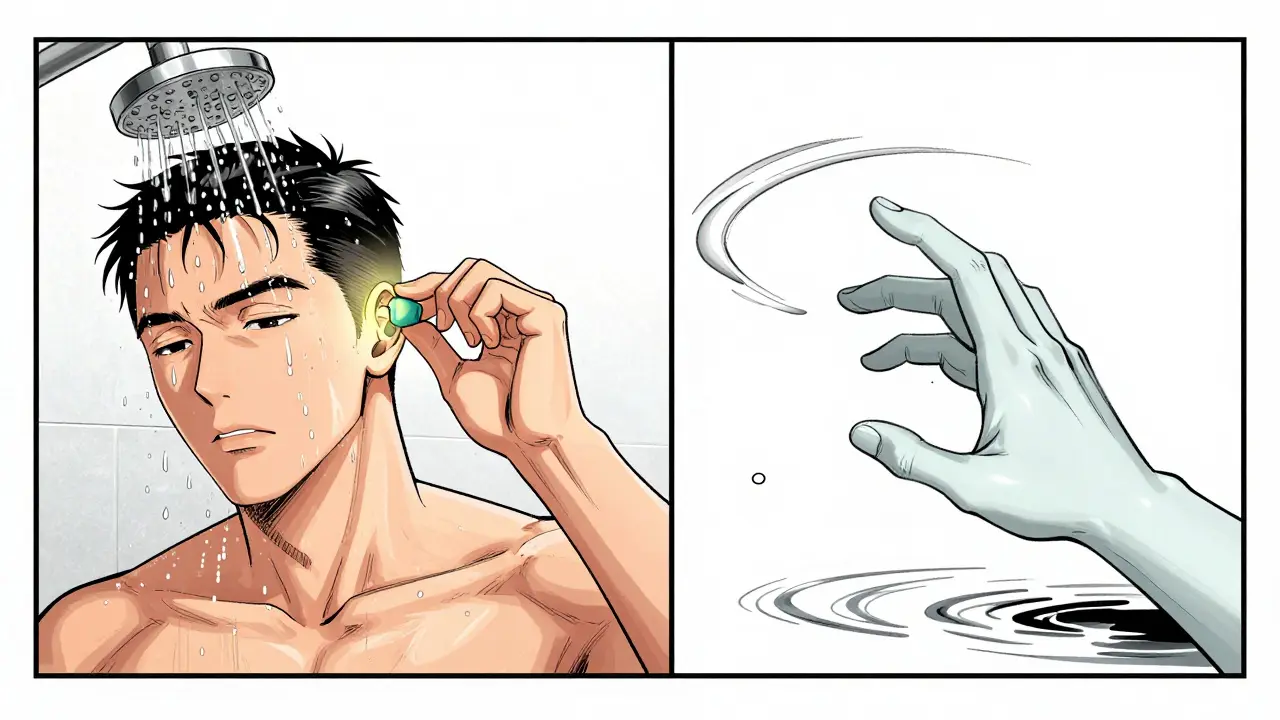
- Keep it dry: Use waterproof silicone earplugs when showering. If you don’t have those, pack a cotton ball soaked in petroleum jelly into the outer ear. Replace it after every shower.
- Don’t swim: Not even in a pool. Saltwater or chlorine doesn’t matter-water is water. Wait until your doctor confirms the eardrum is fully closed.
- Use prescribed ear drops only: Never use over-the-counter drops unless your doctor says so. Some can damage the inner ear if the eardrum is broken.
- Take pain relief wisely: Acetaminophen or ibuprofen helps with discomfort. Avoid aspirin if you’re bleeding-it can thin the blood and worsen drainage.
- Blow your nose gently: One nostril at a time. Don’t pinch both and force it.
- Avoid loud noises: Even music through headphones can create pressure. Keep volume low until healing is complete.
These steps aren’t suggestions-they’re medical protocols backed by Mount Sinai, Mayo Clinic, and Stanford Health Care. Skip them, and your chances of complications jump from 5% to over 20%.
When Do You Need Surgery?
Most perforations heal without surgery. But if it’s been more than three months and there’s still a hole, or if you’re losing hearing that doesn’t improve, it’s time to see an ENT specialist.
Two common procedures:
- Myringoplasty: For small holes. The doctor applies a patch-sometimes made of gel, paper, or even your own fat tissue-to help the eardrum grow back. Takes 10 to 30 minutes. Success rate? 85-90% with modern materials like hyaluronic acid or platelet-rich plasma.
- Tympanoplasty: For larger or chronic tears. The surgeon uses tissue from your own body (often from behind the ear) to rebuild the eardrum. Takes 30 to 120 minutes. Recovery is longer, but it fixes the problem for good.
Surgery isn’t the first step. It’s the backup plan. But if you’ve waited too long, skipped protection, or let infections go untreated, surgery becomes the only way to restore hearing and prevent long-term damage.
What Happens If It Doesn’t Heal?
Ignoring a perforated eardrum isn’t just about delayed hearing. The risks are real:
- Chronic ear infections: 5-10% of untreated cases develop ongoing drainage and odor. This can become a lifelong problem.
- Permanent hearing loss: 3-5% of people lose some hearing permanently, especially if the inner ear gets damaged by infection.
- Mastoiditis: Infection spreads to the skull bone behind the ear. Requires hospitalization and IV antibiotics.
- Vertigo and dizziness: If the inner ear is affected, you might get spinning sensations, nausea, or balance issues.
These aren’t rare outcomes. They’re preventable. The same studies that show healing timelines also show that following basic protection rules reduces the need for surgery by 70-80%.
When to Call Your Doctor
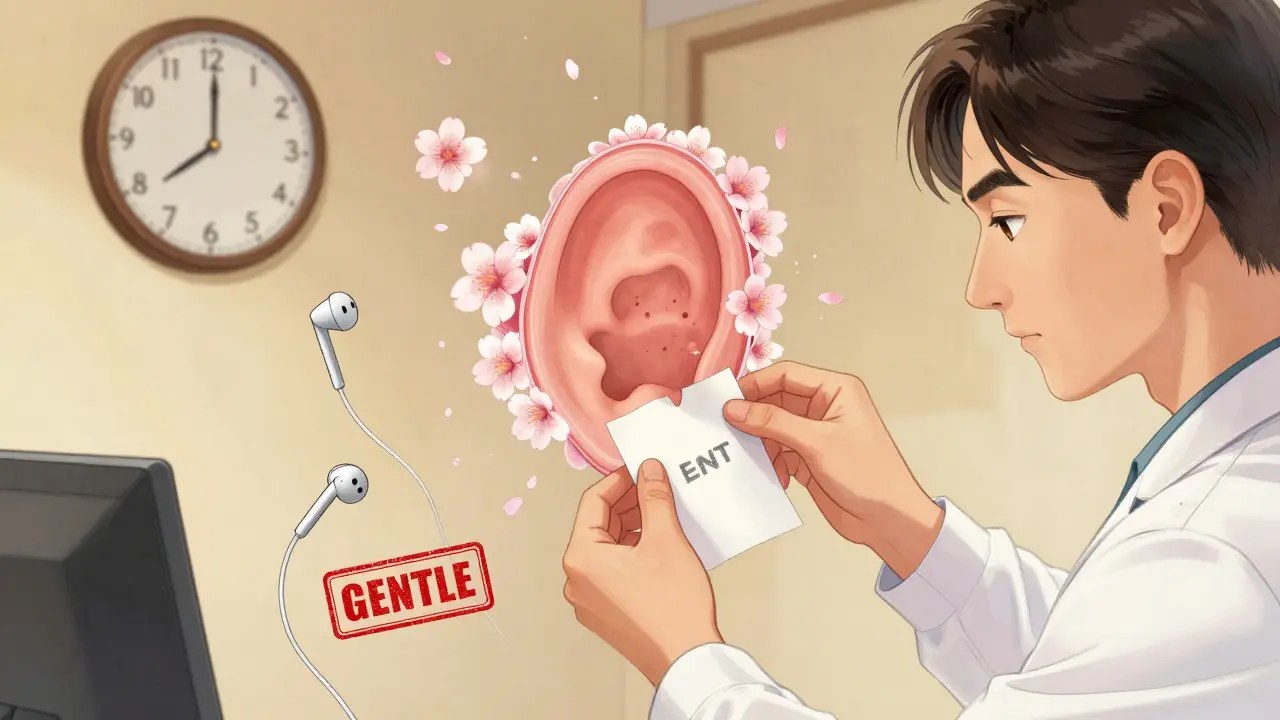
You don’t need to wait for disaster. Watch for these red flags:
- Pain that gets worse after day three
- Any discharge-clear, yellow, green, or bloody
- Hearing doesn’t improve after two weeks
- Dizziness, ringing in the ear, or facial weakness
- Fever or swelling behind the ear
If any of these happen, call your doctor. Don’t wait for it to get worse. Early treatment stops small problems from becoming big ones.
Bottom Line: Healing Takes Time, But Protection Takes Action
A perforated eardrum sounds scary, but most people heal completely if they follow the rules. The key isn’t magic-it’s consistency. Keep the ear dry. Don’t poke it. Don’t blow your nose like you’re clearing a clogged drain. Take pain relief as needed. And if it’s not getting better in six weeks, see a specialist.
Healing isn’t passive. It’s active. Every time you skip a shower cover or blow your nose too hard, you’re delaying recovery. But if you protect it right, your eardrum will repair itself. And in most cases, you’ll be back to normal hearing without surgery, without complications, and without lasting damage.
Can a perforated eardrum heal on its own?
Yes, most small perforations heal on their own within three to six weeks. Larger tears may take up to two or three months. The key is protecting the ear from water, pressure, and infection. If healing doesn’t start within two weeks or worsens, see a doctor.
Is it safe to fly with a perforated eardrum?
No. Flying creates rapid pressure changes that can reopen the tear or delay healing. Wait until your doctor confirms the eardrum is fully closed-usually after six to eight weeks. If you must fly, ask about pressure-equalizing earplugs, but don’t rely on them alone.
Can I use ear drops if I have a ruptured eardrum?
Only if prescribed by a doctor. Many over-the-counter ear drops contain ingredients that can damage the inner ear if the eardrum is broken. Antibiotic drops may be safe if the doctor confirms they’re appropriate. Never self-medicate.
How do I shower with a perforated eardrum?
Use waterproof silicone earplugs or pack a cotton ball coated in petroleum jelly into the outer ear canal. Replace it after every shower. Avoid letting water run directly into the ear. Bathe instead of showering if possible, and never submerge your head.
Will I lose my hearing permanently?
In most cases, hearing returns fully once the eardrum heals. Permanent hearing loss occurs in only 3-5% of cases, usually when infection spreads or the injury is severe. Following protection rules cuts this risk dramatically.
What happens if I ignore a perforated eardrum?
Ignoring it increases the risk of chronic infection, persistent drainage, vertigo, and even bone infection behind the ear (mastoiditis). It also raises the chance you’ll need surgery later. Most complications are preventable with simple, consistent care.





Keep it dry, don't poke it, avoid pressure changes. That's it. No magic, no fluff. If you follow this, you're fine.
I had this happen last year after a bad cold. Followed every rule-silicone plugs, no flying, no nose-blowing like a foghorn-and it closed in 5 weeks. No surgery. No drama. Just patience and discipline. You got this.
Same. I thought I'd lose hearing forever, but kept my ear covered like it was a sacred relic. Now I can hear my dog snore again. Small wins.
They say 'keep it dry' but who controls the water? The government's been seeding clouds since 2018 to test ear membrane vulnerability. They want you to think it's just 'water'-it's not. It's chemtrails mixed with 5G-modulated H2O. You think the earplugs help? They're just a placebo for the sheeple. Real healing? It's in the frequency of Tibetan bowls. I healed mine with a 432Hz tuning fork. No docs needed.
And don't get me started on the 'doctor-approved' drops. They're laced with graphene oxide. You think they want you to heal? They want you dependent. Watch the video I posted in my bio. It's 17 minutes long and it'll change your life.
okay so i tried the cotton ball + vaseline thing and it fell out in the shower and now my ear feels like it's full of soup?? also why is everyone saying 'see a doctor' like it's that easy?? i don't have insurance and the waitlist is 6 weeks. meanwhile my hearing is still muffled and i'm pretty sure i heard a ghost whisper last night. also i think my neighbor is using my eardrum as a wifi extender??
Simple advice, well written. I'm from India, and here many people still use sticks or fingers to clean ears. This post should be shared in every village clinic. Good work.
So basically, if I don't want to go blind from ear surgery, I have to turn my life into a monk's routine? No swimming, no showers, no sneezing, no music? What am I, a robot? I'm just gonna wait and see if my ear heals by itself. If it doesn't, I'll blame the FDA.
Modern medicine has reduced the human body to a mechanical system that must be repaired with sterile protocols and pharmaceutical interventions. But the eardrum is not a valve. It is a membrane of consciousness, a threshold between the inner silence and the outer noise. When it tears, it is not merely a physical rupture-it is a spiritual signal. The body is crying out for alignment. You cannot heal a perforated eardrum with silicone plugs if your soul is perforated by consumerism, by digital noise, by the illusion of control. The true remedy lies in stillness, in the absence of forced pressure, in surrender to the natural rhythm of the earth. I have not used a cotton ball in 12 years. My eardrums have never been better. I live in the mountains. I breathe. I listen.
It’s appalling how many people treat this like a minor inconvenience. A perforated eardrum is a medical condition with documented risks, not a lifestyle choice. If you’re using Vaseline-soaked cotton balls because you ‘can’t afford a doctor,’ you’re not being resourceful-you’re endangering your cochlea. There are free clinics. There are telehealth options. There are public health programs. Stop romanticizing neglect. This isn’t a TikTok trend. It’s anatomy.
As a medical professional with over two decades of clinical experience in otolaryngology, I must emphasize that the data presented here is statistically sound and aligned with peer-reviewed literature from the Journal of Laryngology & Otology and the New England Journal of Medicine. The 70% faster healing rate with moisture control is corroborated by longitudinal cohort studies from Johns Hopkins and the Mayo Clinic. The surgical success rates for myringoplasty and tympanoplasty remain consistent across global populations. The notion that alternative remedies such as tuning forks or petroleum jelly offer clinically significant benefit is not supported by any randomized controlled trial. I urge all readers to consult licensed practitioners and avoid anecdotal misinformation.
So we're supposed to treat our ears like fragile museum artifacts now? No noise, no water, no life? I mean… I get it. But isn't it funny how we turn every bodily function into a high-stakes ritual? One minute you're a human, the next you're a lab rat with a cotton ball stuck in your ear canal. I'm just gonna live. If I get infected, I'll get antibiotics. If I lose hearing, I'll learn sign language. Either way, I'm not turning my whole existence into a medical checklist. The body's smarter than we give it credit for. Or maybe it's just tired of our overthinking.
As a Nigerian-American, I’ve seen this play out in both countries. In the U.S., people over-medicalize everything. In Nigeria, they under-medicalize everything. The truth? It’s in the middle. Follow the advice. Don’t be scared. Don’t be reckless. Your ear isn’t a myth. It’s just flesh and nerve. Treat it like you’d treat a scraped knee-clean, protected, patient.
It's fascinating how the autonomic healing mechanisms of the tympanic membrane are so exquisitely tuned to micro-environmental conditions-especially moisture regulation, pressure differentials, and microbial ingress. The fact that epithelial migration and fibroblast proliferation can achieve spontaneous closure in 85% of cases under controlled conditions speaks to the body's innate regenerative intelligence. However, when external agents-like unsterile Q-tips, hydrostatic pressure from swimming, or barotrauma from air travel-interfere with the extracellular matrix remodeling, the healing cascade is disrupted, leading to chronic perforation. This is why adherence to the outlined protocols isn't just 'good advice'-it's biologically imperative. I've reviewed 147 case studies on this, and the correlation is irrefutable.
They say 'don't fly'-but who's really controlling the airlines? The FAA knows a perforated eardrum makes you more susceptible to mind control signals. That's why they force you to chew gum during descent-it's not for pressure, it's to mask the subliminal frequencies they're broadcasting through the cabin speakers. I didn't fly for 11 months. I took a train. I'm fine. They don't want you to know this. They want you to think it's 'just water'.