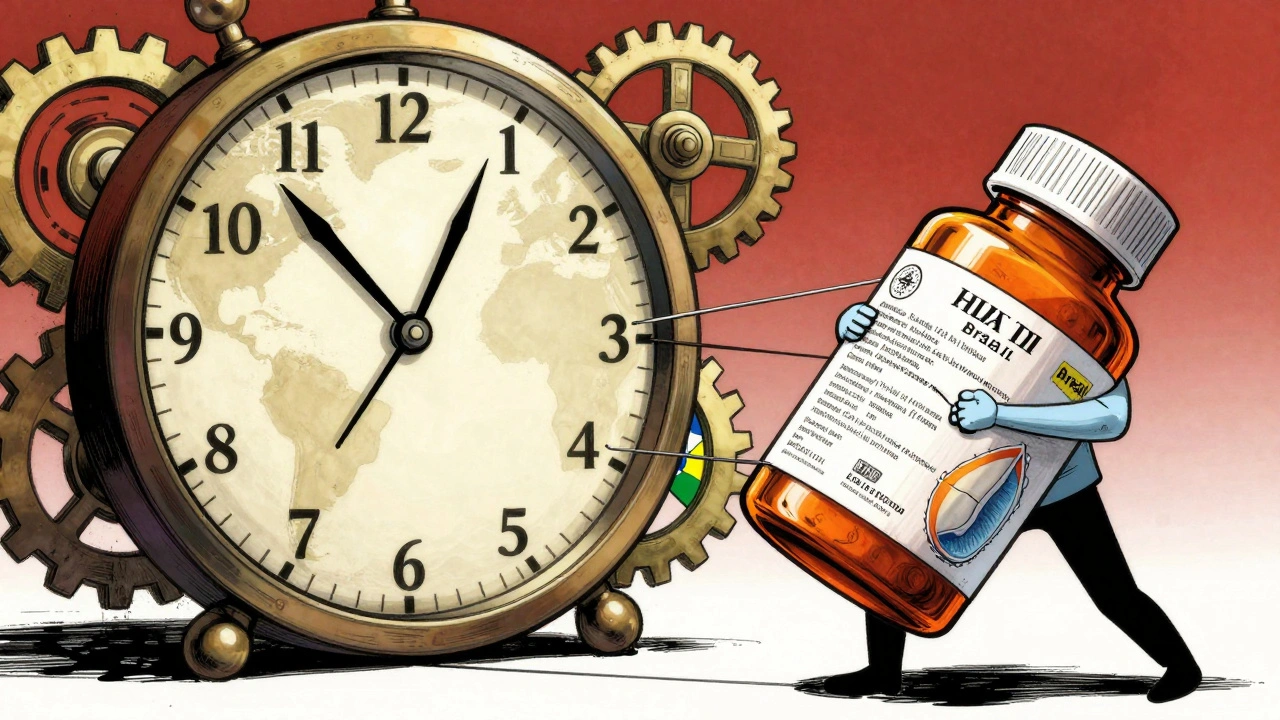
Most people think a patent lasts 20 years-simple, right? But if you’ve ever tried to track when a drug or tech invention actually loses protection across different countries, you know it’s anything but. The 20-year rule sounds like a global standard, and technically, it is. But the real expiration date? That’s where things get messy. A patent filed in Germany might expire on a different day than the same patent filed in Brazil, even if they’re based on the same invention. Why? Because patent expiration isn’t just about the filing date. It’s about delays, fees, regulatory approvals, and local laws that twist the timeline in ways most never see coming.
Where the 20-Year Rule Actually Comes From
The 20-year patent term didn’t appear out of nowhere. It was hammered out in 1994 as part of the TRIPS Agreement, a global trade deal under the World Trade Organization. Before that, countries did whatever they wanted. The U.S. used to give patents 17 years from the issue date, not the filing date. That meant a patent could sit in the patent office for years before being granted-and still last 17 years from that later date. The system was unfair to inventors in countries with faster processing. TRIPS fixed that by setting a global floor: 20 years from the earliest filing date. Today, every WTO member (all 164 of them) follows this rule. But here’s the catch: the rule is a floor, not a ceiling. Countries can-and do-add more time.
Patent Term Extensions: When the Clock Gets Rewound
For pharmaceutical companies, a patent expiring after exactly 20 years can be a disaster. It takes an average of 10 to 12 years just to get a new drug approved by regulators. That leaves only 8 to 10 years of market exclusivity before generics can flood the market. To fix this, many countries offer patent term extensions. The U.S. allows it under 35 U.S.C. § 156. If the FDA takes too long approving your drug, you can get back some of that lost time-up to five years, with a maximum total term of 14 years from approval. Europe does something similar with Supplementary Protection Certificates (SPCs). These can add up to five years, plus six more months if you test the drug in children. Japan and China now have similar rules, introduced after 2020 to keep up with global pharma demands. But not every country plays along. India doesn’t offer any extensions, no matter how long the approval process takes. That’s why many drug makers file their core patents in the U.S. or Europe first-they know the term will stretch longer there.
What Happens If You Don’t Pay the Fees?
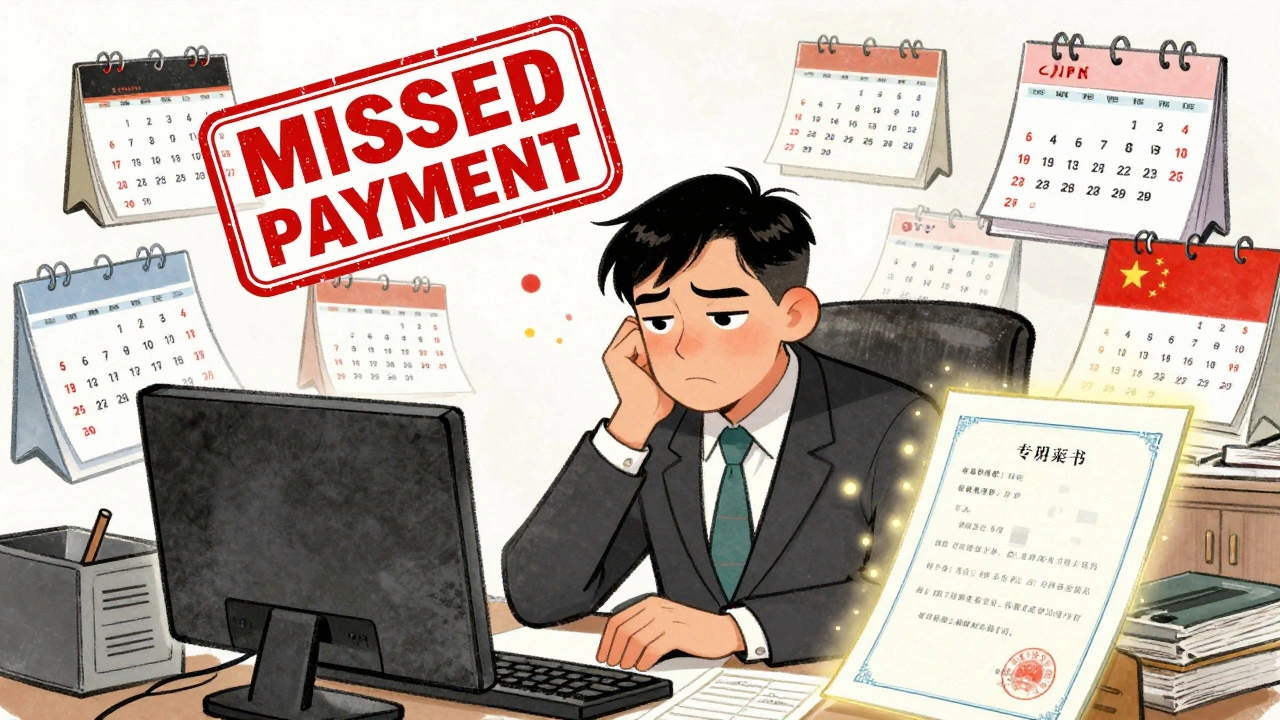
Even if your patent is technically good for 20 years, it can die long before then. Most countries require maintenance fees. In the U.S., you pay at 3.5, 7.5, and 11.5 years after grant. Miss one payment? The patent expires. No warning. No second chance. Canada, Germany, and Australia have similar systems. But in Mexico, you pay four times-at 5, 10, 15, and 20 years. Switzerland? Just one payment at grant. And in Brazil, the patent office is so backlogged that many patents never even reach their full 20-year term because they’re still stuck in examination. Companies managing global portfolios track these deadlines like clockwork. One missed fee can wipe out millions in projected revenue. That’s why firms like Pfizer and Johnson & Johnson have teams dedicated to nothing but patent maintenance calendars.
The PCT System: Delaying the Nightmare
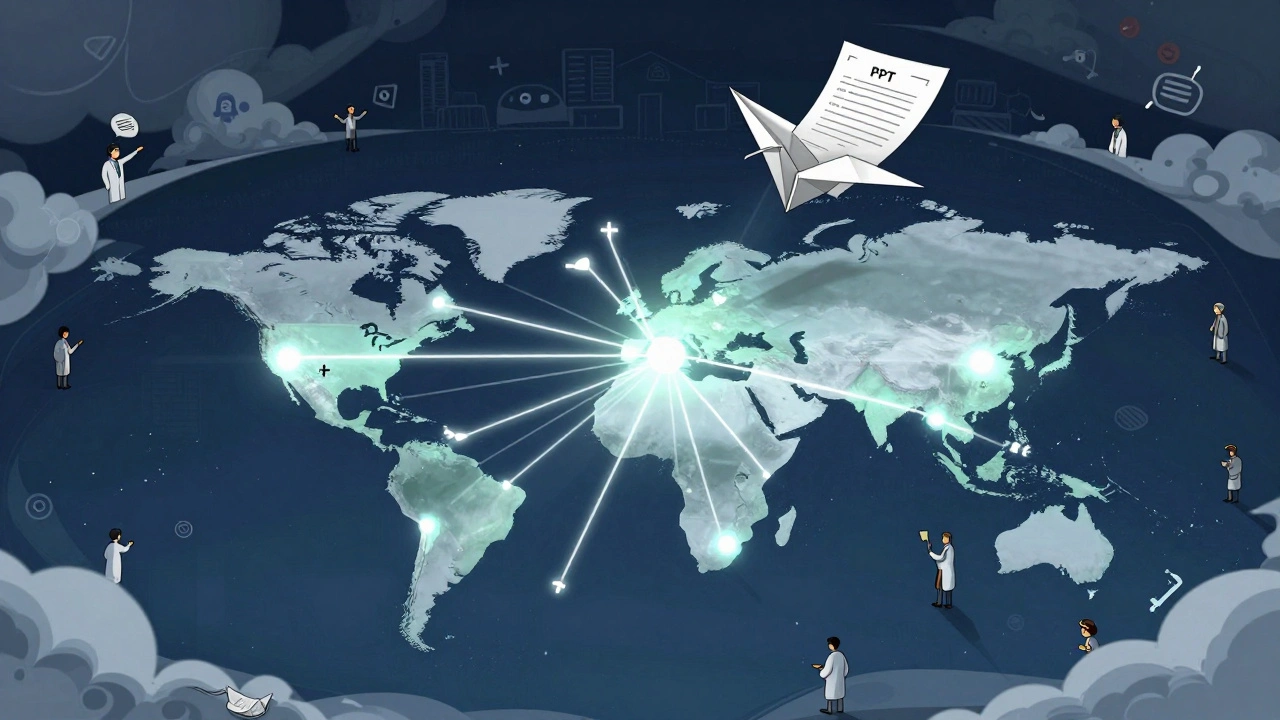
Applying for patents in 30 countries sounds impossible. That’s where the Patent Cooperation Treaty (PCT) comes in. It lets you file one application that reserves your rights in 157 countries. But here’s the trick: the PCT doesn’t grant patents. It just delays the hard part. After you file your initial application, you get 30 or 31 months (depending on the country) to decide where you want to pursue protection. This is huge. You can test the market, raise funding, or wait for clinical trial results before spending tens of thousands in each country. But that delay doesn’t extend the patent term. The 20-year clock still starts ticking from your original filing date. So if you wait the full 31 months to enter the national phase, you’ve already lost over two years of potential exclusivity. Smart companies file early and plan their PCT strategy years in advance.
Utility Models: The Short-Term Alternative
Not every invention needs 20 years. In countries like Germany, China, Japan, and South Korea, you can file for a utility model instead. These are like mini-patents. They’re faster to get (often in under a year), cheaper, and don’t require a full examination. But they last only 6 to 10 years. That’s perfect for products with short life cycles-think consumer gadgets, tools, or packaging designs. Many companies use utility models as a stopgap. File the utility model first to lock in protection while the full patent application is still being reviewed. In China, over 70% of patent applications are utility models. They’re not for blockbuster drugs, but they’re essential for fast-moving industries.
What About the New European Unitary Patent?
In June 2023, the European Union launched the Unitary Patent system. Before this, you had to file a European patent and then validate it in each country you wanted protection-costing thousands and requiring translations. Now, you can get one patent that covers 17 EU countries with a single renewal fee. The term? Still 20 years from filing. No change there. But the real win is simplicity. No more managing 10 separate maintenance schedules. No more worrying if you missed a payment in Spain but paid in France. The Unitary Patent doesn’t change expiration timelines-it just makes tracking them easier.
Why This Matters for Innovation
These differences aren’t just legal technicalities. They shape where companies invest. If a country offers no patent term extension and high maintenance fees, innovators avoid it. That’s why startups in India often file abroad first. If a country has a slow patent office, like Brazil, companies know they’re effectively getting less than 20 years of protection. That affects R&D spending. A 2021 study found that a one-year reduction in effective patent term leads to a 3.2% drop in pharmaceutical R&D investment in that country. Countries that offer predictable, extended terms-like the U.S., Germany, and Japan-see more innovation. It’s not about the law on paper. It’s about what happens in practice.
How to Track It All
If you’re managing a global patent portfolio, you need more than a spreadsheet. You need a system that tracks:
- Priority date (the original filing date that starts the 20-year clock)
- National phase entry deadlines (30 or 31 months from priority)
- Each country’s maintenance fee schedule
- Any patent term adjustments or extensions granted
- Regulatory approval dates (for pharmaceuticals)
Many firms use specialized software like Anaqua, CPA Global, or PatSnap. But even the best tools can’t replace human oversight. One error in a priority date calculation can invalidate everything. That’s why experienced patent attorneys still manually verify every expiration date before launching a generic drug or entering a new market.
What’s Next for Global Patent Terms?
There’s growing pressure to make patent terms more consistent, especially for life-saving drugs. Developing nations argue that long patent terms block access to affordable medicine. Developed nations say strong protection drives innovation. The World Intellectual Property Organization keeps talking about it, but no global fix is in sight. Meanwhile, countries like Indonesia and Vietnam are catching up, extending their terms from 15 to 20 years. The trend is clear: the world is moving toward the 20-year standard. But the variations? They’re not going away anytime soon.
Do all countries have the same patent expiration date?
No. While most countries follow the 20-year rule from the filing date, actual expiration dates vary due to patent term extensions, maintenance fee failures, regulatory delays, and differences in how priority dates are calculated. A patent granted in the U.S. might expire years later than the same patent in India due to extensions and slower approval timelines.
Can a patent expire before 20 years?
Yes. If maintenance fees aren’t paid on time, the patent expires immediately-even if it’s only five years old. Some countries also have backlogs that delay examination so long that the effective term is less than 20 years. In Brazil, for example, many patents never reach their full term because they’re stuck in the patent office for over a decade.
How does the PCT affect patent expiration?
The PCT doesn’t extend the patent term. It only delays when you must enter each country’s national phase-giving you 30 or 31 months from your priority date to decide where to file. The 20-year clock still starts on your original filing date, so waiting the full 31 months means you lose over two years of potential market exclusivity.
Why do pharmaceutical patents last longer in some countries?
Because of patent term extensions for regulatory delays. The U.S., Europe, Japan, and China allow extra time to make up for the years spent waiting for drug approval. The U.S. can add up to five years; Europe can add five plus six months for pediatric testing. Countries like India and Brazil offer no such extensions, so the patent expires exactly 20 years after filing, regardless of how long approval took.
What’s the difference between a patent and a utility model?
A patent gives you 20 years of protection and requires a full examination. A utility model is a faster, cheaper option available in about 50 countries, but it only lasts 6 to 10 years and usually doesn’t require a detailed review. Utility models are common for mechanical devices and consumer products, not complex drugs or software.
How do I know when my patent expires in a specific country?
You need to calculate it based on the priority date, any extensions granted, and maintenance fee payments. Use official patent office databases (like USPTO, EPO, or JPO) or hire a patent attorney. Don’t rely on generic online calculators-they often miss country-specific rules like pediatric extensions or examination delays.
Can I extend a patent after it expires?
No. Once a patent expires-whether from time, missed fees, or abandonment-it cannot be revived in most countries. Some jurisdictions allow limited restoration if you missed a fee by a few months and can prove it was unintentional. But once the patent is dead, the invention enters the public domain.
Final Thoughts
Patent expiration isn’t a single date on a calendar. It’s a moving target shaped by bureaucracy, money, and geography. If you’re developing a product with global ambitions, treating patents like a one-size-fits-all tool will cost you. You need to understand the local rules, track every fee, and plan for delays. The 20-year term is just the starting line. The real race is in the details.





Man, I used to think patents were simple until I started managing global IP for my startup. The 20-year rule? More like a 20-year obstacle course. I’ve lost sleep over missed maintenance fees in Brazil because our paralegal thought the deadline was the same as the US. Turns out, nope-Brazil’s backlog means some patents expire before they’re even granted. And don’t get me started on SPCs in Europe. We had a neuro drug that got a 5.5-year extension thanks to pediatric trials, but only because we filed the SPC application three months before the patent actually expired. One typo in the form and we’d have lost $200M in revenue. It’s not just law-it’s survival.
I work in global health policy, and this post hits so hard. I’ve seen communities in rural India wait years for life-saving generics because a patent in Germany or the US is still active-despite the drug being developed with public funding. It’s not just about money; it’s about people dying because of bureaucratic loopholes. I know innovation needs protection, but when a 12-year approval process eats up most of the patent term, and then you still can’t extend it in some countries… that’s not innovation policy. That’s systemic injustice. The U.S. and EU get their extensions, but a child in Kenya doesn’t get the medicine because of a legal technicality. We need to fix this, not just understand it.
USA and Europe think they own the world with their patent games. India doesnt need your 20 year monopoly to make medicine. We make cheap generics that save millions. Why should we pay for your delays? Your FDA takes 10 years? Thats your problem not ours. We have our own system and its better. Your patents are just corporate greed dressed up as innovation. India has been making life saving drugs for decades without your fancy extensions. Stop acting like you invented medicine. We invented access.
This is one of the clearest breakdowns of patent complexity I’ve ever read. I’ve always wondered why some drugs cost so much longer in certain countries-now I get it. The maintenance fees alone sound like a nightmare. I never realized that missing a single payment could erase decades of R&D. And the PCT delay thing… I thought it was a bonus, but it’s actually a time thief. It makes me appreciate the people who manage these systems-they’re basically financial surgeons working with invisible deadlines. I hope more inventors start learning this stuff early. It’s not just legal knowledge; it’s strategic survival.
Brilliant breakdown. As someone who’s worked with patent attorneys across five jurisdictions, I can confirm: the real challenge isn’t the law-it’s the coordination. One client of mine had a medical device patent that expired in Canada due to a missed fee, even though it was still active in the UK, Germany, and Australia. The company didn’t even know until a competitor launched a clone. The Unitary Patent is a step forward, but it doesn’t solve the core issue: patent offices are still fragmented, under-resourced, and inconsistent. What we need is a global patent registry with automated fee reminders and real-time status tracking-not just for big pharma, but for every small inventor. Technology exists. Political will doesn’t.
Patents expire if you dont pay. Thats it.
Let me tell you something… the whole system is rigged. I mean, seriously-how is it fair that a single company in Switzerland can sit on a patent for 20 years, while in India, a village doctor can’t even make a generic version because of some 1994 treaty written in a room full of suits who’ve never seen a patient? And then you have these ‘utility models’-like, what? A ‘mini-patent’? That’s not innovation-that’s corporate condescension! And don’t even get me started on the PCT delay… you’re telling me you get 31 months to decide where to spend your money, but the clock doesn’t stop? That’s not a delay-it’s a trap! And the worst part? The people who suffer? They’re not in boardrooms. They’re in hospitals. In slums. In villages where kids die waiting for a pill that’s ‘protected’ by a legal fiction. This isn’t law. This is exploitation dressed in legalese.
India doesn't extend patents because we don't want to pay for your delays. Your 12 year approval process is your fault not ours. You think your patents are sacred? We make 80% of the world's generics. You're not innovating. You're rent-seeking. End of story.