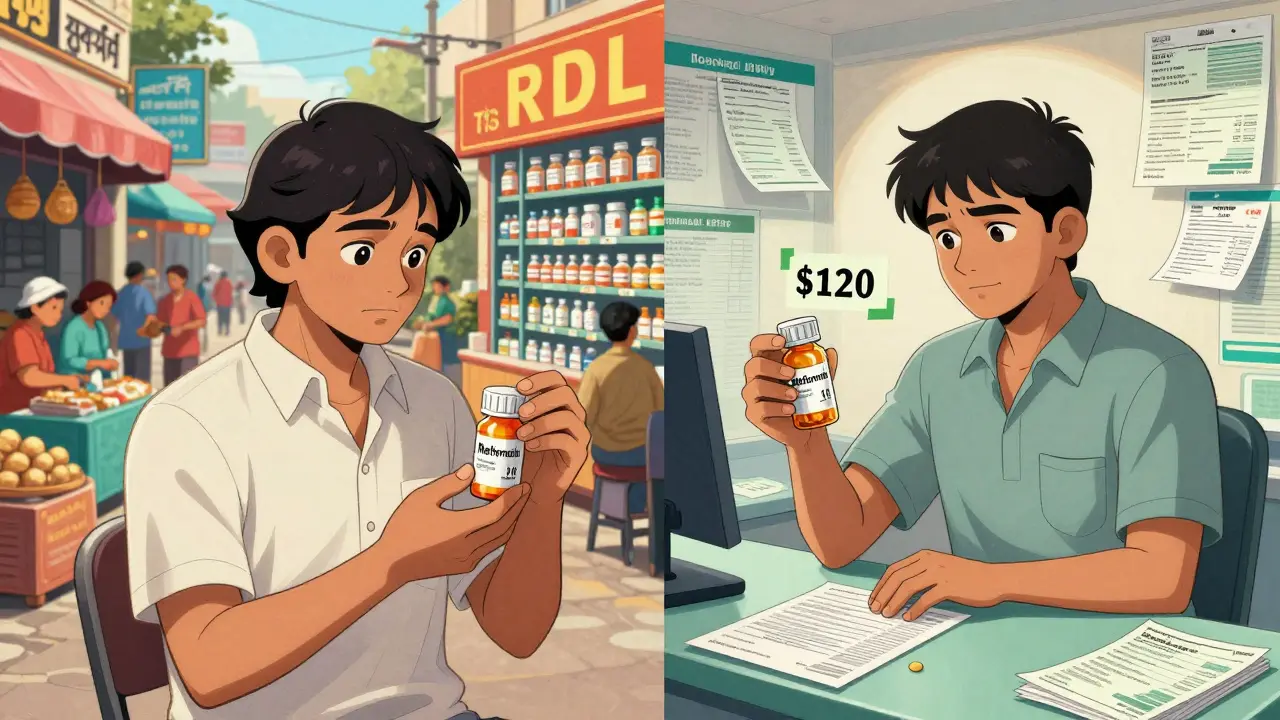
Two people take the same generic pill for high blood pressure. One pays $4 a month in India. The other pays $120 in the United States. Both pills have the same active ingredient, the same dosage, and the same manufacturer label. But they’re not the same in practice. This isn’t a glitch. It’s the global system of generic drugs - a system built on cost, regulation, and history, and one that leaves patients in different countries with wildly different access, safety, and affordability.
Why Some Countries Have Nearly All Generics - And Others Don’t
In the United Kingdom, more than 80% of all prescriptions are filled with generic drugs. In Germany and the Netherlands, it’s around 70%. But in Switzerland, it’s just 17%. Why such a gap? It’s not because Americans are more likely to need brand-name drugs. It’s because of how each country handles pricing, rules, and incentives. Countries with high generic use have clear policies pushing pharmacists and doctors to choose cheaper options. The UK mandates substitution: if a brand-name drug is prescribed, the pharmacist can swap it for a generic unless the doctor specifically says no. In the Netherlands, patients pay a higher co-pay if they refuse a generic. These rules work. Within a year of a drug going off-patent, generic use jumps to 60-70%. In contrast, countries like Switzerland and Italy have no such rules. Doctors there often prescribe the original brand, even after patents expire. Why? Patient trust. Many believe the brand-name version is better, even when there’s no scientific proof. And in some cases, reimbursement systems actually pay more for the brand, making it financially easier for doctors to stick with it.The U.S. Paradox: High Use, High Prices
The United States leads the world in generic prescription volume - over 90% of all prescriptions are for generics. But here’s the twist: the U.S. also has the highest drug prices in the world. Americans pay 2.78 times more for all drugs - brand and generic - than people in other developed countries. How does that happen? It’s not about lack of competition. In fact, the U.S. has more generic manufacturers per drug than most countries. About 66% of off-patent drugs have two or more generic makers. But that doesn’t mean prices drop. Sometimes, when only one company makes a generic, prices spike. When two or three companies make it, prices stay high because they’re not competing hard enough. It’s called a “market failure.” A 2023 study found that for some older generics - like antibiotics or blood pressure pills - prices jumped 500% overnight, even though the drug had been off-patent for 15 years. No new competitor entered. No raw material shortage. Just a quiet agreement among a few manufacturers to keep prices up.Who Makes Your Generic Pills - And Why It Matters
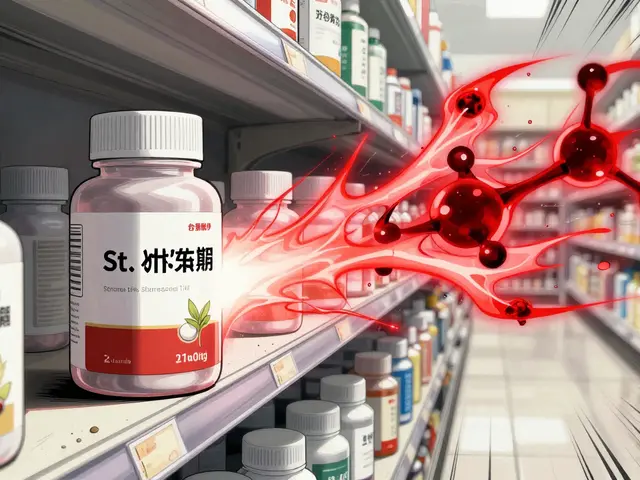
About 40% of the generic drugs you take in the U.S. come from India. Another 15% come from China. India alone has over 750 manufacturing facilities approved by the U.S. FDA. That’s more than any other country. But approval doesn’t mean safety. A 2023 study from Ohio State University found that generic drugs made in India were linked to 54% more severe side effects - including hospitalizations and deaths - compared to the same drugs made in the U.S. The problem? Cost-cutting. To keep prices low, some manufacturers use lower-quality ingredients, skip critical testing, or cut corners in production. The FDA inspects foreign factories - but mostly on schedule. Companies know when inspectors are coming. In the U.S., inspections are unannounced. In India and China, they’re not. That gives manufacturers time to clean up, hide problems, and fake records. The FDA admitted in 2023 that 68% of generic drug shortages in the U.S. were caused by quality issues at just one or two foreign factories.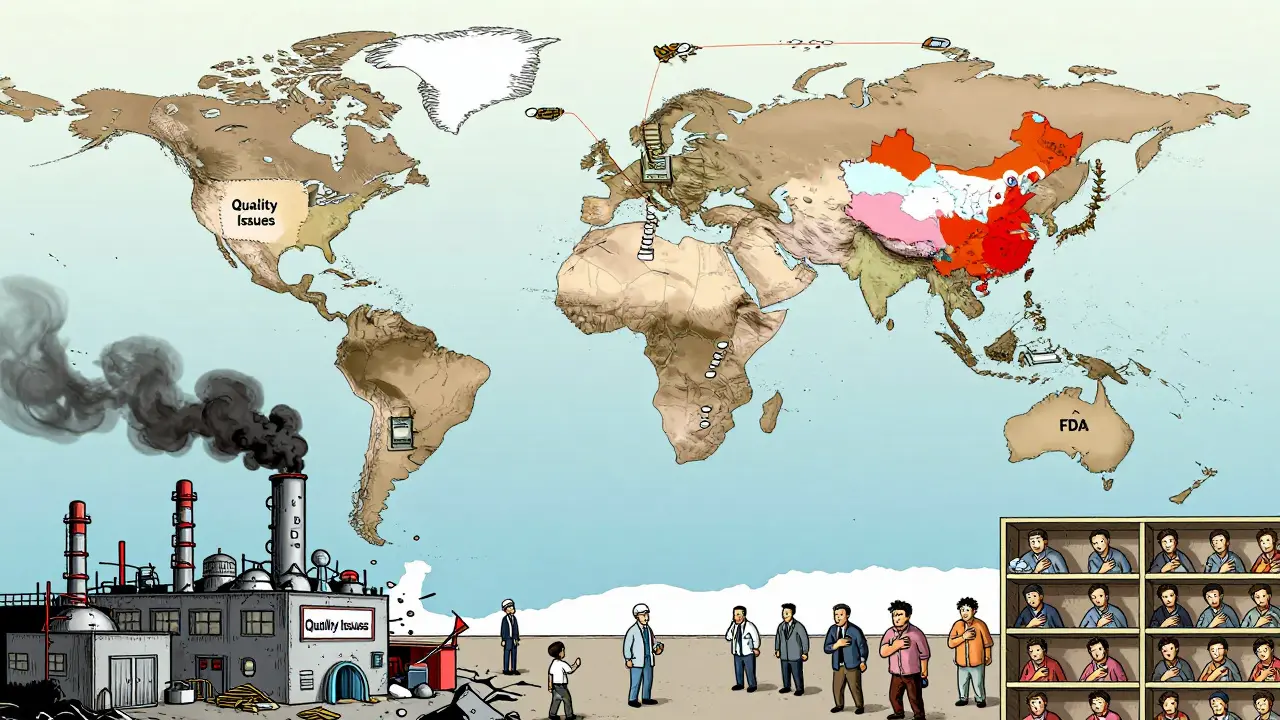
Price Differences That Make No Sense
For the same generic version of metformin (a common diabetes drug), here’s what patients pay:- India: $0.10 per month
- Canada: $3-$5 per month
- Germany: $8 per month
- France: $15 per month
- United States: $120 per month
Why Some Generics Work Better Than Others
Not all generics are created equal - even if they have the same active ingredient. The fillers, coatings, and binders (called excipients) can differ. For some drugs, those small differences matter. Take levothyroxine, a thyroid hormone replacement. A patient switching from one generic to another - even if both are FDA-approved - can experience symptoms like fatigue, weight gain, or heart palpitations. Why? Because the body absorbs the drug slightly differently based on the inactive ingredients. Doctors in the U.S. often warn patients: “Stick with the same brand or generic.” Many patients who travel abroad report problems. One patient from Texas told a forum: “I got my thyroid meds in Canada. The pills looked the same. But I felt awful for weeks. My doctor said it was a different formulation.” The European Medicines Agency and the FDA use similar standards for bioequivalence - meaning the drug must work the same way in the body. But their testing methods aren’t identical. And in countries with weaker oversight, those standards aren’t enforced at all.
How Global Supply Chains Are Breaking Down
During the pandemic, India temporarily stopped exporting 26 key generic ingredients - including antibiotics and blood pressure drugs. Within weeks, hospitals in 22 countries faced shortages. Why? Because so many countries depend on just one or two sources. The U.S. FDA’s Drug Shortage Program listed 147 generic shortages in 2023. Nearly 70% came from single-source manufacturers in India or China. If one factory fails - due to an inspection, a fire, or a quality issue - the entire supply chain breaks. Countries like Germany and the UK have built backup systems: they keep stockpiles of critical generics, and they approve multiple suppliers. The U.S. doesn’t. It relies on the free market - and the free market doesn’t plan for emergencies.What’s Changing - And What’s Not
There are signs of progress. The U.S. Inflation Reduction Act of 2022 gives the FDA more money and staff to inspect foreign factories - and it speeds up the review process for complex generics like inhalers and creams. The European Union wants 80% generic use across all member states by 2030. The World Health Organization is pushing for global quality standards. But big problems remain. Drug companies keep filing minor patent extensions - changing a pill’s coating or adding a slow-release layer - to delay generics. Between 2015 and 2022, over 1,200 such patents were filed on just 12 top-selling drugs. And while AI might cut generic development time from five years to two, that won’t help patients today. Right now, the system is broken. It’s not about science. It’s about money, power, and who gets to decide what’s safe and affordable.What You Can Do
If you take generic drugs:- Stick with the same manufacturer if possible - especially for drugs like thyroid meds or blood thinners.
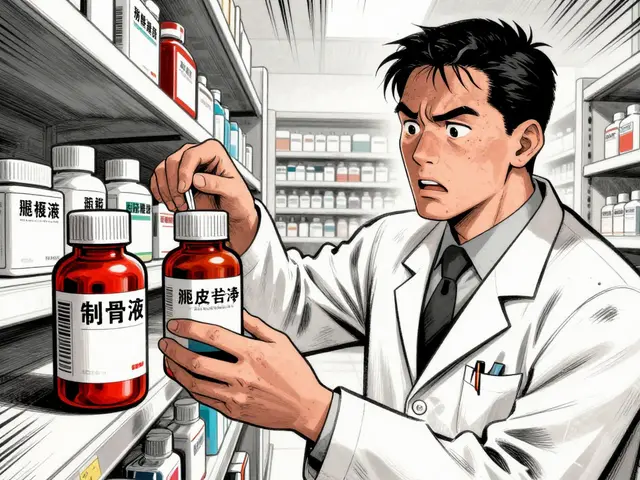
- Ask your pharmacist: “Where is this made?” If it’s from India or China, ask if a U.S.-made version is available.
- Compare prices. Use tools like GoodRx or SingleCare. Sometimes the cash price is lower than your insurance co-pay.
- If you notice new side effects after switching generics, tell your doctor. It’s not in your head.
Why are generic drugs cheaper if they’re the same as brand-name drugs?
Generic drugs are cheaper because they don’t need to repeat expensive clinical trials. The brand-name company already proved the drug works. Generic makers only need to show their version is absorbed the same way in the body. They also spend far less on marketing. That’s why a $500 brand-name pill can become a $5 generic - even if they’re chemically identical.
Are generic drugs from India safe?
Some are. Many FDA-approved factories in India produce safe, effective generics. But not all. A 2023 study found Indian-made generics were linked to 54% more severe side effects than those made in the U.S. The issue isn’t the country - it’s inconsistent quality control. Some manufacturers cut corners to keep prices low. The FDA inspects these factories, but mostly on schedule, which lets companies prepare in advance. Unannounced inspections - like those in the U.S. - catch more problems.
Why does my generic medication make me feel different than before?
Even if two generics have the same active ingredient, they can use different fillers, coatings, or binders. For drugs like thyroid hormone, blood thinners, or seizure meds, these small differences can affect how your body absorbs the drug. That’s why doctors often recommend sticking with the same brand or manufacturer. If you feel worse after switching, tell your doctor - it’s not just in your head.
Can I save money by buying generics from other countries?
Yes - but with risk. Many Americans buy generics from Canada or online pharmacies in the UK or India and save 60-80%. But these aren’t regulated by the FDA. Some are legitimate. Others are counterfeit or outdated. A 2022 Reddit thread had dozens of reports of people getting fake metformin or levothyroxine. If you do this, use verified sites like PharmacyChecker, and never buy from unknown sellers.
Why doesn’t the U.S. negotiate generic drug prices like other countries?
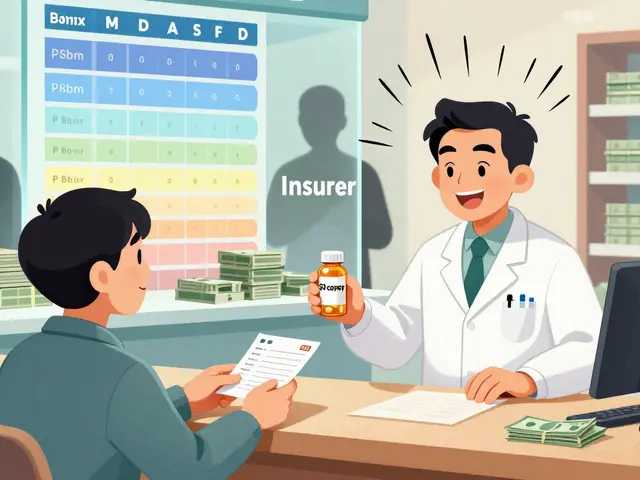
U.S. law prohibits Medicare from negotiating drug prices - including generics. Private insurers and pharmacy benefit managers (PBMs) handle pricing instead. They often don’t pass savings to patients. In countries like Canada or the UK, the government sets price caps. That’s why a $120 pill in the U.S. costs $5 in Canada - not because it’s cheaper to make, but because someone is actually controlling the price.
Will biosimilars change the generic drug market?
Yes - but slowly. Biosimilars are generic versions of complex biologic drugs (like those for cancer or rheumatoid arthritis). They cost about 50% less than the brand at launch. But they’re harder to make and approve. So far, uptake is slow. Unlike small-molecule generics, they require extra testing and aren’t automatically interchangeable. But by 2028, they could save the U.S. system over $60 billion - if regulators and insurers make them easier to use.



Just bought my metformin from Canada last month. Paid $4. My US pharmacy wanted $117. I’m not sorry.
The real tragedy isn’t the price difference-it’s that Americans are conditioned to believe that expensive = better. I’ve seen patients refuse generics because they ‘don’t feel right,’ even though their labs show identical blood levels. It’s psychological branding, not pharmacology. The system exploits that fear. And don’t get me started on how PBMs profit from the chaos.
Meanwhile, Indian manufacturers are producing 75% of the world’s generic APIs under FDA standards. The real issue isn’t safety-it’s oversight gaps and unannounced inspections. The FDA knows this. They just don’t have the budget to fix it. We’re outsourcing production but not accountability.
And yes, excipients matter. I’ve had patients switch from one generic levothyroxine to another and develop palpitations. It’s not placebo. The dissolution profile changes. Doctors need to track manufacturers, not just names. This isn’t theoretical-it’s clinical reality.
The Inflation Reduction Act is a start, but it’s like putting a Band-Aid on a hemorrhage. We need price negotiation. We need bulk purchasing. We need to stop letting middlemen control the market. And we need to stop pretending this is a free-market issue. It’s a policy failure dressed up as capitalism.
USA bad? Nah. India’s got factories where they cook pills in basements with no gloves. You think that’s safe? I’d rather pay $120 than risk my life because some guy in Hyderabad skipped a QC step.
Also, why are we even talking about this? Just use GoodRx. Done. Problem solved. Stop crying.
Oh great, another anti-American rant. We make the best drugs in the world. You want cheap? Go live in India. They don’t even have running water in half the villages but somehow they’re making your pills? Yeah right. Probably fake. And now you want us to pay like Europe? We’re not Europe. We’re America. We innovate. We pay. Get over it.
My father took a generic blood pressure med made in India. He had a stroke. The pharmacist said it was ‘FDA-approved.’ Turns out, the batch was from a factory flagged in 2021 for falsified records. The FDA didn’t recall it because ‘the risk was low.’ Low risk for whom? Not for him.
We treat pharmaceuticals like widgets. They’re not. A 0.5% variation in absorption can kill someone on warfarin. We need mandatory batch tracking. We need real-time inspection data. We need to stop outsourcing safety to profit-driven contractors.
And yes, I’ve used GoodRx. I’ve paid $3 for metformin in Canada. I’ve also seen a friend die because her thyroid med changed manufacturers and her body didn’t adjust. This isn’t about money. It’s about trust. And right now, the system has broken that trust.
Let’s not pretend this is a global issue. It’s an American one. We’re the only developed country that doesn’t negotiate drug prices. We’re the only one that lets insurers and middlemen set the cost. We’re the only one that lets foreign factories know when inspectors are coming.
It’s not that generics are bad. It’s that our system is broken. And until we fix that, people will keep dying because we chose convenience over care.
In the UK, generics are the default. Pharmacists substitute automatically. Patients pay a flat fee regardless of brand. It’s simple, effective, and saves the NHS billions. The key? Policy clarity. No lobbying. No middlemen. Just public health first.
The myth that generics are inferior persists here too. But data doesn’t lie. Over 80% of prescriptions are generic. Hospital admissions for medication errors? Lower than in the US. Patient satisfaction? Higher. The difference isn’t the pill-it’s the system.
As someone from India, I can tell you: our factories aren’t all bad. Many are world-class. But yes, some cut corners. Why? Because global buyers demand lower prices. We’re not the villains-we’re the price-takers. The real blame lies with the countries that demand cheap drugs but won’t pay for quality control.
And yes, I’ve seen the FDA reports. We know the problems. We’re trying to fix them. But if you want safe generics, pay for them. Don’t demand $0.10 pills and then complain when they’re not perfect.
My grandma switched generics and started feeling dizzy. We went back to the original brand. She’s fine now. No drama. Just a simple fix.
Ask your pharmacist where it’s made. Stick with one brand. Use GoodRx. That’s it. You don’t need a PhD to take your pills safely.
Oh wow, another ‘Americans are stupid’ article. Let me guess-next you’ll tell us that capitalism is evil and we should all move to Scandinavia? Newsflash: the U.S. spends more on healthcare because we have the best outcomes. Your generic pill might cost $0.10 in India, but your life expectancy there is 15 years shorter. So maybe stop judging and start appreciating that we have access to life-saving meds at all.
Just read this whole thing. I didn’t know any of this. I thought generics were just cheaper versions of the same thing. Turns out, they’re not. I’ve been switching brands because I thought it didn’t matter. Now I’m scared.
My thyroid med changed last month. I felt like a zombie for three weeks. My doctor said it was ‘just adjustment.’ But now I’m not so sure.
I’m going to call my pharmacy tomorrow and ask where it’s made. And I’m not switching again unless I have to.
Thanks for writing this. I feel less alone now.