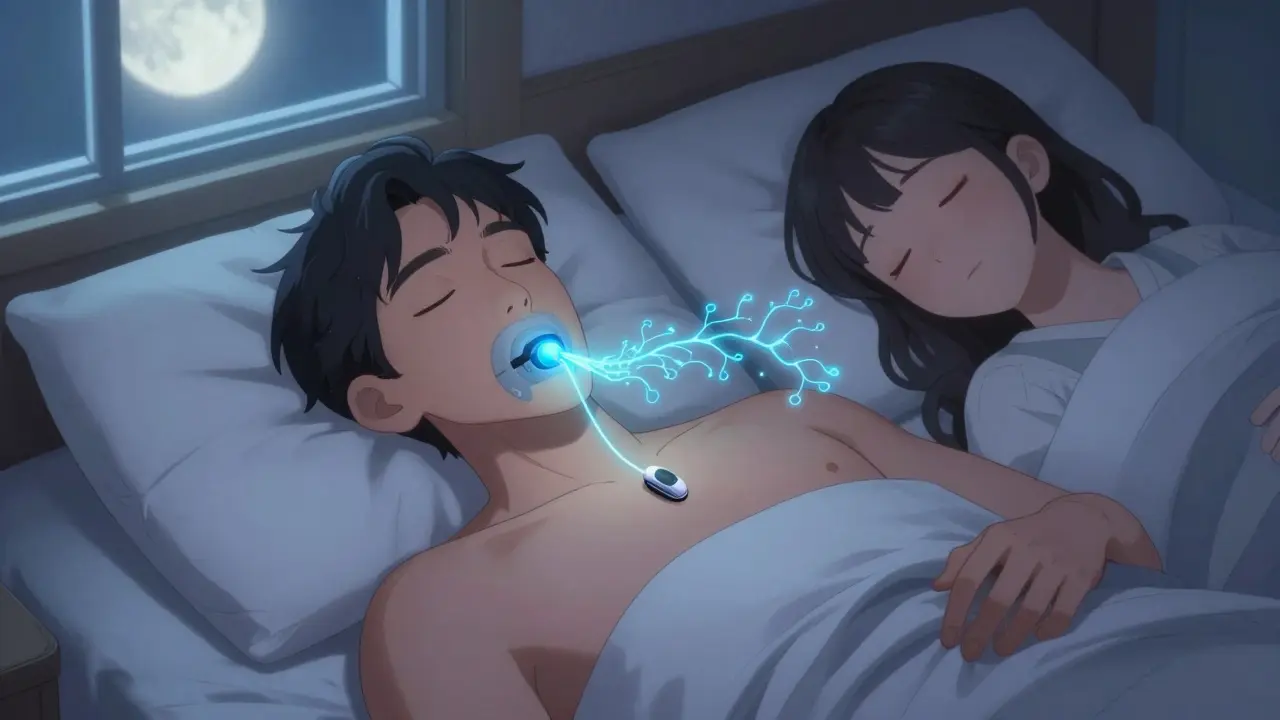
For millions of people with sleep apnea, the CPAP machine is a nightmare - not because it doesn’t work, but because it’s impossible to live with. The mask chafes. The hose tangles. The air pressure feels like a hurricane in your nose. And after weeks of frustration, most people just give up. That’s where upper airway stimulation comes in: a tiny, implantable device that treats sleep apnea without a mask, without noise, and without the daily struggle.
What Is Upper Airway Stimulation?
Upper airway stimulation (UAS) is a surgical therapy for obstructive sleep apnea that works by gently stimulating the nerve that controls your tongue. When you breathe in during sleep, the device sends a mild pulse to the hypoglossal nerve, which moves your tongue forward just enough to keep your airway open. No mask. No hose. No blowing air. Just a quiet, automatic fix that happens while you sleep. The only FDA-approved system currently on the market is the Inspire UAS system. It’s been around since 2014, and over 200,000 people worldwide have had it implanted. Unlike CPAP, which forces air into your airway, UAS fixes the root problem: your tongue blocking your throat when you relax during sleep.How Does the Inspire Device Work?
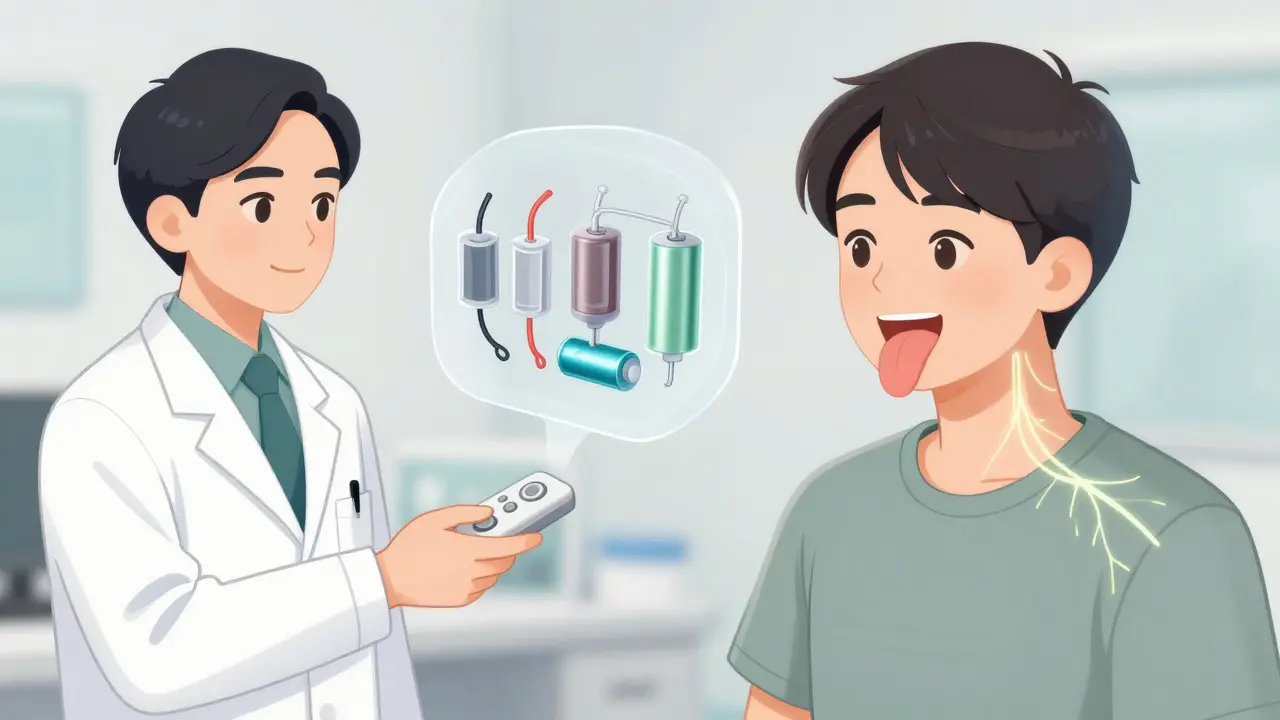
The Inspire system has three small parts implanted under your skin:- A thin wire (stimulation lead) that wraps around the nerve controlling your tongue
- A second wire (sensing lead) that detects when you’re breathing in
- A small battery-powered generator (about the size of a pacemaker) placed under your collarbone
Who Is a Good Candidate?
This isn’t for everyone. The FDA and medical guidelines have clear rules for who qualifies:- You have moderate to severe obstructive sleep apnea (AHI between 15 and 100 events per hour)
- You’ve tried CPAP and couldn’t stick with it - not because it didn’t work, but because you couldn’t tolerate it
- Your body mass index (BMI) is under 35 (some centers allow up to 40)
- You don’t have mostly central apneas (your problem is physical blockage, not brain signal failure)
- You’re at least 22 years old
- Your airway anatomy allows for the device to work - confirmed by a sleep endoscopy
What Happens During Surgery?
The surgery takes about 2 to 3 hours and is done as an outpatient procedure. You’ll be under general anesthesia, so you won’t feel a thing. The surgeon makes three small incisions:- One in your neck to place the stimulation wire around the hypoglossal nerve
- One lower in your neck to thread the sensing wire under your breastbone
- One below your collarbone to tuck in the battery generator
How Effective Is It?
The data speaks for itself. In the landmark STAR trial, patients saw their apnea-hypopnea index (AHI) drop from an average of 29.3 events per hour to just 9.0 after one year - a 68% reduction. Two out of three patients had their AHI cut in half or more. Over 80% of users say they’d recommend the therapy to someone else. And 86% say it’s better than CPAP. Real-world results are just as strong. A four-year follow-up from the Cleveland Clinic found that 85% of bed partners reported no snoring - or only soft snoring. Patients reported better sleep quality, less daytime fatigue, and improved mood. One Reddit user wrote: “My wife says I’ve stopped snoring completely after two years. I feel more rested than I have in decades.”How Does It Compare to CPAP?
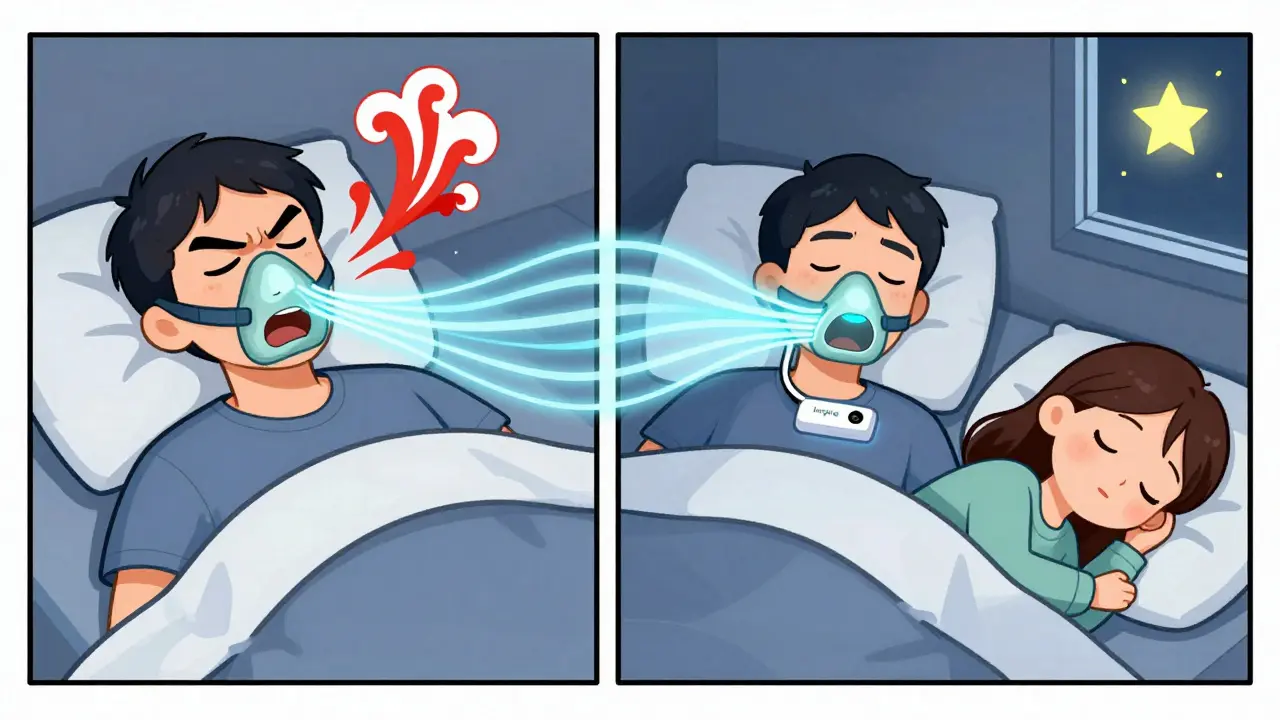
CPAP is still the gold standard - if you can use it. But here’s the problem: 29% to 46% of people quit CPAP within the first year. The reasons? Discomfort, claustrophobia, dry mouth, noise, travel hassle. UAS doesn’t solve every problem. But it solves the biggest one: adherence. People use Inspire an average of 7.5 hours per night. CPAP users average just 4 hours. That’s the difference between treatment and no treatment. UAS also doesn’t require daily cleaning, mask replacements, or humidifiers. Once it’s implanted, it’s basically maintenance-free. But UAS isn’t better in every way. CPAP works for almost everyone with obstructive apnea. UAS only works for a specific group. CPAP is non-invasive. UAS requires surgery. CPAP can be adjusted instantly. UAS needs a clinic visit to tweak settings. It’s not about which is better - it’s about which one you can actually live with.What Are the Risks?
The procedure is very safe. Major complications occur in less than 0.5% of cases. The most common side effects are mild and temporary:- Minor pain or swelling at the incision sites
- Temporary tongue weakness (affects about 5% of patients, usually resolves in weeks)
- Minor infections (about 2% of cases)
- Discomfort from stimulation at first - most people get used to it within 2 to 3 weeks
Cost and Insurance Coverage
The total cost of the procedure - device, surgery, hospital fees - averages between $35,000 and $40,000. That sounds steep, but it’s comparable to the long-term cost of CPAP when you factor in replacement masks, filters, humidifiers, and follow-up visits over 10 years. Insurance coverage has improved dramatically. As of 2023, 95% of Medicare beneficiaries and 85% of privately insured patients have coverage for Inspire therapy. Most insurers require proof of CPAP failure before approving UAS. If you’re denied coverage, many centers offer payment plans or financial assistance programs. The Inspire Patient Support Program helps navigate insurance and even connects you with others who’ve had the implant.What’s Next for This Therapy?
The FDA expanded eligibility in 2023 to include patients with AHI up to 100 and BMI up to 40 - meaning more people qualify now than ever before. Researchers are working on smaller devices, smarter algorithms that adapt to your breathing in real time, and AI tools to predict who will respond best before surgery. The market is growing fast. Analysts expect the upper airway stimulation market to grow over 14% per year through 2028. As more doctors get trained and insurance coverage expands, this therapy will become more accessible.Is It Right for You?
If you’ve been told you have sleep apnea and you’ve tried CPAP - and you hated it - then you’re not broken. You just need a different solution. Upper airway stimulation isn’t magic. It’s not a cure. But for the right person, it’s life-changing. People who’ve had it describe waking up without grogginess, feeling alert during the day, and finally sleeping through the night without their partner nudging them. Talk to a sleep specialist who has experience with UAS. Ask for a sleep endoscopy. Get your AHI and BMI checked. If you meet the criteria, this could be the first night of real sleep you’ve had in years.Frequently Asked Questions
Is upper airway stimulation the same as a pacemaker?
It works similarly - both are implanted devices that send electrical pulses to regulate body function. But while a pacemaker controls heart rhythm, upper airway stimulation controls tongue movement to keep your airway open during sleep. The Inspire device is smaller, less complex, and only activates when you breathe in.
Can I have an MRI after getting the Inspire device?
Yes, but only under specific conditions. The Inspire device is MRI-conditional, meaning you can have an MRI scan of your head, neck, or extremities if the device is turned off and the scan follows strict safety guidelines. Full-body MRIs are not allowed. Always inform your radiology team you have an implanted device before any scan.
Will I feel the stimulation during the day?
No. The device only activates during sleep when you’re breathing in. During the day, it’s completely inactive. You won’t feel any movement, tingling, or pressure. Most users report forgetting it’s even there after a few weeks.
How long does the battery last?
The battery in the Inspire device lasts about 10 years on average. When it starts to run low, your doctor will schedule a simple outpatient procedure to replace the generator - similar to replacing a pacemaker battery. The leads (wires) stay in place, so it’s a much smaller surgery than the original implant.
Do I still need to lose weight if I get this implant?
Weight loss isn’t required to get the device, but it can improve results. People with higher BMI tend to have more severe sleep apnea, and losing even 10% of body weight can reduce apnea events significantly. Many patients find that after getting the device and sleeping better, they have more energy to exercise and make healthier choices - making weight loss easier over time.




I tried CPAP for six months. Felt like a robot breathing through a snorkel. Then I got the Inspire. My wife says I sleep like a baby now. No more midnight elbow nudges. Best decision I ever made.
Of course it works. Big Pharma paid the FDA to approve this so they could charge $40k for a fancy pacemaker. Meanwhile, your grandma in India sleeps fine on a stack of pillows and a prayer. This is just another way to monetize your sleep problems.
LMAO they want you to get surgery just so you can stop snoring? In my day we just punched the snorer. Worked every time. Now we got wires in your neck and a remote control? This is why America's broke. They'd rather implant a gadget than teach people to sleep on their side.
The statistical efficacy cited is statistically misleading. The STAR trial's control group had significant attrition bias, and the long-term data from Cleveland Clinic lacks adjustment for confounding variables such as weight fluctuation and comorbid insomnia. The effect size is clinically insignificant when normalized to baseline severity.
They're implanting devices in people's necks while the government watches through the remote. You think they don't track your sleep patterns? Every time you turn it on, they log it. Next thing you know, your insurance raises your rates because you 'snored too much' last year. This isn't medicine. It's surveillance.
We're all just meat sacks with electrical wiring. The body's a symphony of impulses, and this device? It's just a conductor. We've always been machines. The real question is: why did it take us this long to stop pretending we're not?
I think the real win here isn't the tech - it's that people finally have a choice. CPAP wasn't broken, it was just forced on everyone like a one-size-fits-all solution. This isn't about replacing CPAP. It's about not making people feel like failures because they can't sleep with a mask glued to their face.
I used to think sleep apnea was just a physical thing. Then I realized it's emotional. The mask felt like rejection. The noise felt like loneliness. The device doesn't just open your airway - it gives you back your dignity. I cried the first night I slept without my wife leaving the room.
...And yet, you still need to undergo a sleep endoscopy, which is invasive, expensive, and not universally available... and the device requires a 4–6 week recovery period, during which you cannot drive or operate machinery... and the battery replacement, while minor, still requires anesthesia... and the stimulation may induce lingual paresthesia in 5%... and the long-term neurological adaptation remains understudied... and insurance pre-authorization often takes 8–12 weeks... and the remote is easily lost... and the manufacturer’s warranty excludes damage from accidental drops... and the device is incompatible with certain dental appliances... and... and... and...
In Lagos, we don’t need gadgets to sleep. We just sleep on the floor, close the window, and let the breeze do its work. But I get it - when you got AC, a king-sized bed, and a Netflix subscription, your body starts acting like a diva. This device? It’s just a luxury for people who forgot how to be simple.
I got the implant and now my husband says I’m a different person. I used to be so tired I’d cry over spilled milk. Now I’m baking cookies at 10pm. My therapist said I’ve changed. My dog follows me around more. I think the device gave me my soul back. I’m not joking. I’m not. I’m not.
I’m curious - how do you adjust the stimulation level if you gain weight after the implant? Does it still work the same? Or does it need a full reprogramming? I’ve got a friend who lost 50lbs after getting it and wonders if the device now feels too strong.
The data is cherry-picked. They only include patients who were already good surgical candidates. What about the 30% who still have residual apnea? Or the ones who develop nerve damage? Or the ones who get infections? This isn’t a miracle - it’s a gamble dressed in FDA approval.
I appreciate the comprehensive overview - particularly the distinction between obstructive and central apnea. The inclusion of insurance coverage statistics is also commendable. That said, I would suggest expanding the discussion on long-term neurological adaptation and the potential for neural plasticity to alter device efficacy over time - especially in younger patients who may live with the implant for decades.