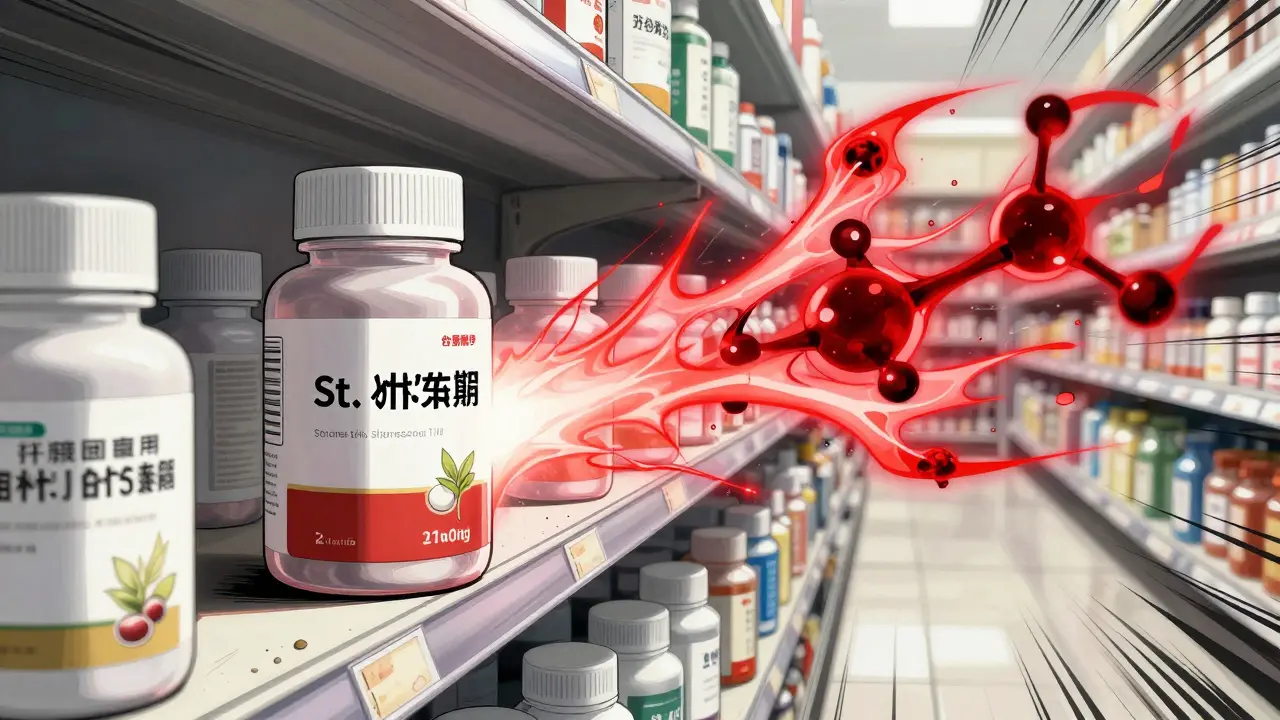
You might think grabbing a bottle of St. John’s Wort is a harmless herbal supplement for mood support from the health food aisle is as safe as taking a vitamin C tablet. It isn’t. In fact, this popular herb is one of the most potent enzyme inducers in nature, capable of turning life-saving prescription medications into ineffective placebos or dangerous toxins within days.
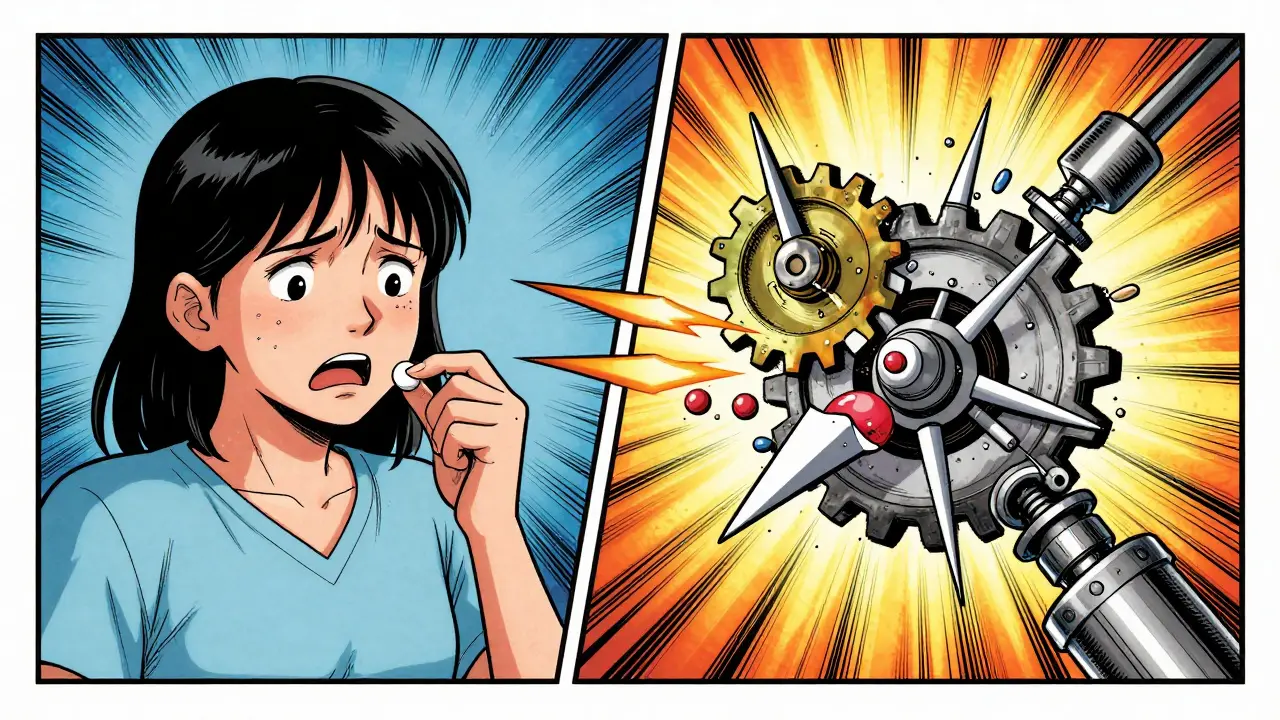
The problem isn't that St. John’s Wort doesn't work-it actually has clinical evidence supporting its use for mild to moderate depression. The issue is that it hijacks your body’s metabolic machinery. Specifically, it activates the pregnane-X-receptor (PXR), which triggers a massive overproduction of cytochrome P450 enzymes, particularly CYP3A4. Think of these enzymes as garbage trucks clearing out drugs from your bloodstream. When St. John’s Wort calls in extra trucks, your medications get flushed out before they can do their job. This creates a silent crisis where patients feel their treatment is failing, not realizing the root cause is the "natural" supplement they added to their routine.
How Your Body Processes the Herb
To understand why these interactions are so severe, you need to look at hyperforin is the active compound in St. John's Wort responsible for drug interactions. Research published in the National Center for Biotechnology Information identified hyperforin as the primary driver behind the herb’s ability to induce CYP3A4 and P-glycoprotein transport systems. Standardized extracts typically contain 3-5% hyperforin, and studies show this concentration can increase CYP3A4 activity by two to three times within just 7 to 14 days.
This induction effect is not subtle. A study in the Journal of Clinical Pharmacology noted that ethanol-based extracts, which often have higher hyperforin levels, are significantly more potent than CO2 extracts. Once those enzymes are ramped up, they don't shut off immediately when you stop taking the herb. Dr. Mary Hardy, Director of Integrative Medicine at UCLA, notes that the induction effect persists for up to two weeks after discontinuation. This means if you take St. John’s Wort for a month, your body will continue to metabolize other drugs rapidly long after the last capsule is gone, creating a dangerous window for medication errors during any transition period.
The Birth Control Crisis
One of the most common and devastating interactions involves oral contraceptives. If you rely on the pill to prevent pregnancy, St. John’s Wort could be undermining your protection without you knowing it. Research published in the journal Contraception found that women taking a standard preparation of St. John’s Wort experienced a 15.4% reduction in ethinyl estradiol exposure and a 25.6% drop in levonorgestrel levels. These aren't minor fluctuations; they are enough to break through contraceptive efficacy.
The real-world consequences are stark. The Swedish Medical Products Agency documented 47 cases of contraceptive failure linked to St. John’s Wort between 2000 and 2003, including 12 confirmed unintended pregnancies. More recently, an analysis of FDA adverse event reports identified 217 additional cases potentially tied to this interaction. Despite this, awareness remains shockingly low. A 2023 Consumer Reports survey revealed that only 32% of supplement users knew St. John’s Wort could reduce birth control effectiveness. For anyone relying on hormonal contraception, adding this herb is effectively playing Russian roulette with family planning.
Transplant Rejection and Immunosuppressants
For organ transplant recipients, the stakes are literally life and death. Medications like cyclosporine is an immunosuppressant drug used to prevent organ rejection and tacrolimus require precise blood levels to keep the immune system from attacking the new organ. St. John’s Wort disrupts this balance dramatically. A 2004 study in the journal Transplantation showed that kidney transplant patients who added St. John’s Wort saw a 54% decrease in cyclosporine trough concentrations. Two of those ten patients suffered acute transplant rejection as a direct result.
Tacrolimus is equally vulnerable, with levels dropping by up to 60% when co-administered with the herb. The European Medicines Agency issued specific warnings in 2007 after reviewing 17 cases of reduced cyclosporine efficacy. If you or a loved one is on immunosuppressive therapy, St. John’s Wort is not just risky-it is contraindicated. The herb accelerates the metabolism of these critical drugs to such an extent that therapeutic levels become impossible to maintain, putting the transplanted organ at immediate risk.
HIV Medications and Treatment Failure
People living with HIV face similar dangers. Protease inhibitors, a cornerstone of HIV treatment, are heavily metabolized by CYP3A4. When St. John’s Wort induces this enzyme, it slashes the concentration of these antiviral drugs in the blood. A pharmacokinetic study in Clinical Infectious Diseases demonstrated that St. John’s Wort reduced the area under the curve (AUC) of indinavir by a mean of 57%. In some individuals, drug concentrations dropped by nearly 99%.
This isn't just about feeling worse; it’s about viral resistance. When drug levels fall below the therapeutic threshold, the virus can replicate unchecked and mutate. The U.S. Department of Health and Human Services explicitly contraindicates St. John’s Wort with all protease inhibitors. There are documented cases where patients experienced a spike in HIV RNA viral load after introducing the herb, essentially undoing years of successful treatment. With only 18% of supplement users aware of this interaction, many may unknowingly jeopardize their long-term health.
Blood Thinners and Stroke Risk
If you take anticoagulants like warfarin or phenprocoumon to prevent blood clots, St. John’s Wort can make your blood clot too easily. Between 1998 and 2000, European regulatory authorities received 22 spontaneous reports of interactions with warfarin, all resulting in unstable INR values. The most common effect was a decreased INR, meaning the blood was becoming thicker and more prone to clotting.
A case study in the British Journal of Clinical Pharmacology highlighted a 62-year-old patient whose INR plummeted from a stable 2.8 to a dangerous 1.4 within just seven days of starting St. John’s Wort. Similarly, phenprocoumon plasma concentrations dropped by 37% in patients taking the herb. For someone with atrial fibrillation or a history of deep vein thrombosis, this rapid shift can lead to stroke or pulmonary embolism. The interaction is fast-acting and severe, requiring immediate medical intervention to adjust dosages or discontinue the herb.
Antidepressants and Serotonin Syndrome
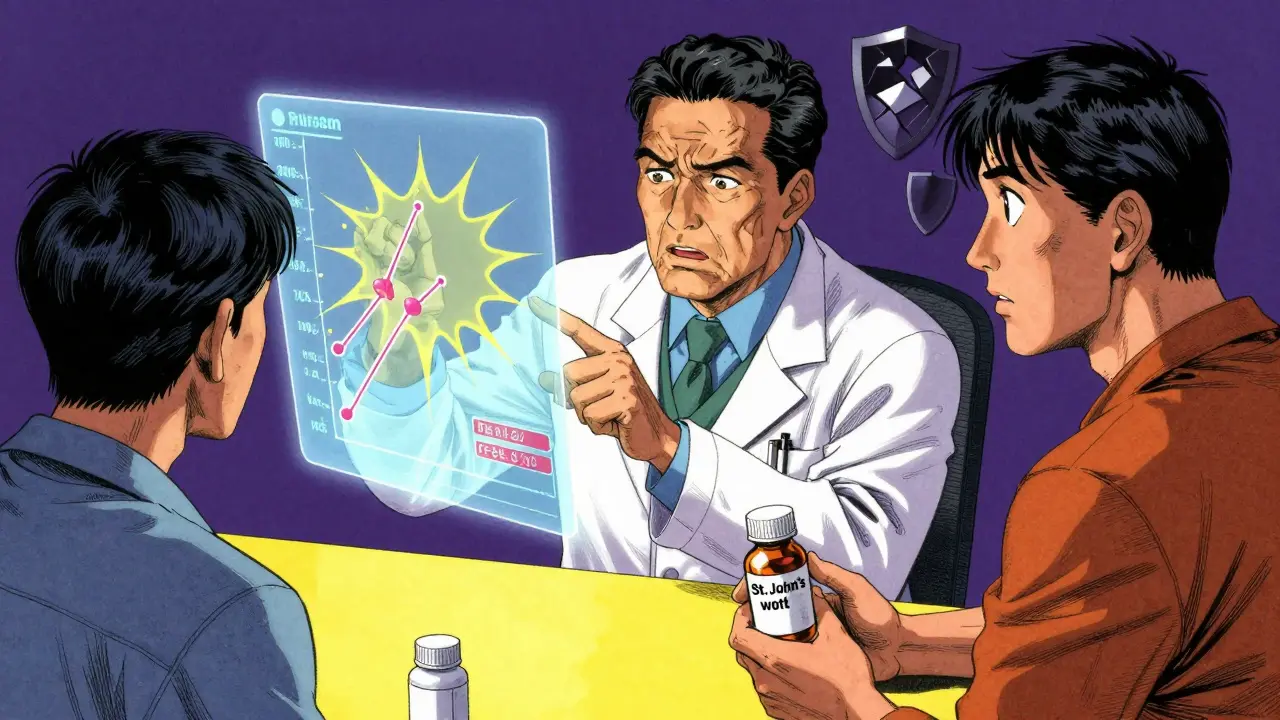
While St. John’s Wort is often taken for depression, combining it with prescription antidepressants is a recipe for disaster. Both the herb and medications like SSRIs (e.g., fluoxetine), SNRIs (e.g., venlafaxine), and MAOIs increase serotonin levels. Taking them together can trigger serotonin syndrome is a potentially life-threatening condition caused by excessive serotonin accumulation.
Serotonin syndrome is not a mild side effect; it is a medical emergency. Symptoms include abnormal sweating (seen in 89% of cases), tachycardia (heart rate >100 bpm in 76% of cases), muscle spasms, and confusion. A 2021 Poison Control case involved an 18-year-old man who developed paranoid behavior, a heart rate of 128 bpm, and high blood pressure, and required IV fluids and benzodiazepines after mixing St. John’s Wort with other serotonergic agents. The American Psychiatric Association recommends waiting at least 14 days between stopping prescription antidepressants and starting St. John’s Wort to allow serotonin pathways to reset and minimize this risk.
Other Critical Interactions
The list of dangerous combinations extends beyond the major categories above. Benzodiazepines like alprazolam (Xanax) see their effectiveness reduced by up to 40%, potentially leading to breakthrough anxiety or panic attacks. Digoxin, used for heart failure, sees serum concentrations drop by 25% due to increased P-glycoprotein efflux, risking cardiac instability. Antiseizure medications like phenytoin can lose 19-46% of their plasma concentration, increasing the risk of seizures. The FDA received 12 reports of breakthrough seizures between 2000 and 2005 among patients combining these drugs with the herb.
| Medication Class | Specific Drugs | Interaction Effect | Risk Level |
|---|---|---|---|
| Oral Contraceptives | Ethinyl Estradiol, Levonorgestrel | Reduced hormone levels; contraceptive failure | High |
| Immunosuppressants | Cyclosporine, Tacrolimus | Decreased drug levels; organ rejection risk | Critical |
| HIV Protease Inhibitors | Indinavir, Ritonavir | Significant drop in drug efficacy; viral resistance | Critical |
| Anticoagulants | Warfarin, Phenprocoumon | Lowered INR; increased clotting risk | High |
| SSRIs/SNRIs | Fluoxetine, Venlafaxine | Serotonin syndrome; life-threatening toxicity | Critical |
| Benzodiazepines | Alprazolam | Reduced anxiety control; withdrawal symptoms | Moderate-High |
Navigating Safety and Future Solutions
Given these risks, expert consensus is clear: unsupervised use of St. John’s Wort is dangerous. Dr. Paul Farmer of the National Center for Complementary and Integrative Health describes it as having interaction risks comparable to strong prescription enzyme inducers. The Institute for Safe Medication Practices recommends using dedicated interaction checkers, which currently list over 140 documented drug conflicts.
Regulatory bodies are catching up. The FDA announced in June 2023 that all St. John’s Wort products must carry a "Drug Interaction Alert" symbol on front labels starting January 2025. Meanwhile, researchers are exploring hyperforin-free extracts. A phase 2 trial in August 2023 showed that extracts with less than 0.5% hyperforin maintained antidepressant effects while causing only a 9% reduction in midazolam levels, compared to 56% with standard extracts. Until these safer alternatives are widely available, the safest approach is strict avoidance if you take any prescription medication.
If you are considering St. John’s Wort, screen your current medications first. Talk to your pharmacist or doctor. Do not assume "natural" means safe. In the world of pharmacology, chemistry is chemistry, regardless of whether it comes from a lab or a garden.
Can I take St. John’s Wort with birth control pills?
No, you should not. St. John’s Wort significantly reduces the effectiveness of oral contraceptives by accelerating the metabolism of estrogen and progestin. Studies have shown reductions in hormone levels of up to 25%, leading to documented cases of contraceptive failure and unintended pregnancies. Use alternative non-hormonal birth control methods if you choose to take this supplement.
How long does it take for St. John’s Wort to interact with other drugs?
Interactions can begin within 7 to 14 days of starting the supplement. The herb induces liver enzymes (specifically CYP3A4) that metabolize other medications faster. This means your prescribed drugs may become less effective within two weeks of adding St. John’s Wort to your regimen.
Is it safe to stop St. John’s Wort abruptly?
Stopping the herb does not immediately reverse the interaction. The induced enzymes remain active for up to two weeks after discontinuation. During this "washout" period, your body will continue to metabolize other drugs rapidly. Inform your doctor if you stop taking St. John’s Wort, as they may need to adjust your other medication doses temporarily.
What are the symptoms of serotonin syndrome?
Serotonin syndrome is a serious condition caused by excessive serotonin. Symptoms include heavy sweating, rapid heartbeat (tachycardia), muscle rigidity or spasms, tremors, diarrhea, and confusion. If you experience these symptoms after combining St. John’s Wort with antidepressants, seek emergency medical attention immediately.
Are there safer alternatives to St. John’s Wort?
Researchers are developing hyperforin-free extracts that may offer antidepressant benefits with fewer drug interactions. Early trials show promise, but these are not yet widely available. For now, if you need mood support but take other medications, consult your doctor about prescription options or therapies that do not interfere with your current drug regimen.