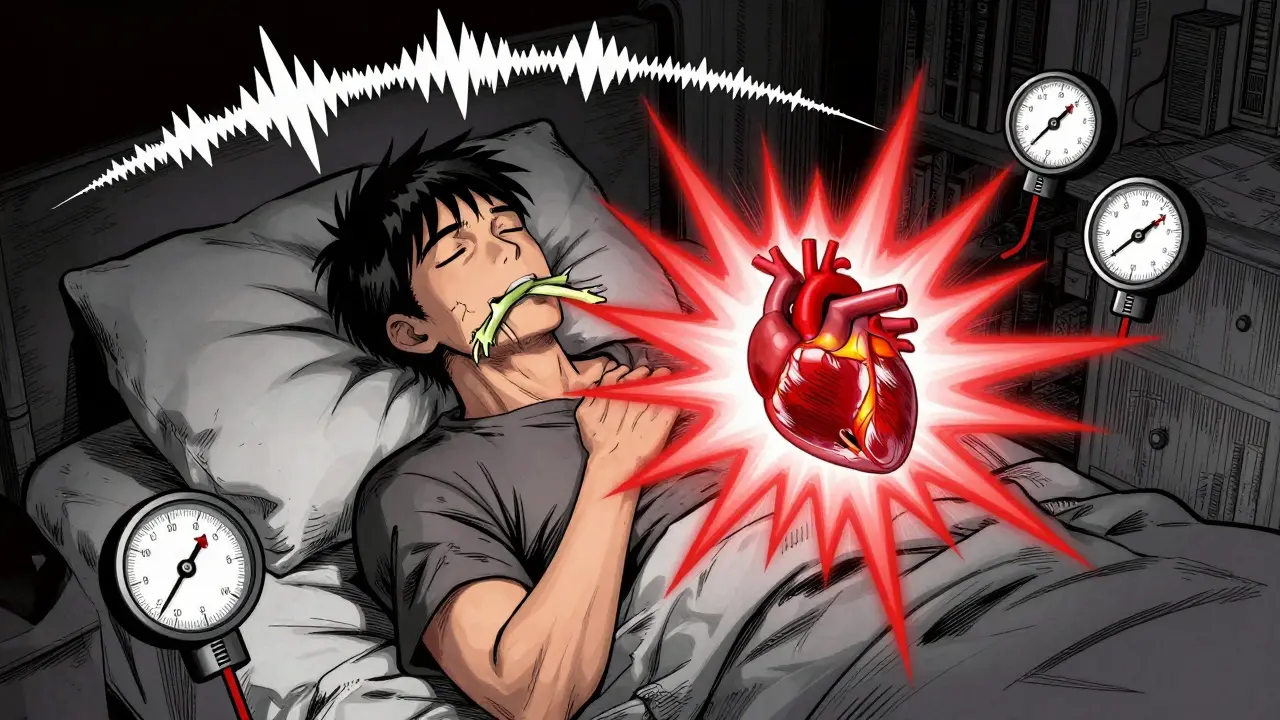
Why Your Sleep Might Be Hurting Your Heart
If you snore loudly, wake up gasping, or feel exhausted even after a full night’s sleep, you might have obstructive sleep apnea (OSA). It’s not just annoying-it’s dangerous for your heart. Right now, about 1 billion adults worldwide have this condition, and most don’t even know it. What makes OSA so risky isn’t just the lack of sleep. It’s the way it repeatedly shocks your cardiovascular system every time you stop breathing.
The Hidden Cardiovascular Shockwaves
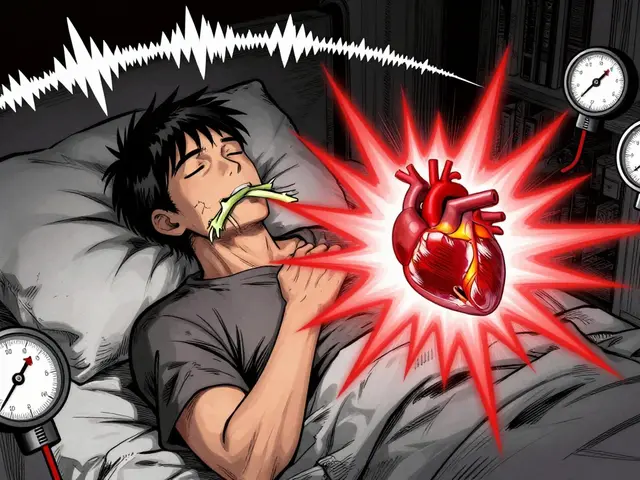
Every time your airway collapses during sleep, your body panics. Oxygen levels drop. Your brain screams for air. In response, your nervous system fires off a massive surge of adrenaline. Blood pressure spikes by 20 to 40 mmHg in seconds. Your heart works harder. Your arteries tighten. This doesn’t just happen once-it can happen 50, 80, even 100 times a night.
This isn’t normal stress. It’s repeated, violent strain. Over months and years, those spikes don’t fade. They become your new baseline. Studies show that 35% to 45% of people with OSA develop left ventricular diastolic dysfunction-a sign the heart is stiffening and struggling to fill properly. That’s the early warning sign of heart failure.
How OSA Fuels High Blood Pressure
You’ve heard that obesity, salt, and stress raise blood pressure. But OSA raises it in a different, more aggressive way. Unlike regular hypertension, OSA causes nocturnal hypertension-high pressure that spikes at night and never fully drops. By morning, your blood pressure is still elevated. That’s why 30% to 40% of people with high blood pressure have undiagnosed sleep apnea.
Even if you’re on medication, your pressure might stay stubbornly high because OSA is still working behind the scenes. Research from the American Heart Association shows that treating OSA with CPAP lowers systolic blood pressure by an average of 5 to 10 mmHg. That’s the same drop you’d get from adding a second blood pressure pill. For many, it means cutting back on meds entirely.
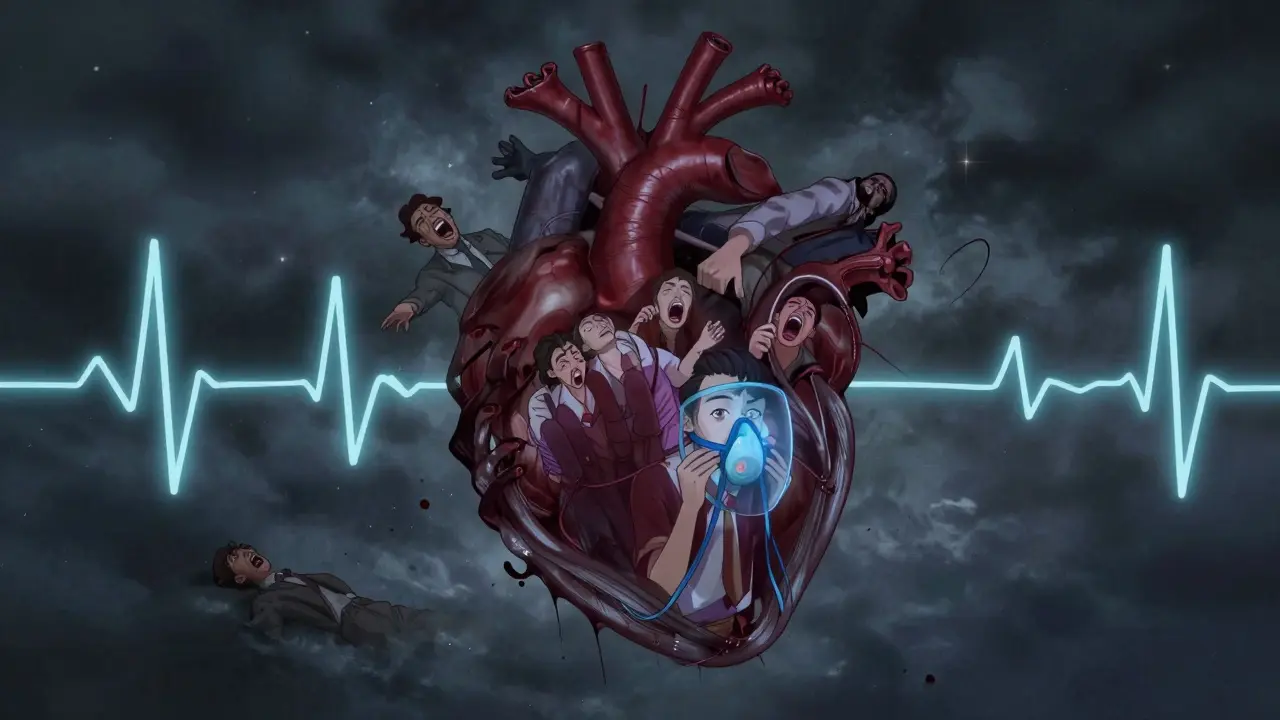
Arrhythmia: When Your Heart Goes Off-Beat
Imagine your heart’s electrical system is a choir. OSA turns it into chaos. Every apnea episode triggers a wild swing between vagal slowdown and sympathetic overdrive. This imbalance creates perfect conditions for arrhythmias-especially atrial fibrillation (AFib).
People with severe OSA (AHI ≥30) are 140% more likely to develop AFib than those without it. That’s worse than the risk from obesity or even high cholesterol. And it’s not just AFib. Ventricular arrhythmias, pauses, and premature beats are all more common. One 2024 study found OSA patients experience 3 to 5 times more AFib episodes than healthy controls.
Here’s the kicker: even if you’ve had AFib ablation, OSA can make it come back. Studies show CPAP therapy reduces AFib recurrence by 42% after just one year. If you’ve had a heart rhythm procedure and still get episodes, ask your doctor: could sleep apnea be the missing piece?
Why OSA Is Different From Other Sleep Problems
Not all sleep disorders are created equal. Restless legs? Insomnia? They can make you tired, but they don’t crush your heart like OSA does. Why? Because OSA isn’t just about poor sleep quality. It’s about mechanical obstruction, oxygen starvation, and pressure swings inside your chest that literally pull and twist your heart with every breath.
Central sleep apnea-where your brain forgets to tell your lungs to breathe-is less common and less damaging to the heart. OSA is the real threat because it’s so widespread and so physically punishing. It doesn’t just add risk-it multiplies it. OSA increases stroke risk by 60%, coronary artery disease by 30%, and heart failure by 140%. And these numbers hold even after accounting for obesity, diabetes, and age.
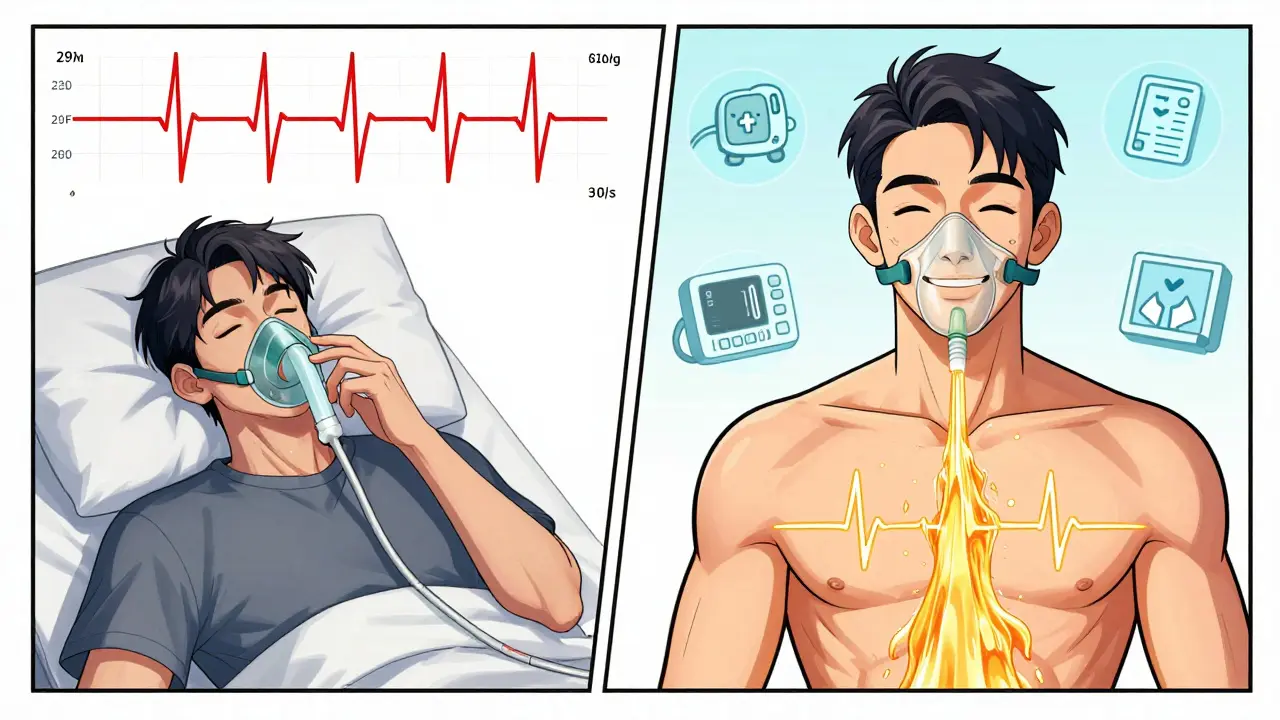
Real People, Real Results
On online forums, people describe life before and after treatment. One user, ‘CardioPatient87,’ had blood pressure of 160/95. After three months of consistent CPAP use, it dropped to 128/82. Another, ‘AFibSurvivor,’ went from weekly AFib episodes to once every two or three months after six months of therapy.
These aren’t outliers. A 2024 survey of over 5,200 CPAP users found that 65% needed fewer blood pressure medications. Nearly 80% said they had more energy during the day. The catch? Only about half of people use CPAP four or more hours a night. And if you use it less than that, the benefits fade.
What You Need to Do Now
If you have high blood pressure, AFib, heart failure, or a stroke history-get tested for OSA. The American Academy of Sleep Medicine says 45% to 65% of these patients have undiagnosed sleep apnea. You don’t need a hospital stay. Most people can start with a home sleep test-a simple device you wear overnight. It measures breathing, oxygen, and heart rhythm.
If you’re diagnosed, CPAP is the gold standard. It’s not perfect. Masks can feel claustrophobic. Airflow can dry your nose. But 85% of people who stick with it for 30 days say their sleep quality improves dramatically. Use humidifiers. Try different masks. Adjust the ramp setting. Don’t quit after a week. The first month is the hardest. The payoff? A stronger heart, lower pressure, fewer arrhythmias, and a longer life.
The Bigger Picture
Doctors used to think OSA was just a side effect of being overweight. Now we know it’s a direct cause of heart damage. New research shows even young adults under 40 with OSA are at higher risk for heart disease. The American College of Cardiology is expected to classify OSA as a major risk factor in 2025. Insurance companies already cover testing for people with resistant hypertension or AFib.
This isn’t about snoring. It’s about survival. Your heart doesn’t rest when you sleep. If you’re stopping breathing at night, your heart is working overtime-and it’s wearing out.

My dad had untreated sleep apnea for 15 years. He thought he was just old and tired. Then he had a stroke at 68. They found his AHI was 87. He’s on CPAP now, and his blood pressure dropped 20 points. I wish someone had told us sooner.
It is imperative to note that the pathophysiological mechanisms underlying obstructive sleep apnea induce recurrent hypoxemic-reoxygenation cycles, which activate oxidative stress pathways and sympathetic overactivity, thereby precipitating endothelial dysfunction and systemic inflammation. The cardiovascular sequelae are not merely correlational but causally mediated through these biological cascades.
CPAP saved my life. 😅 I used to wake up like I’d been punched. Now I sleep like a baby. Also, my wife says I don’t snore anymore. She’s finally letting me sleep in the same room again. 💪
It’s fascinating how the body treats sleep apnea like a siege. Every collapse isn’t just a breath missed-it’s a trauma. The heart doesn’t know it’s asleep. It thinks it’s in a war zone. And yet we call it a ‘sleep disorder.’ That’s like calling a bomb blast a ‘noise problem.’ We’ve anthropomorphized the issue so much that we’ve lost the gravity of what’s happening inside the chest. The heart isn’t failing because you’re tired-it’s failing because it’s been fighting for oxygen while you dreamt of vacations.
What does it mean to be ‘rested’ when your autonomic nervous system never gets to shut down? We measure sleep in hours, but maybe we should measure it in peace.
And then there’s the irony: we prescribe pills to lower blood pressure, but the real culprit is the silence between breaths. We treat symptoms like enemies, not signals. Maybe the question isn’t how to fix the heart-but how to stop the body from needing to scream to breathe.
Is sleep apnea a disease? Or is it the body’s last desperate shout for attention before the system collapses? We treat it like a gadget to fix. But maybe it’s a mirror.
Listen up. If you're on blood pressure meds and still struggling, get tested for sleep apnea. No excuses. No ‘I’ll do it later.’ Your heart is screaming and you’re ignoring it. I’ve seen it too many times-people think they’re fine because they’re not obese or they ‘sleep fine.’ Bullshit. You don’t need to snore like a chainsaw. You just need to stop breathing. And if you do, your heart pays the price. CPAP isn’t optional. It’s your lifeline. Use it 4+ hours. Don’t just wear it. Use it. And if your mask sucks, try a different one. There are 12 types. Find your fit. Your future self will thank you.
Let’s be honest-this whole OSA narrative is pushed by the CPAP industry. Big Sleep is making billions. Did you know the FDA has approved over 200 CPAP devices since 2010? Meanwhile, studies show placebo masks have a 30% success rate in reducing symptoms. Who’s really benefiting here? And why are we ignoring the role of neck muscle tone, posture, and even dental alignment? The medical establishment loves a simple fix. But the truth is rarely that tidy.
My sister used to hate her CPAP. Said it felt like a space helmet. 😔 But she stuck with it for a month, switched to a nasal pillow mask, and now she says she feels like she’s been given back her life. 💖 I cried when she told me she slept through the night for the first time in 10 years. You’re not broken. You just need the right tool. Don’t give up.
I think Andrew makes a fair point. Maybe we’re oversimplifying. I had OSA, tried CPAP, hated it, then switched to a mandibular device and it worked better for me. Not everyone needs the same solution. Maybe the real issue isn’t just CPAP vs. no CPAP-it’s that we don’t personalize treatment enough. We treat the machine, not the person.
They say OSA causes heart failure. But what if the heart failure came first? What if the real problem is that we’re medicating symptoms while ignoring the root: our toxic, overstimulated, screen-addicted, 24/7 culture? You think your heart is dying because you stop breathing at night? No. It’s dying because you never truly rest. Sleep apnea is just the symptom of a civilization that forgot how to slow down.
Interesting how Americans treat this like a medical crisis. In my country, we just accept that everyone snores. We don’t run tests. We don’t buy machines. We just sleep next to each other and deal with it. Maybe the problem isn’t OSA-it’s that we’ve turned normal human biology into a pathology. Also, why are we blaming the patient? If your mask is uncomfortable, maybe the system is broken, not you.
To everyone who’s scared to try CPAP: I was you. I thought it was ridiculous. I thought I’d never wear it. But I did. And I’m not just more rested-I’m more present. With my kids. With my partner. With myself. You’re not weak for needing help. You’re brave for trying. And if today doesn’t work, try again tomorrow. One night at a time. You’ve got this.