
When you buy a medical device, a life-saving drug, or even a smartphone, you assume it works perfectly. You don’t think about the factory where it was made, the inspector who checked it, or the data stream that flagged a tiny flaw before it left the line. But if that assumption breaks-once-your trust in the brand doesn’t just wobble. It shatters. And in 2026, quality assurance isn’t just a department. It’s the invisible thread holding brand reputation together.
Manufacturing Fears Aren’t About Defects Anymore
Five years ago, quality issues meant a broken part, a mislabeled bottle, or a recall. Today, it’s deeper. It’s the fear that your brand’s promise is crumbling under pressure-faster production, tighter margins, and a workforce that can’t keep up with the tech. A 2025 survey by ZEISS of over 1,100 U.S. manufacturers found that 95% of executives call quality assurance mission-critical. Not important. Not helpful. Mission-critical. Why? Because when a single defective implant goes into a patient, or a battery in an electric car overheats, the fallout isn’t just financial. It’s emotional. It’s psychological. Customers don’t just stop buying-they stop believing. The real fear isn’t that a product will fail. It’s that the brand won’t be able to prove it didn’t happen again.The Cost of Getting It Wrong
Rework and iterations cost manufacturers 38% more than they did in 2020. That’s not just labor. It’s wasted materials, delayed shipments, and angry customers. In the medical device industry, where precision is measured in microns, one misaligned component can trigger a recall that costs millions and destroys credibility. One company in Ohio invested $2.3 million in automated inspection systems but didn’t train its team. Within a year, error rates went up 40%. The machines were faster, but the people didn’t know how to use them. The result? More defects, not fewer. And customers noticed. Meanwhile, companies that integrated AI-powered inspection tools saw defect detection improve by 37% and false positives drop by 29%. One automotive supplier paid for the entire system in eight months. That’s not luck. That’s strategy.Why Quality Is Now a Brand Strategy
Brands used to treat quality as a compliance checkbox. Now, it’s a competitive weapon. Manufacturers using integrated quality systems-where data flows between design, production, and customer feedback-see 22% lower rework costs and 18% faster time-to-market. That’s not just efficiency. That’s trust built into the product cycle. In aerospace and medical sectors, where regulations are brutal, 78% and 72% of companies, respectively, use advanced quality tech. Why? Because they can’t afford to lose a single customer. One bad experience means losing not just a sale, but a hospital contract, a government bid, or a lifetime of referrals. But here’s the twist: customers don’t see the sensors, the AI, or the cloud-based quality dashboards. They see the result. A pill that works. A device that lasts. A car that doesn’t catch fire. The brand becomes a promise-and quality assurance is the only thing keeping that promise real.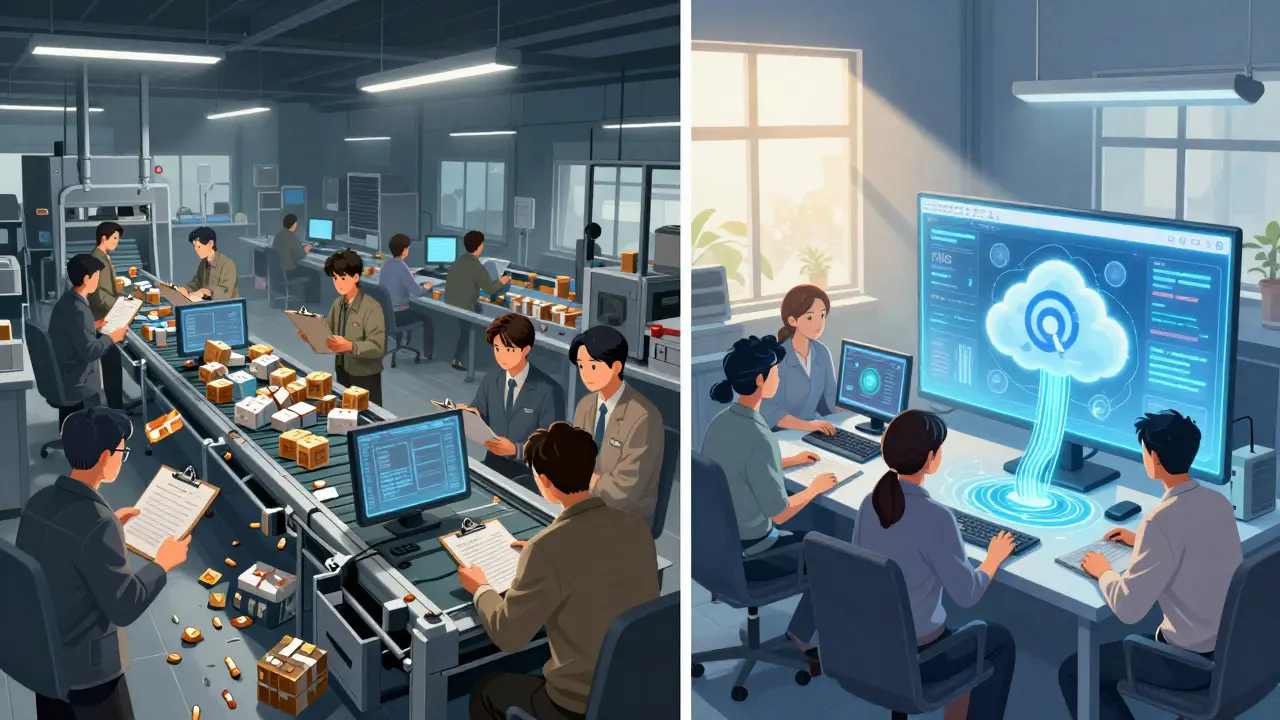
The Skills Gap Is the Silent Crisis
You can buy the best metrology system in the world. But if no one knows how to use it, it’s just expensive paperweight. Forty-seven percent of manufacturers say the biggest hurdle isn’t technology-it’s people. There’s a growing gap between workers trained in manual inspections and those who understand data analytics, AI tools, and real-time monitoring. The median salary for a quality engineer with AI skills is now $98,500-22% higher than traditional roles. Companies are scrambling to hire, but training takes time. On Reddit’s r/Manufacturing forum, 87% of respondents said their biggest frustration is inconsistent data between departments. Quality teams get different numbers than production. IT doesn’t talk to engineering. The result? Confusion, delays, and broken trust. The solution isn’t just hiring. It’s retraining. It’s building cross-functional teams-quality engineers, IT specialists, and floor managers working together from day one of a project. Companies that do this see 68% higher success rates in tech adoption.The Technology That’s Changing Everything
In 2026, quality assurance isn’t about checking boxes after production. It’s about predicting failure before it happens. Predictive analytics now flags potential defects 48 hours before they occur. One medical device maker cut customer-reported defects by 41% using this approach. Another reduced rework costs by $1.2 million a year by optimizing material use with real-time metrology. Cloud-based Quality Management Systems (QMS) are now the standard. In 2025, 68% of new enterprise deployments used them-up from 52% in 2023. Why? Because they let suppliers, factories, and quality teams access the same data in real time. No more spreadsheets. No more phone calls. Just clarity. And the tech is getting smarter. AI-enhanced vision systems now spot defects invisible to the human eye. 3D scanning catches warping in real time. Sensors on machines predict when a tool will fail before it causes a bad batch. But here’s the catch: 58% of manufacturers know quality is strategic-but don’t have the resources to act. That’s the real crisis. The gap between awareness and action is widening. And brands on the wrong side of that gap are losing customers faster than they can replace them.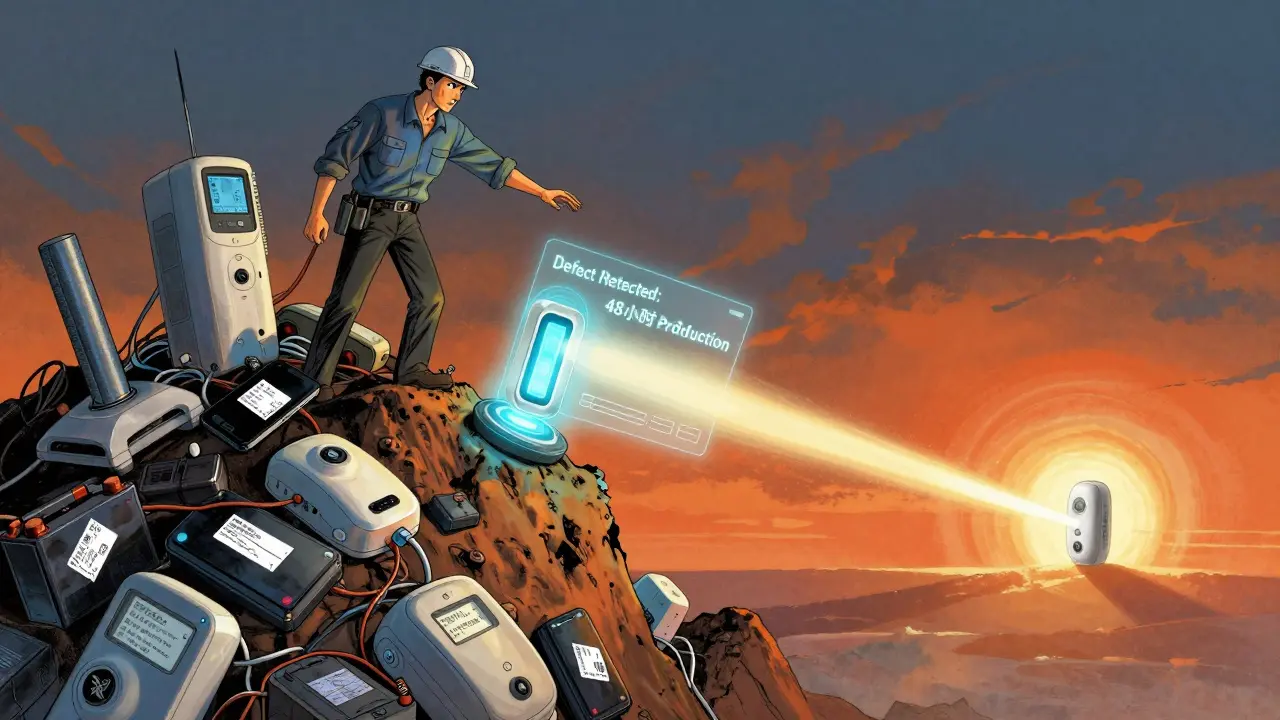
What Happens When Trust Breaks
Think about the last time you bought something that broke after a few uses. Did you call customer service? Maybe. But did you tell a friend? Almost certainly. In 2026, word spreads faster than any ad campaign. A single negative review on a medical forum can tank a product line. A viral video of a faulty device can trigger a congressional hearing. Brands that treat quality as a cost center will see their profit margins shrink. Deloitte’s modeling shows that companies treating quality as a strategic function will have 28% higher margins by 2030. Those treating it as a checkbox? They’ll be outcompeted-or bought out. The fear isn’t that something will go wrong. It’s that no one will know how to fix it before it’s too late.How to Build a Quality-First Brand
If you’re a brand owner, supplier, or manufacturer, here’s what you need to do now:- Integrate quality data across departments-no more silos.
- Invest in AI and real-time monitoring, but train your people first.
- Use cloud-based QMS to connect suppliers, factories, and customers.
- Measure quality not just by defects, but by customer feedback and repeat sales.
- Start small. Pilot one AI tool. Train one team. Measure the impact.
Why is quality assurance more important now than ever?
Because today’s customers expect flawless performance, not just compliance. A single defect can trigger a recall, a lawsuit, or a viral social media post that destroys brand trust. With supply chains stretched thin and production speeds increasing, quality assurance has shifted from a back-office function to a core brand strategy that directly impacts customer loyalty and profitability.
What’s the biggest mistake manufacturers make with quality control?
Investing in advanced technology without training the people who use it. Many companies spend millions on automated inspection systems but fail to update their workforce skills. The result? Higher error rates, more rework, and lost confidence from both employees and customers. Technology without human understanding doesn’t fix problems-it creates them.
How does poor quality affect brand psychology?
It erodes perceived reliability. When a product fails, customers don’t blame the factory-they blame the brand. This triggers a psychological response called “brand betrayal,” where trust is replaced by suspicion. Even one bad experience can reduce repeat purchases by 50% and increase negative word-of-mouth by 3x. In industries like pharmaceuticals, that loss of trust can be irreversible.
Can small manufacturers compete with big brands on quality?
Yes-but only if they focus on consistency, not scale. Small manufacturers can outperform giants by using affordable cloud-based QMS tools, partnering with trusted suppliers, and communicating transparency about their processes. Customers value honesty and reliability more than flashy marketing. A small company with a 99.5% defect-free rate will earn more loyalty than a big brand with a 97% rate and a PR team.
What’s the future of quality assurance in manufacturing?
The future is predictive and connected. By 2027, 89% of leading manufacturers will use AI to forecast defects before they happen. Quality data will be tied directly to customer feedback, creating a loop where every product improvement is driven by real-world use. The winners won’t be the ones with the most machines-they’ll be the ones who listen, adapt, and prove they care more about safety than speed.







Quality assurance? More like quality theater. They slap on AI cameras, call it innovation, and act like that fixes human laziness. The real problem? No one cares until someone dies.
I’ve worked in med device QA for 15 years. The shift from manual checks to AI isn’t about tech-it’s about trust. Workers feel sidelined. Brands forget that people, not algorithms, hold the line.
Oh wow, so the solution to manufacturing chaos is... more screens? Brilliant. Let’s just automate the human out of the loop until the only thing left is a robot that can’t explain why it flagged a perfectly fine screw. Classic.
The real crisis isn’t the tech gap. It’s the communication gap. I’ve seen QA teams and production teams use different software, different metrics, even different definitions of ‘acceptable.’ No wonder trust crumbles.
Start small. Train one team. Use one tool. Measure results. Then grow. That’s how real change happens. Not with big flashy systems. With people who feel heard and supported.
I love how everyone’s like ‘AI will save us!’ but no one’s like ‘wait, what if the person running the AI is just overwhelmed and hasn’t slept in 36 hours?’ Like… maybe fix the human problem first? 🙃
The assertion that quality assurance is now a 'brand strategy' is empirically unsupported. While anecdotal success stories exist, the causal linkage between QA investment and brand loyalty remains statistically indeterminate without controlled longitudinal studies. Furthermore, the cited 28% margin increase lacks methodological transparency.
You’re all right. But here’s the thing-this isn’t about blame. It’s about building bridges. QA isn’t the enemy of production. They’re the ones keeping us from losing everything. Let’s stop treating them like cost centers and start treating them like partners. We all win when quality wins.
You're all talking about AI like it's magic. The real issue is workforce upskilling. Without certified Six Sigma practitioners who understand IoT data streams and ISO 13485 compliance, your shiny new vision system is just a glorified camera. Stop wasting capital. Invest in certification programs. Now.
The fact that we even have to say this shows how far we’ve drifted. Quality isn’t a department. It’s a mindset. If your whole company doesn’t live it, no system will fix that
The real question isn’t how to fix quality-it’s whether we’ve lost the will to care. We optimize for speed because we’ve forgotten that products carry meaning. A pill isn’t just a chemical. A device isn’t just metal. They’re hope. And we’re treating hope like a line item on a spreadsheet.