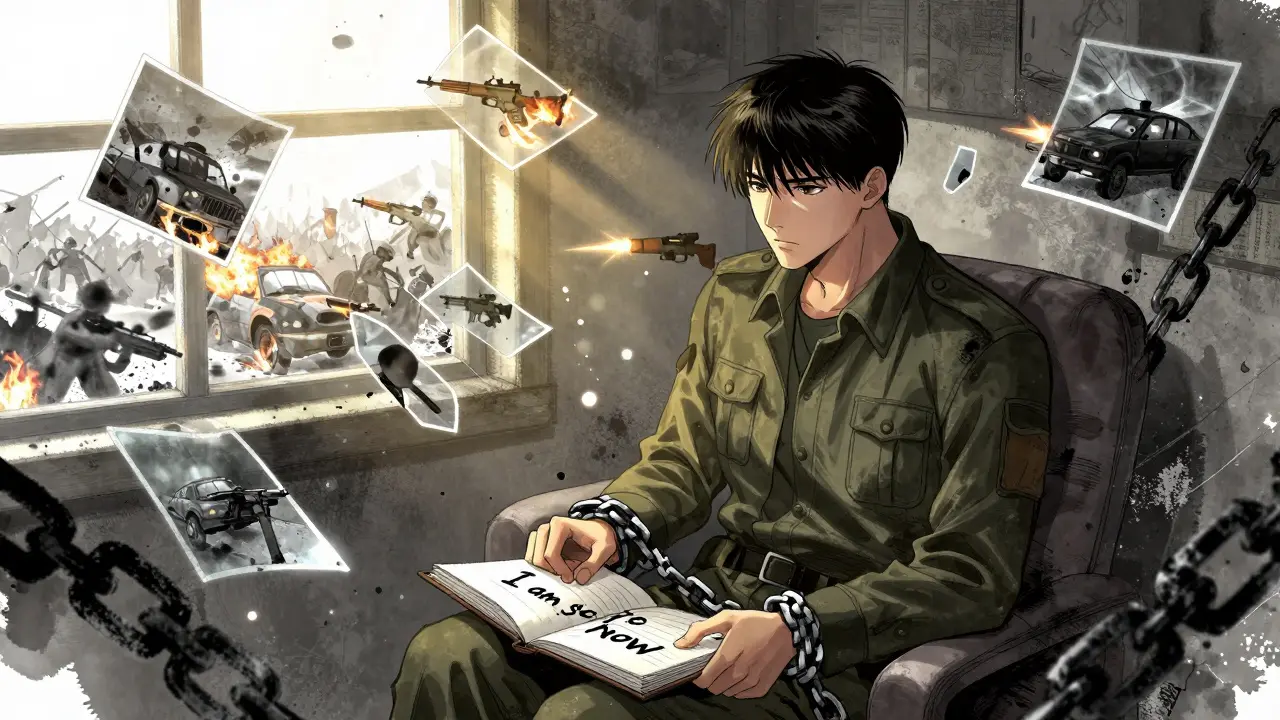
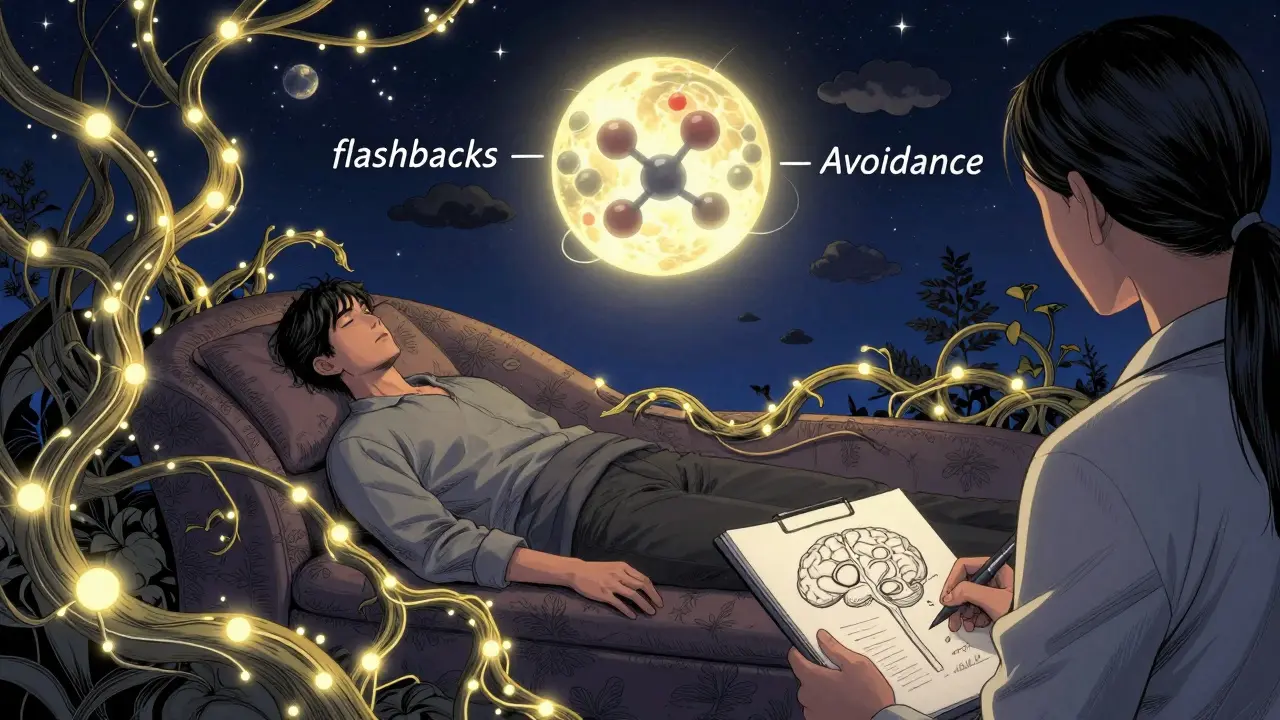
Post-Traumatic Stress Disorder isn’t just about remembering something bad. It’s about your brain getting stuck in a loop where the past won’t let go. You might have flashbacks that feel real, nightmares that leave you drenched in sweat, or jump at a car backfiring like it’s gunfire again. You avoid places, people, even thoughts that remind you of what happened. And no matter how hard you try to move on, your body stays on high alert-like you’re always waiting for the next threat. This isn’t weakness. It’s biology. And it’s treatable.
What PTSD Really Looks Like
The DSM-5-TR, the official guide doctors use to diagnose mental health conditions, lays out four clear symptom clusters for PTSD. First, intrusion symptoms: unwanted memories, nightmares, or sudden flashbacks that pull you back into the trauma. Second, avoidance: actively steering clear of anything tied to the event-conversations, locations, even certain smells. Third, negative changes in thinking and mood: feeling detached, blaming yourself, losing interest in things you used to love. And fourth, hyperarousal: being constantly on edge, sleeping poorly, reacting too strongly to small surprises, feeling irritable or angry for no clear reason.
These symptoms don’t show up right away. They need to last more than a month and interfere with your job, relationships, or daily life to count as PTSD. About 3.6% of U.S. adults live with it each year, according to the National Comorbidity Survey. That’s roughly 9 million people. Veterans, first responders, survivors of assault, and even people who’ve witnessed violent events are at higher risk. But PTSD doesn’t care about your background-it can happen to anyone who’s been through something overwhelming.
Trauma Processing: The Core of Healing
Medication can help with the noise, but trauma processing is what rewires the brain. The most effective treatments aren’t pills-they’re therapies that help you face and make sense of what happened. Two names come up again and again in research: Cognitive Processing Therapy (CPT) and Prolonged Exposure (PE).
CPT helps you challenge the stories you’ve built around the trauma. Maybe you think, “It was my fault,” or “The world is completely dangerous.” CPT guides you to examine those beliefs with evidence, not emotion. In 8 to 12 weekly sessions, you write about the event, talk through it, and slowly replace distorted thoughts with more balanced ones. Studies show 60-70% of people who complete CPT reach full remission.
Prolonged Exposure is different. Instead of changing thoughts, it changes your relationship to memories. You talk about the trauma in detail, repeatedly, in a safe space. Then you go back to places you’ve been avoiding-like driving past the intersection where the accident happened. At first, it’s terrifying. But over time, the fear loses its power. Your brain learns: “I’m safe now. That event is over.”
These aren’t quick fixes. They take time. Most people start feeling better after 6-8 weeks, but real change often comes around week 10 or 12. And unlike medication, the gains stick. Once you’ve processed the trauma, you don’t need to keep going to therapy forever.
Medication: What Actually Works
The FDA has approved only two drugs specifically for PTSD: sertraline (Zoloft) and paroxetine (Paxil). Both are SSRIs-selective serotonin reuptake inhibitors. They don’t erase the trauma. They help regulate the brain chemicals that get thrown off balance after trauma, reducing anxiety, depression, and emotional numbness.
How well do they work? In clinical trials, about 53% of people taking sertraline saw significant symptom reduction. Paroxetine was slightly higher at 60%. That sounds good, but here’s the catch: only 20-30% of people achieve full remission. For many, symptoms improve but don’t disappear. And side effects are common-nausea, insomnia, sexual dysfunction. One Reddit survey of over 1,200 people found 42% stopped SSRIs because of low libido or inability to orgasm.
Other medications are used off-label because they help, even if they’re not officially approved. Venlafaxine (Effexor XR), an SNRI, shows similar results to SSRIs. Prazosin, a blood pressure drug, is surprisingly effective for nightmares. Veterans using it report a 50% drop in nightmare frequency within weeks. It’s cheap, simple (taken at night), and has few serious side effects.
Atypical antipsychotics like risperidone and quetiapine are sometimes added for severe hyperarousal or aggression. But their benefit is small, and long-term use brings risks like weight gain and metabolic issues. They’re not first-line-they’re last-resort tools.
Medication vs. Therapy: The Real Comparison
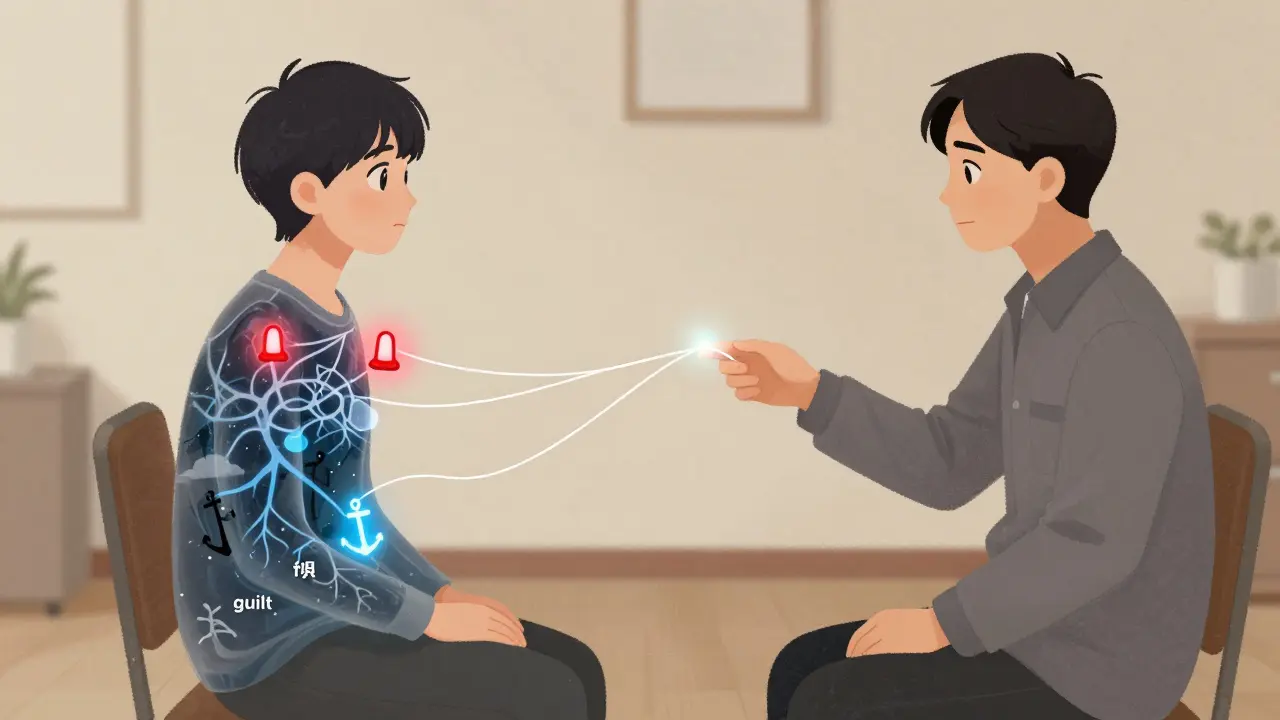
Let’s be clear: therapy beats medication for long-term recovery. A 2022 VA/DoD guideline found CPT and PE led to higher remission rates than SSRIs alone. But medication works faster. If you’re so overwhelmed you can’t even talk about the trauma, an SSRI might give you the emotional breathing room to start therapy.
Here’s what the data shows:
| Factor | Trauma-Focused Therapy | SSRIs (Sertraline/Paroxetine) |
|---|---|---|
| Time to Notice Improvement | 8-12 weeks | 4-6 weeks |
| Remission Rate | 60-70% | 50-60% |
| Duration of Effect | Lasts after treatment ends | Relapse common after stopping |
| Side Effects | Mild discomfort during sessions | Nausea, sexual dysfunction, emotional blunting |
| Cost (U.S., monthly) | $100-$200 per session | $4-$10 (generic) |
Cost is a big factor. Therapy adds up fast. Generic sertraline costs less than a coffee a day. But if you stop the pill, symptoms often come back. Therapy doesn’t have that problem. You learn skills that last.
Combining Both: The Best of Both Worlds?
Some experts say you should do both from the start. A 2021 JAMA Psychiatry study found that people who took sertraline and did Prolonged Exposure had a 72% response rate-higher than either alone. For someone with severe anxiety, insomnia, and flashbacks, medication can lower the barrier to therapy.
But others warn: drugs might block the emotional processing needed to heal. Dr. Jonathan Shay, a VA psychiatrist, says SSRIs can blunt the very feelings you need to work through. If you feel emotionally numb on medication, are you really healing-or just hiding?
The VA’s current stance? Start with therapy. If you can’t engage-because you’re too dissociated, too overwhelmed, or your symptoms are too severe-then add medication. Don’t use pills to avoid therapy. Use them to make therapy possible.
What’s Next: New Treatments on the Horizon
PTSD treatment isn’t standing still. In 2023, the FDA accepted a new application for brexpiprazole as an add-on to SSRIs. Early trials showed a 35% symptom reduction when combined with an SSRI-far better than placebo. It’s not a cure, but it’s another tool.
The biggest breakthrough? MDMA-assisted therapy. After years of research, phase III trials showed 67% of participants no longer met PTSD criteria 18 weeks after just three sessions of MDMA combined with therapy. The FDA gave it Breakthrough Therapy status in 2017, and if approved by 2026, it could become the first non-traditional treatment for PTSD. It doesn’t work by itself-it works by helping people revisit trauma without fear.
Researchers are also looking at genetics. The Psychiatric Genomics Consortium has found 95 genetic variants linked to how people respond to SSRIs. In the future, a simple blood test might tell you which drug is most likely to work for you.
What to Do If You’re Struggling
If you think you have PTSD, don’t wait. Start with a trauma-informed therapist. Ask if they use CPT or PE. If you’re too overwhelmed to talk, ask about medication as a bridge-not a replacement.
Here’s what to expect:
- Start therapy first. Give it 8-12 weeks before considering medication.
- If you try an SSRI, start low: 25 mg of sertraline, increase weekly. Don’t rush.
- Give medication at least 8-12 weeks at a full dose before deciding it doesn’t work.
- Track your sleep, nightmares, and mood. Use a journal or the VA’s PTSD Coach app.
- If side effects are unbearable, talk to your doctor. Don’t quit cold turkey.
- Don’t give up if one treatment fails. Try another. Many people need more than one try.
Relapse is common after stopping medication-55% within a year. That’s why guidelines recommend staying on it for at least 12 months after symptoms improve. But if you’ve done trauma therapy, you might not need to stay on pills at all.
Final Thoughts
PTSD isn’t something you just get over. It’s something you process. Medication can calm the storm. But only trauma-focused therapy can help you rebuild after it. You don’t have to choose one or the other. You can use both-smartly.
Healing isn’t linear. Some days will feel like progress. Others will feel like backsliding. That’s normal. The goal isn’t to forget. It’s to no longer be controlled by the past.
Can SSRIs make PTSD worse?
SSRIs don’t make PTSD worse, but they can mask symptoms without addressing the root cause. Some people feel emotionally numb, which can interfere with trauma processing in therapy. If you feel detached or unable to feel anything-even good things-it’s a sign to talk to your provider. This isn’t a reason to quit, but it’s a signal to adjust your approach.
How long should I stay on PTSD medication?
Most guidelines recommend staying on SSRIs for at least 12 months after symptoms improve. Stopping too soon increases relapse risk by over 50%. If you’ve completed trauma therapy and feel stable, you and your doctor can consider tapering slowly. Never stop abruptly-withdrawal can cause dizziness, anxiety, or flu-like symptoms.
Is prazosin safe for long-term use?
Yes, prazosin is considered safe for long-term use in PTSD, especially for nightmares. It’s been used for decades for high blood pressure and has a low risk of serious side effects. The most common issue is dizziness when standing up quickly-take it at bedtime and rise slowly. It doesn’t cause dependence or emotional blunting, making it one of the few PTSD meds that doesn’t interfere with therapy.
Why isn’t MDMA-assisted therapy available yet?
MDMA-assisted therapy is not yet FDA-approved, but it’s close. Phase III trials showed strong results, and the FDA granted Breakthrough Therapy status. Approval is expected by 2026, but it won’t be available at your local clinic. It will be administered only in certified centers by specially trained therapists, with multiple preparation and integration sessions around the MDMA sessions. It’s not a magic pill-it’s a structured, intensive therapy.
Can I do therapy while on medication?
Absolutely. In fact, combining them often works better than either alone. Many people need medication to get to a point where they can tolerate talking about the trauma. Medication doesn’t stop therapy from working-it can help you do it better. The key is working with a provider who understands both approaches and can coordinate care.
What if medication doesn’t work for me?
You’re not broken. About 30-40% of people don’t respond to first-line SSRIs. That’s normal. Try a different SSRI, switch to venlafaxine, or add prazosin for nightmares. If that fails, trauma therapy is still your best bet. Some people need multiple rounds of therapy or different types of trauma-focused approaches. Treatment resistance doesn’t mean no hope-it means you need a different strategy.
If you’re reading this and thinking, “This sounds like me,” you’re not alone. Healing is possible. It’s messy, it’s slow, and it takes courage-but it’s not impossible. Start with one step: talk to someone who understands PTSD. Not just any therapist. One who knows how trauma changes the brain, and how to help you rebuild it.


I’ve been on sertraline for a year and honestly? It didn’t touch my nightmares. Prazosin? First night, I slept like a baby. No more drenching sweats. Just... peace. Why isn’t this the first thing doctors offer?
Oh wow, another feel-good narrative about ‘trauma processing’ like it’s a yoga retreat. You think talking about your trauma fixes your neurochemistry? Please. SSRIs don’t ‘mask’ anything-they stabilize the damn system so you’re not screaming into a void 24/7. Meanwhile, your ‘CPT’ gurus are charging $150/hour while people starve. This isn’t healing-it’s capitalism with a therapist’s couch.
The reductionist framing of PTSD as a ‘broken circuit’ to be ‘rewired’ is dangerously reductive. Trauma isn’t a glitch in the software-it’s the scar tissue of a soul that was violently restructured. Medication may quiet the static, but it cannot restore the architecture of trust that was shattered. Therapy, even the gold-standard CPT, remains a clumsy scalpel when what’s needed is a symphony of re-attachment-not just cognitive reframing.
MDMA-assisted therapy, then, is not a pharmacological miracle-it’s a biochemical bridge back to embodiment. The drug doesn’t heal; it permits the self to remember without disintegrating. That’s not magic. That’s neuroscience honoring the sacredness of human vulnerability.
Okay but-how many of us have tried therapy and got a therapist who didn’t know the difference between PTSD and general anxiety? I had one who told me to ‘re-frame my triggers as opportunities for growth.’ I wanted to throw my journal out the window. I’m not here to ‘grow.’ I’m here to not scream when someone slams a door. Prazosin saved my life. Not therapy. Not mindfulness. A $3 pill I take before bed. Don’t romanticize the struggle.
They’re letting veterans take MDMA now? Next they’ll be giving out LSD to schoolkids to ‘process’ bullying. This is why America’s going to hell-turning mental illness into a psychedelic cult. SSRIs are real medicine. This ‘breakthrough therapy’ nonsense is just Big Pharma’s new money grab wrapped in spiritual glitter. Wake up, sheeple!
Interesting data. But in India, access to even SSRIs is limited. Many rely on traditional healers or nothing at all. The cost comparison here assumes healthcare access that doesn’t exist globally. Also, CPT requires literacy, stable housing, and time-all luxuries for trauma survivors in low-income settings. Is the ‘gold standard’ just for the privileged?
Let’s be real: 60% remission with therapy? That’s not ‘healing’-that’s ‘managed dysfunction.’ And you’re telling me we should wait 8 weeks before trying meds? My cousin waited 11 months and ended up in the ER after a panic attack that broke three ribs. Stop romanticizing ‘process.’ Sometimes you need a fire extinguisher before you learn how to build a campfire. SSRIs are the extinguisher. Don’t make people suffer while you philosophize.
I appreciate the nuance in this post. It is critical to recognize that trauma is not a pathology to be eradicated, but a lived experience to be integrated. Medication, when used appropriately, can serve as a temporary scaffold-not a permanent crutch. The goal of trauma-focused therapy is not to erase memory, but to restore agency. I encourage anyone reading this to seek a provider trained in both pharmacological and psychological modalities, and to advocate for insurance coverage that reflects the true cost of healing. You are not broken. You are becoming.
MDMA-assisted therapy is a psyop. The FDA’s ‘Breakthrough Therapy’ designation was pushed by pharmaceutical lobbyists with ties to MAPS. Look at the funding sources. The same people who sold us OxyContin are now selling ‘healing circles’ with ecstasy. The 67% remission rate? Small sample size, no long-term follow-up, and no control for placebo effects in a ritualized setting. This isn’t science-it’s cult-building with IRB approval. And don’t get me started on the genetic studies-they’re underpowered and riddled with population bias. Trust the data, not the hype.
Oh, how quaint. We’ve reduced the existential horror of living with a shattered nervous system to a neatly formatted table with ‘Cost (U.S., monthly)’ and ‘Remission Rate.’ How dare we not monetize the soul’s collapse with a side of bullet points? Let’s add a ‘Difficulty Level’ slider: Beginner (SSRIs), Intermediate (CPT), Expert (MDMA + integration journaling). I’m sure the Apple Store will release PTSD Coach 2.0 with in-app purchases for ‘emotional clarity’ next quarter.
Y’all are overthinking this. I did PE. Took 10 weeks. Had to drive past the crash site 7 times. Cried in the car every time. Now? I can hear a backfire and just keep driving. No meds. No magic. Just showing up when it sucked. If you’re waiting for the perfect treatment? You’re waiting forever. Just start. Even if it’s ugly. Even if you hate it. Just. Start.