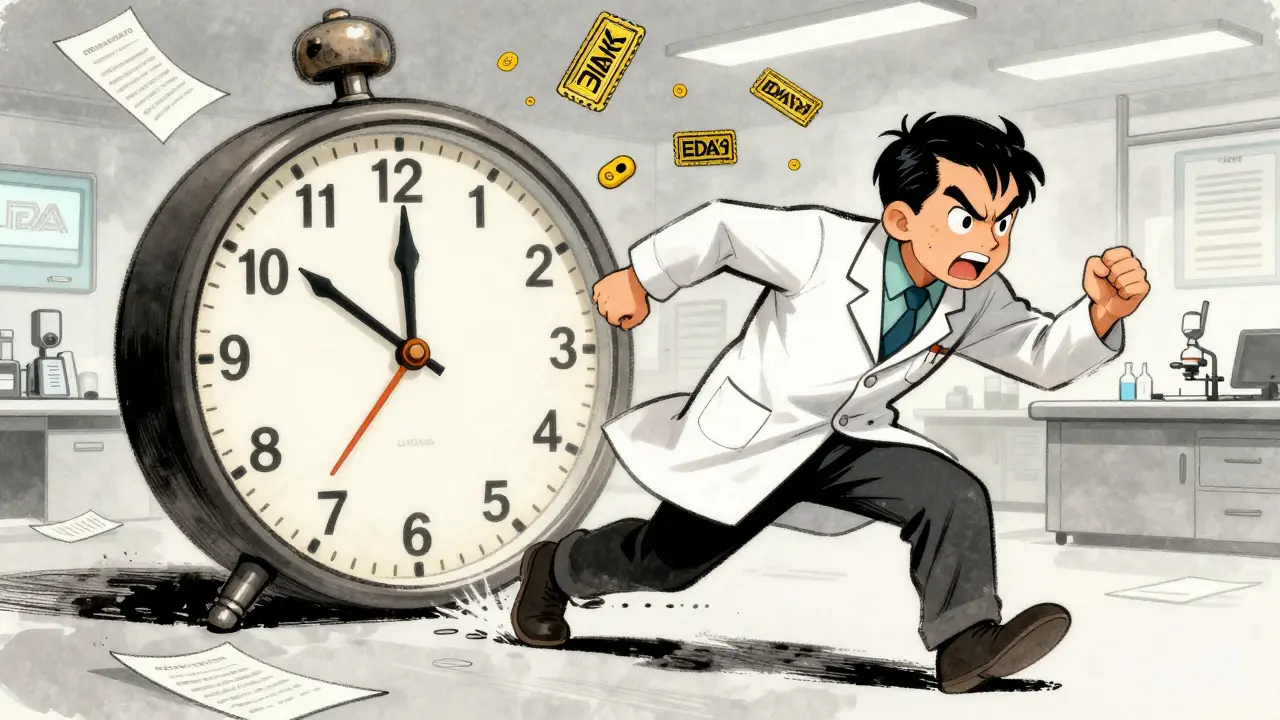
When a pharmaceutical company spends over $2 billion and 12 years developing a new drug, they don’t just want to protect their invention-they need to recover their investment. But here’s the catch: the patent clock starts ticking the moment they file the application, not when the FDA finally approves the drug. By the time the drug hits the market, patent term restoration (PTE) might be the only thing standing between them and generic competition. Most people think patents last 20 years. That’s true-but only if the patent was filed right before clinical trials began. In reality, most drugs are patented years before human testing even starts. That means by the time the FDA gives the green light, 8 to 10 years of patent life are already gone. Without PTE, companies would have barely five years of market exclusivity to earn back their costs. That’s not a business-it’s a gamble. PTE fixes that. It’s not a loophole. It’s a legal reset button. The system was created by the Hatch-Waxman Act of 1984, named after Senator Orrin Hatch and Representative Henry Waxman. It wasn’t designed to give drug makers endless monopoly power. It was meant to balance two things: letting generics enter the market quickly after approval, and giving innovators enough time to profit from their invention after the long FDA review process. Today, over 1,200 patent extensions have been granted since 2010. And every single one had to clear a strict set of rules.
How Patent Term Restoration Actually Works
PTE doesn’t just add years to your patent. It’s a precise calculation. The formula looks complicated, but here’s what matters in plain terms:- Take the total time from when you submitted your drug to the FDA until approval.
- Subtract any time you were slow to respond to FDA questions.
- Subtract half the time before the patent was granted (if you filed early).
- The result? That’s your extension.
Who Gets PTE-and Who Doesn’t
PTE only applies to specific products: human drugs, medical devices, food additives, color additives, and animal drugs. That’s it. You can’t extend a patent for a new software algorithm or a mechanical tool. The system was built for regulated medical products. Here’s another key point: only one patent per product can get extended. If a company has 12 patents covering the same drug, only one of them qualifies. Companies often pick the one with the longest remaining life. That’s why you’ll see lawsuits over which patent is the "correct" one to extend. And here’s where it gets tricky: PTE doesn’t give you new rights. If your original patent only covered the active ingredient, the extension doesn’t let you block generics from making a similar formulation. You’re stuck with the same claims you had before. That’s why many companies file secondary patents-for delivery methods, dosages, or uses-and try to extend those too. In fact, 78% of PTE applications now involve secondary patents, not the original compound patent. That’s not what the Hatch-Waxman Act intended. But it’s what the system allows.The Hidden Cost: Delaying Generics
The FDA approves over 50 new drugs each year. About half of them get some kind of patent extension. And once that extension kicks in, generic competition is frozen. The numbers tell the story:- Drugs with PTE keep 92% of the market during the extension period.
- After generics enter, that drops to 37%.
- The Congressional Budget Office estimates PTE adds $4.2 billion a year to U.S. drug spending.

The Paperwork Nightmare
Applying for PTE isn’t like renewing a driver’s license. It’s a marathon of documentation. The FDA requires day-by-day proof that the company didn’t waste time. Every email, every meeting, every submission to the agency must be tracked. If a single form was filed two days late? The whole application can be denied. According to the USPTO, 12.7% of PTE applications get rejected. The most common reason? Inadequate proof of due diligence. One senior patent attorney on Reddit described it this way: "We’ve seen companies lose extensions because they didn’t save an email from a lab technician saying they shipped a sample on time. It sounds insane-but the FDA requires it." The application process takes an average of 217 days. That’s over seven months. And during that time, the clock keeps ticking. If your patent expires before the extension is approved, you’re out of luck. That’s why smart companies use something called an interim extension. It’s a temporary fix. You can apply for it six months before your patent expires. It keeps your rights alive while the USPTO and FDA sort out the final decision.The Bigger Picture: Biologics, Regulations, and the Future
In 2023, 34% of PTE applications were for biologic drugs-things like monoclonal antibodies or gene therapies. That’s up from 19% in 2018. Biologics take even longer to approve than traditional drugs. So the need for PTE is growing. The FDA just released new guidance in January 2024 on what counts as "due diligence." It’s clearer now. But it’s also stricter. Companies that used to get away with vague records now need detailed logs. And the USPTO is pushing for digital submissions. A new platform is set to launch in Q2 2026. That could cut processing times in half. But there’s pressure from lawmakers. The proposed Preserve Access to Affordable Generics and Biosimilars Act wants to limit how companies stack patents to delay competition. If it passes, PTE could become harder to get. Meanwhile, the Government Accountability Office is finalizing a major review due in December 2025. Its findings could lead to changes in how extensions are calculated-or even whether they’re allowed at all.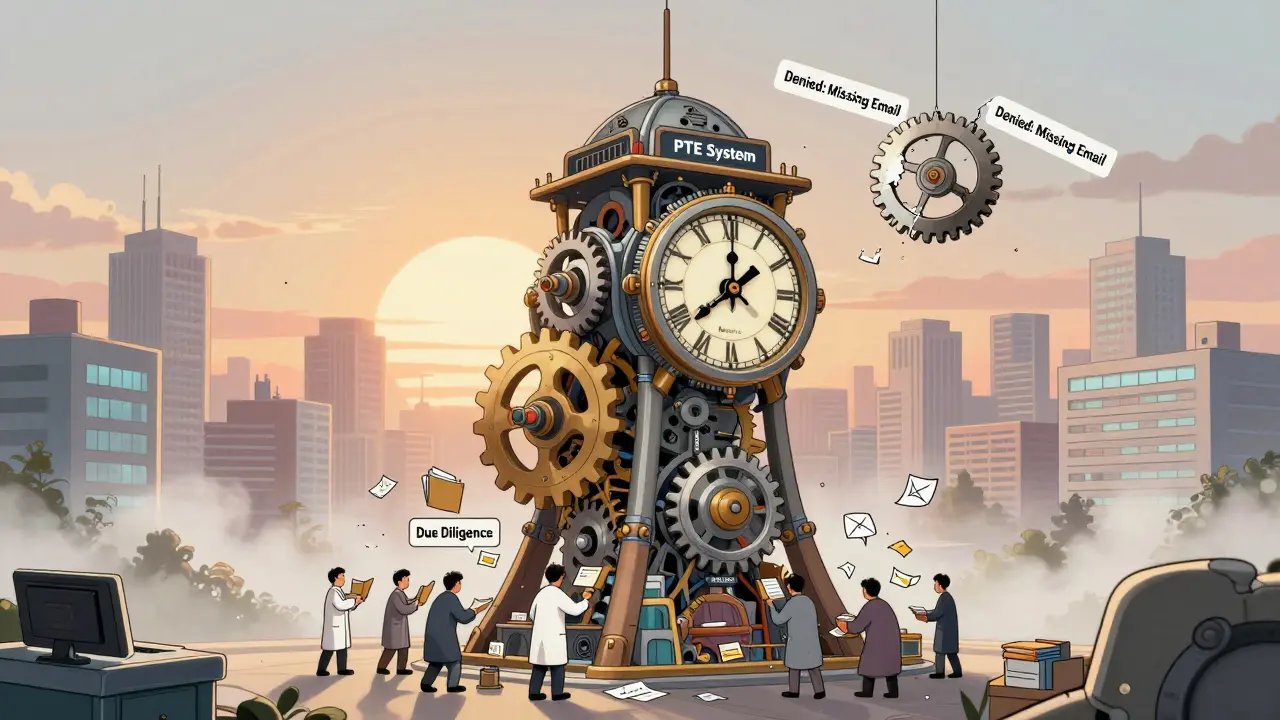
Why It Matters for Patients and Prices
You might think PTE is just a legal technicality. But it directly affects your medicine costs. Branded drugs make up only 12% of prescriptions filled in the U.S., but they generate 78% of pharmaceutical revenue. That’s because they’re the only ones you can buy when the patent is active. When PTE delays a generic, you pay more. A single extended drug can cost $10,000 a year. A generic version? $300. The system was designed to reward innovation. And it does. But it also lets companies lock in profits longer than intended. Whether that’s fair depends on who you ask. For manufacturers: it’s survival. For patients: it’s affordability. For regulators: it’s balancing both. There’s no perfect answer. But understanding PTE helps you see why some drugs stay expensive for years-even after they’ve been on the market for a decade.What You Need to Know
- PTE only applies to FDA-regulated products-drugs, devices, food additives.
- You can get up to five years added, but total market exclusivity can’t exceed 14 years after approval.
- Only one patent per product can be extended.
- Applications must be filed within 60 days of FDA approval.
- Documentation must prove continuous progress-no gaps allowed.
- Interim extensions are available if your patent expires before approval.
- Secondary patents are now the most common targets for PTE, not original compound patents.
- Over 300 applications were filed in 2023, with a 12.7% denial rate.
Can a patent be extended more than once for the same drug?
No. The Hatch-Waxman Act limits each product to one patent term extension. Even if a company holds multiple patents covering the same drug-like one for the molecule, another for the pill coating, and another for a new dosage form-only one of those patents can receive an extension. Companies usually choose the patent with the longest remaining life to maximize exclusivity.
What happens if I miss the 60-day deadline to apply for PTE?
You lose the opportunity forever. There are no extensions, exceptions, or grace periods. The 60-day window starts the day the FDA grants marketing approval. If your legal team doesn’t file within that time-even if it’s one day late-the patent expires on schedule, and generic competitors can enter the market immediately. Many companies assign dedicated teams to track FDA approval dates precisely to avoid this.
Does PTE apply to biologic drugs like Humira or Keytruda?
Yes. Since the 21st Century Cures Act of 2016, biologics-including monoclonal antibodies, gene therapies, and cell-based treatments-are eligible for patent term restoration. In fact, biologics now account for 34% of all PTE applications in 2023, up from 19% in 2018. Because biologics often take longer to develop and approve than traditional small-molecule drugs, they rely heavily on PTE to recover lost patent life.
Can I extend a patent that’s already expired?
No. The patent must still be active at the time you apply. If it has already expired, even by one day, you cannot get a restoration. That’s why interim extensions exist-to bridge the gap between patent expiration and final FDA approval. If your patent is set to expire in six months and approval is still pending, you can apply for an interim extension to keep your rights alive until the final decision.
Why do so many PTE applications get denied?
The main reason is insufficient proof of "due diligence." The FDA requires detailed records showing continuous progress through the regulatory review process. Missing emails, unlogged delays, or vague timelines can lead to denial. In 2023, 12.7% of applications were rejected, mostly because companies didn’t document every step of communication with the FDA. It’s not enough to say "we submitted everything on time." You have to prove it-with dated records.



Whoa, this is wild-PTE is basically the pharma version of a ‘do-over’ card in a board game where the house always wins. 😅 I’m from India, and I’ve seen how these extensions make life-saving meds unaffordable here. One drug my aunt needed? $12K/year until generics came in… then $300. The math ain’t hard. Innovation matters, but not at the cost of human lives.
Okay but let’s be real-this whole system is a glorified loophole factory. Companies aren’t trying to recover R&D costs; they’re trying to squeeze every last penny out before generics show up. And don’t even get me started on secondary patents. It’s like they’re playing monopoly with medicine. 🤦♀️
so like… uhhhhh… pharma bros spent 2 billion so they get a time-out? lol. what’s next? a 5-year nap for coders who made a buggy app? ‘sorry, your code crashed 3x, but i had a hard week’? 🤡
and ‘due diligence’? they lost an email from a lab tech? oh noes. the FDA is now your personal email archivist. this isn’t science. it’s a bureaucratic opera.
also, 78% of extensions are on secondary patents? so the original drug is just the appetizer and the real money’s in the pill coating? i’m not mad. i’m just disappointed.
While the intent of the Hatch-Waxman Act was to balance innovation and access, the current implementation reveals significant structural inefficiencies. The documentation burden for PTE applications is disproportionate, and the lack of automation contributes to high denial rates. Digital submission platforms, as proposed for 2026, represent a necessary step toward reducing administrative waste. However, without reforms to cap secondary patent extensions, the system will continue to distort market dynamics.
This whole thing is like a marathon where the finish line keeps moving. You run for 12 years, then they say, ‘oh wait, you started too early, so we’re gonna take away 8 years of your prize time.’ So you get a little boost? Cool. But then they let you stretch it with patent candy-like putting glitter on a band-aid and calling it a new invention.
And honestly? I get why companies do it. If you’re risking billions and your whole team’s future on one drug, you’re gonna cling to every legal inch you can. But we’re not just talking about profit anymore-we’re talking about people who can’t afford insulin because a company filed a patent on the color of the vial.
It’s not evil. It’s systemic. And it’s broken. We need to stop pretending this is about innovation. It’s about rent-seeking with a lab coat.
Did you know the FDA and USPTO are secretly owned by Big Pharma? 🤫 I’ve been digging into this for years. The 60-day deadline? That’s not a rule-it’s a trap. They let you miss it on purpose so they can push you into buying their ‘legal recovery packages’ for $50k. And interim extensions? Total scam. It’s just a way to keep you paying fees while they delay generics. I’ve got screenshots. I’ll post them if you DM me.
Also-why is no one talking about how the FDA ‘accidentally’ loses paperwork? Coincidence? I think not. 🕵️♀️
Yesss!! This is SO important!! 💖 Thank you for breaking this down so clearly!! I’ve been trying to explain this to my cousin who’s in med school and she was totally confused. You just made it click for her!! 🙌 PTE isn’t magic-it’s math. And math shouldn’t be used to keep people from getting healthy. Huge respect!! 🌟
One sentence: They’re not extending patents-they’re extending suffering.