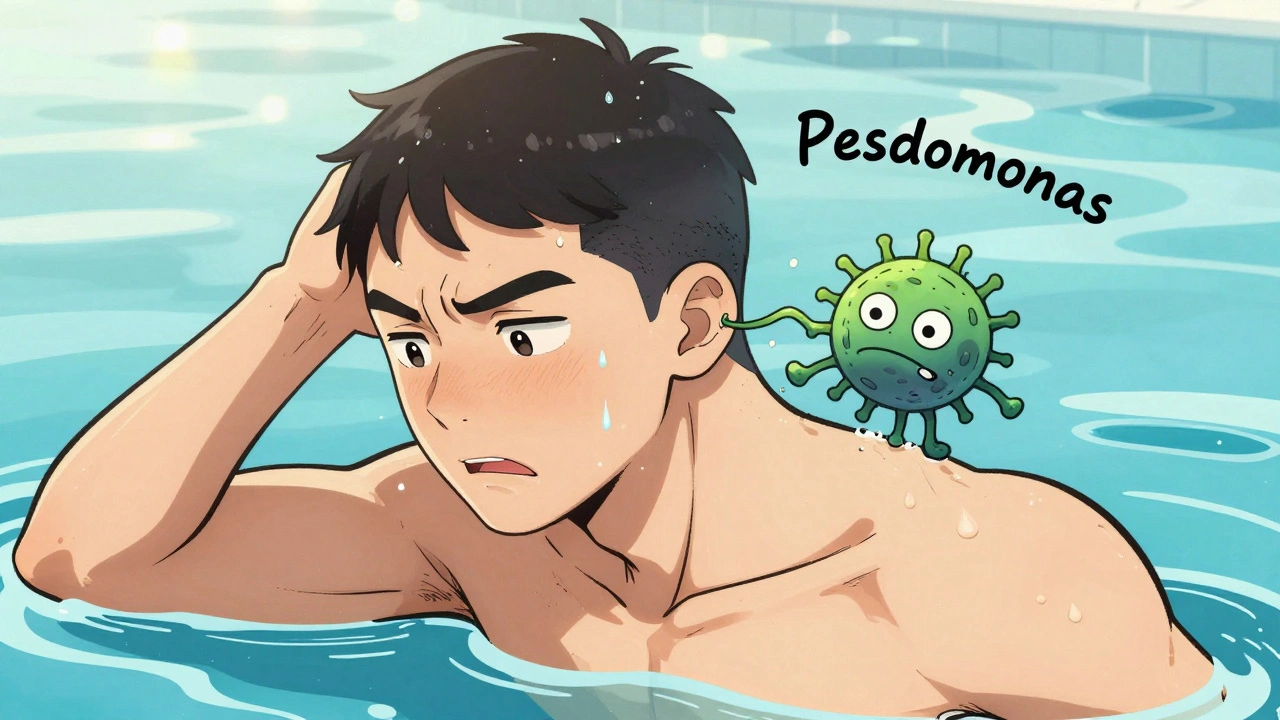
Otitis externa, commonly called swimmer’s ear, isn’t just a nuisance after a day at the pool. It’s an infection that can turn a simple splash into days of pain, swelling, and muffled hearing. Unlike middle ear infections, this one lives in the outer ear canal - the tube that runs from your eardrum to the outside of your head. When water gets trapped, the skin inside swells, cracks, and becomes a breeding ground for bacteria or fungi. If you’ve ever felt that sharp, stabbing pain when you tug on your earlobe, you know exactly what this feels like.
What Causes Swimmer’s Ear?
The main culprit? Moisture. When water stays in your ear after swimming, showering, or even sweating, it washes away the natural protective layer of earwax. That wax isn’t just dirt - it’s acidic, with a pH between 5.0 and 5.7, and it keeps harmful microbes from taking over. Once that barrier breaks down, bacteria move in. Pseudomonas aeruginosa is the most common offender, responsible for over half of bacterial cases. Staphylococcus aureus comes in second. Fungi like Aspergillus cause about 1 in 10 cases, especially in warm, humid climates like Durban.
It’s not just swimmers who get it. People who clean their ears with cotton swabs, wear hearing aids, or have eczema are also at higher risk. Scratching the ear canal with a Q-tip might feel good, but it scrapes off that protective layer and leaves tiny cuts where germs can settle. Diabetes also increases risk - if your immune system is already working harder, your ear canal becomes an easy target.
How Bad Can It Get?
Not all cases are the same. Mild cases mean itching, slight redness, and a little discomfort when you move your jaw. Moderate cases bring more swelling - enough to block half the ear canal, making your hearing feel dull. Severe cases? That’s when the canal swells shut, pain becomes constant and intense, and you might even get a fever or swollen lymph nodes near your neck. About 20% of cases reach this level, and if left untreated, they can lead to something called malignant otitis externa, a rare but dangerous infection that spreads to the skull bone. It’s most common in older adults with diabetes.
What Ear Drops Actually Work?
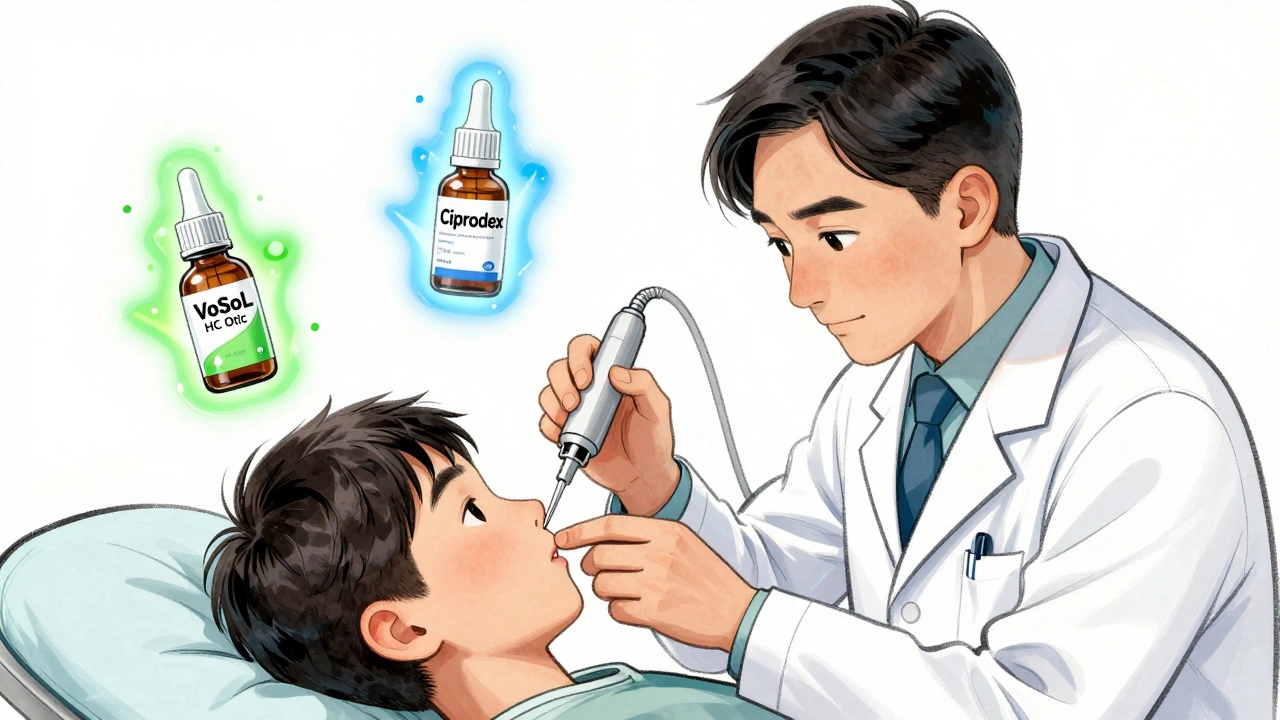
The right ear drop depends on what’s causing the problem - and how bad it is. For mild cases, the gold standard is a 2% acetic acid solution with hydrocortisone, sold under brands like VoSoL HC Otic. Acetic acid restores the ear’s natural acidity, killing bacteria and fungi. Hydrocortisone reduces swelling and itching. Studies show this combo works in 85% of mild cases. It’s also cheap - around $15 for a 10mL bottle - and can even be used as a preventive rinse after swimming.
But if your ear canal is swollen shut or the pain is unbearable, you need something stronger. That’s where Ciprodex (ciprofloxacin and dexamethasone) comes in. This prescription drop combines an antibiotic (ciprofloxacin) with a powerful steroid (dexamethasone). It kills bacteria and reduces swelling at the same time. Clinical trials show it clears up symptoms in 92% of cases within a week. It’s the most prescribed treatment for moderate to severe swimmer’s ear.
But here’s the catch: Ciprodex costs about $147.50 without insurance. Many people switch to generic ofloxacin drops, which cost around $45 and are almost as effective - about 88% success rate. The downside? Ofloxacin doesn’t have a steroid, so swelling might take longer to go down.
For fungal infections - which make up about 10% of cases - acetic acid won’t cut it. You need an antifungal. Clotrimazole 1% solution works in 93% of cases, while acetic acid only hits 78%. If you’ve been using antibiotic drops for days and it’s not helping, fungal infection might be the real issue.
Stay away from older drops like neomycin-polymyxin. They’re cheaper but carry a risk of permanent hearing damage if your eardrum is perforated - something you might not even know about. The FDA warns against them for this reason.
How to Use Ear Drops Correctly
Even the best drop won’t work if you use it wrong. Most people make the same mistakes:
- They don’t warm the bottle first. Cold drops can make you dizzy. Hold it in your hand for 1-2 minutes.
- They lie on their side, but not long enough. You need to stay still for at least 5 minutes after putting in the drops so the medicine reaches deep into the canal.
- They use cotton swabs afterward. That wipes out the medicine and pushes debris deeper.
- They skip debridement. If your ear canal is clogged with wax or pus, the drops can’t reach the infection. A doctor needs to gently clean it out with suction or a soft tool - not a Q-tip.
Studies show that people who skip debridement cut their treatment success rate by 40%. That’s why even if you buy the best drops, you might still feel worse if your ear wasn’t cleaned first.
What Doesn’t Work - And Why
Over-the-counter ear drops labeled for "earwax removal" like Debrox are useless for swimmer’s ear. They’re made to dissolve wax, not fight infection. Using them can make things worse by irritating the skin further.
Oral antibiotics? Don’t bother. The American Academy of Otolaryngology says they offer almost no extra benefit over topical drops - but they come with side effects like nausea, diarrhea, and yeast infections. They’re only used if the infection has spread beyond the ear canal.
And no, putting alcohol or vinegar in your ear isn’t a reliable fix. While acetic acid works in controlled, buffered formulas, homemade mixtures are too harsh and can burn your skin. Stick to FDA-approved products.
When to See a Doctor
You don’t need to rush to the clinic for mild itching. But if you have any of these, get help right away:
- Pain that gets worse after 2 days of using drops
- Fever above 101°F (38.3°C)
- Swelling that blocks your ear canal completely
- Drainage that’s thick, yellow, or bloody
- History of diabetes or a weakened immune system
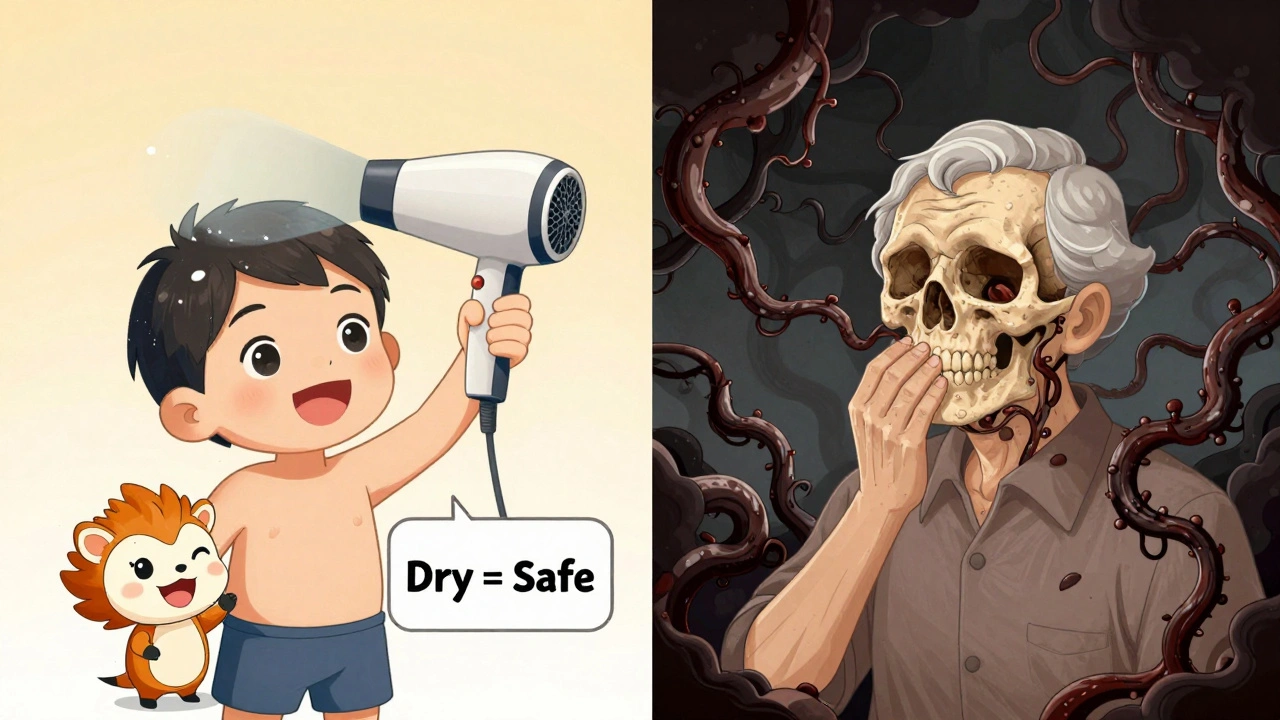
Delayed treatment can lead to complications - especially if you have diabetes. In those cases, even a small ear infection can turn into something serious fast.
Prevention Is Easier Than Treatment
The best way to avoid swimmer’s ear? Keep your ears dry. After swimming or showering:
- Tilt your head to each side and gently pull your earlobe to help water drain.
- Use a hairdryer on the lowest, coolest setting, held at least a foot away.
- Use a few drops of over-the-counter acetic acid solution (like Swim-Ear) as a rinse. It reduces recurrence by 65%.
- Avoid putting anything - even cotton swabs - into your ear canal.
If you swim often, consider silicone earplugs designed for swimmers. They’re not 100% waterproof, but they cut down water exposure significantly.
What’s New in Treatment?
In March 2023, the FDA approved a new version of ofloxacin called OtiRx, which releases medication slowly over 24 hours instead of every 12. That means fewer applications - and better compliance. Early results show 94% effectiveness.
Researchers are also testing microbiome-based treatments. The idea? Instead of killing all bacteria, restore the healthy ones that naturally protect your ear. It’s still in early trials, but it could change how we treat ear infections in the future.
Right now, though, the best approach is simple: use the right drop for your symptoms, clean your ear properly, and don’t ignore warning signs. Swimmer’s ear isn’t dangerous for most people - but it’s painful, avoidable, and treatable if you act fast.
Can swimmer’s ear go away on its own?
Mild cases can improve in a few days without treatment, especially if you keep your ear dry. But pain, swelling, or hearing loss won’t resolve on their own - and waiting too long can make the infection worse or lead to complications. Most doctors recommend starting treatment within 24-48 hours to prevent the infection from spreading.
Are ear drops better than pills for swimmer’s ear?
Yes, by far. Topical ear drops deliver the medicine directly to the infection site. Oral antibiotics have to travel through your bloodstream and only reach the ear in small amounts. Studies show they add almost no benefit over drops - but they do increase side effects like stomach upset and yeast infections. Guidelines from the American Academy of Otolaryngology strongly recommend against oral antibiotics for simple swimmer’s ear.
Can I use hydrogen peroxide to clean my ear if I have swimmer’s ear?
No. Hydrogen peroxide can irritate the already inflamed skin in your ear canal and delay healing. It’s not designed to treat infection - it’s a cleaning agent for surfaces. Using it can make your symptoms worse. Only use ear drops prescribed or recommended by a doctor, and avoid putting anything inside your ear canal unless instructed.
Why does my ear hurt more when I chew or move my jaw?
The ear canal runs close to the jaw joint. When you chew or open your mouth wide, the inflamed skin inside the canal gets stretched and pressed, triggering pain. This is actually a classic sign of otitis externa - not a middle ear infection. If your ear hurts when you move your jaw, it’s likely swimmer’s ear.
How long should I wait before swimming again after treatment?
Wait until all symptoms are gone - usually 7-10 days after starting treatment. Even if the pain is gone, the skin inside your ear is still healing. Swimming too soon can reintroduce water and bacteria, leading to a relapse. Use earplugs and dry your ears thoroughly when you do return to the water.
Can children get swimmer’s ear?
Yes - and they’re actually more likely to get it than adults. Kids aged 7 to 12 have the highest incidence rate, often because they swim more and have narrower ear canals that trap water easily. The same treatments work for children, but always check with a doctor before using any drops. Never use adult-strength drops on kids without medical advice.





I used to think swimmer’s ear was just a myth people made up to avoid swimming. Then I got it. One dip in the lake and I couldn’t sleep for three nights. The pain when I chewed? Like someone was drilling into my skull. Never thought it could be that bad.
America’s got the best ear drops. Why are people still using foreign crap? Ciprodex? That’s the gold standard. If you’re not using it, you’re just wasting time. And don’t even get me started on those cheap generics - they’re for people who don’t care about results.
I’ve had this twice. First time I ignored it. Second time I went straight to the doctor. Big difference. The debridement part? That’s the secret. No one tells you that. Your ear has to be clean before the drops can even work. Don’t skip it.
If you’re reading this and you’ve got swimmer’s ear - you’re not alone. I’ve been there. I’ve cried from the pain. But you can get through it. Use the right drops. Don’t poke your ear. Let it heal. You’re stronger than this infection. And you don’t need to suffer in silence.
It is important to understand that otitis externa is a preventable condition. Prevention is always better than cure. After swimming, drying the ears thoroughly and using a buffered acetic acid rinse can reduce recurrence significantly. This is not optional. It is essential.
You people are so naive. You think OtiRx is magic? It’s just a repackaged ofloxacin with a fancy name. The FDA approves everything if the company pays enough. And don’t even get me started on microbiome stuff - that’s science fiction dressed up as medicine.
OMG I just tried the acetic acid rinse after swimming and it’s a game changer 😍 I used to get it every time I went to the pool. Now I just drop 3 drops in each ear and boom - no more pain. I’m telling all my swim buddies. You guys need to try this!!
You think you’re smart because you read a medical article? I’ve had swimmer’s ear since I was 12. I don’t need your fancy drops. I just use rubbing alcohol and vinegar. Works fine. Stop overcomplicating everything.
There’s something beautiful about how the body protects itself - earwax isn’t dirt, it’s armor. We’ve been taught to clean our ears like we’re polishing a trophy. But the truth? Our bodies already know how to heal. We just have to stop interfering.
I’m a lifeguard and I’ve seen this a hundred times. The worst cases? Always the ones where people waited too long. One guy came in with a fever and couldn’t open his mouth. That’s not swimmer’s ear anymore - that’s a medical emergency. Don’t wait until you’re crying in the ER. Start the drops early. Even if it’s just a little itch. Don’t ignore it. Your ear will thank you.
I used ciprodex. Cost me a fortune. Didn’t work. I think the doctor just wanted to make money. Now I just let it run its course. It always goes away eventually. Why pay $150 for something that’ll heal on its own?
The key is timing. If you have pain that worsens after 48 hours or drainage that’s thick or bloody - see a doctor immediately. Delaying treatment increases risk of complications, especially with diabetes. This isn’t just about comfort - it’s about preventing permanent damage.
I’m from Kenya. We don’t have Ciprodex here. We use acetic acid and neomycin - same thing, cheaper. People here think American medicine is better. But sometimes, simple works best.