Herbal Supplement Interaction Checker
It is a common trap to believe that because something comes from a plant, it must be harmless. We see "all-natural" on a label and assume safety. But the reality of natural remedies is far more complex. Many people turn to herbs and supplements to manage the uncomfortable side effects of prescription medications, hoping for relief without adding more chemicals to their system. The problem? Some of these natural options can interact dangerously with your drugs or cause their own severe side effects.
You are not alone in this search. According to the National Center for Complementary and Integrative Health (NCCIH), about 23% of U.S. adults use natural products regularly. That number has been climbing for years. But here is the catch: just because a remedy is popular does not mean it is safe for you, especially if you are already taking medication. This article cuts through the marketing hype to look at what the medical evidence actually says about using natural supplements to manage side effects.
The Myth of "Natural Equals Safe"
We need to address the biggest misconception first. The idea that "natural" means "safe" has been systematically debunked by major health organizations like the FDA, JAMA, and Nature. Plants contain potent chemical compounds. These are the same types of molecules found in pharmaceutical drugs. Just because a compound is extracted from a root rather than synthesized in a lab does not make it benign.
Consider Ephedra. Once a popular weight-loss and energy supplement, it was banned in the U.S. after investigations revealed over 800 adverse reaction reports between 1995 and 1999. In many cases, users under 40 suffered heart attacks, strokes, or even death. The American Academy of Family Physicians noted that serious cardiovascular events occurred in roughly 56% of these young patients. There was no "safe dose" for many people; even small amounts triggered life-threatening reactions.
Or look at Liquorice root. It sounds like a sweet treat, but consuming it regularly can lead to pseudohyperaldosteronism. The NHS reports that up to 3% of people who consume liquorice develop high blood pressure, swelling, low potassium levels, and even convulsions. If you are trying to manage blood pressure side effects from another drug, adding liquorice could undo all your progress and put you in the hospital.
Common Supplements and Their Hidden Risks
Many people reach for specific herbs to target common issues like menopause symptoms, colds, or mood swings. Let’s look at the evidence for three of the most popular ones.
Black Cohosh for Menopausal Symptoms
Menopause often brings hot flashes and sleep disturbances, which can feel like side effects of hormonal shifts. Black cohosh is frequently recommended for this. However, the evidence is mixed. The Cleveland Clinic notes that while some specific preparations (like Remifemin®) might help, others do not. More importantly, there have been unconfirmed reports of liver damage associated with black cohosh. While some researchers believe contaminants might be to blame rather than the herb itself, the risk remains real. If you have a history of liver issues, this is not a casual experiment.
Echinacea for Immune Support
If you are taking immunosuppressants for an autoimmune condition or organ transplant, you might think Echinacea is a gentle way to boost your immunity. Think again. Echinacea stimulates the immune system. For someone with an autoimmune disease like lupus or rheumatoid arthritis, this stimulation can worsen their condition. Additionally, if you are allergic to plants in the daisy family (ragweed, marigolds, chrysanthemums), Echinacea can trigger allergic reactions ranging from rashes to asthma attacks.
St. John’s Wort for Mood
This herb is famous for helping with mild depression. But it is also notorious for causing dangerous drug interactions. St. John’s wort induces the CYP3A4 enzyme in your liver, which speeds up the breakdown of many medications. A study published in *Clinical Pharmacology & Therapeutics* found that it can reduce the effectiveness of birth control pills by 15-24%. It also lowers the levels of antidepressants, anti-HIV drugs, and blood thinners in your bloodstream. Taking St. John’s wort alongside these prescriptions can render them useless, leading to unintended pregnancies, viral rebound, or blood clots.
| Supplement | Common Use | Key Risk/Side Effect | Major Drug Interactions |
|---|---|---|---|
| St. John’s Wort | Mild Depression | Sun sensitivity, anxiety | Birth control, antidepressants, HIV meds, blood thinners |
| Ginkgo Biloba | Cognitive function, circulation | Bleeding risk, headaches | Warfarin, aspirin, NSAIDs |
| Cranberry Extract | Urinary tract health | Kidney stones (in susceptible individuals) | Warfarin (increases bleeding risk) |
| Bupleurum Root | Inflammation, liver support | Hematuria (blood in urine), urinary urgency | Diuretics, blood pressure meds |
The Interaction Trap: When Natural Meets Pharmaceutical
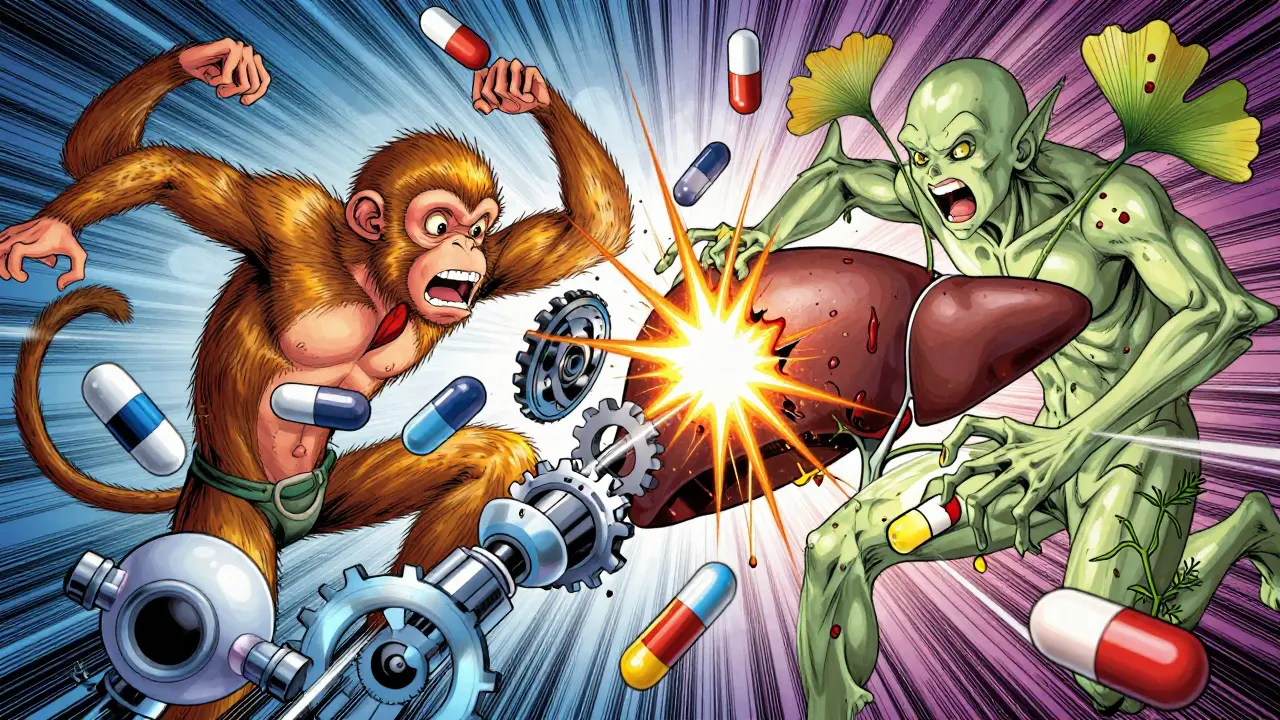
The most dangerous aspect of self-medicating with supplements is the interaction with prescribed drugs. Your liver processes both herbal compounds and pharmaceuticals. When they meet, they can interfere with each other in two main ways:
- Inhibition: The herb blocks the enzyme that breaks down the drug. This causes the drug to build up in your body to toxic levels. Example: Grapefruit juice inhibits enzymes that process certain statins and blood pressure meds, potentially causing muscle damage or kidney failure.
- Induction: The herb speeds up the enzyme. This clears the drug from your body too fast, making it ineffective. Example: As mentioned, St. John’s wort induces enzymes, neutralizing many vital medications.
Bleeding risks are another major concern. Ginkgo biloba and cranberry extract both have mild blood-thinning properties. If you are taking warfarin, aspirin, or clopidogrel, adding these supplements can significantly increase your risk of internal bleeding or bruising. You might not notice the danger until you suffer a severe hemorrhage.
Quality Control and Contamination Issues
Even if an herb is theoretically safe for you, the product you buy might not be. Unlike pharmaceuticals, herbal supplements in the U.S. are regulated under the Dietary Supplement Health and Education Act (DSHEA) of 1994. This law prevents the FDA from requiring pre-market safety and efficacy testing. Manufacturers are responsible for ensuring their products are safe, but enforcement is reactive, not proactive.
This leads to significant quality issues:
- Adulteration: Products may be mixed with undisclosed pharmaceutical drugs to enhance effects. Some weight-loss herbs have been found to contain sibutramine, a banned drug.
- Contamination: Herbs can absorb heavy metals (lead, mercury, arsenic) from soil or pesticides during farming. A PMC analysis highlighted that many reported adverse effects stem from these toxins rather than the plant itself.
- Misidentification: Wrong plants are sometimes used due to poor supply chain tracking. DNA barcoding programs like the Botanical Adulterants Prevention Program have shown that a significant percentage of herbal products contain different species than labeled.
In Japan, the Ministry of Health documented cases of interstitial pneumonia linked to *syo-saiko-to*, a traditional formula containing Scutellaria root. Liver dysfunction was also reported in 1-5 out of every 10,000 users, predominantly women over 50. These cases highlight that even standardized traditional formulas carry risks.
Who Is Most at Risk?
While anyone can experience side effects, certain groups face higher dangers:
- Older Adults: As we age, our kidneys and liver become less efficient at eliminating substances from the body. JAMA warns that older adults may retain herbal compounds longer, leading to higher concentrations and increased toxicity. Polypharmacy (taking multiple drugs) is common in this group, multiplying interaction risks.
- Pregnant Women: Many herbs cross the placenta. Safety data is scarce because ethical constraints prevent rigorous clinical trials on pregnant populations. What works for a healthy adult might harm fetal development.
- People with Chronic Conditions: Liver disease, kidney disease, autoimmune disorders, and bleeding disorders create fragile physiological balances that herbs can easily disrupt.
How to Navigate Natural Remedies Safely
You do not have to give up on natural remedies entirely, but you must approach them with caution. Here is a practical checklist for managing side effects safely:
- Talk to Your Doctor First: Never assume a supplement is safe because it is sold over the counter. Bring a list of all your current medications and supplements to your appointment. Ask specifically: "Could this interact with my current drugs?"
- Check Reputable Sources: Avoid blog posts and anecdotal forum threads as primary sources. Look for information from the National Center for Complementary and Integrative Health (NCCIH), the Mayo Clinic, or the Natural Medicines Database. These sources categorize remedies by evidence level (e.g., "possibly effective," "likely unsafe").
- Start Low and Go Slow: If your doctor approves, start with the lowest possible dose. Monitor your body for new symptoms like nausea, rash, fatigue, or changes in blood pressure.
- Choose Quality Brands: Look for third-party testing seals from organizations like USP (United States Pharmacopeia), NSF International, or ConsumerLab.com. These indicate the product has been tested for purity and accurate labeling.
- Report Adverse Events: If you suspect a supplement caused a side effect, report it to the FDA’s Safety Reporting Portal. This helps regulators identify dangerous products faster.
Conclusion: Evidence Over Hype
The global herbal supplements market is booming, valued at billions of dollars, driven by a desire for holistic health. But desire does not equal safety. The evidence shows that natural remedies are biologically active substances with real potential for harm. They can cause liver damage, trigger allergic reactions, and dangerously interact with life-saving medications.
Managing side effects is crucial for your quality of life, but doing so blindly is risky. By understanding the difference between marketing claims and clinical evidence, you can make informed choices. Always prioritize professional medical advice over internet trends. Your health is too important to gamble on unverified "natural" solutions.
Is it safe to take herbal supplements with prescription medication?
Not necessarily. Many herbal supplements interact with prescription drugs by altering how your liver processes them. For example, St. John's wort can make birth control pills and antidepressants less effective, while Ginkgo biloba can increase bleeding risk when taken with blood thinners. Always consult your doctor before combining any supplement with medication.
What are the most common side effects of natural remedies?
Common side effects include gastrointestinal distress (nausea, diarrhea), allergic reactions (rashes, asthma), headaches, dizziness, and dry mouth. More severe but less common effects include liver damage, kidney injury, and cardiovascular issues like high blood pressure or rapid heartbeat.
Why aren't herbal supplements regulated like drugs?
In the U.S., the Dietary Supplement Health and Education Act (DSHEA) of 1994 classifies supplements as food, not drugs. This means manufacturers do not need to prove safety or efficacy before selling them. The FDA only intervenes after a product is proven harmful, unlike pharmaceuticals which undergo rigorous pre-market testing.
Can natural remedies cause liver damage?
Yes. Several herbs, including black cohosh, kava, and comfrey, have been linked to hepatotoxicity (liver damage). Sometimes the damage comes from the herb itself, and other times from contaminants like heavy metals or adulterants added during manufacturing. If you experience jaundice, dark urine, or abdominal pain after starting a supplement, seek medical attention immediately.
Are older adults at higher risk from supplements?
Yes. Older adults often have reduced kidney and liver function, which slows the elimination of substances from the body. This can lead to higher concentrations of herbal compounds and increased toxicity. Additionally, seniors are more likely to take multiple medications, raising the chance of dangerous drug-supplement interactions.