Imagine a patient named Sarah. She has bipolar disorder and is prescribed lithium, a mood stabilizer that requires careful blood level monitoring. Sarah moves from a secure psychiatric unit back to her community home. The handover notes are brief. Her general practitioner (GP) continues the prescription but doesn't know she also takes over-the-counter ibuprofen for migraines. Two weeks later, Sarah feels dizzy and confused. Her lithium levels have spiked to toxic ranges because of the interaction, compounded by dehydration. This isn't just bad luck; it’s a failure in medication safety within mental health care coordination. This scenario plays out far too often. Medication safety in mental health isn't just about writing the right dose on a script. It is a complex web of communication, monitoring, and system design designed to prevent harm while treating serious conditions. With psychotropic medications carrying unique risks-from narrow therapeutic windows to high potential for diversion-coordinating care effectively is the single most important factor in keeping patients safe.
The High Stakes of Psychotropic Medication Management
Mental health settings face a unique set of challenges compared to general medical wards. Patients may have impaired cognition, struggle with communication, or exhibit behaviors that make standard administration difficult. According to research highlighted by the National Institutes of Health (NIH), these factors create a perfect storm for adverse drug events (ADEs). The World Health Organization (WHO) launched its Global Patient Safety Challenge: 'Medication Without Harm' in 2017, specifically identifying mental health care as a high-risk area. Why? Because the margin for error is slim. Medications like lithium and clozapine are classified as "high-alert" medications. They can save lives when managed correctly but cause severe organ damage or death if doses are missed, doubled, or interact poorly with other substances. Consider the data: NHS England reported that only 40% of patients prescribed lithium in primary care receive the necessary regular health checks. That means nearly six out of ten people are flying blind, risking toxicity without realizing it until symptoms appear. This gap highlights a critical truth: prescribing the drug is only step one. The real work happens in the ongoing coordination between specialists, GPs, pharmacists, and the patient.
Core Principles of Safe Coordination
To bridge the gaps between different care settings, we need robust frameworks. You cannot rely on memory or informal phone calls. Effective coordination relies on three non-negotiable pillars:
- Mandatory Medicines Reconciliation: Every time a patient transitions care-from hospital to home, or from psychiatrist to GP-their entire medication list must be verified against what they are actually taking. New Zealand's Health Quality & Safety Commission found that this simple step significantly reduces discrepancies. If a patient says they stopped taking a pill because it made them nauseous, but the record says otherwise, that discrepancy must be resolved before discharge.
- The Ten Rights and Three Checks: This is the gold standard for administration, emphasized by bodies like Saskatchewan's Registered Psychiatric Nurses Association. Beyond the traditional five rights (patient, drug, dose, route, time), modern protocols add documentation, reason, response, right to refuse, and education. The "three checks" involve verifying the medication label at selection, preparation, and administration. In mental health, where observation of swallowing is often required to prevent hoarding or diversion, this protocol is vital.
- Shared Care Agreements: Clear definitions of who does what. Who monitors kidney function? Who adjusts the dose during a crisis? Who handles the paperwork? Ambiguity leads to errors. A documented care plan should specify trigger symptoms that require immediate contact with the mental health team, rather than waiting for the next scheduled review.
Technology vs. Human Factors
Technology is a powerful ally, but it is not a silver bullet. Electronic prescribing systems have been shown to reduce errors involving wrong drugs, wrong doses, and illegible handwriting by up to 55%, according to evidence cited in New Zealand's medication safety reviews. Digital records allow a GP in a rural clinic to see exactly what a specialist in the city prescribed, including allergies and recent lab results. However, technology introduces new risks. Alert fatigue-where clinicians ignore pop-up warnings because there are too many of them-can lead to dangerous oversights. Furthermore, electronic systems do not solve the human element of communication. Dr. Sarah Ashcroft of King's College London points out that a lack of formal training among general practitioners regarding mental illnesses remains a significant barrier. A GP might see a digital alert for a drug interaction but not understand the clinical nuance of why a specific antipsychotic was chosen despite that risk. Therefore, the best approach combines electronic precision with human expertise. Clinical pharmacist involvement, for instance, has been proven to reduce errors by 25%. Pharmacists act as the bridge, interpreting the data and ensuring the treatment plan makes sense for the individual patient's lifestyle and physical health.

High-Risk Scenarios: Polypharmacy and Transitions
Two scenarios demand extra vigilance: polypharmacy and care transitions. Polypharmacy refers to the use of multiple medications simultaneously. In mental health, this is common. A patient might take an antidepressant, a mood stabilizer, an antipsychotic for sleep, and medications for diabetes or hypertension. Each addition increases the complexity exponentially. The risk isn't just direct interactions between pills; it's cumulative side effects like sedation, weight gain, or metabolic changes. Guidelines from NICE (NG5) stress that every medicine must have a clear, documented indication. If you can't explain why a patient needs it, stop prescribing it. Off-label use, such as using low-dose antidepressants solely for insomnia, carries higher risks of abuse and diversion and should be avoided unless strictly necessary. Care transitions are the most fragile moments. When a patient leaves a secure environment, like a prison or a locked ward, the continuity of care often breaks. NHS England guidance warns against simply omitting medicines during these moves without considering withdrawal effects. Some medications require tapering. Suddenly stopping benzodiazepines or certain antidepressants can cause life-threatening seizures or severe rebound anxiety. The transition plan must include explicit instructions on dose adjustments and immediate follow-up appointments.
| Strategy | Impact on Error Reduction | Key Implementation Challenge |
|---|---|---|
| Electronic Prescribing | Reduces errors by 30-55% | Alert fatigue and system interoperability |
| Clinical Pharmacist Review | Reduces errors by ~25% | Staffing shortages and access in rural areas |
| Mandatory Reconciliation | Significant reduction in discrepancies | Time-consuming; requires accurate patient history |
| Therapeutic Drug Monitoring | Prevents toxicity for high-alert meds | Low adherence in primary care (only 40% compliance noted) |
Monitoring High-Alert Medications
Not all psychotropics are created equal. High-alert medications require specialized monitoring protocols. Lithium, for example, has a narrow therapeutic index-the difference between a helpful dose and a toxic one is small. NICE guidelines specify serum level checks every three months. But blood tests alone aren't enough. Clinicians must also monitor thyroid and kidney function, as long-term lithium use can impair these organs. Clozapine, used for treatment-resistant schizophrenia, requires even stricter oversight due to the risk of agranulocytosis (a dangerous drop in white blood cells). Regular blood counts are mandatory. If a patient misses a blood test, the supply of medication must be withheld until the test is done. This rigid protocol saves lives but requires seamless coordination between the patient, the pharmacy, and the laboratory. Any break in this chain puts the patient at immediate risk. For providers, this means building a "culture of safety." As ASHP guidelines state, this culture must be supported from leadership down to the frontline staff. It encourages reporting near-misses without fear of punishment, allowing teams to fix systemic issues before they cause harm.
Empowering Patients and Families
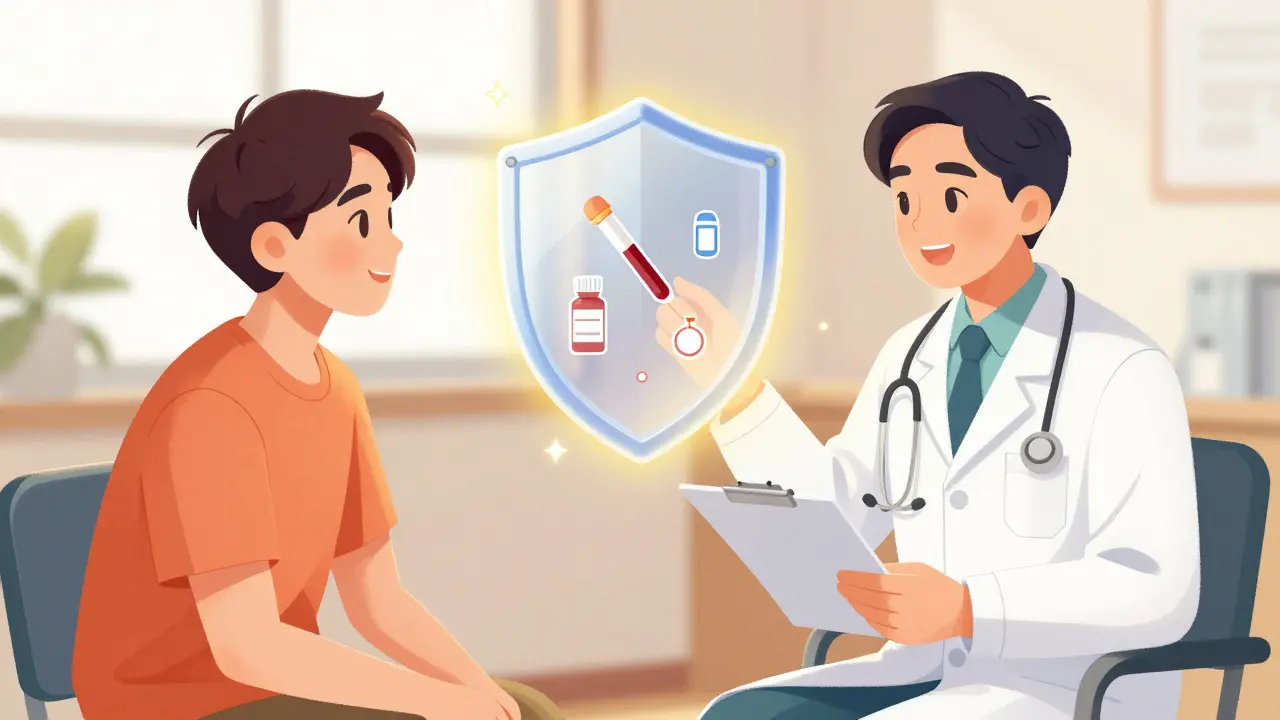
Safety isn't just the clinician's job. Patients and their families are crucial partners. Education is the first line of defense. Patients should understand:
- Why they are taking each medication.
- What side effects to expect and which ones are emergencies.
- How to store medications safely to prevent diversion or accidental ingestion by children.
Next Steps for Safer Care
If you are a clinician, start by auditing your reconciliation process. Are you asking patients what they *actually* take, including supplements? If you are a patient or family member, keep an updated list of all medications and bring it to every appointment. Ask questions: "What are the signs of toxicity?" "Who do I call if I miss a dose?" Coordinating care for safety is not a destination; it is a continuous practice. By combining rigorous protocols, supportive technology, and engaged partnerships, we can drastically reduce the harm associated with psychotropic medications. The goal is simple: effective treatment without unnecessary risk. For Sarah, and millions like her, getting this coordination right means the difference between recovery and tragedy.
What is medication reconciliation in mental health?
Medication reconciliation is the process of creating the most accurate list possible of all medications a patient is taking-including name, dose, frequency, and route-and comparing it against the orders written at admission, transfer, or discharge. In mental health, this is critical because patients often manage multiple prescriptions across different providers (psychiatrists, GPs, specialists) and may have cognitive barriers affecting their ability to report accurately. It prevents errors like duplicate therapies or dangerous omissions.
Why are lithium and clozapine considered high-alert medications?
Lithium and clozapine are high-alert because they carry a heightened risk of causing significant harm when used in error. Lithium has a narrow therapeutic window, meaning small dosage changes can lead to toxicity, damaging kidneys and the thyroid. Clozapine can cause agranulocytosis, a severe drop in infection-fighting white blood cells. Both require strict, regular monitoring (blood tests) and specific handling protocols to ensure patient safety.
How does electronic prescribing improve medication safety?
Electronic prescribing (e-prescribing) reduces errors related to illegible handwriting, incorrect dosages, and wrong drug selections. Studies show it can cut these types of errors by 30-55%. It also facilitates better communication between providers by making the full medication history instantly accessible. However, it requires proper training to avoid issues like alert fatigue, where clinicians ignore important warnings due to excessive notifications.
What are the risks of polypharmacy in mental health patients?
Polypharmacy, or taking multiple medications, increases the risk of adverse drug interactions, cumulative side effects (like sedation or weight gain), and non-adherence. In mental health, patients often take psychotropics alongside medications for physical conditions like diabetes or heart disease. This complexity requires careful review to ensure each drug has a clear indication and that the benefits outweigh the risks of adding another agent.
Why is care transition a high-risk period for medication errors?
Care transitions, such as moving from hospital to home or from specialist to primary care, are when information is most likely to be lost. Errors occur when prescriptions are not transferred accurately, monitoring plans are ignored, or patients are not educated on changes. Sudden discontinuation of certain mental health medications without proper tapering can also cause severe withdrawal symptoms or relapse, making coordinated handovers essential.