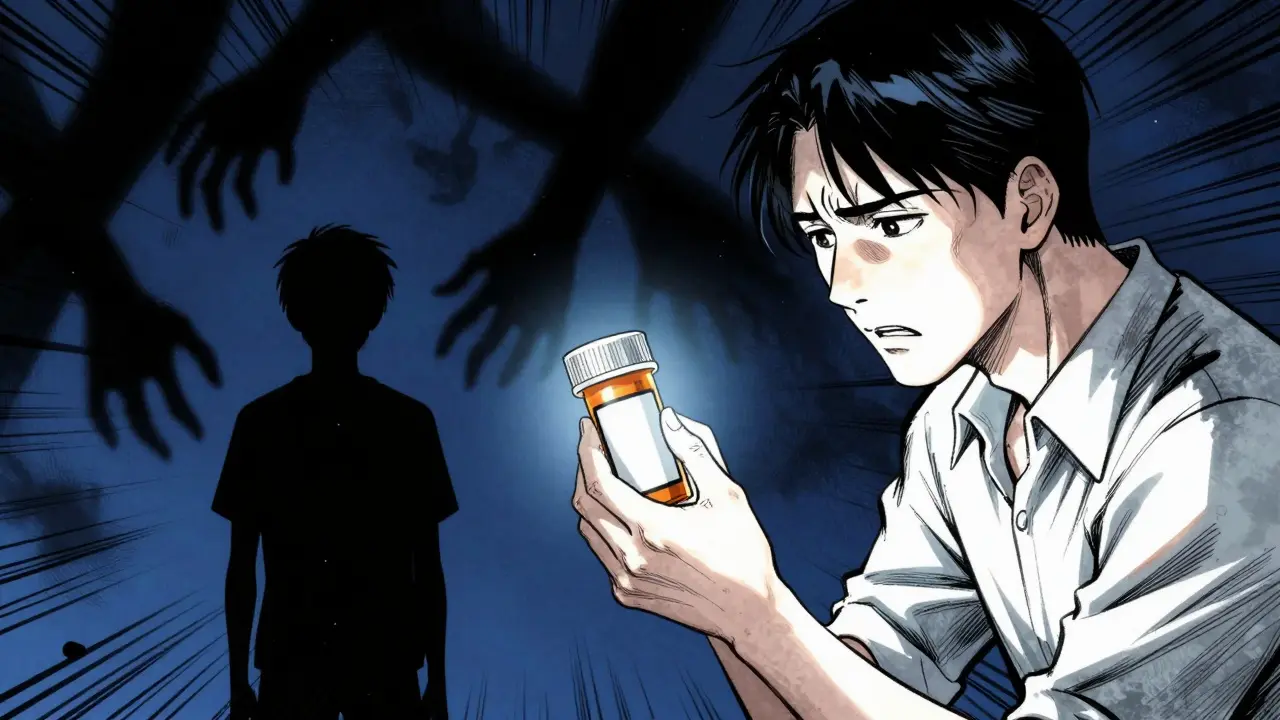
Imagine being told that the medicine prescribed to help your child feel better might actually make them more likely to harm themselves. That is exactly what parents and doctors have faced since 2004, when the U.S. Food and Drug Administration (FDA) issued a black box warning on all prescription antidepressants for children and adolescents. This warning is the strictest safety alert the agency can issue, designed to highlight serious or life-threatening risks. But here is the twist: while the warning was meant to protect young people, a growing body of evidence suggests it may have caused unintended harm by discouraging necessary treatment.
This isn't just a theoretical debate. It’s a real-world dilemma affecting millions of families. The warning states that antidepressants increase the risk of suicidal thinking and behavior in patients under 25. Yet, untreated depression carries its own severe risks, including suicide. So, which path is safer? To answer that, we need to look past the headline-grabbing fear and examine the data, the history, and the human cost behind these labels.
The Origin of the Warning: What Triggered the Alarm?
The story begins in October 2003, when the FDA released a health advisory based on an analysis of 24 short-term clinical trials involving over 4,400 young patients. These studies focused on conditions like major depressive disorder (MDD) and obsessive-compulsive disorder (OCD). The key finding? A small but statistically significant increase in suicidal thoughts among those taking antidepressants compared to those on placebos.
Specifically, the data showed a 4% rate of suicidal events in the drug group versus 2% in the placebo group. Crucially, no actual suicides occurred in these controlled trials. However, the FDA decided this signal was strong enough to warrant immediate action. In January 2005, they formalized this into a permanent black box warning. By May 2007, the scope expanded to include young adults up to age 24.
The intent was clear: ensure physicians closely monitor young patients for any signs of worsening depression or unusual behavior changes. The label requires bold text framed in a black border at the top of every medication insert. It also mandates that pharmacists provide a MedGuide-a patient information leaflet-to anyone filling the prescription. The goal was vigilance, not prohibition. But as we’ll see, the message received by the public was often interpreted differently.
The Unintended Consequences: Less Treatment, More Harm?
Here is where the narrative gets complicated. While the FDA aimed to improve monitoring, the real-world impact was a dramatic drop in antidepressant prescriptions for youth. Studies show that between 20% and 50% fewer young people were prescribed these medications after the warning took effect. According to IQVIA prescription data, annual prescriptions for ages 10-19 fell by 31%, representing about 1.05 million fewer scripts per year.
Why does this matter? Because depression didn’t disappear. In fact, diagnoses of youth depression rose by 14.3% during the same period. When you combine reduced access to effective medication with rising rates of illness, the outcome can be tragic. A landmark systematic review published in Health Affairs in 2023 analyzed data from 1.1 million adolescents across eleven U.S. health plans. The results were stark: psychotropic drug poisonings-a reliable proxy for suicide attempts-increased by 21.7% within two years of the 2005 warning. For young adults aged 20-24, the spike was even higher at 33.7%.
Dr. Stephen Soumerai from the Harvard Pilgrim Health Care Institute noted that the consistency of these negative outcomes across 14 years of research points to a causal link. "The absence of observed benefits and the presence of documented harms suggest this is not a coincidence," he stated. Essentially, by scaring families away from treatment, the warning may have left vulnerable youth without the very support they needed most.
| Metric | Pre-Warning Trend (2003) | Post-Warning Trend (2007-2017) | Change |
|---|---|---|---|
| Antidepressant Prescriptions (Ages 10-19) | Baseline | -31.0% | Decrease |
| Youth Depression Diagnoses | Baseline | +14.3% | Increase |
| Psychotropic Poisonings (Suicide Attempts Proxy) | Baseline | +21.7% | Increase |
| Pharmaceutical Market Size (Pediatric) | $1.27 Billion | $865 Million | -31.9% |
Clinical Reality vs. Label Language
The disconnect between the warning’s language and clinical reality creates confusion for everyone involved. The warning says antidepressants "increase the risk of suicidal thinking." It doesn’t say they cause completed suicides. In fact, large-scale observational studies have repeatedly shown that treated depression leads to lower overall suicide rates than untreated depression.
Consider the perspective of Dr. Zoltán Rihmer and Göran Isacsson, independent researchers who analyzed Swedish suicide data. They looked at 845 suicides among teens from 1992 to 2010, comparing periods before and after similar warnings were introduced globally. Their conclusion? The warning may have increased young suicides by leaving suicidal individuals untreated. This aligns with findings from the Mayo Clinic, which advises patients to weigh the small risk of increased ideation against the substantial benefit of symptom relief.
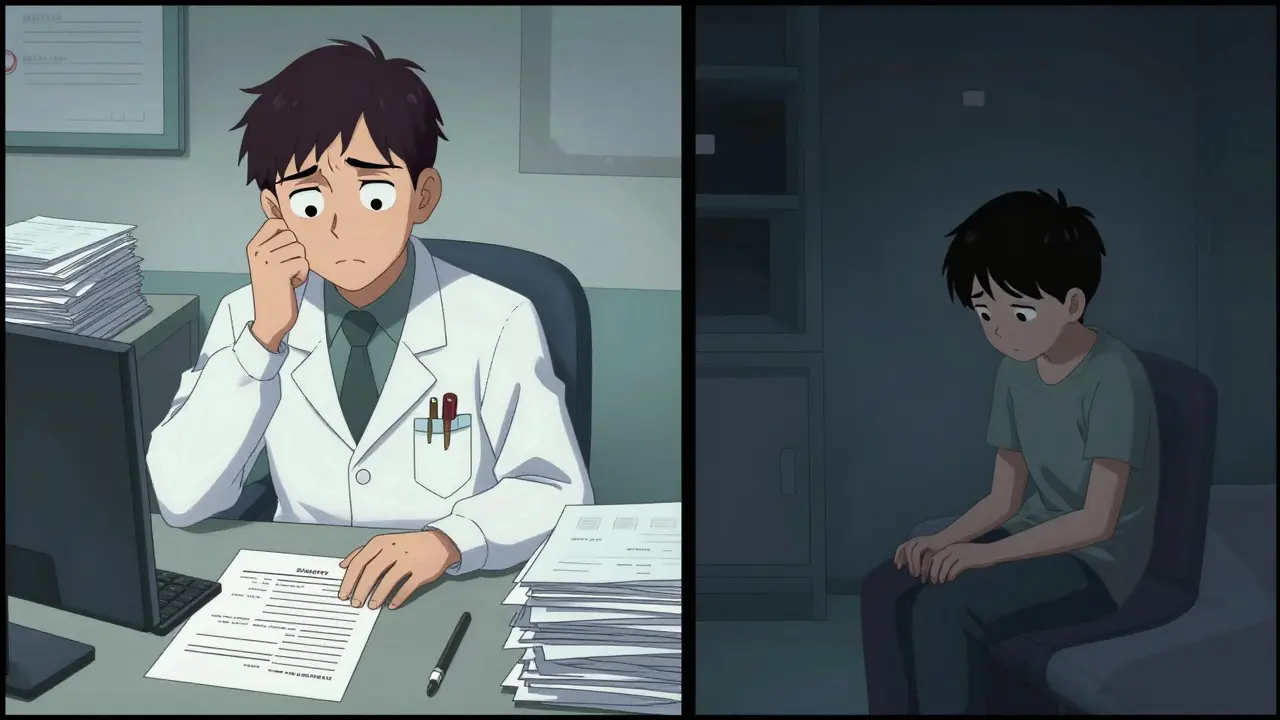
For clinicians, the warning has created administrative burdens that hinder care. An American Academy of Child and Adolescent Psychiatry (AACAP) survey found that 87% of child psychiatrists reported increased difficulty prescribing after the warning. Doctors now spend significantly more time addressing parental fears-average consultation time jumped from 8.2 minutes to 22.7 minutes per patient. Additionally, 94% of psychiatrists report needing extra consent forms specifically addressing the black box warning.
Monitoring requirements are also challenging to meet. Guidelines suggest weekly check-ins during the first month of treatment. However, a 2020 study in JAMA Network Open found that only 37.2% of youth patients received this recommended level of monitoring, with rural areas lagging further behind at just 22.4%. This gap means many patients aren’t getting the close supervision the warning was designed to enforce.
Parental Perspectives: Fear vs. Hope
If you talk to parents, you hear a mix of anxiety and gratitude. Online forums reveal deep divisions. On Reddit’s r/mentalhealth community, a thread discussing the warning attracted nearly 300 comments. About 68% expressed concern about medication safety, while 32% shared positive experiences where antidepressants helped their children thrive under medical supervision.
A survey by the National Alliance on Mental Illness (NAMI) highlighted this tension further. Among 1,243 users on a depression support forum, 74% admitted delaying or refusing treatment due to the black box warning. The primary fear? Making suicidal thoughts worse. Yet, among those who pushed through the fear and started treatment, 67% reported positive outcomes. One parent noted, "The warning made us vigilant about monitoring, which probably helped catch early warning signs."
This duality is crucial. The warning succeeded in making families aware of potential side effects. But it also instilled a paralyzing fear that prevented many from seeking help. The challenge for healthcare providers is bridging this gap-educating families without inducing panic.

Global Differences and Future Directions
It’s worth noting that the U.S. approach differs significantly from other parts of the world. Health Canada maintains a similar warning but uses modified language that emphasizes balancing benefits and risks. Meanwhile, the European Medicines Agency (EMA) never implemented an equivalent blanket warning. Interestingly, European countries did not experience the same post-warning spikes in youth suicide rates seen in the United States. This suggests that regulatory framing plays a massive role in public perception and behavior.
Back home, momentum is building for change. The American College of Neuropsychopharmacology issued a position statement in June 2022 calling for a careful reassessment of the warning. Pharmaceutical giants like Eli Lilly (maker of Prozac) and Pfizer (maker of Zoloft) have petitioned the FDA to modify the language. In September 2023, the FDA held a public advisory committee meeting to review the latest evidence, though no final decision has been announced yet.
Looking ahead, the National Institute of Mental Health (NIMH) is working on more precise risk stratification tools. Instead of a one-size-fits-all warning, future guidelines might identify specific subgroups of patients who are truly at high risk for adverse reactions. Preliminary results from this research are expected in mid-2024, potentially paving the way for smarter, more targeted safety communications.
What Should You Do Now?
If you are considering antidepressants for yourself or a loved one, don’t let the black box warning stop you from having a conversation with a doctor. Here are practical steps to take:
- Discuss Risks and Benefits Openly: Ask your provider to explain why they recommend a specific medication and how it compares to non-medication options like therapy.
- Commit to Monitoring: If you start medication, agree on a schedule for follow-up visits. Weekly checks in the first month are ideal if possible.
- Watch for Red Flags: Be alert for sudden changes in mood, energy, or behavior, especially during the first few weeks of treatment. Contact your doctor immediately if you notice agitation, aggression, or new suicidal thoughts.
- Involve Support Systems: Keep family members or close friends informed so they can help observe any changes.
Remember, the warning exists to promote caution, not avoidance. Untreated depression is dangerous. With proper medical guidance, antidepressants can be a lifeline rather than a liability.
What exactly is an FDA black box warning?
An FDA black box warning is the strongest safety alert the agency can issue for a prescription drug. It appears in a black-bordered box at the beginning of the medication’s labeling to highlight serious or life-threatening risks, such as the potential for increased suicidal thinking in young people taking antidepressants.
Do antidepressants actually cause suicide in teenagers?
Clinical trials show a small increase in suicidal *thoughts* (ideation), not completed suicides. In fact, no suicides occurred in the original trials that led to the warning. However, real-world data suggests that untreated depression poses a much higher risk of suicide than the medication itself. The warning aims to encourage closer monitoring, not to ban treatment.
How has the black box warning affected treatment rates?
Studies indicate that antidepressant prescriptions for youth dropped by 20% to 50% after the warning was issued. Despite this decline, rates of diagnosed depression continued to rise. This mismatch has been linked to an increase in suicide attempts and deaths among adolescents, suggesting that fear of the warning may have prevented some young people from getting necessary care.
Is the black box warning still in effect today?
Yes, as of 2026, the black box warning remains on all prescription antidepressants for patients under 25. However, there is ongoing debate and pressure from medical experts and pharmaceutical companies to modify or remove it based on newer evidence showing that the warning may have caused more harm than good.
What should parents do if their teen needs antidepressants?
Parents should discuss the risks and benefits openly with their child’s psychiatrist. It is important to commit to regular monitoring, especially during the first few weeks of treatment. Watch for any sudden changes in behavior or mood. Remember that treating depression effectively often reduces the overall risk of suicide, even if there is a small initial risk of increased suicidal thoughts.