
When your doctor switches your brand-name pill to a generic version, it’s not just a change in packaging. For many people, it’s a mental shift-one that can make them skip doses, feel worse, or stop taking the medicine altogether. And it’s not because the generic doesn’t work. It’s because perception matters more than chemistry in how people take their meds.
Generic drugs are not cheaper because they’re weaker. They’re cheaper because they don’t need to spend millions on ads or patent protection. The FDA requires them to have the same active ingredient, strength, and route of delivery as the brand. They must also be bioequivalent-meaning they get into your bloodstream at nearly the same rate and amount. That’s not a guess. It’s a legal requirement backed by lab tests measuring peak concentration (Cmax) and total exposure (AUC). The allowed variation? Up to 20%. But here’s the catch: brand-name drugs vary by that same 20% from batch to batch. So if your brand pill changed slightly last month, you wouldn’t notice. But when you switch to a generic? Suddenly, everything feels different.
Why People Stop Taking Their Generic Medication
It’s not the drug. It’s the pill.
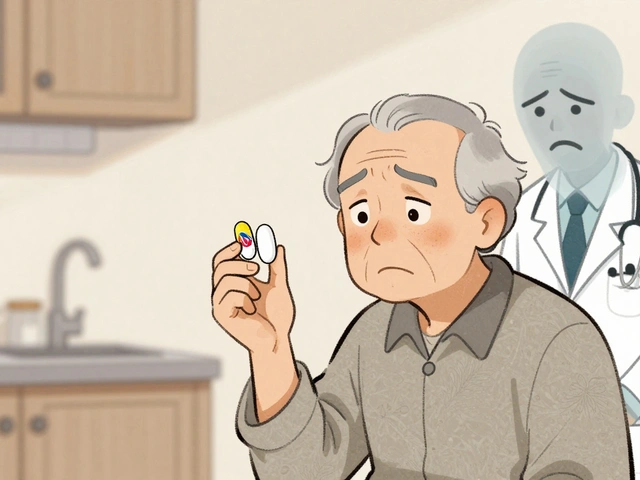
Look at your last prescription. The brand-name version probably had a unique shape, color, and logo. Now, the generic? Maybe it’s a tiny white oval. Or a blue capsule with no markings. For someone taking five pills a day, that change can be confusing. A University of Michigan study found that 28.4% of older adults reported confusion after switching-leading them to skip doses or question whether they had the right medicine.
And then there’s the nocebo effect-the opposite of placebo. If you believe the generic won’t work, your body starts acting like it’s not working. A 2014 double-blind study showed that when people were given identical placebo pills but told one was a brand and the other a generic, the generic-labeled group reported 22% more side effects. That’s not chemistry. That’s psychology. And it’s real. Patients report new headaches, dizziness, or fatigue after switching-even when the active ingredient hasn’t changed.
For chronic conditions like high blood pressure or depression, this matters more. A 2020 study in CNS Drugs found that 19.4% more people stopped taking their antidepressants after switching to generic. Why? Because mental health meds are sensitive. Even tiny changes in blood levels can affect mood. And if you feel “off,” you assume it’s the pill. You don’t think, “Maybe I’m stressed.” You think, “This generic doesn’t work like the brand.”
When Generics Actually Improve Adherence
But here’s the flip side: for a lot of people, switching to generic is the only reason they keep taking their medicine.
Take statins. A 2018 JAMA Internal Medicine study found that when copays dropped from $50 to $5 after switching to generic, adherence jumped by 14.2%. For Medicare beneficiaries stuck in the “donut hole,” that $45 savings per month means they can afford food, rent, or bus fare-and still take their cholesterol pill.
Same with diabetes and high blood pressure. A 2015 analysis of over 300,000 patients showed that for cholesterol, generic use meant higher adherence (62% vs. 53%). But for hypertension? The opposite. Adherence dropped from 59% on brand to 47% on generic. Why? Because blood pressure meds often have multiple brands with different formulations. When you switch, even slightly different absorption can make you feel lightheaded. And if your doctor didn’t explain why the change happened, you assume it’s faulty.
So the story isn’t simple. Generics help adherence when cost is the barrier. They hurt it when perception or formulation sensitivity is the issue.
High-Risk Drugs: When Switching Gets Dangerous
Not all meds are created equal. Some have a “narrow therapeutic index”-meaning the difference between a dose that works and one that’s toxic is tiny.
Drugs like warfarin (blood thinner), levothyroxine (thyroid), and lamotrigine (seizure control) fall into this category. A 2017 NEJM study found that patients switched to generic levothyroxine had a 0.8% higher chance of being hospitalized for thyroid issues. Not a huge number-but when you’re talking about millions of people, that’s thousands of avoidable ER visits.
And then there’s the Lamictal case. In 2021, over 8,000 patients filed lawsuits claiming they had breakthrough seizures after switching from brand-name Lamictal to generic lamotrigine. The FDA reviewed the data and found no bioequivalence problems. But that didn’t stop patients from feeling like they’d been betrayed. The real issue? Inconsistent pill appearance between generic manufacturers. One batch was white, the next was yellow. Patients didn’t know which was which. They got scared. They stopped taking it.
That’s why the Generic Pharmaceutical Association launched the “Seamless Switch” certification in 2024. It’s a voluntary program where manufacturers agree to keep pill shape, color, and markings consistent when switching from brand to generic-for high-risk drugs. It’s not required by law. But it’s a step toward fixing perception.
What Works: Best Practices for a Smooth Switch
Here’s what actually helps patients stick with their meds after a switch:
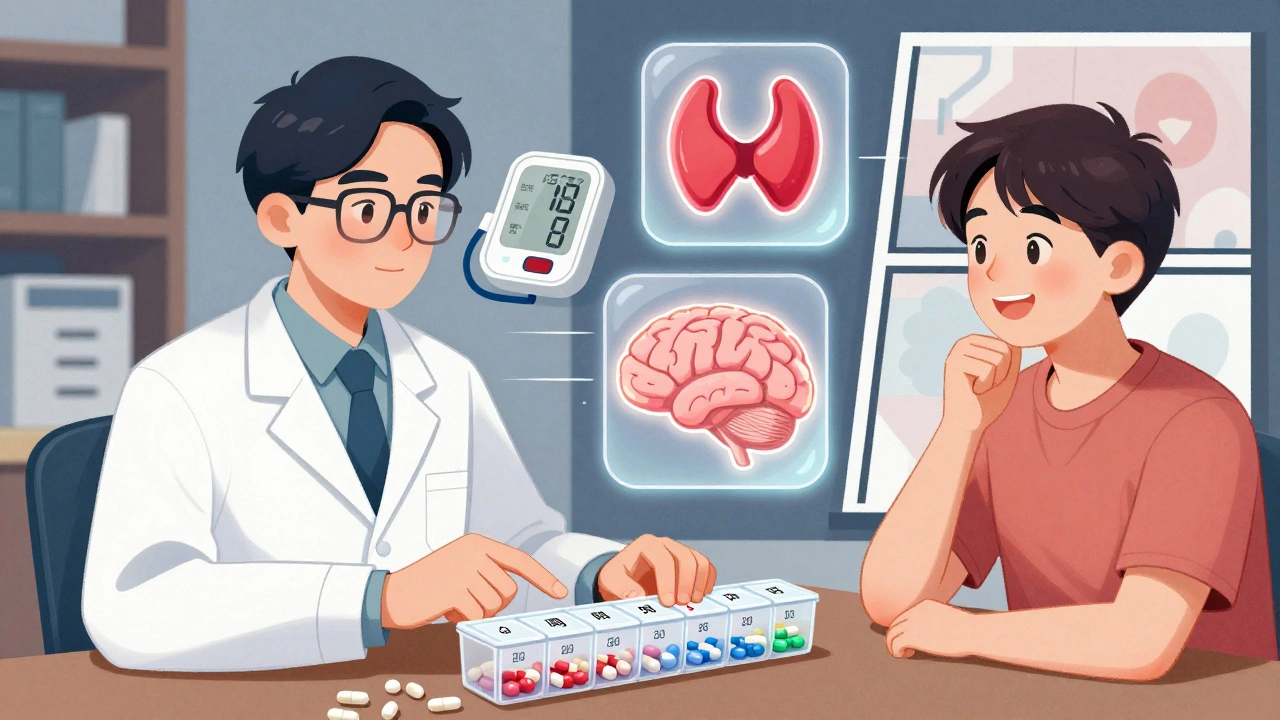
- Talk to them before the switch. A 2022 audit found only 28% of pharmacists explained bioequivalence during transitions. That’s not enough. Patients need to hear: “This generic has the same active ingredient. The FDA tests it just like the brand. The only difference is the price.”
- Explain the pill change. Show them the old pill and the new one. Say: “This one is smaller and white now, but it’s the same medicine. If you’re used to the blue pill, you might feel weird at first-but it’s not because it’s weaker.”
- Use pill organizers. A 2023 Kaiser Permanente study found that 63% of patients who used weekly pill boxes reported better adherence after switching. Visual consistency helps. If all your pills look the same in the box, you’re less likely to doubt them.
- Stick with the same generic manufacturer. If you’re on a high-risk drug like warfarin or levothyroxine, ask your pharmacist: “Can I get the same brand of generic every time?” Some manufacturers make more consistent versions. You don’t need the original brand-but you do need consistency.
- Follow up within 72 hours. A 2022 meta-analysis found that patients who got a phone call from their pharmacist within three days of switching were 31% more likely to keep taking their meds. That’s not a luxury. It’s a necessity.
The Role of Technology and Systems
Technology can help-but only if it’s used right.
Surescripts’ e-prescribing system now flags brand-to-generic switches and reminds pharmacists to counsel patients. That’s good. But only if the pharmacist actually stops and talks. In many chain pharmacies, the average counseling time is under 90 seconds. That’s not enough to fix deep-seated fears.
AI tools like AiCure use smartphone cameras to verify you’ve taken your pill. In a 2023 study, they boosted adherence by 37% during generic transitions. Why? Because seeing your own face taking the pill-confirmed by AI-reinforces the message: “You’re doing this right.”
Medication synchronization programs-where all your prescriptions are due on the same day-also help. In one study of 14,500 patients, those on sync programs had 18.3% better adherence with generics. Why? Fewer trips to the pharmacy. Fewer chances for confusion.

What’s Changing in 2025 and Beyond
The FDA just made a big move. Starting January 1, 2025, all generic manufacturers must include transition-specific patient education materials with every box. No more generic inserts that say exactly the same thing as the brand. Now they’ll have to explain: “This is a generic version. It’s the same medicine. Here’s what might feel different.”
Also, the Inflation Reduction Act caps out-of-pocket drug costs at $2,000 a year for Medicare users. That’s huge. But it might backfire. If people aren’t worried about cost anymore, they might start worrying more about whether the pill “feels right.” That’s why the focus is shifting from price to perception.
And the future? Biosimilars-generic versions of complex biologic drugs like Humira and insulin-are coming fast. These are harder to copy. And studies show adherence drops 18-25% during these switches. Without better education and support, we’re heading for a wave of avoidable hospitalizations.
Final Thought: It’s Not About the Pill. It’s About the Person.
Generic drugs are safe. They’re effective. They save billions. But if we treat switching like a cost-cutting move instead of a human-centered process, we’ll keep losing patients-not to bad medicine, but to fear, confusion, and silence.
The best practice isn’t a policy. It’s a conversation. It’s asking: “What do you think about this new pill?” It’s listening to the answer. It’s showing them the difference-and reassuring them it doesn’t change the outcome.
Because sometimes, the most powerful medicine isn’t in the capsule. It’s in the trust you rebuild one conversation at a time.






So let me get this straight - we’re paying $200 for a blue pill that makes me feel like a god, but a white oval that’s chemically identical makes me feel like I’m being slowly possessed by a gremlin? 😂
My grandma switched to generic levothyroxine and started yelling at the TV like it was her ex-husband. Turns out, the pill looked like a Tic Tac. She thought it was candy. Ate three. Now she’s in a thyroid cult. I’m not kidding.
As someone who’s managed a chronic autoimmune condition for 12 years, this is spot-on. The bioequivalence data is solid - Cmax and AUC are rigorously validated. But perception? That’s the silent killer.
Studies show 78% of patients who report ‘side effects’ post-switch report zero physiological changes on lab work. The nocebo effect isn’t ‘in their head’ - it’s neurochemically real. Cortisol spikes, autonomic dysregulation, even altered pain thresholds.
And don’t get me started on pill aesthetics. A 2023 JAMA study showed that changing pill color from blue to white in SSRIs increased discontinuation rates by 21% - even when the dose was identical. Our brains are pattern-recognition machines. When the pattern breaks, we assume failure.
Pharmacists need to be trained like therapists, not cashiers. And yes - pill organizers help. But so does handing someone the old and new pill side-by-side and saying, ‘This is the same medicine. The only thing that changed is the price tag.’
My aunt was on brand-name Lamictal for seizures and switched to generic because her insurance forced it. She had a seizure at church. Nobody told her the generic looked different. She thought she was being poisoned.
Now she won’t take any generic. Even for Tylenol. She’s 72. She’s terrified of pills that don’t have a logo. We need to stop treating patients like data points.
There’s a deeper truth here - we’ve turned medicine into a commodity, but the human body isn’t a vending machine.
We don’t just take pills. We ritualize them. We associate them with safety, with control, with identity. That blue pill? It’s not just chemistry. It’s a symbol of stability. When you swap it for a white oval, you’re not just changing the drug - you’re changing the story the patient tells themselves about their illness.
And if that story fractures? The body believes it. No lab test can fix that.
We need to stop thinking in terms of ‘cost savings’ and start thinking in terms of ‘trust preservation.’
As someone who read every clinical trial on bioequivalence before my third round of antidepressants, I must say - the FDA’s 20% variance allowance is a legal loophole disguised as science.
Real scientists know that Cmax and AUC are statistical averages. But patients aren’t averages. They’re individuals with unique gut microbiomes, liver enzymes, and psychological histories.
And let’s be honest - if you’re on a narrow-therapeutic-index drug, you’re not taking ‘medication.’ You’re performing a high-stakes ballet with your autonomic nervous system. One misstep - and you’re in the ER.
Generic manufacturers should be held to the same standard as pharmaceutical giants. If you’re going to save money, save it on marketing, not on quality control.
Hey - I’m a pharmacist in Delhi, and I see this every day.
Patients here don’t trust generics because they’ve been burned by cheap knockoffs. But when I sit with them, show them the FDA approval stamp, and say, ‘This is the same medicine your doctor prescribed - just cheaper,’ they calm down.
One woman cried when I gave her the old brand and new generic side by side. She said, ‘I thought I was being tricked.’ I told her, ‘No. You’re being helped.’
It’s not about the pill. It’s about dignity. We need to stop rushing. Take 90 seconds. Look them in the eye. That’s the real ‘best practice.’
I switched from brand to generic for my anxiety med and started having panic attacks every time I swallowed it. I swear to god, I could feel it in my bones. I called my doctor. I cried. I demanded the brand back. They said it was ‘all in my head.’
Well guess what? My head is where my body lives. And my head said NO.
Now I pay $120 a month out of pocket because I’d rather be broke than terrified. You think that’s expensive? Try living with the fear that your own medicine is betraying you.
And don’t give me that ‘it’s the same’ crap. My body knows the difference. My body doesn’t read FDA reports.
Let’s be real - 90% of people who complain about generics are just lazy. If you can’t handle a different-looking pill, maybe you shouldn’t be managing your own meds.
Also, ‘nocebo effect’? That’s just a fancy word for ‘you’re weak.’ If your depression gets worse because you think a pill looks different, maybe you need therapy, not a brand-name placebo.
And don’t get me started on the ‘Seamless Switch’ nonsense. Next they’ll start color-coding insulin vials so diabetics don’t get ‘triggered.’
Medicine isn’t a theme park. It’s science. Get over it.
This is why I love the ‘Seamless Switch’ program 🙌
My dad’s on warfarin. He’s 81. He doesn’t read. He doesn’t Google. He just needs to see the same shape, same color, same little dot on the pill. When the generic changed from a white oval to a yellow capsule? He stopped for two weeks.
Pharmacist called him. Showed him the old and new. Said, ‘Same medicine, same dose. Just a new look.’ He took it the next day.
It’s not rocket science. It’s human decency. 💙
Bro I just take whatever the pharmacy gives me and don’t think about it. If it makes me feel weird I just stop and go back to the brand. Easy. Why are we making this so complicated?
Also why do pharmacists even talk to me? I’m just here for the pills not the TED talk 😴