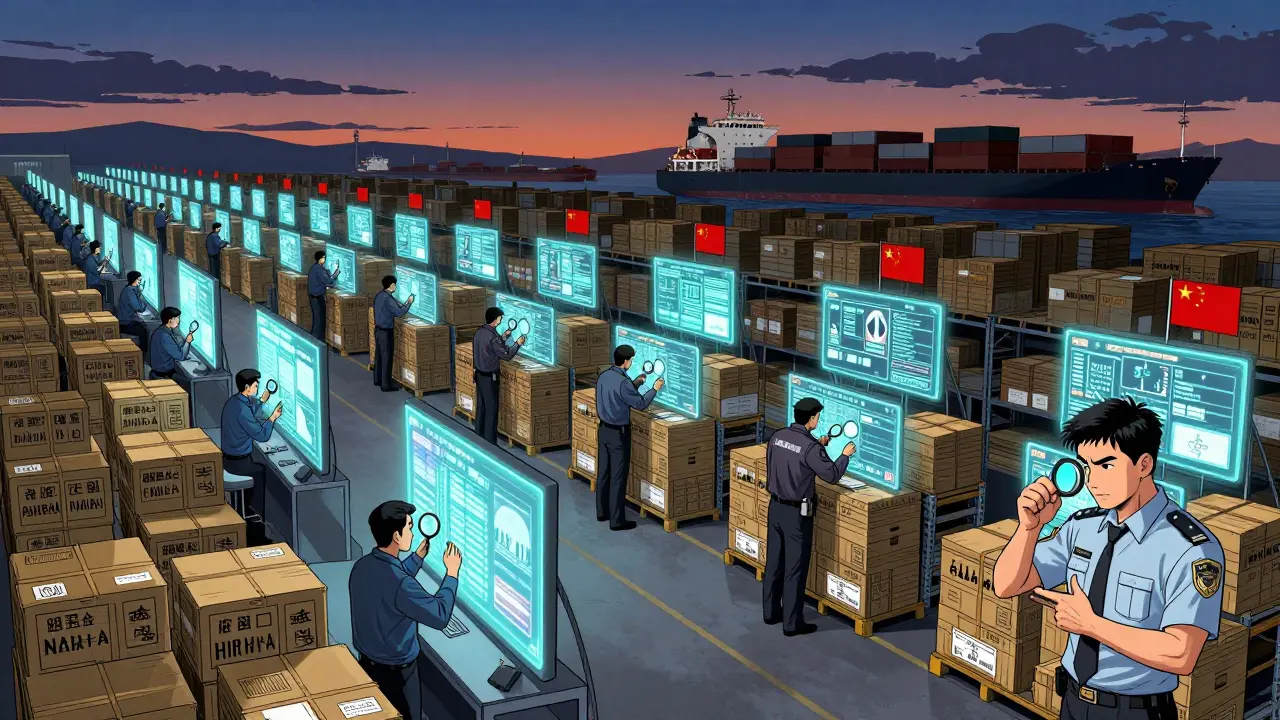
Every year, over 100 million drug shipments enter the United States. Most come from overseas manufacturers in countries like India, China, Germany, and Switzerland. But how does the FDA make sure these drugs are safe, effective, and not counterfeit? The answer isn’t just random checks-it’s a complex, data-driven system designed to catch dangerous products before they reach pharmacies, hospitals, or your medicine cabinet.
How the FDA Reviews Every Drug Import
The FDA doesn’t inspect every single shipment. That’s impossible. Instead, it uses a risk-based system that screens nearly every entry electronically. About 98% of drug imports are reviewed by computer systems before they even reach a U.S. port. These systems look at the product type, manufacturer history, country of origin, past violations, and even the importer’s track record. If something looks off-a company with a history of violations, a shipment from a facility on the FDA’s watchlist, or a product labeled incorrectly-it gets flagged for further review. Ships that pass the initial screen move forward. Those flagged? They’re held. The FDA then decides whether to examine the product physically, take samples for lab testing, or detain the entire shipment. In 2022, about 15.7% of drug entries were flagged for extra review. Of those, 14.3% of the ones physically examined were detained. And nearly 70% of those detained shipments were eventually refused entry.The Five Steps of an FDA Import Inspection
The process isn’t random. It follows five clear steps:- Entry Submission - The importer or customs broker files electronic paperwork through the FDA’s system. This includes the product name, manufacturer, quantity, and proof that the facility is registered with the FDA.
- Entry Review - The FDA’s automated system analyzes the submission. If it’s flagged, the shipment is put on hold.
- Examination and Sampling - FDA inspectors may check the physical packaging, verify labels match FDA requirements, or take 1-3 units from the shipment for lab testing. They look for signs of tampering, incorrect ingredients, or contamination.
- Compliance Review - If the product fails inspection-say, it’s not from a registered facility, lacks proper labeling, or contains banned substances-it’s marked as non-compliant.
- Final Admissibility Decision - The FDA either lets the shipment in, requests corrections, or refuses entry. If refused, the importer can appeal, re-export, or destroy the product.
What Gets the FDA’s Attention?
Not all drugs are treated the same. The FDA focuses on high-risk products:- Generic drugs from countries with poor inspection histories
- Active pharmaceutical ingredients (APIs) - the actual medicine in pills - which are often made overseas
- Products with suspicious labels, like fake brand names or missing lot numbers
- Shipment from facilities previously cited for violations
The De Minimis Loophole Is Gone
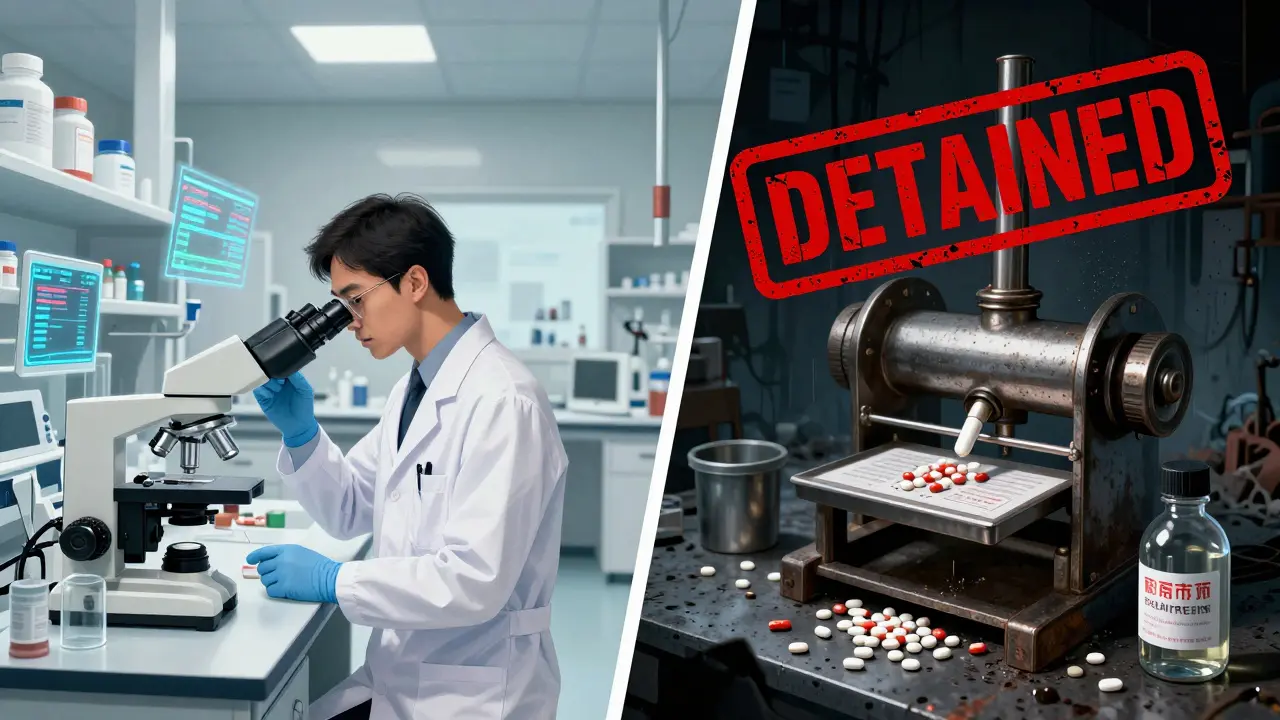
For years, small shipments under $800 - called “de minimis” - were exempt from FDA review. That meant anyone could mail pills from overseas without inspection. In 2023, the FDA closed that loophole. Now, even a single pill sent from India or China must go through the same review as a full container. This change was made after reports of dangerous products slipping through: counterfeit cancer drugs, fake weight-loss pills laced with steroids, and even pill presses shipped in small packages. The Government Accountability Office found that before this change, $4.3 billion in counterfeit drugs entered the U.S. in 2022 alone. About 63% of those came through de minimis shipments. The move has made things harder for researchers and small biotech firms. Importing biological samples for labs now costs $285-$420 more per shipment and adds 3-5 days to processing time. But the FDA says the trade-off is worth it. The system now catches more dangerous products before they reach patients.Fast-Track for Trusted Companies: The SSCPP
Not all manufacturers are treated like suspects. The FDA runs a program called the Secure Supply Chain Pilot Program (SSCPP). Companies that have proven they follow strict quality controls for at least three years can get their products cleared in 24-48 hours instead of 7-10 days. As of late 2023, only 27 companies qualified. They include big names like Johnson & Johnson. Their Global Regulatory Affairs Director said the program cut their clearance time variability from ±5 days to ±8 hours. That’s huge for just-in-time manufacturing. But the program is hard to get into. Smaller companies, especially generic drug makers, struggle to meet the requirements. Teva Pharmaceuticals reported that 37% of their API shipments from certain Indian facilities were detained in early 2023-even though they were fully compliant. The system isn’t perfect. It’s catching bad actors, but sometimes good ones get caught in the net.Why Some Shipments Still Slip Through
Despite all the technology, the FDA only physically inspects about 1.2% of the 100 million+ drug shipments that enter the U.S. each year. That’s not because they’re lazy-it’s because they can’t do more with current staffing and budgets. That’s why they rely on risk models. But those models aren’t flawless. In 2022, a contaminated blood pressure medication called valsartan slipped in through a shipment that wasn’t flagged. The problem? The API came from a factory that had never been inspected before. The risk model didn’t flag it because it had no history. The Government Accountability Office pointed out that only 4 of 17 key performance indicators required by law have been fully implemented. In other words, the FDA knows what it should be measuring, but it hasn’t built the systems to track them all.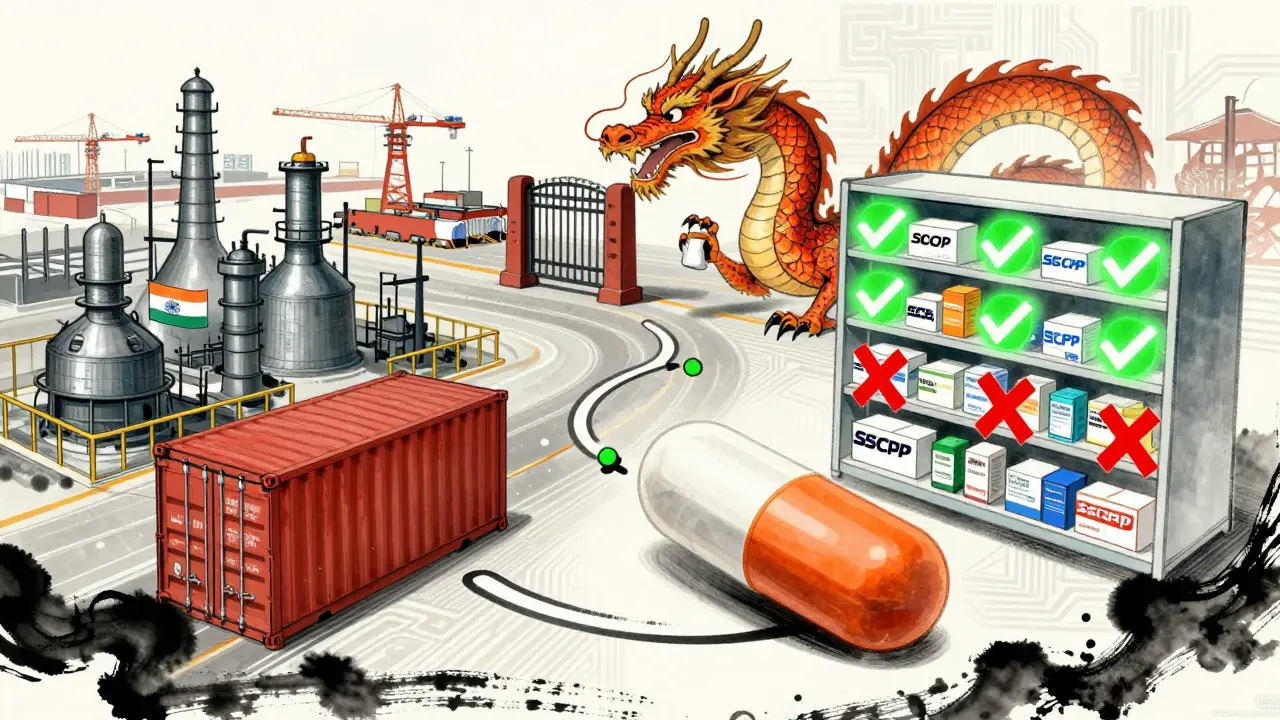
What Importers Need to Get It Right
If you’re importing drugs into the U.S., here’s what you need to avoid delays:- Register your facility - Every foreign manufacturer must be registered with the FDA. No exceptions.
- Use correct product codes - 28% of delays come from wrong or missing product codes.
- Match labels to FDA rules - Labels must include the manufacturer’s name, lot number, expiration date, and proper warnings. 19% of rejections are label-related.
- File complete paperwork - Missing bills of lading, commercial invoices, or Affirmations of Compliance can delay shipments by nearly 5 business days.
- Keep records for 3 years - FDA can audit you anytime. If you can’t prove compliance, you could get an Import Alert, which means every future shipment gets automatically detained.
The Bigger Picture: Global Supply Chains
The U.S. imports 88% of its active pharmaceutical ingredients. That’s not going to change. The FDA knows it can’t inspect every shipment. So it’s investing in new tools: AI to predict which shipments are risky, blockchain to track drugs from factory to pharmacy, and partnerships with international regulators to share inspection data. By 2025, the FDA plans to improve its targeting accuracy by 25%. They’re also expanding the SSCPP to include contract manufacturers, which could help smaller companies get faster clearance. But the real challenge? Online pharmacies. Over 41% of websites selling drugs to U.S. customers operate outside any regulatory system. The FDA can’t shut them all down. So they focus on the big imports-the ones that feed pharmacies and hospitals.What’s Next?
The system is evolving. More automation. Better data sharing. Tighter rules. But the core idea stays the same: protect public health without blocking legitimate trade. For manufacturers, the message is clear: if you want your drugs into the U.S. quickly, you need to prove you’re trustworthy. For consumers, the system isn’t perfect-but it’s better than it was. And it’s getting smarter every year.Does the FDA inspect every drug shipment entering the U.S.?
No. The FDA reviews all 100 million+ drug shipments electronically, but only physically inspects about 1.2% of them. The rest are cleared based on risk assessments using data like manufacturer history, product type, and past violations.
What happens if a drug shipment is detained by the FDA?
If a shipment is detained, the importer is notified and given a chance to fix the issue-like correcting labeling or providing missing documentation. If the problem can’t be resolved, the shipment is refused entry. The importer can then re-export the product or destroy it under FDA supervision.
Can I import prescription drugs from other countries for personal use?
Generally, no. The FDA prohibits importing prescription drugs for personal use unless they’re for a serious condition with no U.S. equivalent and are not commercially available. Even then, the shipment must be in quantities for no more than a 90-day supply and declared to customs. Most personal imports are seized.
What is the SSCPP, and how does it help manufacturers?
The Secure Supply Chain Pilot Program (SSCPP) is a fast-track program for manufacturers with proven compliance records. Approved companies can import up to five designated products with clearance in 24-48 hours instead of 7-10 days. It reduces delays and improves supply chain predictability.
Why are generic drugs more likely to be detained than brand-name drugs?
Generic drugs often come from manufacturers in countries with less frequent FDA inspections. Many generic API suppliers have no prior inspection history, making them higher risk in the FDA’s system. Even if they’re compliant, lack of data triggers more scrutiny. Brand-name manufacturers usually have long inspection records, so they’re trusted more.
How can I check if a drug manufacturer is FDA-registered?
You can search the FDA’s Drug Establishment Registration database online. Enter the company name or facility number. If it’s not listed, the facility isn’t approved to export drugs to the U.S. Always verify this before placing an order.
What’s the biggest mistake importers make?
Incorrect product coding. It’s the leading cause of delays, responsible for 28% of shipment holds. Using the wrong Harmonized System (HS) code or failing to specify whether a product is an API or finished drug leads to misrouting and extended review times.
Are online pharmacies selling drugs to U.S. customers regulated by the FDA?
Most aren’t. Over 41% of websites selling drugs to U.S. consumers operate outside U.S. law. The FDA can’t regulate them directly, but they do work with U.S. Customs and the DEA to seize shipments and shut down illegal sites. Consumers should only buy from pharmacies with a verified .pharmacy domain.




So basically the FDA is playing whack-a-mole with pills from overseas. I mean, 1.2% physical inspection? That’s like checking one random book in a library of 100 million to see if it’s printed correctly. Feels like we’re trusting math more than medicine.
Still, better than nothing I guess. At least they’re not letting people mail insulin from Instagram sellers anymore.
OMG I just read this and i’m crying 😭 like i have a relative who takes blood pressure meds and i had NO IDEA how much risk was involved in just… getting pills. i always thought it was like, FDA says good, you get good. but the fact that 70% of flagged stuff gets blocked?? that’s actually comforting. thank you for writing this. seriously.
also the de minimis loophole closing? yes please. my aunt ordered ‘weight loss pills’ from a site that looked like a 2005 geocities page. she’s fine now. but still.
Let’s not romanticize the FDA’s ‘risk-based system.’ It’s a glorified spam filter trained on outdated data. The fact that a facility with zero inspection history slipped through for valsartan proves the model is fundamentally brittle.
And don’t get me started on the SSCPP-this isn’t a ‘pilot,’ it’s a corporate loyalty program disguised as public safety. Johnson & Johnson gets VIP treatment while Teva’s compliant factories get detained for ‘lack of historical data.’ That’s not risk assessment. That’s institutional bias dressed in lab coats.
Also, blockchain? Please. The supply chain is already a labyrinth of shell companies and subcontractors. Adding a ledger won’t fix a system built on opacity.
88% of our active pharmaceutical ingredients come from foreign shores? That’s not globalization-it’s national surrender. We used to make medicine in this country. Now we outsource our very heartbeat to factories where labor laws are suggestions and inspectors are paid in tea and silence.
The FDA’s algorithms might be smart, but they’re still playing checkers while the world plays 4D chess. And for what? To save a few bucks on pills while our kids breathe contaminated air from Chinese factories making the fillers?
We need a Marshall Plan for domestic pharma. Not more digital screens. More factories. More American workers. More pride.
As someone who works in global clinical supply chains, this is spot-on. The label mismatches? Oh god yes. I’ve seen ‘ibuprofen’ labeled as ‘ibuprofen sodium’ because someone copied a PDF from 2012 and forgot to update it.
And the 28% delay from wrong HS codes? That’s not incompetence-it’s a failure of training. Many small exporters in India and Vietnam don’t have access to FDA’s coding guides. They’re using third-party brokers who barely understand the difference between API and finished dosage.
What’s missing? Education. Not more detention. More outreach. More free webinars. More bilingual inspectors at ports. We’re punishing the innocent because the system’s too lazy to teach.
So let me get this straight: the FDA is using AI to guess if a pill is safe… while 41% of online pharmacies are selling fake Adderall with glitter and caffeine? And we’re impressed?
It’s like having a bouncer at a club who only checks IDs at the front door while the back alley is full of guys selling knockoff vodka out of backpacks.
The real problem isn’t the inspection rate-it’s that we treat medicine like Amazon Prime. ‘One-click cure-all’ culture. We want pills fast, cheap, and without asking questions. And now we’re shocked when the pills turn out to be glitter glue with a side of arsenic?
Fix the demand. Not just the supply.
Everyone’s acting like the FDA is some heroic guardian. It’s not. It’s a bureaucracy that’s 80% paper and 20% panic. They catch the obvious stuff because it’s easy. The real threats? The ones that look like real medicine. The ones that pass every test but have 0.3% more impurity than allowed. That’s the silent killer.
And don’t tell me about ‘risk models.’ Risk models are just math pretending to be wisdom. The valsartan case? The model didn’t flag it because it had no history. So the system rewards obscurity. Brilliant.
Also-why are we still using Harmonized System codes from 1992? That’s like using a rotary phone to call 911.
Oh please. The FDA is a joke. You think they care about you? They care about lawsuits. They care about headlines. They don’t care that your grandma’s blood pressure med came from a factory that hasn’t been inspected since 2018.
And don’t give me that ‘SSCPP helps trusted companies’ crap. Who defines ‘trusted’? Big pharma. The same companies that lobby to keep inspection budgets low.
They’re not protecting us. They’re protecting their budgets. And your pills? You’re just collateral damage in their PR game.
THIS IS WHY WE CAN’T HAVE NICE THINGS 😭
I got my diabetes meds from India last year and they were fine. But now I can’t even order them because the FDA says ‘nope’? What if I can’t afford the $600 version here?!
They’re punishing people who are just trying to survive. And now they’re charging $400 extra to ship lab samples?? Are they trying to kill scientists too??
Stop hiding behind ‘public safety’ and start thinking about real people. I’m not a criminal for wanting to live.
#SaveMyPills #FDAYoureKillingMe
The philosophical underpinning of this entire system is a paradox: we demand absolute safety in pharmaceuticals while simultaneously outsourcing the production of those substances to jurisdictions with vastly different epistemological frameworks regarding quality, regulation, and truth.
Our reliance on algorithmic risk assessment is not a technological triumph-it is a metaphysical abdication. We have outsourced not merely labor, but moral responsibility, to statistical models that cannot comprehend the human cost of a single undetected contaminant.
The closure of the de minimis loophole is not reform-it is the final surrender of individual autonomy to institutional overreach, justified by fear. And yet, we applaud it.
What, then, is freedom when even the medicine we take must be pre-approved by a machine that does not understand suffering?
Let’s zoom out. The FDA’s system is a mirror of modern capitalism: efficiency over equity, data over dignity, scale over safety.
But here’s the real question: why do we let this happen? Why do we accept that our lives depend on a system that inspects less than 2% of what enters our bodies?
Because we’re distracted. We’re scrolling. We’re buying. We’re assuming someone else is watching.
But no one is. Not really. The FDA is just the last guard on a wall that’s been crumbling for decades.
And the people who built that wall? They’re retired. And their pensions? Paid for by the same companies that now ship pills from unregistered factories.
We didn’t lose control of our medicine. We gave it away. Quietly. One click at a time.
Listen-I work in logistics for a small biotech firm and I’ve seen this system up close. It’s messy. It’s slow. But here’s the thing: it’s working. We had a shipment held for 11 days because the lot number was printed one pixel off. We fixed it. They cleared it. No fines. No drama.
And yeah, the SSCPP is hard to get into-but that’s because it’s designed to reward consistency, not luck. We spent two years documenting every batch, every audit, every temperature log. Now our clearance time is under 48 hours. Worth it.
Yes, the system catches good companies too. But it catches way more bad ones. Last year, we saw a shipment from a ‘well-known’ Indian supplier get flagged because the API had traces of a banned solvent. Turned out, they were cutting corners. That shipment? Never made it to a single patient.
So yes, it’s imperfect. But it’s the best thing we’ve got. And if you want it to be better? Don’t complain. Help. Submit your data. Train your brokers. Register your facility. Be part of the solution. We can do better. But only if we stop waiting for someone else to fix it.