
HP vs DILD Symptom Checker
This tool helps you understand whether your cough and breathlessness might be related to hypersensitivity pneumonitis (HP) or drug-induced interstitial lung disease (DILD). Based on your answers, we'll provide guidance on what condition is more likely.
Results will appear here after clicking the button
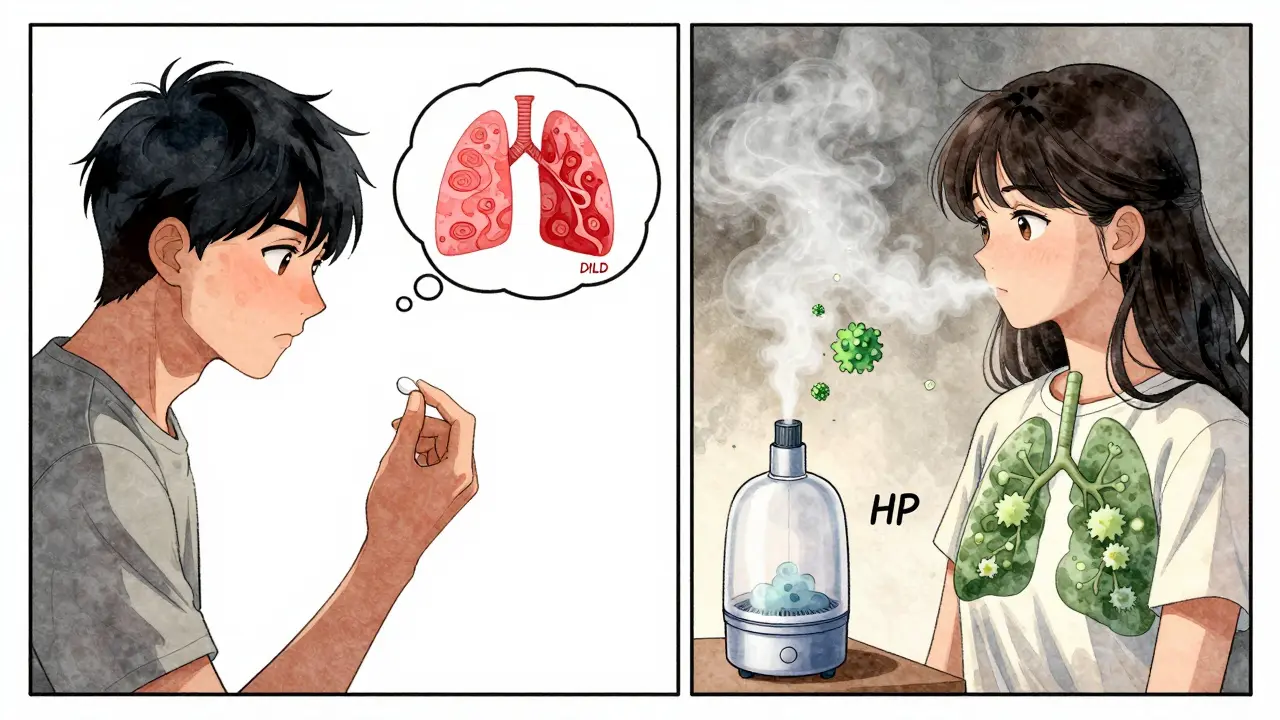
When people hear about hypersensitivity pneumonitis, they often think of farmer’s lung or bird fancier’s lung - diseases caused by breathing in mold, bird droppings, or dust from hay. But what if someone develops a persistent cough and breathlessness after starting a new medication? Could it be the same condition? The short answer: probably not.
True hypersensitivity pneumonitis (HP) is not caused by pills, injections, or IV drugs. It’s an immune reaction that happens when you repeatedly breathe in tiny particles from the environment - not when you swallow or inject a substance. The lungs react to these inhaled antigens, triggering inflammation in the tiny air sacs (alveoli), leading to cough, shortness of breath, and fatigue. If you stop breathing the trigger, symptoms often vanish. But if you keep breathing it in, scarring can set in - and that’s when things get serious.
What Hypersensitivity Pneumonitis Really Is
Hypersensitivity pneumonitis is not asthma. It’s not an allergic reaction like hay fever. It’s a distinct type of interstitial lung disease. Unlike asthma, which narrows the airways, HP attacks the lung tissue itself. The inflammation builds up in the alveoli, where oxygen enters the blood. Over time, if the trigger isn’t removed, the lung starts to scar - a process called fibrosis. That’s irreversible.
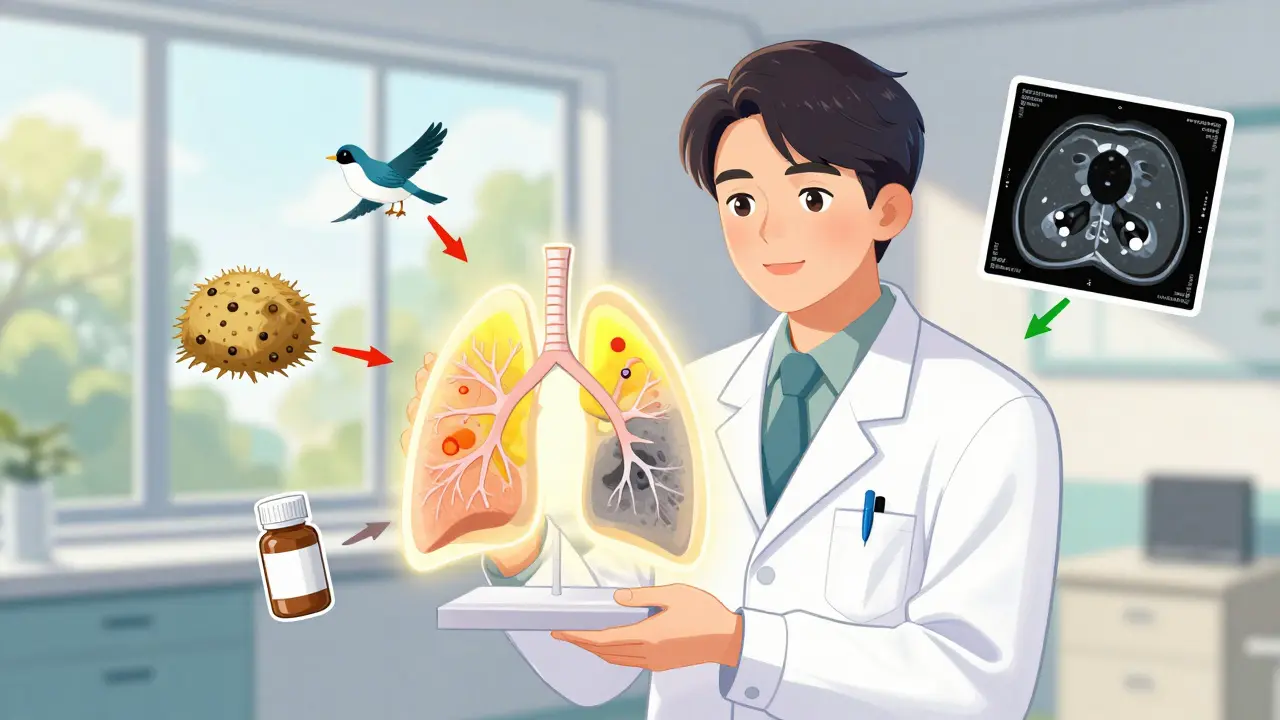
According to the Merck Manual (2023), HP is defined as a syndrome caused by “sensitization and subsequent hypersensitivity to environmental (frequently occupational or domestic) antigens.” That means the cause has to be something you breathe in. Common triggers include:
- Bird proteins from feathers or droppings (bird fancier’s lung)
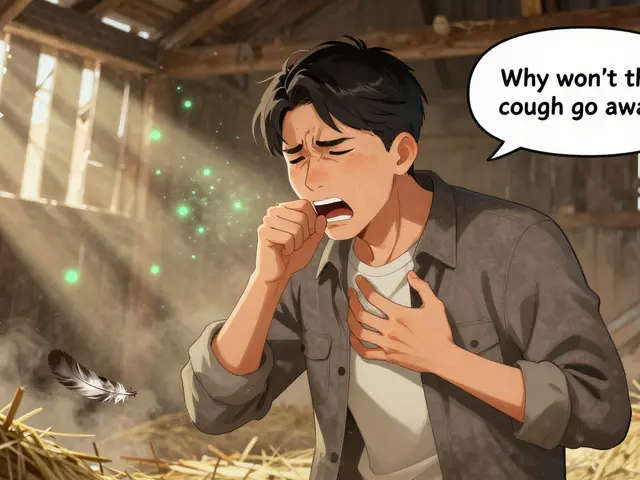
- Mold from damp hay, grain, or compost (farmer’s lung)
- Fungi from mushroom growing environments
- Bacteria in humidifiers, hot tubs, or air conditioning systems
These aren’t just rare cases. In high-risk jobs - farming, bird breeding, mushroom harvesting - prevalence can jump to 10-20 cases per 100,000 people. The pattern is unmistakable: symptoms get worse at work and improve on weekends or vacations. That’s a classic clue doctors look for.
Why Medications Don’t Cause True Hypersensitivity Pneumonitis
Medications can hurt the lungs - no doubt about it. But they don’t cause hypersensitivity pneumonitis the way mold or bird dander does. The reason is simple: route of exposure.
HP requires the antigen to reach the alveoli directly through inhalation. That’s how the immune system gets triggered locally. Medications, on the other hand, enter the bloodstream. Their effects are systemic. When they damage the lungs, they cause something else: drug-induced interstitial lung disease (DILD).
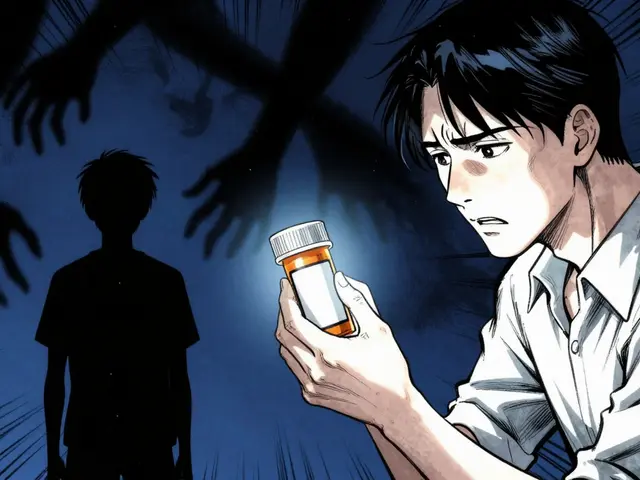
Drugs like amiodarone (used for heart rhythm problems), nitrofurantoin (a common antibiotic), and chemotherapy agents like bleomycin are known to cause lung injury. But their damage looks different under the microscope. Instead of the poorly formed granulomas and lymphocyte-rich inflammation seen in HP, DILD often shows:
- Organizing pneumonia (fibrous tissue plugging airways)
- Eosinophilic pneumonia (too many white blood cells called eosinophils)
- Diffuse alveolar damage (widespread injury like in acute respiratory failure)
These are not HP. They’re separate diseases with different treatments. Confusing them can lead to misdiagnosis - and worse, missed opportunities to stop the real cause.
Symptoms: Cough and Breathlessness - But What’s the Pattern?
Cough and breathlessness are common in both HP and DILD. But how they develop tells the real story.
In true HP:
- Acute form: Symptoms hit 4-8 hours after breathing the trigger. Fever, chills, shaking, tight chest - then they vanish within a day or two if you leave the environment.
- Subacute form: Symptoms creep in over weeks. You feel tired, get short of breath climbing stairs, and cough more than usual. It feels like a lingering cold - but it doesn’t go away.
- Chronic form: This is the dangerous one. Symptoms build slowly over months. You lose weight, your breathlessness gets worse, and you might notice your fingertips becoming rounded (clubbing). Scarring is already setting in.
In drug-induced lung disease:
- Onset is usually slower - weeks to months after starting the drug.
- There’s no clear link to being in a specific place or around a specific object.
- Symptoms don’t improve when you change your environment - because the trigger is the pill you’re taking.
One key diagnostic trick: if you stop the drug and the symptoms improve, it’s likely DILD. If you leave your job or home and feel better - it’s likely HP.
Diagnosis: No Single Test, But a Clear Path
There’s no blood test that says “you have HP.” Diagnosis requires piecing together clues:
- History: Did you start a new job? Do you have birds at home? Have you used a humidifier or hot tub recently?
- Imaging: A high-resolution CT scan (HRCT) of the lungs shows the pattern. Acute HP has ground-glass opacities and air trapping. Chronic HP shows honeycombing and traction bronchiectasis - signs of scarring.
- Blood tests: Antibodies to specific antigens (like pigeon serum) are found in 60-90% of cases. But if you don’t know the trigger, the test might be negative.
- Bronchoalveolar lavage (BAL): A fluid sample from the lungs often shows a high percentage of lymphocytes (over 40%).
- Lung biopsy: The gold standard. A sample of lung tissue shows the telltale granulomas and inflammation pattern unique to HP.
If the patient has no known environmental exposure - and recently started a new medication - doctors look for DILD instead. Biopsy results will show different patterns. No granulomas? No bronchiolocentric lymphocytes? Then it’s not HP.
Treatment: Stop the Trigger - Nothing Else Matters
For true HP, treatment is simple: remove the trigger. That’s it. No drugs needed in most cases.
In acute HP, symptoms often vanish within days of avoiding the antigen. No steroids. No treatment. Just walk away from the moldy barn, the bird cage, or the humidifier.
If symptoms are severe - high fever, low oxygen - doctors may use short-term corticosteroids (like prednisone) for 1-2 weeks. But long-term steroids? Only if scarring is forming.
Chronic HP is trickier. If fibrosis has started, steroids alone won’t fix it. New drugs like nintedanib - originally for idiopathic pulmonary fibrosis - are now being tested for fibrotic HP. The INJOURNEY trial showed a 56% reduction in lung function decline over a year. That’s promising.
For DILD, the approach is similar: stop the drug. If the drug is essential - like amiodarone for a life-threatening arrhythmia - doctors may switch to another medication or use steroids to calm the inflammation. But again, this is not HP. It’s a different disease with a different name and different rules.
Prognosis: Early Action Saves Lungs
The good news? If you catch HP early and remove the trigger, recovery is nearly complete in 70-80% of cases. No scarring. No long-term damage.
The bad news? If you ignore the symptoms, keep breathing the trigger, and wait too long - fibrosis takes over. Once scarring is visible on CT scan, it’s permanent. Five-year survival drops to 50-80%. Some patients end up needing a lung transplant.
For DILD, prognosis depends on the drug. Stopping amiodarone early can reverse damage. Bleomycin? Once it’s done, the damage is often irreversible.
One surprising fact: smokers have a lower risk of developing HP. Researchers aren’t sure why. Some think cigarette smoke suppresses immune responses in the lungs. But that doesn’t make smoking safe - far from it. Smoking causes plenty of other lung diseases.
What You Should Do If You Have Cough and Breathlessness
If you’ve started a new medication and now have trouble breathing:
- Don’t assume it’s HP. It’s almost certainly not.
- Write down when symptoms started - right after the drug? Or weeks later?
- Think about your environment. Have you been around birds? Cleaning a humidifier? Working in a barn?
- Track if symptoms improve on weekends or vacations.
- See a pulmonologist. Bring your medication list and a history of your home and work environment.
Doctors need to know: Is this an inhaled trigger? Or a swallowed one? The answer changes everything.
Bottom line: Hypersensitivity pneumonitis is not caused by medications. But medications can still damage your lungs. Don’t confuse the two. The right diagnosis saves lives - and lungs.
Can medications cause hypersensitivity pneumonitis?
No, medications do not cause true hypersensitivity pneumonitis. HP is triggered only by inhaled environmental antigens - like mold, bird proteins, or fungi. Medications cause a different condition called drug-induced interstitial lung disease (DILD), which has different symptoms, pathology, and treatment. While both can cause cough and breathlessness, the underlying mechanisms are not the same.
How do I know if my cough is from HP or a drug?
Look at the pattern. If your cough and breathlessness get worse at work or home and improve on weekends or vacations, it’s likely HP. If symptoms started shortly after beginning a new medication and don’t change with environment, it’s likely DILD. Doctors will use CT scans, lung function tests, and sometimes a biopsy to confirm.
Is hypersensitivity pneumonitis reversible?
Yes - if caught early. In acute and subacute HP, removing the trigger leads to full recovery in most cases. If scarring (fibrosis) has already formed, the damage is permanent. That’s why early diagnosis matters. Chronic HP with fibrosis may require long-term treatment with steroids or antifibrotic drugs like nintedanib.
What tests are used to diagnose HP?
Diagnosis requires a combination: exposure history, high-resolution CT scan showing lung patterns, bronchoalveolar lavage (BAL) showing high lymphocytes, and sometimes a lung biopsy. Antibody tests can help identify the trigger in about 70% of bird-related cases. No single test is enough - it’s about putting the puzzle together.
Can I still have HP if I don’t know the trigger?
Yes. In 20-30% of HP cases, doctors can’t identify the exact antigen - even after thorough testing. This is called “cryptogenic HP.” But even then, the diagnosis is based on the pattern of symptoms, imaging, and biopsy - not on knowing the trigger. The treatment is the same: avoid all potential environmental exposures and monitor lung function closely.


i swear people dont read anymore. its not meds its inhaled stuff. you take a pill and your lungs go haywire? lol. my uncle was a farmer and he got sick from mold in the barn. not from his blood pressure pill. duh.
stop mixing up stuff. its like saying car crashes are caused by the color of the paint.
this is actually super helpful. i had a cough for months and thought it was allergies, but then i realized it got better every weekend. turned out i had a humidifier that was full of mold. stopped using it and boom, better in 2 weeks. no meds needed. thanks for the clarity.
man i love how medicine is basically just detective work sometimes. you got symptoms, now figure out if it’s the thing you breathe in or the thing you swallow. like a medical whodunit.
also side note: i used to have a pet parrot. never knew bird dander could wreck your lungs. now i know why my friend’s dad had to move out of his house. he was allergic to his own birds. wild.
This post is not merely informative-it is a critical public health clarification that must be disseminated to primary care providers, pulmonologists, and pharmacists alike. The conflation of drug-induced interstitial lung disease with hypersensitivity pneumonitis constitutes a dangerous diagnostic error that may result in delayed intervention, inappropriate corticosteroid use, and preventable fibrotic progression. The distinction is not academic-it is existential for patient outcomes. I urge all institutions to adopt standardized diagnostic algorithms that prioritize exposure history and imaging patterns over symptomatic similarity.
you people are so naive. everything causes lung damage. even water. why are you acting like this is some big revelation? your precious HP is just a fancy name for 'my lungs hate my life'.
and don't even get me started on 'nintedanib'-that's just a $10,000/month placebo with extra steps. big pharma loves selling you a cure that doesn't exist. stop believing in magic pills.
i mean, think about it philosophically-what even is an 'antigen'? is it the molecule, or the context in which it's encountered? if i inhale mold from a barn, it's HP. if i swallow the same mold spores in a supplement, is it DILD? or is it just...HP but with a different route? the immune system doesn't care about your route of administration, does it? it just sees a foreign particle. so why do we draw this line? is it just because we can't measure the same immune response in the alveoli when it's systemic? or are we just being lazy with classification? i'm not saying meds cause HP...but maybe we're oversimplifying the biology. just saying.
If you start a new drug and get short of breath, stop the drug. See a doctor. Don't overthink it.
i love how this post is basically a love letter to pulmonologists everywhere. like, you know who gets the late-night calls? the ones who can tell the difference between a moldy humidifier and a bad amiodarone dose.
also, i had a friend who worked in a mushroom farm. she got diagnosed with HP. turned out she was also on nitrofurantoin. so she had both. and no one caught it until she stopped working and still felt awful. the real hero here? the doc who asked about her job AND her meds. that’s how you save lungs.
okay but what if you have a humidifier AND you're on amiodarone AND you're a bird owner? i'm not joking. i have all three. i've been coughing for 5 months. i just want to know if i'm gonna die or if i should just move to the desert and quit everything.
also i typoed 'amiodarone' three times while typing this. i'm tired. my lungs are tired. help.
this is why i hate medicine. everyone’s so obsessed with labels. HP, DILD, whatever. it’s all just lung damage. the real question is: are you breathing? if yes, maybe chill. if no, go to the hospital. stop making it a PhD thesis.
also, smokers have lower HP rates? that’s not a feature, that’s a bug. your body’s just too busy dying from cancer to care about mold. congrats, evolution.
As a physician from India who has managed multiple cases of cryptogenic hypersensitivity pneumonitis in rural populations, I must emphasize that environmental exposure histories are often underreported due to cultural stigma, lack of awareness, or linguistic barriers. In many cases, patients describe their symptoms as 'weakness in the chest' or 'breathing like a bellows'-terms that do not map directly to Western diagnostic frameworks. This underscores the need for culturally sensitive clinical interviewing, not just imaging or biomarkers. Furthermore, the use of nintedanib in fibrotic HP remains investigational in low-resource settings, where access to high-resolution CT or BAL is limited. We must not equate global diagnostic standards with global accessibility. The path to saving lungs begins not with technology, but with listening.