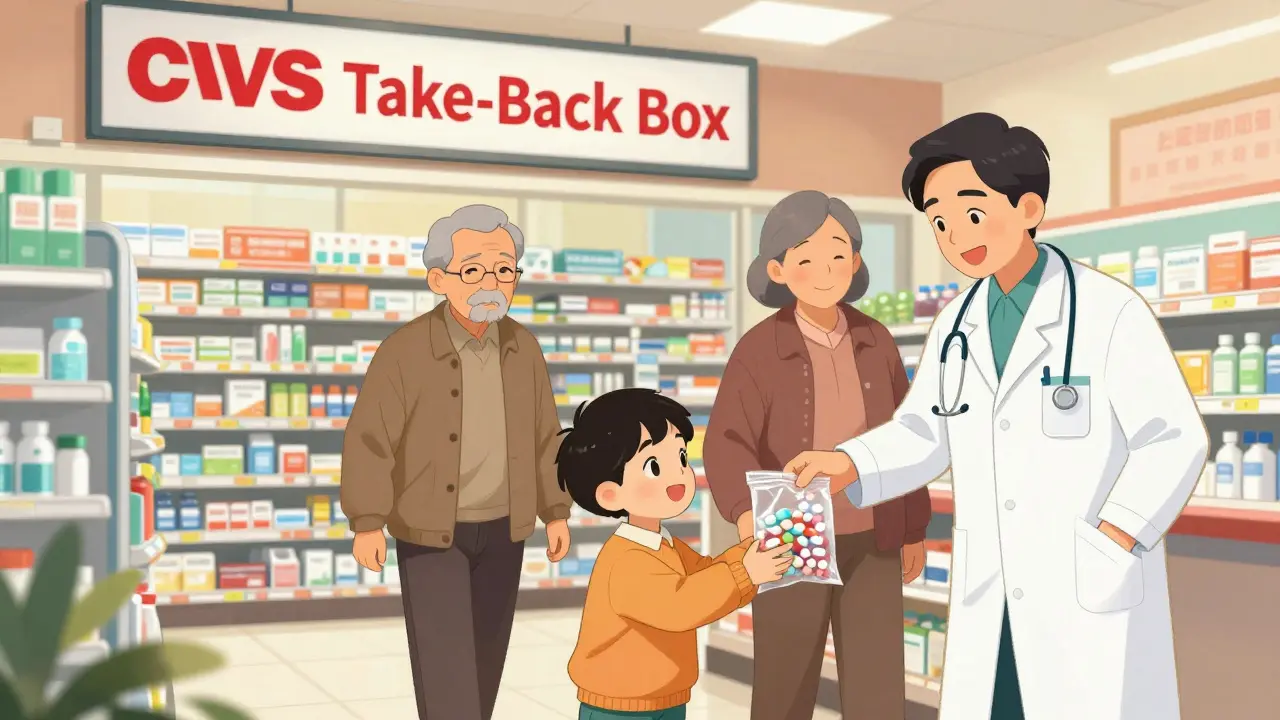
What Are Drug Take-Back Programs?
Drug take-back programs are community-based efforts that let you safely drop off expired, unused, or unwanted medications so they don’t end up in your toilet, trash can, or the hands of someone who shouldn’t have them. These programs exist because flushing pills down the drain or tossing them in the garbage doesn’t just waste money-it pollutes water, harms wildlife, and fuels addiction. The U.S. Drug Enforcement Administration (DEA) officially launched these efforts in 2010 after seeing a sharp rise in teen opioid misuse and accidental overdoses. Today, more than 16,500 permanent collection sites exist across the country-in pharmacies, hospitals, and police stations-plus twice-yearly events where people can turn in meds for free.
How Do These Programs Actually Work?
There are three main ways to use a drug take-back program: permanent drop boxes, mail-back envelopes, and one-day collection events. Permanent drop boxes are the most reliable. You’ll find them inside pharmacies like Walgreens or CVS, or at local police stations. These are locked metal boxes with a slot on top. You just walk in during business hours, hand over your old pills, and leave. No questions asked. Mail-back programs let you order a prepaid envelope from your pharmacy or health department, put your meds inside, seal it, and drop it in any mailbox. The third option is the DEA’s National Prescription Drug Take Back Day, held every April and October. On those days, hundreds of temporary collection sites open up in parking lots, community centers, and fire stations. But permanent drop boxes are better-they’re always open, and people use them 25% more often than one-day events.
What Can You Actually Drop Off?
You can bring in almost any type of unused medication: prescription pills, over-the-counter drugs, patches (like fentanyl or nicotine), liquid medicines, ointments, vitamins, and even pet meds. Keep them in their original bottles if you can. If the bottle’s missing, just put them in a sealed plastic bag. The key rule: remove or black out your name and address on the label. But here’s what you can’t bring: aerosol cans (like asthma inhalers), hydrogen peroxide, thermometers, alcohol, needles, or illegal drugs. Those require special handling. If you’re unsure, call the collection site first. Most pharmacies have a simple list they’ll read to you over the phone.
Why Not Just Flush or Trash Them?
Flushing meds might seem quick, but it’s one of the worst things you can do. Pharmaceuticals end up in rivers, lakes, and drinking water. The EPA says this contributes to long-term environmental damage-fish developing tumors, frogs changing sex, and antibiotics polluting groundwater. Throwing pills in the trash isn’t much better. Kids, pets, or even scavengers can dig them out. In 2022, the FDA found that nearly 30% of teens who misused prescription drugs got them from family medicine cabinets. That’s why the FDA and DEA both say: take-back programs are the only safe way to dispose of most medications. There are only about 15 drugs-like fentanyl patches and certain painkillers-that the FDA still recommends flushing because they’re so dangerous if misused. You can find that list on the FDA’s website. For everything else, drop it off.
Where Can You Find a Collection Site Near You?
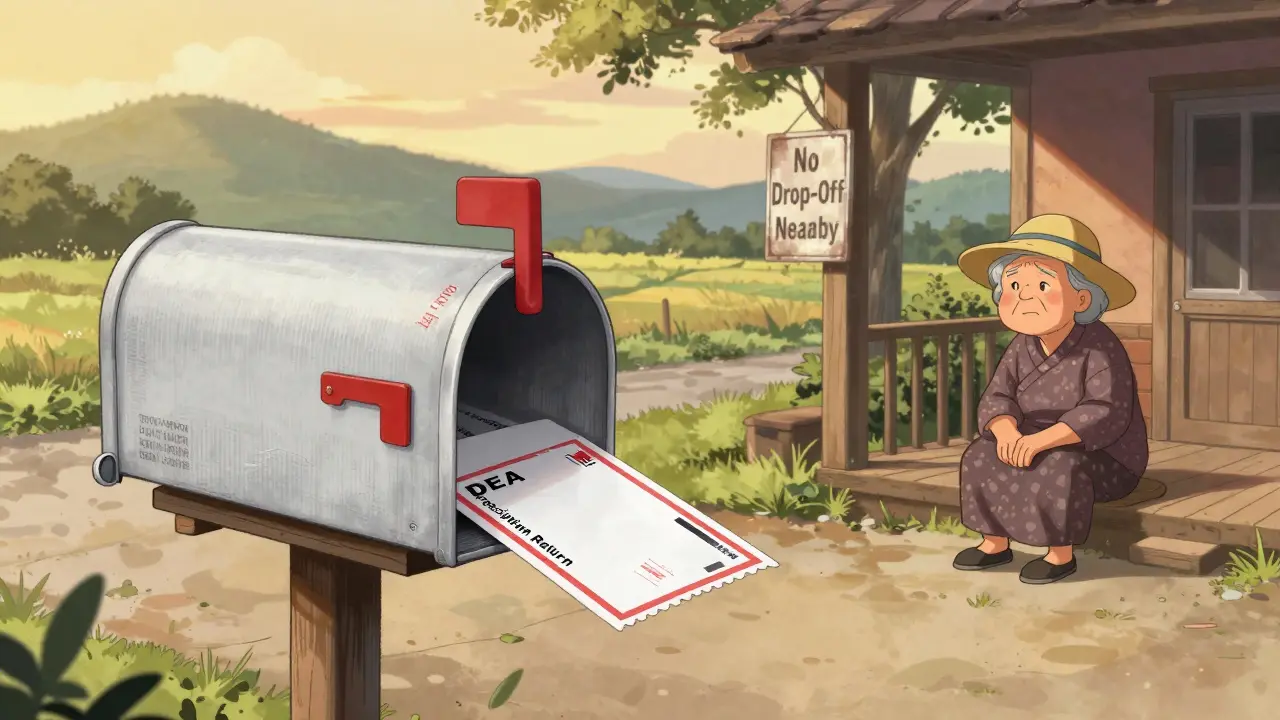
The DEA has a searchable map on its website that shows every authorized drop-off location. Just type in your ZIP code, and it pulls up nearby pharmacies, hospitals, or police stations with permanent boxes. In urban areas, you’re usually within five miles of one. But in rural parts of the country, access drops sharply. Only 63% of rural communities have a collection point, compared to 89% in cities. That’s a big gap. Some places, like Broward County in Florida, solved this by sending mobile collection units to libraries, churches, and senior centers. If you live far from a site, check with your local health department-they might offer free mail-back envelopes. Walgreens alone has over 1,600 drop boxes across 49 states. CVS, Rite Aid, and many independent pharmacies are also in the program.
Why Some Programs Struggle to Work
Even with all these options, only 28% of Americans know permanent take-back boxes exist. Many still think the only chance to dispose of meds is during the DEA’s twice-a-year events. Others avoid police station drop boxes because they fear being questioned or judged. Studies show participation drops 32% when collection points are run by law enforcement. Pharmacies, on the other hand, see 41% higher usage because people feel more comfortable there. Funding is another problem. Setting up a permanent drop box costs between $1,200 and $2,500 upfront. Running it costs about $18,500 a year. Most local programs rely on grants or donations, and 57% say they’re barely keeping up. Without steady funding, these boxes get removed or locked up. That’s why experts say the best solution is to tie these programs into existing healthcare systems-like linking them to pharmacy refill services or insurance billing-so they’re sustainable long-term.
What’s Changing in 2026?
Things are moving fast. The DEA’s “Every Day is Take Back Day” campaign has pushed communities to focus on permanent solutions instead of one-day events. Since 2020, year-round collection sites have jumped from 5,000 to over 16,500. Mail-back programs are expanding too. A new bill proposed in 2023 would require Medicare Part D plans to pay for free return envelopes for seniors-about 48 million people. That could be a game-changer. Stericycle, a major medical waste company, reports a 67% increase in year-round disposal services since 2020. Some states, like Virginia, now offer detailed at-home disposal instructions if no drop-off is nearby: crush pills, mix them with coffee grounds or kitty litter, seal them in a container, and throw them out. But again-this is a last resort. The goal is to make drop-offs so easy that no one needs to resort to this.
What Happens to the Medications After You Drop Them Off?
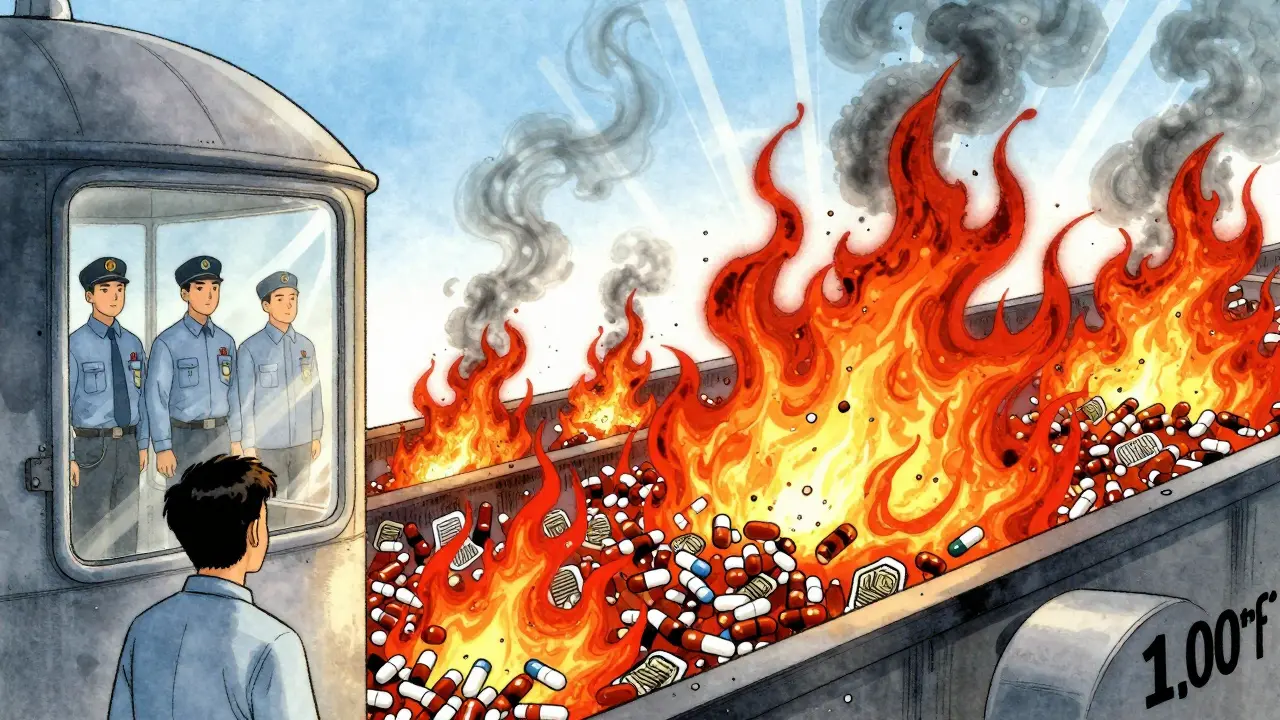
Once collected, all medications are shipped to licensed incineration facilities. They’re burned at temperatures over 1,800°F, which completely destroys the chemicals. Nothing goes to landfills. Nothing gets recycled. Nothing ends up in water. This process is tightly regulated by the DEA and EPA. It’s the only method proven to fully eliminate the risk of misuse or environmental harm. In 2025 alone, over 620,000 pounds of drugs were collected during the April Take Back Day. Since 2010, the total is nearly 20 million pounds. That’s the weight of over 1,500 full-size cars. All of it safely destroyed.
Why This Matters for Your Family
It’s not just about the environment. It’s about safety. Every year, over 100,000 Americans die from drug overdoses. Many of those involve pills taken from a family member’s medicine cabinet. Kids who find old painkillers, grandparents who accidentally take the wrong pill, or teens experimenting with leftover antibiotics-it all starts with easy access. Drug take-back programs cut that access. Communities with permanent drop boxes see a 19% drop in teen prescription misuse within three years. That’s not a small number. It’s lives saved. It’s families kept together. It’s less pressure on emergency rooms and law enforcement. When you drop off your old meds, you’re not just cleaning out a drawer-you’re helping prevent a tragedy.
Frequently Asked Questions
Can I drop off medications for someone else?
Yes. You can drop off medications for family members, friends, or even neighbors. You don’t need to be the person named on the prescription. Just make sure personal info is removed from the bottles, and the meds are in sealed containers. Collection sites don’t ask for ID or proof of ownership.
Do I need to remove pills from blister packs?
No. You can drop off pills still in their original blister packs. Just put the entire pack in a sealed plastic bag or box. If you prefer, you can remove them and put them in a container-either way is fine. The key is keeping them contained and labeled only with the medication name, not your personal info.
Are there any costs involved?
No. All DEA-approved take-back programs are completely free. You don’t pay for drop-off boxes, mail-back envelopes, or event participation. If someone asks you for money, it’s not an official program. Report it to your local health department.
What if I live in a rural area with no drop-off site?
Check with your county health department or local pharmacy. Many offer free mail-back envelopes. If not, the FDA recommends mixing crushed pills with kitty litter, coffee grounds, or dirt, sealing them in a container, and tossing them in the trash. Never flush unless it’s one of the 15 drugs listed by the FDA as dangerous if misused.
Can I drop off expired vitamins and supplements?
Yes. Vitamins, herbal supplements, and over-the-counter products like antacids or allergy pills are all accepted. Treat them the same way you would prescription meds-remove personal info and keep them sealed.
Why don’t all pharmacies have drop boxes?
It’s not mandatory for every pharmacy to participate. Some don’t have space, others can’t afford the upfront cost of the box ($1,200-$2,500), and some pharmacists are confused by DEA rules. But major chains like Walgreens and CVS have made it standard. If your pharmacy doesn’t have one, ask them to join. Public pressure works.
Next Steps
Look up your nearest drop-off site today. It takes less than five minutes on the DEA’s website. If you’re in a rural area, call your local pharmacy or health department and ask about mail-back options. Clear out your medicine cabinet-expired painkillers, old antibiotics, leftover anxiety meds. Don’t wait for the next DEA event. Use a permanent box. It’s easier, safer, and more effective. And if you’re still unsure what to do with a specific medication, call the DEA’s hotline or check the FDA’s list. Your community-and your family-will thank you.

I’ve seen these boxes at CVS… but let’s be real. Who’s to say they’re not just storing them and selling them on the dark web? 🤔 I heard a guy on a podcast that the DEA’s just using this as a cover to track who’s hoarding opioids. They don’t care about the environment-they care about control. #DeepStatePharma
The notion that pharmaceutical disposal is a matter of public safety is, frankly, a gross oversimplification. One must consider the structural inefficiencies inherent in decentralized collection infrastructure, as well as the fiscal disincentives faced by municipal entities. The absence of federal mandate renders these initiatives inherently unstable.
i didnt know you could drop off pet meds too... that's actually really helpful. my dog's arthritis pills expired last month and i had no idea what to do with them. thanks for the info!
Oh wow, so now we’re supposed to trust pharmacies with our old meds? Next they’ll tell us to leave our keys in the door and call it ‘community safety’. How quaint.
i tried using the mail-back thing once. the envelope got lost. took 3 weeks. i was like... okay, maybe i'll just toss it. not great. maybe they need better tracking?
One of the most scalable interventions here is integrating take-back logistics into the Rx refill workflow. Think: automated opt-in mailers at point of dispensing, with real-time inventory tracking via blockchain-enabled containers. It’s low-friction, high-impact, and aligns with value-based care models. We’ve piloted this in 3 clinics-adoption rate jumped 89% in 6 months.
You know what’s really wild? They burn it all. Like, 1,800 degrees Fahrenheit-hot enough to turn a human body into ash. But somehow, we’re supposed to believe that the smoke doesn’t carry traces of antidepressants, antipsychotics, or hormone disruptors into the atmosphere? And nobody’s talking about that? No one’s asking what happens to the ash? What’s in the filters? What’s in the air downwind? I’ve seen the reports. They don’t test for trace pharmaceuticals in the emissions. They don’t even look. It’s not disposal-it’s just… hiding. And we’re all complicit because it’s ‘easier’.
Good info. Thank you.
I find it profoundly regressive that a developed nation like the United States still relies on antiquated, geographically inconsistent, and underfunded drop-boxes-rather than implementing a centralized, AI-optimized, RFID-tagged pharmaceutical return ecosystem, integrated with national health registries and blockchain-based audit trails. The very notion that ‘mixing with kitty litter’ is an acceptable fallback is an indictment of our civic imagination.
This is such a simple thing that makes such a big difference. My grandma used to keep all her meds in a shoebox. Now she drops them off at the pharmacy every time she picks up a new script. No drama. No guilt. Just… done.