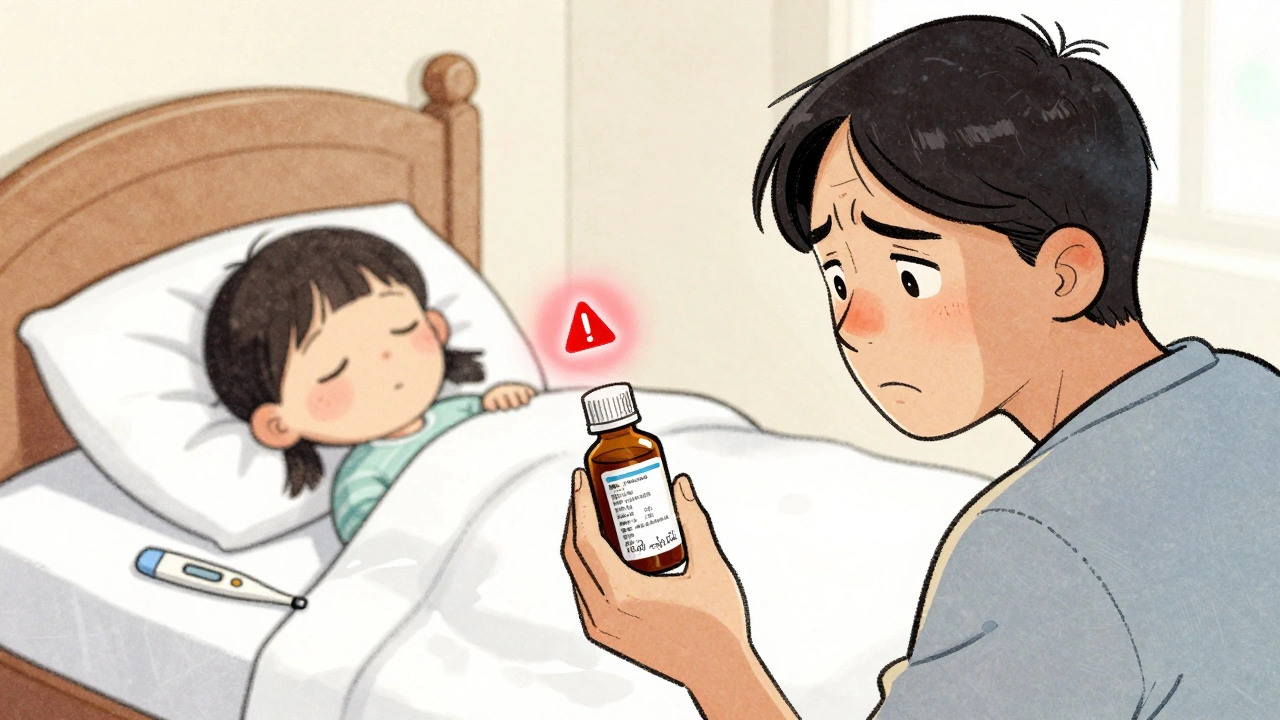
Every year, over 1.4 million children in the U.S. end up in the emergency room because of medication errors-most of them avoidable. The problem isn’t always that parents are careless. It’s that OTC children’s medication labels are confusing, even when they’re designed to be clear. You pick up a bottle of children’s Tylenol or ibuprofen, and suddenly you’re staring at numbers, abbreviations, and warnings that feel like a code you’re not supposed to know. But you can decode it. And doing it right could keep your child safe.
Why Weight Matters More Than Age
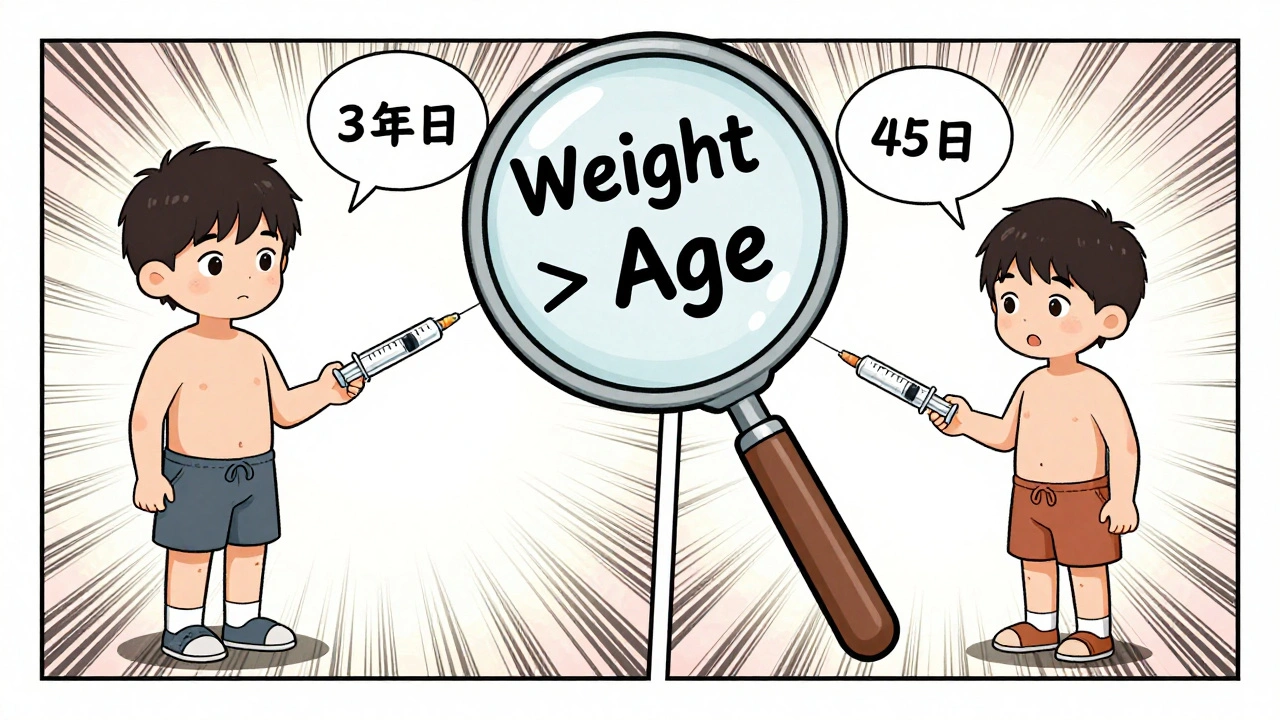
You’ve probably seen the age-based dosing chart on the side of the bottle: "For children 2-3 years: 5 mL." It’s easy. It’s tempting. But it’s not the best way to dose your child.The American Academy of Pediatrics (AAP) says weight is the only reliable way to determine the right dose. Why? Because two kids who are both 3 years old can weigh 25 pounds or 45 pounds-and their bodies process medicine completely differently. A 2019 study from Johns Hopkins found that using age instead of weight leads to dosing errors in 23% of cases. That’s more than 1 in 5 times.
Underdosing means the medicine won’t work. Overdosing? That’s when things get dangerous. Acetaminophen overdose is the leading cause of acute liver failure in children. Ibuprofen overdoses can damage kidneys or cause stomach bleeding. Neither is rare. Between 2018 and 2020, acetaminophen overdoses sent over 51,000 children to the ER. And nearly 30% of those cases happened because parents misread the label.
So if you know your child’s weight, use it. If you don’t, use age-but only as a backup. And always double-check the weight range on the label.
What to Look for on the Label: The Must-Read Sections
Every children’s OTC medicine label has the same basic structure. But not everyone reads it the same way. Here’s what you need to look for, in order:- Active Ingredient: This tells you what’s in the medicine. Is it acetaminophen? Ibuprofen? Diphenhydramine (Benadryl)? If you’re giving more than one medicine, check this section first. Many cold and flu products also contain acetaminophen. Giving Tylenol plus a cold medicine? You could be doubling the dose without realizing it.
- Uses: What is this medicine for? Fever? Pain? Allergies? Don’t use it for something it’s not meant to treat.
- Warnings: This is where the safety rules live. Look for phrases like "Do not give to children under 6 months" (for ibuprofen) or "Do not use with other medicines containing acetaminophen." If your child has liver disease, asthma, or allergies, check here too.
- Dosing Instructions: This is the most important part. It will list doses by weight and by age. Always start with weight. If your child’s weight falls between two ranges, go with the lower one. Never round up.
- Other Information: This includes storage instructions and expiration date. Don’t use expired medicine.
One more thing: Look for the concentration. It’s usually written as "160 mg per 5 mL" for children’s liquid acetaminophen. That’s the standard since 2011. But some older bottles or infant drops might say "80 mg per 0.8 mL." They’re not the same. Using the wrong syringe for the wrong concentration is how kids get overdosed.
Understanding Measurements: mL, TSP, TBSP
The FDA banned teaspoons and tablespoons from children’s medicine packaging in 2011. Why? Because a kitchen teaspoon can hold anywhere from 3 mL to 7 mL-depending on the spoon. That’s a 100% variation. One parent thought they were giving 5 mL. Their spoon held 7 mL. Their child got 40% too much medicine.Every bottle comes with a dosing cup or syringe. Use it. Never use a kitchen spoon, no matter how "accurate" it looks. Even if the label says "tsp," it means 5 mL-not the spoon in your drawer.
Here’s what the abbreviations mean:
- mL = milliliter. This is the only unit you should trust.
- TSP = teaspoon. On labels, this means 5 mL.
- TBSP = tablespoon. On labels, this means 15 mL.
Confusing TSP and TBSP is one of the most common mistakes. One parent on Reddit gave their 2-year-old 15 mL thinking it was 5 mL because they read "tsp" as "tbsp." That’s three times the dose.
Acetaminophen vs. Ibuprofen: Key Differences
Most parents know these two names. But they don’t know how different they are.Acetaminophen (Tylenol)
- Can be given as young as 2 months (with pediatrician approval).
- Dose: Every 4-6 hours as needed.
- Max: 5 doses in 24 hours.
- Concentration: 160 mg per 5 mL (standard for children’s liquid).
- Warning: Can cause liver damage if too much is taken.
Ibuprofen (Advil, Motrin)
- Not for children under 6 months.
- Dose: Every 6-8 hours as needed.
- Max: 4 doses in 24 hours.
- Concentration: 100 mg per 5 mL (for children’s liquid).
- Warning: Can irritate the stomach or affect kidney function.
Notice something? The dosing frequency is different. Acetaminophen can be given more often, but you can’t give more than five doses total. Ibuprofen is given less often, but each dose is stronger. A 30-pound child gets 5 mL of acetaminophen (160 mg/5 mL) and also 5 mL of ibuprofen (100 mg/5 mL). The volume is the same, but the active ingredient is different.
Never switch between them without checking the label. And never give both at the same time unless a doctor tells you to.
What About Chewables and Tablets?
Liquid isn’t the only option. Chewables and tablets are common for older kids. But they’re trickier.Children’s chewable acetaminophen tablets are usually 80 mg each. The liquid is 160 mg per 5 mL. So if you give two chewables, that’s 160 mg-same as 5 mL of liquid. But if you think one chewable is enough because your child is "big for their age," you might underdose.
Always check the mg per tablet. Don’t assume. One brand’s "children’s tablet" might be 160 mg. Another’s might be 80 mg. The label will say. Read it.
Benadryl (diphenhydramine) is another minefield. Liquid is 12.5 mg per 5 mL. Tablets are 25 mg. Giving a tablet to a 1-year-old because you think "it’s the same as liquid" can cause serious sedation or even seizures. The AAP says: "Do not give Benadryl to children under 2 unless your doctor says so."
What to Do If You’re Not Sure
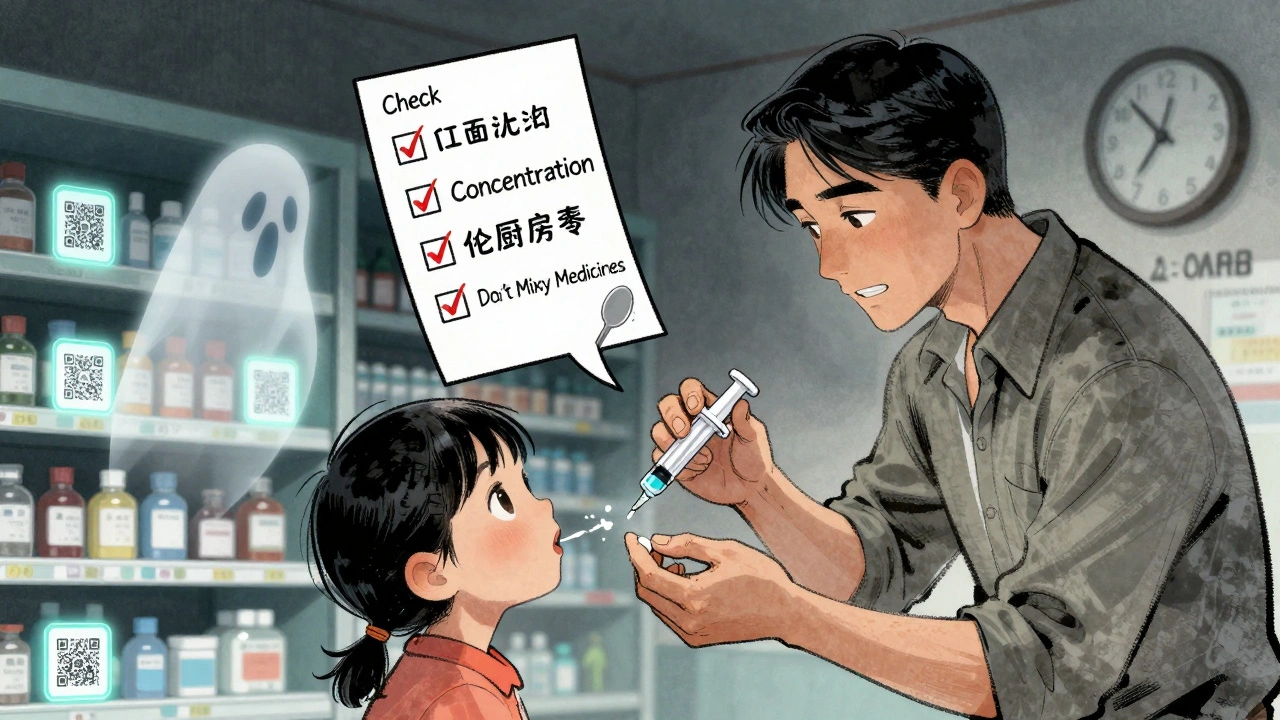
If you’re unsure about the weight, the concentration, or whether you should give the medicine at all-don’t guess.Call your pediatrician. Or call your pharmacist. Both are trained to help with this. Many pharmacies have free dosing apps or online calculators. Hyde Park Pediatrics’ digital dosing tool, for example, has been used over 17,000 times with 98% accuracy.
Even if it’s 2 a.m. and your child has a fever, don’t wing it. Use the dosing syringe. Check the weight. Read the concentration. Confirm the maximum daily dose.
And if you’ve already given a dose and you’re worried you got it wrong? Call Poison Control at 1-800-222-1222. They’re available 24/7. They’ve seen every mistake. They know what to do.
Common Mistakes Parents Make (And How to Avoid Them)
- Mistake: Using a kitchen spoon. Solution: Always use the syringe or cup that came with the bottle.
- Mistake: Giving medicine based on age alone. Solution: Weigh your child if you can. Even a rough estimate on a bathroom scale helps.
- Mistake: Giving two medicines with the same active ingredient. Solution: Always check the "Active Ingredient" section on every bottle. If it says acetaminophen, don’t give Tylenol on top of it.
- Mistake: Assuming "infant" and "children’s" are the same. Solution: Infant drops are concentrated. Children’s liquid is not. Don’t swap syringes.
- Mistake: Giving medicine past the expiration date. Solution: Throw it out. It doesn’t work as well, and it might be unsafe.
What’s Changing in 2025?
The FDA is pushing for even clearer labeling. By 2025, most children’s OTC medicines will include:- QR codes that link to video dosing instructions.
- Secondary measurements in "syringe units" (like 0.2 mL marks) alongside mL.
- Bolder "Liver Warning" labels on acetaminophen products for kids under 12.
These changes are based on data showing that 35% of parents still misread mL measurements-even after 10 years of standardization. The goal isn’t to make labels longer. It’s to make them impossible to misinterpret.
For now, the rules haven’t changed. Read the weight. Use the right tool. Check the concentration. Don’t mix medicines. If in doubt, call someone who knows.
Can I use a kitchen teaspoon to measure children’s medicine?
No. A kitchen teaspoon can hold anywhere from 3 to 7 milliliters, which is up to 40% more than the 5 mL dose your child needs. Always use the dosing syringe or cup that comes with the medicine. Never guess with spoons.
What if my child’s weight falls between two ranges on the label?
Always round down to the lower weight range. For example, if your child weighs 37 pounds and the label lists 36-47 lbs (5 mL) and 24-35 lbs (4 mL), give 5 mL. But if they weigh 34.5 pounds and the next range starts at 36 lbs, give the dose for 24-35 lbs (4 mL). It’s safer to underdose slightly than to risk an overdose.
Is it safe to give acetaminophen to a 2-month-old?
Acetaminophen can be given to infants as young as 2 months, but only after talking to your pediatrician. Never give it without medical advice for babies under 3 months with a fever. Fever in a young infant can be a sign of a serious infection, and medicine alone won’t fix that.
Can I give ibuprofen to a 4-month-old?
No. Ibuprofen is not approved for children under 6 months of age. Even if your child is in pain or has a fever, do not give ibuprofen until they are at least 6 months old. For younger babies, use acetaminophen only after consulting your doctor.
Why do some labels say "160 mg per 5 mL" and others say "80 mg per 0.8 mL"?
The "80 mg per 0.8 mL" is for infant drops, which are more concentrated. The "160 mg per 5 mL" is for children’s liquid. They are not interchangeable. Using the infant syringe on children’s liquid (or vice versa) can lead to serious overdoses. Always match the medicine to the correct dosing device.
How do I know if I’ve given too much acetaminophen?
Signs of acetaminophen overdose include nausea, vomiting, loss of appetite, and yellowing of the skin or eyes. But symptoms can take hours to appear. If you suspect an overdose-even if your child seems fine-call Poison Control at 1-800-222-1222 or go to the ER immediately. Liver damage can happen without obvious warning.






OMG I just realized I’ve been using a kitchen tsp for months 😭 My 3-year-old got Tylenol with a regular spoon like 5 times last winter… I’m so scared right now. Thank you for this. I’m printing this out and taping it to the fridge.
While the intent of this article is commendable, the underlying assumption-that parents are merely misinformed-is fundamentally flawed. The real issue lies in the systemic failure of pharmaceutical regulation and consumer product design. The burden of precision should not fall upon caregivers who are sleep-deprived, stressed, and operating without medical training. Clear labeling is a minimum standard, not a virtue. The fact that we still require parents to decode milliliters and concentrations in 2025 is a moral indictment of the industry and its regulatory overseers.
Ugh I used to give my kid Motrin with the cap because it looked like a teaspoon 😅 Then I saw a mom at Target cry because her 18-month-old got too much and had to go to the ER. I bought a syringe that day and never looked back. Also-PLEASE don’t mix Tylenol and cold meds. I did it once. My baby was zonked for 12 hours. Never again.
so like… i just found out infant drops are way stronger?? i thought they were just for babies?? i used the infant syringe on the kids liquid tylenol once bc i lost the cap… my kid was kinda out of it for hours… i thought he was just sleepy 😅 now i know why. never again. also why do labels say tsp but mean ml?? why not just say ml??
THIS. I’ve been using the dosing syringe since my first kid. But here’s a pro tip: write the date you opened the bottle on the label with a sharpie. Liquid meds lose potency after 6 months, even if the expiration is later. Also-keep a small notebook with your kids’ weights and meds they’ve taken. I did this for my twins and it saved me during a 3am fever panic. 🙌
It’s interesting how we treat medicine like a math problem when it’s actually a deeply human one. We demand precision from exhausted parents, yet we design systems that are inherently confusing. The real tragedy isn’t the misreading of mL-it’s that we’ve normalized a world where a parent’s love must be measured in milligrams, and where safety depends on vigilance rather than design. Maybe the question isn’t how to read the label-but why the label exists in such a hostile form at all.
in india we dont have much choice, most parents use spoon or even medicine dropper from old bottles. i hope this gets global. also weight based dosing is good but many dont have scale at home. age is fallback but still better than nothing.
Oh wow. A whole 1200-word essay on how to read a label. How revolutionary. Next they’ll tell us not to drink bleach. This is like writing a manual on how to not step on your own feet. The fact that this is even necessary speaks volumes about the collective cognitive decline of American parenting. I’m starting a petition to ban OTC meds until everyone passes a 10-question quiz. With diagrams.
So let me get this straight… we’re now teaching parents to read labels… as if this were 1998? 🤦♀️ And we’re calling this ‘safety’? Meanwhile, the same companies that make these confusing labels also lobby against plain packaging laws. The real villain isn’t the parent who used a spoon-it’s the $500B pharma industry that profits from confusion. But hey, at least we can all feel virtuous for using the syringe, right?
weight matters. use syringe. dont mix. call poison control. simple. no need for long post.
From a global pharmacovigilance standpoint, the primary failure mode here is non-adherence to WHO’s standardized pediatric dosing protocols. The absence of BMI-adjusted dosing algorithms in OTC formulations represents a critical gap in risk mitigation infrastructure. Additionally, the persistence of non-standardized concentration metrics (e.g., 80mg/0.8mL) violates ISO 10993-1 pharmaceutical labeling compliance thresholds. Parents are not the problem-the regulatory arbitrage is.
Wow. A whole article about not using spoons. I’m sure the 1.4 million ER visits were caused by… kitchen utensils. Meanwhile, Big Pharma is selling 5 different versions of the same medicine with 3 different concentrations and no warning labels. But hey, at least we can blame the moms for using a teaspoon. 🙄