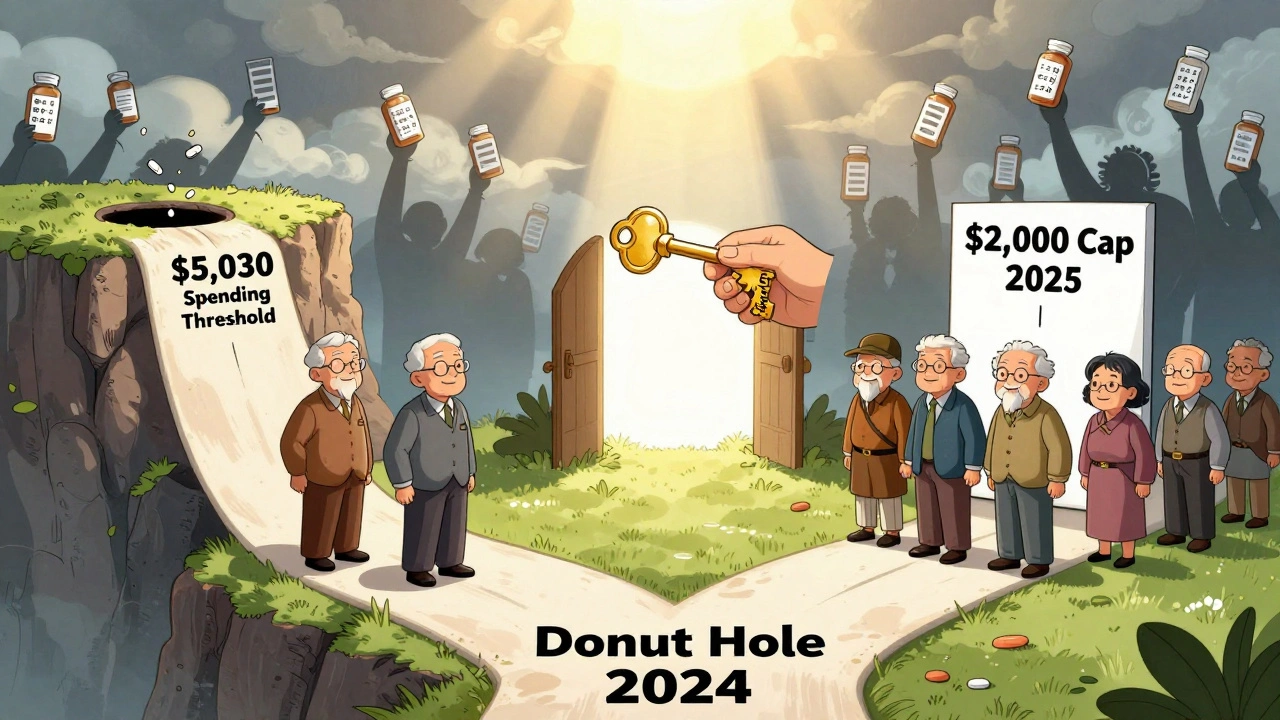
By the end of 2024, millions of Medicare beneficiaries will face a final year of the donut hole-a confusing and costly gap in prescription drug coverage. But starting January 1, 2025, it disappears completely. If you’re taking medications now and hitting that gap, you’re not alone. In 2022, nearly 1 in 4 Medicare Part D enrollees entered the coverage gap. For many, that meant paying full price for insulin, heart meds, or arthritis drugs-sometimes over $1,000 a month. You don’t have to suffer through it. Here’s how to manage your medication costs before and after the donut hole vanishes.
What the Donut Hole Really Means in 2024
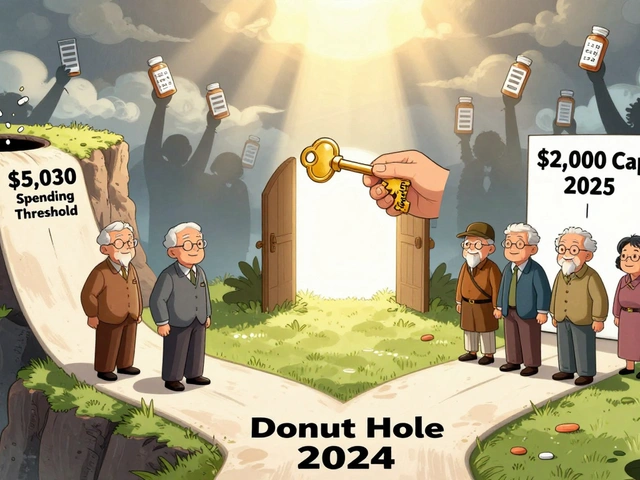
The donut hole isn’t a mystery-it’s a phase in your Medicare Part D plan where you pay more out of pocket after your plan and you have spent a certain amount on covered drugs. In 2024, that threshold is $5,030 in total drug costs. Once you hit that number, you enter the coverage gap. You still get some help: you pay 25% of the cost for both brand-name and generic drugs. Sounds fair? Not quite. Here’s the catch: the 25% you pay doesn’t include the 70% discount drugmakers give on brand-name drugs. That discount doesn’t count toward getting you out of the gap. Only what you actually pay out of pocket matters. So if you’re on a $600-a-month brand-name drug like Humira, you’re paying $150 a month-but the $420 discount doesn’t help you escape the donut hole. That means you could spend over $3,000 out of pocket before you reach catastrophic coverage, where you pay just 5% of drug costs. For people on generics, it’s even worse. Since there’s no manufacturer discount, you pay 25% of the full price, and it takes nearly $6,000 in out-of-pocket spending to get out of the gap. That’s why many people end up skipping doses, splitting pills, or going without meds entirely.How the $2,000 Cap Changes Everything in 2025
The Inflation Reduction Act of 2022 didn’t just tweak the system-it rewrote it. Starting January 1, 2025, the donut hole is gone. Instead, you’ll have a hard cap: once you’ve spent $2,000 out of pocket on covered drugs in a year, your Part D plan pays 100% of your prescription costs for the rest of the year. No more sliding into a cost trap. No more guessing how much you’ll owe next month. This change hits hardest for people on expensive brand-name drugs. Before 2025, someone on a $1,200-a-month biologic could pay $9,000+ in a year. In 2025, they’ll pay $2,000 and nothing more. That’s a $7,000 savings. For people on multiple generics, the savings are smaller but still meaningful-especially if they’re on fixed incomes. The trade-off? Premiums might rise slightly for some. But the real win is predictability. No more panic in July when you realize you’ve spent $4,000 and still have six months of meds to buy.Five Ways to Slash Your Costs Before the Donut Hole Disappears
You don’t have to wait until 2025 to save money. Here’s what works right now:- Check your drug’s tier-Your plan puts drugs into tiers (Tier 1 = cheapest, Tier 4 = most expensive). If your drug is in Tier 3 or 4, ask your doctor if a Tier 1 or 2 alternative exists. A switch from a brand-name statin to its generic version can save you $1,500 a year.
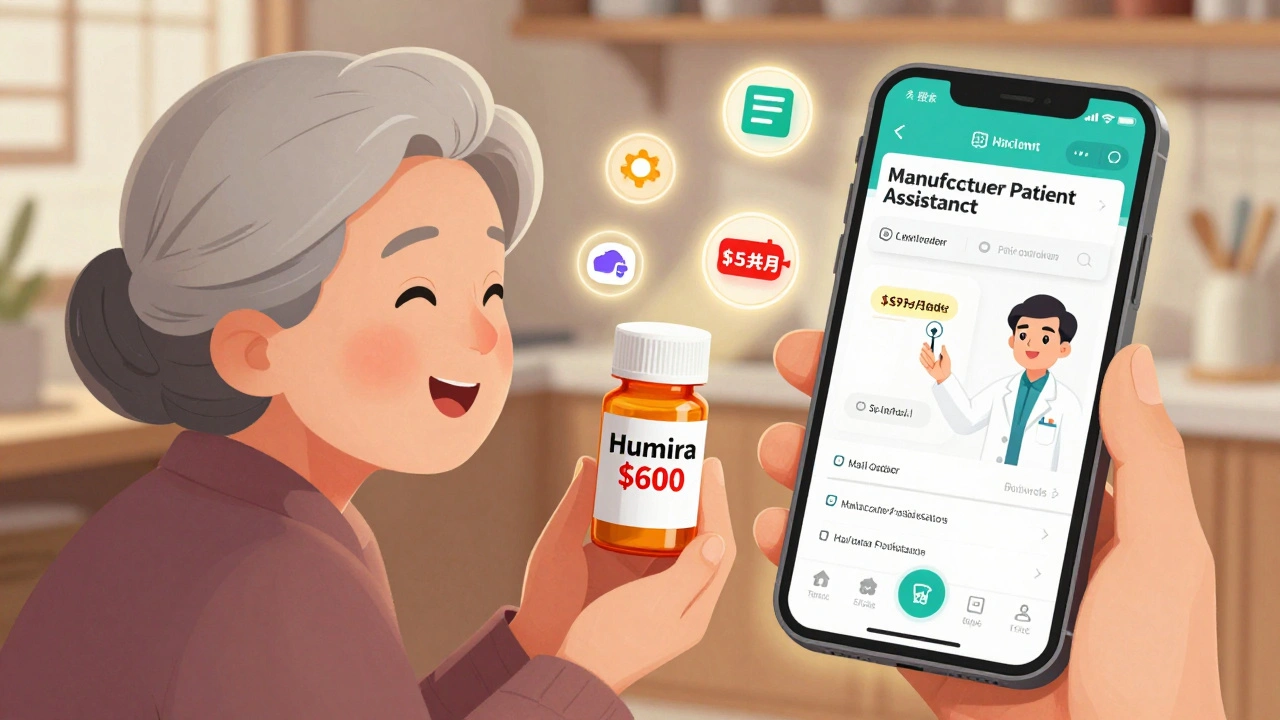
- Use manufacturer patient assistance programs-Companies like Amgen, AbbVie, and Eli Lilly offer programs that cut your cost to $5 or $10 a month for brand-name drugs. You don’t need to be poor to qualify. Just apply. One woman on Repatha cut her monthly bill from $560 to $5 using her drugmaker’s program.
- Switch to generics-If your doctor says it’s safe, swap brand for generic. A 30-day supply of brand-name Lipitor costs $180. Generic atorvastatin? $12. That’s $2,000 saved a year.
- Get 90-day supplies-Mail-order pharmacies often charge less for 90-day fills. A 30-day copay of $45 becomes $105 for 90 days-saving you $30 a month. That adds up fast.
- Apply for Extra Help-If your income is below $21,870 (individual) or $29,580 (couple), you qualify for the Low-Income Subsidy. It covers your premiums, deductibles, and eliminates the donut hole entirely. 12.6 million people got this in 2023. You might be one of them.
Use the Medicare Plan Finder-Before It’s Too Late
Most people pick a Part D plan during open enrollment and forget about it. Big mistake. Your plan’s formulary changes every year. What was cheap in January might be expensive in June. Go to Medicare.gov/plan-compare. Type in every drug you take, including dose and frequency. Compare plans side by side. Look at the total annual cost-not just the monthly premium. One man saved $1,300 a year just by switching from a $60/month plan with high copays to a $35/month plan with lower out-of-pocket costs for his insulin. If you’re close to the donut hole, use the tool to see how each plan handles the gap. Some plans offer extra discounts during the coverage gap. Others don’t. That difference could mean hundreds-or thousands-of dollars.Don’t Fall for the ‘Spread Out Your Purchases’ Trick
You might hear advice like: “Buy your meds in January and July to delay hitting the donut hole.” It sounds smart, but it’s risky. Medicare tracks your total spending across all pharmacies. If you buy 6 months’ worth of a drug in January, it still counts toward your $5,030 limit. You won’t trick the system-you’ll just run out of meds in August. Instead, focus on what you can control: switching to cheaper drugs, applying for assistance, and using mail-order. Spreading purchases doesn’t work. But reducing your drug costs does.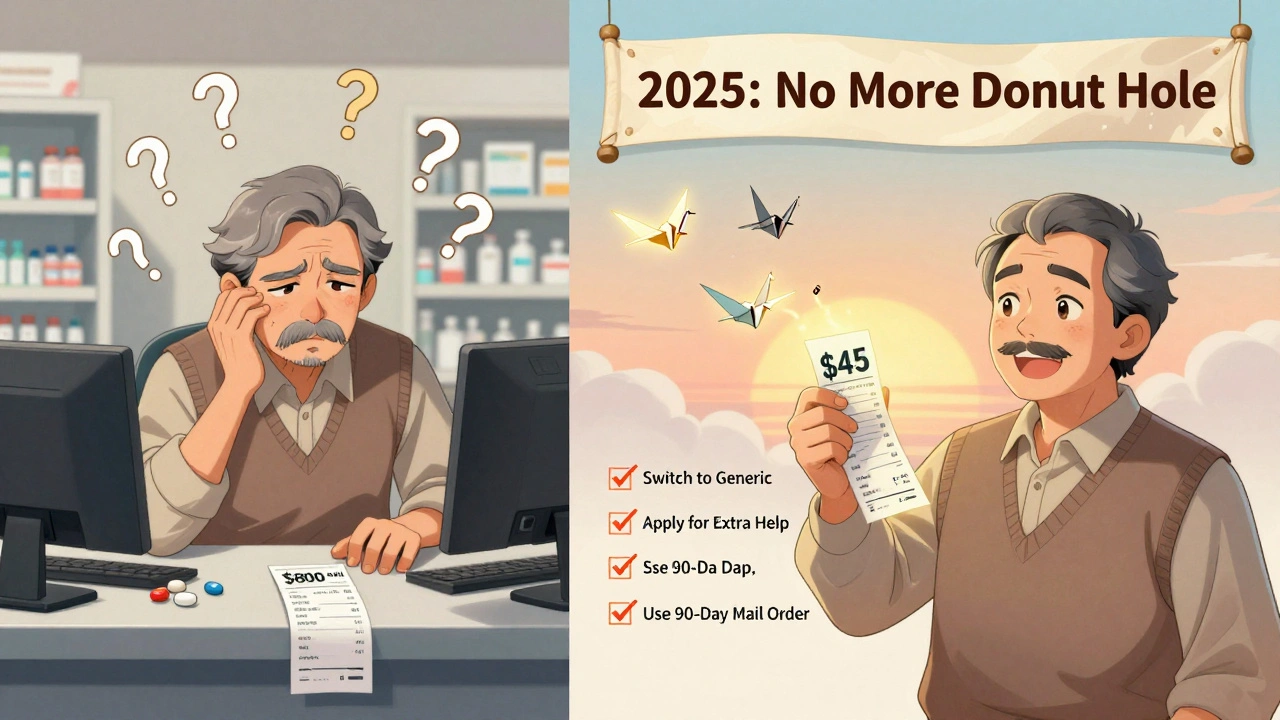
What to Do If You’re Already in the Donut Hole
If you’re already paying 25% of your drug costs and feeling the pinch:- Call your pharmacy and ask if they can switch you to a cheaper alternative today.
- Visit NeedyMeds.org or RxAssist.org-they list free or low-cost programs for over 1,000 drugs.
- Ask your doctor for samples. Many reps still bring them to clinics.
- Check if your state has a Medicare Savings Program. Thirty-seven states offer extra help for low-income seniors.
Prepare for 2025 Now
Even though the donut hole is ending, you still need to act. Your plan’s 2025 details will arrive in September 2024. Don’t wait. Review your current meds. Talk to your doctor about generics. Apply for Extra Help now-it takes up to 90 days to process. If you’re eligible, you’ll be covered under the new $2,000 cap without any gaps. The system is changing. The good news? You don’t have to wait for it to fix itself. You can fix it for yourself-with the right info and the right moves.What is the Medicare Part D donut hole in 2024?
The Medicare Part D donut hole is the coverage gap that begins after you and your plan have spent $5,030 on covered drugs in 2024. Once you enter this phase, you pay 25% of the cost for both brand-name and generic drugs. The manufacturer discount on brand-name drugs doesn’t count toward getting you out of the gap, so you may spend thousands before reaching catastrophic coverage.
Will the donut hole still exist in 2025?
No. Starting January 1, 2025, the donut hole is eliminated. Instead, Medicare Part D will have a $2,000 annual out-of-pocket spending cap. Once you hit that amount, your plan covers 100% of your prescription drug costs for the rest of the year.
How can I save money on my prescriptions during the coverage gap?
Switch to generic drugs, apply for manufacturer patient assistance programs, use 90-day mail-order fills, check your drug’s tier on your plan’s formulary, and apply for Extra Help if your income qualifies. These steps can cut your costs by 50% to 90%.
Do manufacturer discounts count toward getting out of the donut hole?
No. The 70% discount drugmakers give on brand-name drugs during the coverage gap does not count toward your out-of-pocket spending limit. Only what you actually pay-your 25% coinsurance-counts. That’s why people on expensive brand-name drugs can spend over $3,000 before reaching catastrophic coverage.
How do I know if I qualify for Extra Help?
You qualify if your income is below $21,870 per year (individual) or $29,580 (couple) in 2024, and your resources (like bank accounts and investments) are under $17,220 (individual) or $34,360 (couple). You can apply at SSA.gov or through your state’s Medicaid office. If approved, you’ll pay little to nothing for your prescriptions and won’t enter the coverage gap.
Should I change my Medicare Part D plan because of the donut hole?
Yes-if you take one or more expensive medications. Use the Medicare Plan Finder to compare plans based on your specific drugs, not just the premium. A plan with a slightly higher monthly cost but lower copays during the coverage gap can save you hundreds or thousands annually.
Can I avoid the donut hole by buying my meds in bulk?
No. Medicare tracks your total drug spending across all pharmacies and all purchases in a year. Buying six months’ worth of a drug in January still counts toward your $5,030 limit. You can’t delay the gap by timing purchases. Focus on lowering your drug costs instead.


Hey everyone, I’ve been helping my dad navigate this mess for years. He’s on three meds for diabetes and heart issues. Last year, he skipped doses in July just to make it through. This year, we applied for his drugmaker’s program-cut his Humira cost from $500 to $10. No magic, just paperwork. If you’re struggling, don’t wait. Call the manufacturer. They want you to get better, not bankrupt.
One cannot help but observe the tragic commodification of human health under the neoliberal medical-industrial complex. The very notion of a ‘$2,000 cap’ is a performative gesture-a neoliberal sleight of hand designed to pacify the proletariat while preserving the structural violence of pharmaceutical monopolies. The donut hole was never the problem; capitalism was.
It is deeply irresponsible to suggest that patients should ‘apply for manufacturer programs’ as if these are reliable, permanent solutions. These programs are temporary, discretionary, and subject to corporate whim. One does not solve systemic failure by encouraging individuals to beg for scraps from the tables of Fortune 500 executives. This article is a distraction, not a solution.
Let me be perfectly clear: the fact that you have to navigate a $5,030 threshold just to get basic healthcare is a national disgrace. The 70% manufacturer discount not counting toward out-of-pocket? That’s not a loophole-it’s a fraud. The system is rigged. And the fact that people are still being told to ‘switch to generics’ like it’s a magic bullet? That’s tone-deaf. I’ve seen people die because they couldn’t afford their meds. This isn’t advice-it’s a survival guide for a broken system.
lol i just took my 90-day script and called it a day 😌
the donut hole is just another layer in the great american paradox we demand care but refuse to pay for it we want miracles but won't fund the machinery that makes them possible the real tragedy isn't the gap it's that we've learned to live inside it
Guys, I’m from India, I’ve seen how people here pay $2 for insulin, and here we’re paying $150? It’s insane. My cousin in Ohio used NeedyMeds and got her arthritis drug for free. Just go online, type your drug name, and boom-help. Don’t overthink it. Apply. Call. Ask. You’re not asking for charity, you’re asking for what’s owed. The system’s broken, but the tools are there. Use them.
i just started taking my meds every other day to make it last. not ideal but hey, i’m alive
It is regrettable that the article offers no substantive critique of the pharmaceutical lobbying apparatus that has actively obstructed meaningful reform for decades. The focus on individual mitigation strategies, while pragmatically useful, fundamentally misdirects the moral imperative toward systemic overhaul.
Anyone who suggests ‘switching to generics’ without medical supervision is dangerously negligent. Not all generics are bioequivalent. Some patients experience adverse effects. This article reads like a corporate pamphlet disguised as public service. You’re not helping-you’re enabling.
Of course the donut hole is disappearing-right after Big Pharma raised premiums 12% last year. This is a PR stunt. The $2,000 cap? It’s funded by squeezing out smaller insurers and forcing seniors into managed care plans with narrower networks. You think you’re winning? You’re just being herded into a different cage.
I just got my first insulin prescription under Extra Help and I cried in the pharmacy 😭 thank you to whoever wrote this I’m not alone
...I just don’t understand why no one talks about how the government lets drug companies set prices without any oversight. It’s not about the donut hole. It’s about the fact that a pill that costs 12 cents to make is sold for $1,200. And we just... accept it? I mean, what’s the point of even trying to ‘manage’ costs when the whole foundation is rotten?