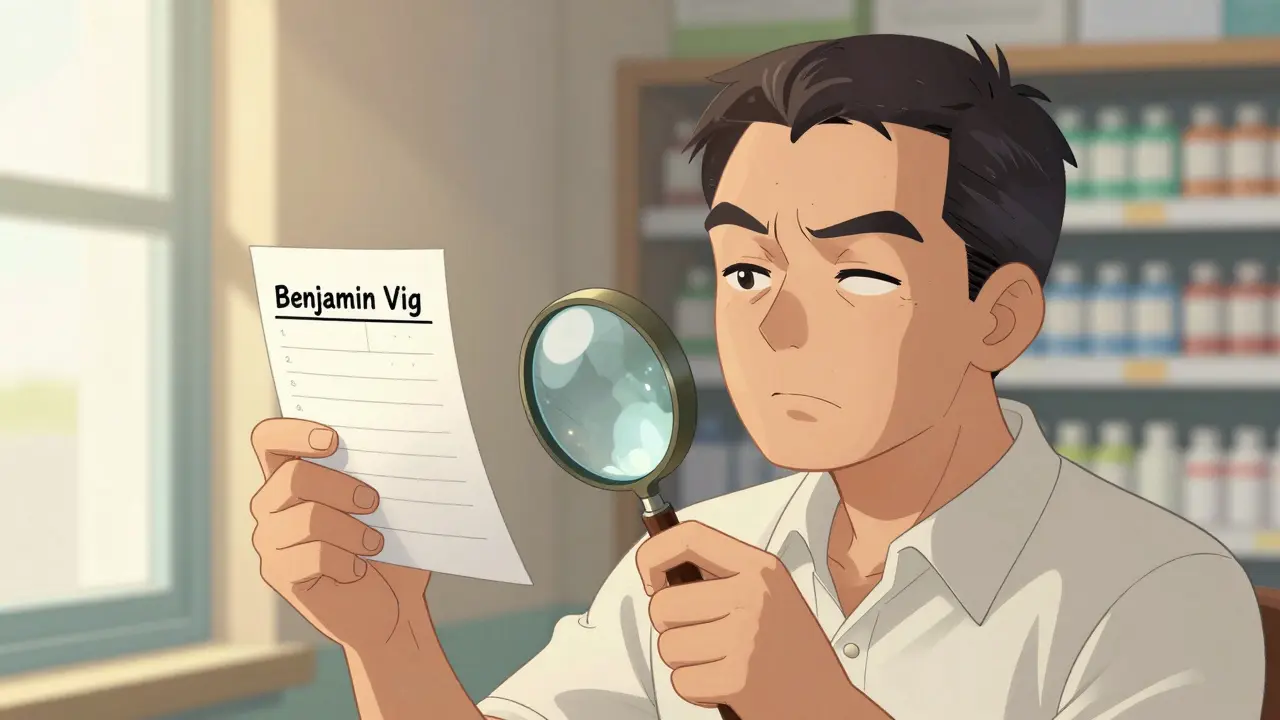
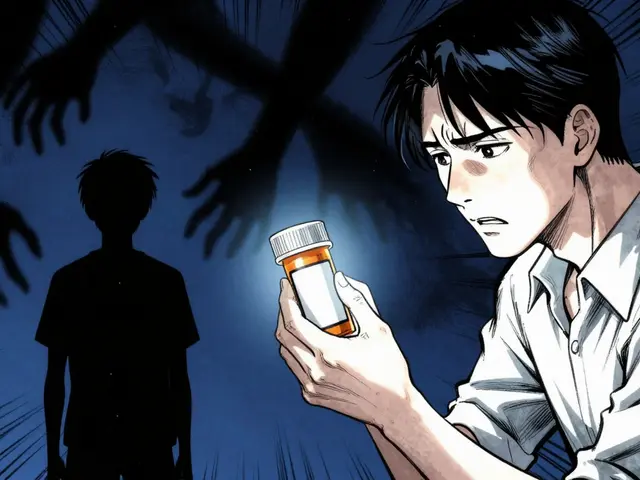
Every time you pick up a prescription, you’re holding your safety in your hands. It sounds simple, but prescription label verification is one of the most powerful ways to stop a dangerous medication error before it happens. You might think the pharmacy got it right - and most of the time, they do. But mistakes happen. A label with your roommate’s name. A pill that looks wrong. A strength that’s ten times higher than it should be. These aren’t rare accidents. They’re preventable - and you’re the last line of defense.
What Every Prescription Label Must Show
By law, every prescription label in the U.S. must include six key pieces of information. If any of these are missing or unclear, ask the pharmacist to fix it before you leave.- Your full legal name - first and last, exactly as you gave it to the pharmacy. No nicknames, no initials unless you used them when filling the script.
- The medication name - both the brand name (like Lipitor) and the generic name (like atorvastatin). If you’re not sure which is which, ask.
- The strength - this is critical. Is it 5 mg or 50 mg? 100 mg or 200 mg? A single digit can be life-changing.
- The dosage instructions - how much to take, how often, and when. "Take one by mouth twice daily" is clear. "Take q12h"? That’s confusing. Ask for plain language.
- The pharmacy’s name and phone number - so you can call if something doesn’t feel right.
- The prescription number and date - helps the pharmacy track your history.
The FDA requires all labels to use at least 12-point font for readability. If you’re over 65 or have trouble seeing, you’re not alone. Nearly 13% of adults over 40 have vision issues that make small print hard to read. That’s why many pharmacies now offer large-print labels or magnifiers at the counter.
How to Verify Your Label - Step by Step
You don’t need a medical degree. You just need five seconds and a clear head. Follow this quick checklist every time you get a new prescription:- Hold it up to good light. Don’t check the label under a dim pharmacy bulb. Go outside or stand near a window. Poor lighting hides small errors.
- Read your name out loud. Say it clearly: "Benjamin Vig." Does it match your ID? If it says "Ben V." or "B. Vig," ask if that’s correct. Some pharmacies shorten names to save space - but your full legal name should be there.
- Match the medication to what your doctor told you. Did your doctor say "warfarin"? The label might say "Coumadin." That’s the same drug - brand vs. generic. But if it says "lisinopril" and you were told you’re getting a blood thinner, that’s a red flag. Write down the name your doctor gave you before you go to the pharmacy.
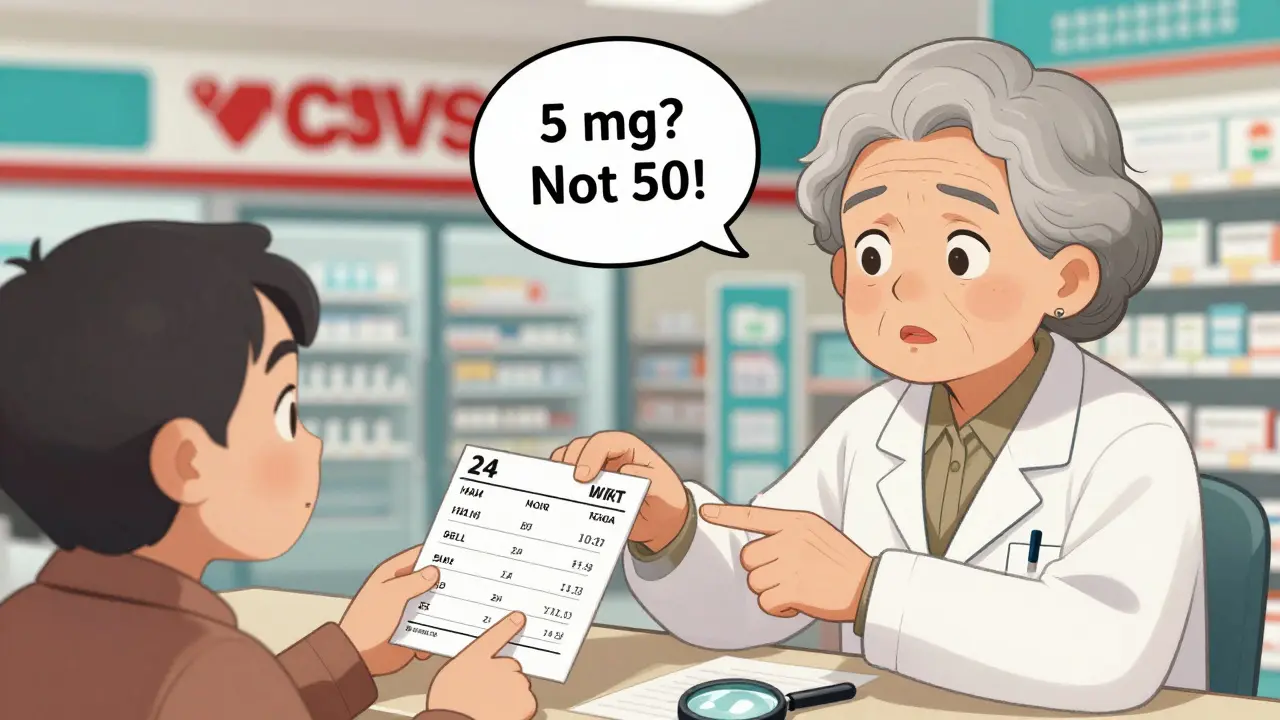
- Check the strength. If your doctor said 5 mg, and the label says 50 mg - stop. Don’t take it. Call the pharmacy. This is the most common error found during verification.
- Read the directions. "Take one tablet by mouth twice daily" - that’s normal. But if it says "take every 4 hours," and your doctor said twice a day, something’s off. Medications like insulin or blood thinners can be deadly if taken too often.
- Check the pharmacy info. If the phone number is smudged or missing, ask for a new label. You need to be able to reach them if you have questions later.
Do this every time - even if it’s the same medication you’ve taken for years. Pills can change. Manufacturers switch. Strengths get updated. What was 5 mg last year might be 10 mg this year. Don’t assume.
Common Mistakes People Miss
Most errors aren’t obvious. Here’s what most people overlook:- Similar-looking names. "Hydrochlorothiazide" and "hydroxyzine" sound alike. One’s a water pill. The other’s for anxiety. Mix them up, and you could get seriously sick.
- Wrong patient name. In 2023, a Reddit user shared how they almost took their roommate’s blood pressure pill - same name, different medication. The label had their name, but the pill looked wrong. They noticed because they checked the color and shape.
- Abbreviations. "QD" means once daily. "BID" means twice daily. But not everyone knows these. Ask for plain English.
- Refill marks. If the label says "Refill: 3" but your doctor only authorized one, something’s wrong. Pharmacies sometimes over-refill by mistake.
One 2023 survey found that 18% of patients caught an error in their prescription within the past year. The most common? Wrong strength (42%), wrong medication (28%), and wrong name (15%). You’re not paranoid - you’re protecting yourself.
What to Do If Something’s Wrong
If you spot a mistake, don’t just walk away. Don’t assume it’s your fault. Don’t take the pills and hope for the best.Here’s what to do:
- Don’t take the medication. Even if it looks right. Even if you’re in a hurry.
- Call the pharmacy. Use the number on the label. Say: "I picked up a prescription today, and I think there’s an error. Can you confirm the name, medication, and strength?"
- Ask to speak to the pharmacist. Not the technician. The pharmacist is the one who checked the prescription before it was filled.
- Bring your doctor’s note. If you have a printout or a photo of what your doctor wrote, show it. It helps them fix it faster.
- Ask for a new label. Pharmacies are required to provide a corrected label at no cost. If they refuse, ask for a manager.
One nurse in Texas shared online how she caught her mother’s blood thinner dose was 10 mg instead of 5 mg. The pharmacy had misread the doctor’s handwriting. If she hadn’t checked, her mother could have bled internally. That’s not a hypothetical. That’s real.
Tools That Help - But Don’t Replace Your Eyes
There are apps like Medisafe and GoodRx that scan your label and tell you what the drug is. They’re useful. But they’re not foolproof.Here’s why:
- They need a smartphone and good lighting.
- They can’t read faded or smudged labels.
- They don’t catch wrong names or mismatched directions.
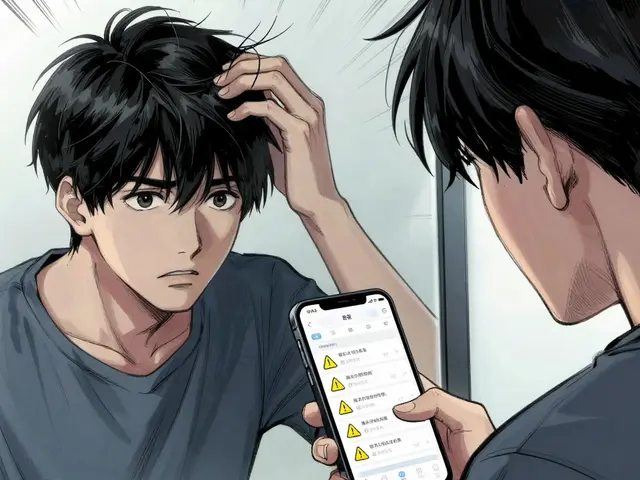
- Over 70% of adults over 65 don’t use health apps regularly.
Think of apps as backup tools - not replacements. The best system is still your eyes, your brain, and your willingness to ask questions.
What Pharmacies Are Doing to Help
Pharmacies know this is a big problem. That’s why:- 78% of CVS locations now have magnifiers and large-print label stations.
- Walgreens and others are required by law to use 12-point font - but some still use smaller sizes to fit more info.
- By 2025, the FDA will require all labels to have your name in 24-point font at the top - making it impossible to miss.
- Some pharmacies now include QR codes on labels that link to short videos explaining the medication in your language.
But none of these changes matter if you don’t look at the label. Technology helps. But you’re still the safety net.
Why This Matters More Than You Think
Medication errors send over 1.5 million people to the ER every year in the U.S. alone. A quarter of those are caused by wrong labels. That’s like a small town’s population getting hurt because someone didn’t check a piece of paper.And it’s not just about pills. It’s about trust. When you verify your label, you’re telling the system: "I’m not just a number. I’m a person who deserves to be safe."
Doctors, pharmacists, and nurses are trained to catch errors. But they’re human. They’re busy. They make mistakes too. Your verification doesn’t mean they failed - it means you’re part of the team.
Final Tip: Make It a Habit
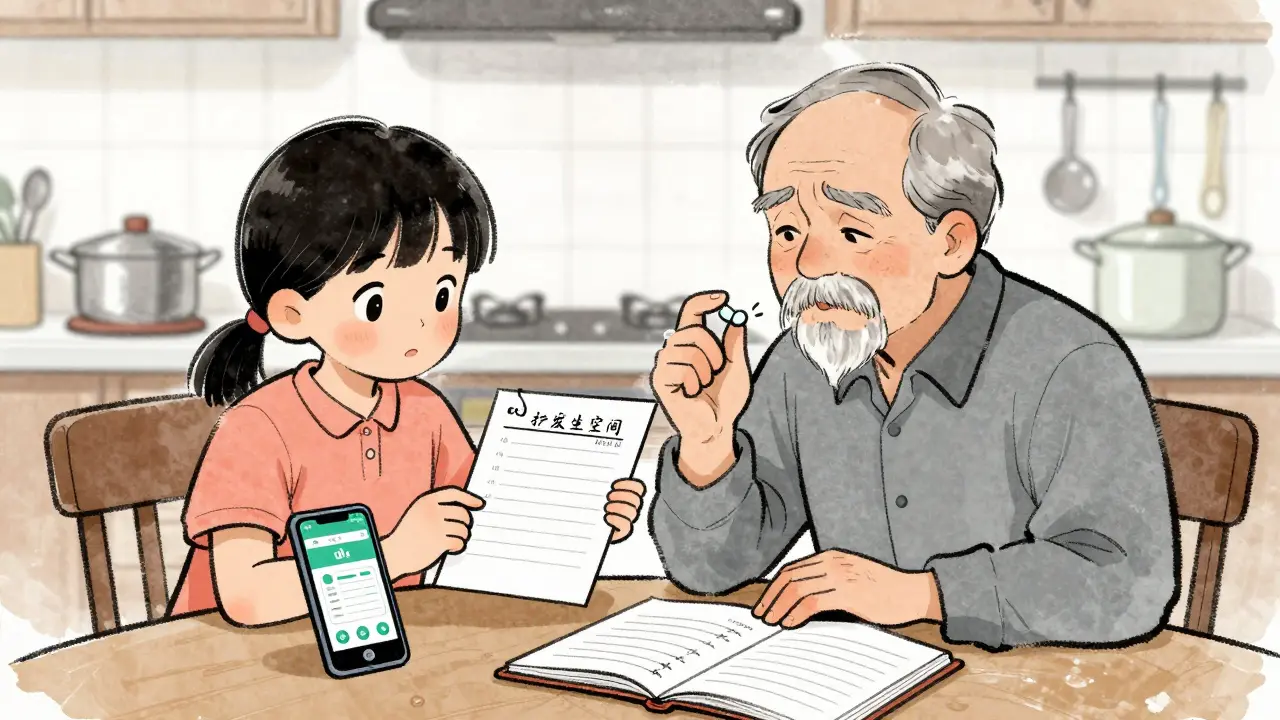
Don’t wait until you’re confused or scared. Make checking your prescription label part of your routine - like checking your wallet or your keys.Keep a small notebook. Write down each medication you take, the dose, and why. When you get a new script, compare it. If it doesn’t match, question it.
Teach your family members to do the same. If your parent or partner takes multiple medications, help them check. You might save their life.
It takes 30 seconds. But it could save you months - or years - of pain, hospital visits, or worse.
What if my name is spelled wrong on the prescription label?
If your name is misspelled, even by one letter, do not take the medication. Contact the pharmacy immediately. Your full legal name must match exactly what’s on your ID. Pharmacies are required to correct this at no cost. A wrong name could mean you’re getting someone else’s medicine - and that’s dangerous.
Can I trust the generic version of my medication?
Yes, generic medications are FDA-approved and work the same as brand names. But you still need to verify the name on the label matches what your doctor prescribed. Sometimes, the generic name is different than what you expected. For example, if your doctor said "atorvastatin," but you thought you were getting "Lipitor," both are correct - as long as the strength and instructions match.
Why does my prescription label have two names - brand and generic?
Pharmacies are required to list both to avoid confusion. The brand name (like Zoloft) is what your doctor might say. The generic name (sertraline) is what’s actually in the pill. Both are correct. But if the label lists a drug you’ve never heard of - like "clonazepam" when you were told you’re getting "Klonopin" - that’s fine. If it lists something completely different - like "metformin" for a heart medication - that’s a red flag.
What if I can’t read the label because the print is too small?
Ask the pharmacist for a large-print label. Most pharmacies offer this for free. You can also use your smartphone’s magnifier app - just hold your phone over the label. If the pharmacy refuses or doesn’t have the option, ask to speak to a manager. Under FDA guidelines, labels must be readable. If they’re not, they’re not compliant.
Is it okay to take a prescription if the label looks right but the pill looks different?
No. Pills can change color, shape, or size even if the medication is the same. But if you’ve taken this drug before and the new pill looks completely different - different color, shape, markings - ask the pharmacist. They can confirm if it’s a new manufacturer. If they can’t explain why it looks different, don’t take it.

Okay but have you ever noticed how pharmacies don't even *try* to spell names right? My cousin got her prescription for metformin labeled as 'Methformin' and the pharmacist just shrugged like it was a typo in a TikTok caption. And guess what? She took it for three days because she trusted the system. Turns out, the pill was fine, but the label? A glitch in the Matrix. I now take a photo of every label and send it to my phone. If your name is misspelled, it's not an error-it's a warning sign. The system doesn't care if you live or die. You have to care for yourself.
Also, why do they still use 'q.d.' and 'b.i.d.'? That's Latin. We're in 2025. If I can't read it, it's not medical advice-it's a riddle from a cult.
And don't even get me started on the QR codes. My grandma tried scanning one and her phone downloaded a crypto app. She thought it was 'medication instructions' and tried to 'mine' her insulin.
They're not helping. They're just adding layers of confusion. Check the label. Always. Even if it's your 47th refill of the same pill. Because next time, it might be your neighbor's blood thinner.
And yes, I'm paranoid. But I'm alive. And that's the only metric that matters.
Let’s be clear: this isn’t about ‘verification.’ This is about systemic negligence masked as patient empowerment. The FDA mandates 12-point font, yet 83% of retail pharmacies still use 10-point for ‘space optimization’-a euphemism for cost-cutting. The burden is placed on the patient to audit a system designed to fail. And yet, we’re told to ‘be proactive’ as if that absolves the pharmacy of liability.
Moreover, the assertion that ‘you’re the last line of defense’ is a dangerous myth. It shifts responsibility from trained professionals to laypeople who are often elderly, cognitively impaired, or medicated themselves. This isn’t safety-it’s scapegoating.
And let’s not pretend apps are ‘backup tools.’ They’re marketed as solutions while pharmacies quietly disable barcode scanning at the counter to save labor hours. The entire framework is a performance of accountability without actual accountability.
What’s needed isn’t a checklist-it’s mandatory pharmacist-patient face-to-face verification with audio recording and third-party audit trails. Until then, this is performative harm reduction wrapped in wellness rhetoric.
THIS. THIS IS WHY I’M STILL ALIVE.
Two years ago, I picked up my thyroid med and the label said 100 mcg. My doctor prescribed 50. I didn’t question it. I took it. For three days. I was shaking, sweating, heart racing like I’d downed five Red Bulls. I called the pharmacy. They said, ‘Oh, that’s the new formulation.’ But I never got a call. No warning. No follow-up.
I almost died. Not from the pill. From the silence.
So now? I read every label out loud. I compare the pill to the picture on the bottle. I take a photo. I text my sister. I scream into the void if I have to. You think you’re being dramatic? You’re not. You’re the only one who cares enough to stop the train before it hits the wall.
Don’t wait until you’re in the ER to learn this. Do it now. For yourself. For your mom. For your best friend who forgets her own birthday but remembers to take her pills.
You are not paranoid. You are powerful.
Interesting. I’ve never had an issue. But then again, I don’t go to pharmacies. I use mail-order. No one’s yelling at me. No one’s handing me a bottle while distracted by their phone. Everything’s printed neatly. No smudges. No abbreviations. No ‘q12h.’
Also, I always call my doctor’s office to confirm the script before I even go to the pharmacy. I’ve done this for 12 years. Never once had a problem.
Maybe the issue isn’t the label-it’s the people rushing through the process. If you’re stressed, don’t pick up your meds. Wait. Breathe. Call ahead. The system’s broken, but you don’t have to be part of the brokenness.
Just wanted to add a practical tip: if you’re ever unsure about the pill’s appearance, use the Pill Identifier tool on WebMD or Drugs.com. Snap a pic of the pill-color, shape, imprint-and it’ll tell you exactly what it is. I’ve used it three times when I got a new generic and the pill looked totally different. Saved me from panic.
Also, if your pharmacy doesn’t offer large-print labels, ask for a printed copy of the label on regular paper. They’re required to give it to you. No excuses.
And yeah, I check my labels every time. Even if it’s the same med I’ve been on since 2018. Because I learned the hard way: ‘same name’ doesn’t mean ‘same dose.’
Small habit. Big safety net.
i just started taking my new blood pressure med and i was so tired i almost didn't check the label... thank god i did. it said 25mg but my doc said 12.5. i called the pharmacy and they were like 'oh we thought you wanted the higher one since you're 68'... no. no no no. i almost took it. i still have chills.
now i keep a little notebook next to my meds. i write the date, the name, the dose, and what my doc said. if it doesn't match, i don't touch it. it's dumb, but it's saved me twice.
also, if you're old like me and can't read the tiny print, just ask for the big font. they'll do it. i was too shy at first. don't be shy. you deserve to be safe.
Thank you for writing this. I’ve worked in healthcare for 18 years and I can’t tell you how many times I’ve seen patients hesitate to question a label because they’re afraid of sounding ‘stupid’ or ‘bothersome.’
You’re not bothering anyone. You’re doing your job as a patient. Pharmacists are trained to appreciate this. Most of them will thank you.
One thing I’d add: if you’re ever unsure, ask the pharmacist, ‘Can you walk me through why this is the right medication for me?’ Not just ‘Is this right?’-but ‘Why?’ That shifts the conversation from verification to understanding. And understanding prevents future errors.
Also, if you’re helping an elderly parent, sit with them while they open the bottle. Don’t assume they know what they’re taking. Even if they’ve been on it for 10 years.
You’re not just checking a label. You’re honoring someone’s life.
Look, I get it. You’re supposed to check your label. But let’s be real-most people don’t. Why? Because they’re tired. Because they’re in pain. Because they’re on five meds and their brain is mush. And now you’re telling them to become pharmacists on top of it?
I’m an immigrant. My English is fine, but I don’t know what ‘atorvastatin’ sounds like versus ‘atorvastatin.’ I just know my doctor said ‘blue pill for heart.’
And yes, I’ve seen labels with my cousin’s name on them. Twice. Once they fixed it. Once they didn’t. I just took the pill and didn’t say anything because I didn’t want to cause trouble.
So yes, check your label. But don’t shame people who don’t. The system is broken. The burden shouldn’t be on the sick. It should be on the system to get it right the first time.
Until then? We’re all just trying not to die. And sometimes, that’s enough.
I used to ignore labels. Then my mom had a reaction to a mislabeled antibiotic. She ended up in the hospital for a week. I was with her. I saw the label. It had her name. But the drug was wrong. She didn’t know. I didn’t know. We trusted it.
Now I check every single time. I read it out loud. I hold it up to the light. I text my sister the photo. I don’t care if it’s the same pill. I don’t care if I’ve taken it for 15 years.
It’s not paranoia. It’s love.
And if you’re reading this and you’re scared to ask a question? Do it anyway. The pharmacist won’t think you’re dumb. They’ll think you’re brave.
While the sentiment expressed herein is commendable and aligns with best practices in patient safety, the prescriptive nature of the checklist may inadvertently foster a culture of performative compliance rather than systemic improvement. The onus placed upon the patient to act as a final arbiter of pharmaceutical accuracy is, in principle, an abdication of professional responsibility by the dispensing entity. Furthermore, the reliance on manual verification by individuals who may be cognitively impaired, visually deficient, or emotionally compromised constitutes a non-ideal risk mitigation strategy.
It is recommended that regulatory bodies enforce real-time, electronic cross-referencing between e-prescriptions and dispensed labels, with mandatory pharmacist authentication prior to handoff. Technological solutions exist and are underutilized. Patient vigilance should be a supplement-not a substitute-for institutional accountability.
Oh wow. Another feel-good post about how YOU have to save yourself because the system is too lazy to do its job. How noble. How brave. How utterly pathetic.
You’re not ‘protecting yourself’-you’re cleaning up the mess that lazy, overworked, underpaid, and under-regulated pharmacists and techs made. And now you’re being told to feel good about it?
It’s not your fault. But it’s also not your job.
And for the love of God, if you’re still using ‘q.d.’ or ‘b.i.d.’ on labels in 2025, you’re not a pharmacy-you’re a relic. Stop pretending you’re helping people. You’re just hoping they don’t die before the next audit.
And if you think a QR code or a magnifier fixes this? You’re delusional.
Real safety isn’t a checklist. It’s accountability. And no one’s holding anyone accountable.
So keep checking your labels. Keep being the hero. And keep dying quietly while the system laughs.