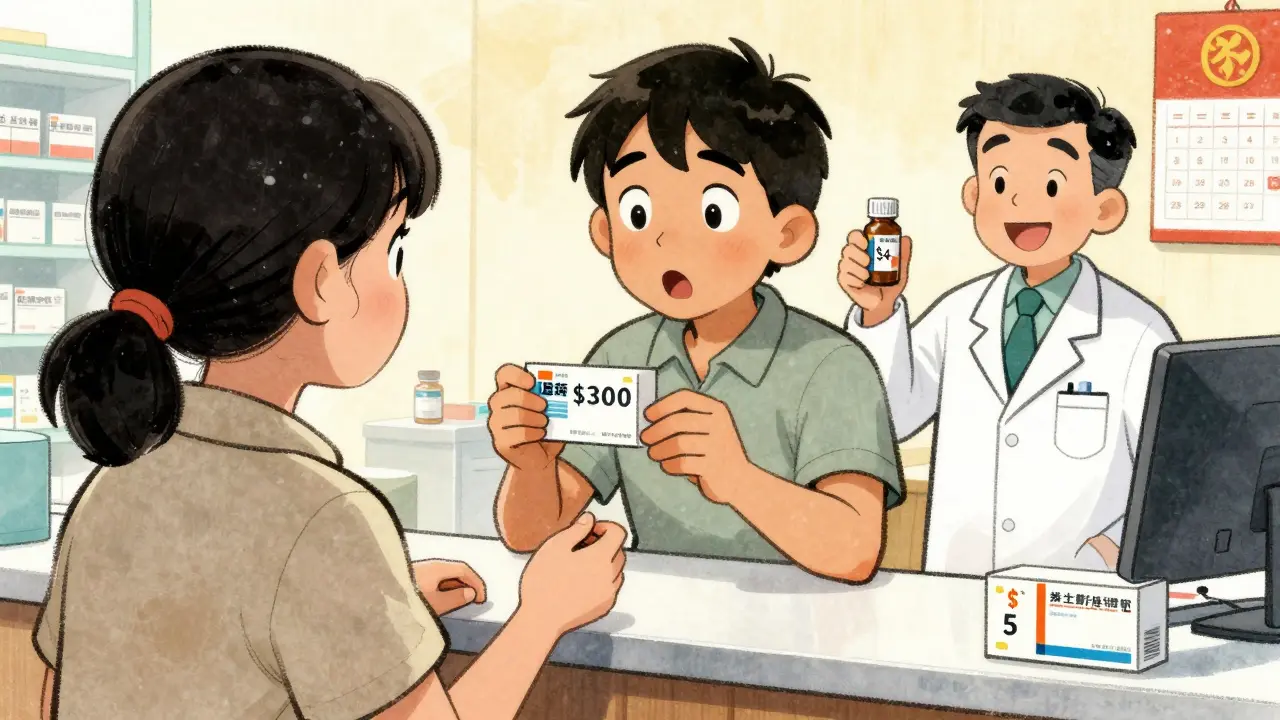
You’re standing at the pharmacy counter, staring at the price tag on your prescription. It’s $300 for a 30-day supply. You check your bank balance. You think about your rent, your groceries, your kid’s school supplies. Then you remember: generic versions of this drug exist. But you didn’t ask your doctor about them. You’re not alone. Most people don’t bring it up-until the bill hits.
Why Generics Are Almost Always the Same
Generic drugs aren’t cheaper because they’re weaker. They’re cheaper because the patent expired. The FDA requires them to have the same active ingredient, dose, strength, and way of working as the brand-name drug. That means if your brand-name pill works to lower your blood pressure or control your thyroid, the generic version does too-down to the molecule.Here’s what’s different: the color, shape, or filler ingredients. Those don’t affect how the drug works. A 2022 FDA analysis found that 95% of generic drugs perform identically to brand-name ones in real-world use. For most people, switching saves hundreds or even thousands a year.
Take lisinopril, a common blood pressure drug. The brand-name version, Zestril, can cost $250 a month. The generic? $4. Same drug. Same results. That’s not a trick. That’s the system working as designed.
When Brand-Name Might Still Be Necessary
There are exceptions. About 5% of medications fall into what doctors call “narrow therapeutic index” drugs. These are medicines where even tiny changes in blood levels can cause big problems. Examples include warfarin (a blood thinner), levothyroxine (for thyroid), and some seizure meds like phenytoin.For these, switching between different generic brands-even if they’re all FDA-approved-can sometimes cause fluctuations. That’s why some doctors stick with one brand for these drugs. But here’s the catch: it’s not about brand-name vs. generic. It’s about consistency. If you’ve been on the same generic version for months and it’s working, don’t switch to a different one. If you’re on brand-name and it’s working, don’t switch unless your doctor says so.
Most people don’t need to worry about this. If your doctor says you need the brand, ask: “Is this because it’s a narrow therapeutic index drug?” If they say yes, ask if you’ve been on a consistent generic before. If not, maybe you can try one under close monitoring.
How to Bring It Up Without Sounding Like You’re Trying to Save Money
You don’t need to lead with “I can’t afford this.” That puts your doctor on the defensive. Instead, frame it as a shared goal: “I want the most effective treatment at the best price.”Here’s exactly what to say:
- “Is there a generic version of this medication?”
- “Would it be safe and effective for me to use the generic?”
- “Are there any reasons I should stay on the brand-name version?”
- “If a generic isn’t available now, when might one be?”
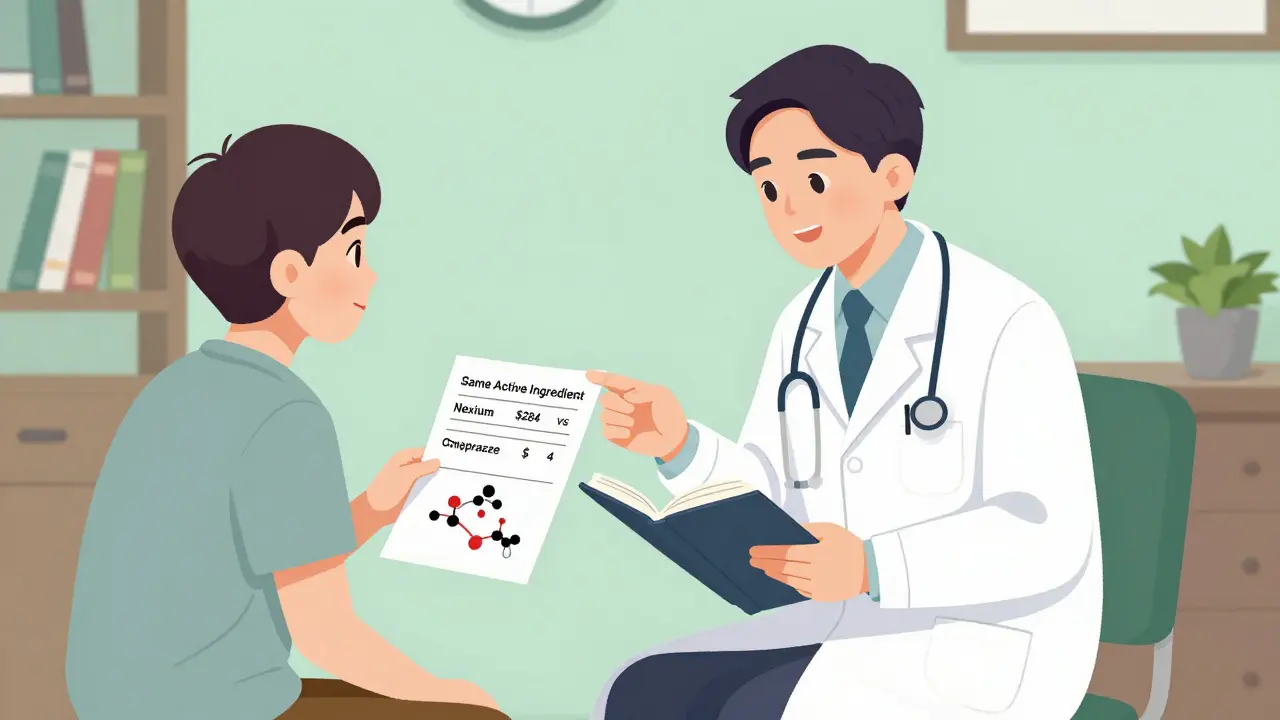
Bring a list of your current meds. If you know the cost difference-like Nexium at $284 vs. omeprazole at $4-write it down. Don’t be shy. Your doctor isn’t judging you. They want you to take your meds. And if you can’t afford them, you won’t take them.
One study of 12,500 seniors found that 68% who asked their doctor about generics successfully switched-and saved an average of $427 a year. That’s not luck. That’s asking the right question at the right time.
Timing Matters: Ask Before You Get the Prescription
Don’t wait until you’re at the pharmacy. That’s too late. By then, the prescription is already printed. The pharmacist might switch it automatically, but if your doctor didn’t write “dispense as written,” they might not even know you switched.Ask during the appointment. Say: “Can you write this so that generic substitution is allowed?” That tells the pharmacist you’re okay with the cheaper version. It also tells your doctor you’re informed and engaged.
Most states let pharmacists substitute generics unless the doctor says “Do Not Substitute.” But if your doctor doesn’t know a generic exists, they won’t write it that way. That’s why you need to start the conversation.
Insurance Plays a Big Role
Your insurance plan might already push you toward generics. Medicare Part D fills 89% of prescriptions with generics when available. Commercial plans? Around 72%. That means if you’re on Medicare, you’re already getting the cheaper version more often.But if you’re on a private plan, check your formulary. Some plans still charge you more for brand-name drugs-even when a generic is available. That’s called “step therapy.” You have to try the generic first. If it doesn’t work, then they’ll cover the brand.
Ask your pharmacist: “Is there a generic that’s covered at the lowest tier?” They can tell you what your plan prefers. Then bring that info to your doctor.
What If Your Doctor Says No?
Sometimes they say no. Maybe they think you’re asking because you’re worried about cost. Or maybe they’re out of touch with the latest generics.Here’s how to respond:
- “I understand. But I’ve read that generics are just as effective for most drugs. Is this one of the exceptions?”
- “Can we look up whether a generic is available right now?”
- “Would you be open to trying the generic for a month and checking how I feel?”
Doctors aren’t trained to memorize every drug’s generic status. The FDA approves hundreds of new generics every year. Your doctor might not know that the brand-name drug you’re on now has had three generic competitors since last year.
If they still refuse, ask for a reason. If they say, “It’s just better,” ask for evidence. If they say, “I’ve always prescribed this,” ask if they’ve checked the latest data. You’re not arguing. You’re inviting them to collaborate.
Real Savings, Real Stories
A man in Ohio switched from Humira (brand-name) to its generic, adalimumab. His monthly cost dropped from $6,300 to $4,480. He saved $1,820 a month. His disease control stayed the same. His C-reactive protein levels? Unchanged.A woman in Texas switched from brand-name levothyroxine to a generic. She felt fine. Her TSH levels stayed in range. Her pharmacist told her the generic was made by the same company that made the brand-just under a different name.
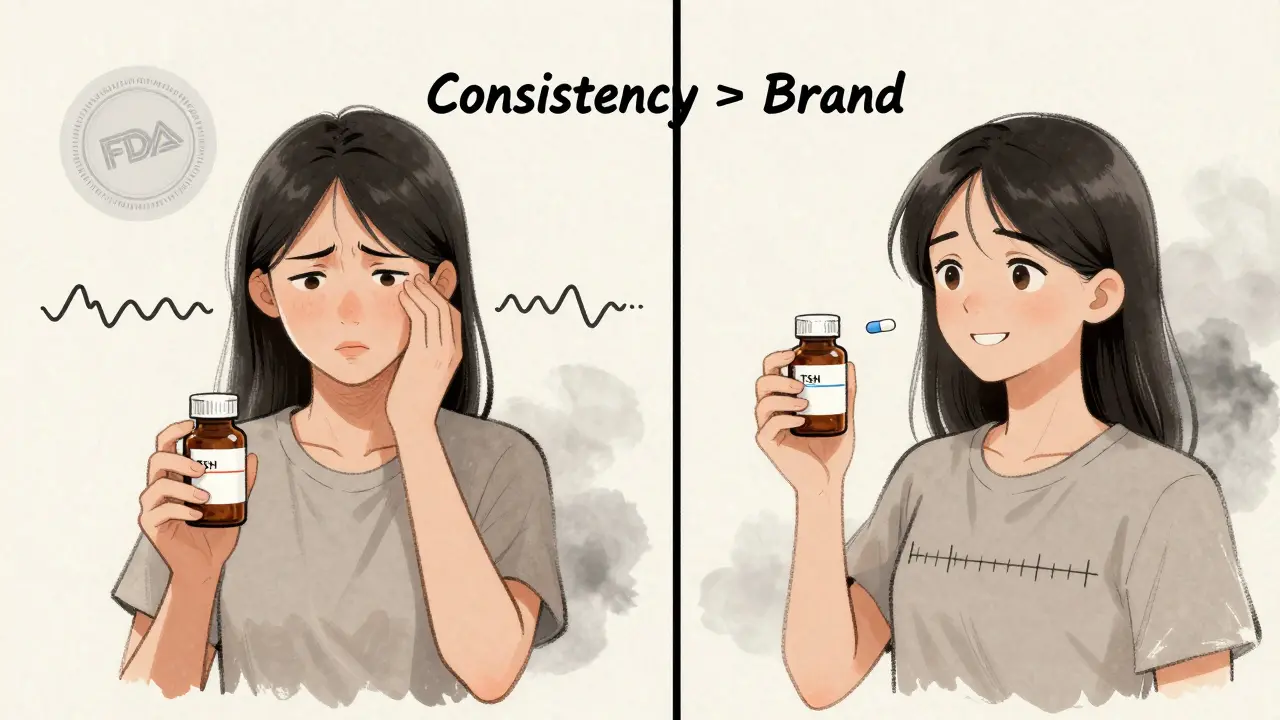
But not all stories are smooth. One patient switched from one generic levothyroxine to another-and her thyroid levels went wild. Why? Because even though both were FDA-approved, the fillers affected absorption. Her doctor switched her back to the same generic she started on. Consistency mattered more than the brand.
That’s the key: for most drugs, any generic works. For a few, stick with one you know works.
Pharmacists Are Your Secret Weapon
Your pharmacist knows more about generics than your doctor does. They see the price changes, the new approvals, the insurance formularies. If you’re unsure, ask them: “Is there a cheaper generic for this?”They can call your doctor and suggest an alternative. In 48 states, they’re allowed to do that without you having to go back to the clinic. That’s a huge advantage. Use it.
What to Do Next
1. **Make a list** of all your current prescriptions. 2. **Check prices** on GoodRx or your pharmacy’s website. Compare brand vs. generic. 3. **Schedule a quick chat** with your doctor. Don’t wait for your annual visit. 4. **Ask the four questions** listed above. 5. **If you switch**, give it a few weeks. Monitor how you feel. 6. **If something changes**-new side effects, no improvement-call your doctor. Don’t assume it’s the generic.Generics aren’t a compromise. They’re the standard. For 9 out of 10 prescriptions, they’re the best choice. You’re not settling. You’re being smart.
Are generic drugs really as good as brand-name drugs?
Yes, for the vast majority of medications. The FDA requires generics to have the same active ingredient, strength, dosage form, and route of administration as the brand-name drug. They must also prove they deliver the same amount of medicine into your bloodstream at the same rate. Studies show 95% of generics work just as well in real-world use. Differences in color, shape, or fillers don’t affect how the drug works.
Why do some doctors refuse to prescribe generics?
Most doctors are open to generics, but some aren’t aware of when new ones become available. Others may have had a rare case where a patient reacted differently to a generic-usually with narrow therapeutic index drugs like warfarin or thyroid meds. If your doctor says no, ask if your drug is one of those rare cases. If it’s not, ask them to check the latest FDA data.
Can I switch from brand to generic without my doctor’s approval?
In most cases, yes-but only if your doctor didn’t write “Do Not Substitute” on the prescription. Pharmacists in 48 states can legally switch you to a generic without calling your doctor. But if you’re on a narrow therapeutic index drug, or if you’ve had issues before, it’s safer to talk to your doctor first.
How much money can I save by switching to generics?
Savings vary, but they’re often dramatic. When multiple generic manufacturers enter the market, prices can drop 50% to 95% below the brand-name cost. For example, the blood pressure drug lisinopril costs about $4 for a month’s supply as a generic, compared to $250 for the brand. The average patient saves $400-$1,000 a year by switching.
What if I feel different after switching to a generic?
Some people notice minor differences-like a change in side effects-because the inactive ingredients (fillers, dyes) are different. This is rare, but it happens. If you feel worse, don’t assume the generic isn’t working. Call your doctor or pharmacist. You might need to switch back to the same generic you were on before, or to the brand. Consistency matters more than the brand name.


OMG I just switched my blood pressure med to generic and saved $240/month?? 😱 I thought I was being shady but turns out I’m just smart?? My pharmacist literally high-fived me. 🙌
Interesting how the system works-except when it doesn’t. I’ve seen people switch to generics and then spend weeks in the ER because their thyroid levels went haywire. The system’s not broken, it’s just… oversimplified by people who think ‘same molecule’ means ‘same experience.’
US healthcare is a joke. You need to beg for a generic like you’re asking for a favor? In Australia we just get the cheapest approved version and shut up. No drama. No ‘ask your doctor’ nonsense. Your doctor doesn’t own your medicine, the market does. And the market says: go generic. Done.
This is one of the most important public health guides I’ve read in years. Thank you for breaking down the science, the economics, and the communication strategy in a way that empowers patients without patronizing them. You’ve given people the tools to advocate for themselves-and that’s more valuable than any drug.
Let’s not ignore the elephant in the room: the FDA is controlled by Big Pharma lobbyists. The ‘95% effectiveness’ stat? That’s based on industry-funded studies. Real-world data from the VA and Medicaid shows higher failure rates with generics-especially for mental health meds. They’re not the same. They’re just cheaper. And they’re replacing quality with cost-cutting. You’re not being smart. You’re being exploited.
While I appreciate the intent of this exposition, it is, regrettably, replete with lexical imprecision and syntactic redundancies. One must question the epistemological validity of assertions regarding ‘molecular equivalence’ when pharmacokinetic variability in bioavailability-particularly in CYP450-metabolized compounds-is demonstrably non-negligible. Moreover, the conflation of ‘filler ingredients’ with ‘inactive’ components is a profound misrepresentation of pharmaceutical science.
I used to think generics were for people who couldn’t afford the real thing. Then I got my first one for my asthma inhaler-same puff, same relief, $3 instead of $180. I felt like I’d cracked the code. Turns out the system wasn’t rigged-it was just asleep. Wake up, people. The magic’s in the label, not the logo.
Listen I’ve been a pharmacist for 22 years and I’ve seen it all. People panic when their pill changes color. They think the generic is fake. It’s not. It’s the same damn drug. I’ve had patients cry because they thought they were getting ‘lesser medicine.’ I showed them the FDA paperwork. The active ingredient is identical. The only thing different is the price tag and the fact that they’re finally taking control. You don’t need to beg. You just need to ask. And if your doctor gives you pushback? Tell them you’re not asking for a favor-you’re asking for evidence. And if they can’t give you any? Then you find someone who can. Your health isn’t a negotiation. It’s your right.
Generics are the unsung heroes of modern medicine. No cape. No commercials. Just pure, unglamorous science doing its job. I switched my dad from brand-name statin to generic and he’s been stable for 5 years. He didn’t know the difference until I showed him the receipt. Now he jokes that his heart is on a budget. And honestly? That’s the best kind of medicine-effective, affordable, and human.
I’m a nurse and I’ve watched so many patients skip doses because they can’t afford the brand. I’ve seen diabetic patients ration insulin. I’ve seen people choose between meds and food. This post? It’s not just helpful-it’s a lifeline. If you’re reading this and you’re scared to ask your doctor, just say this: ‘I want to be healthy. I need this to work. Can we make sure it’s affordable?’ That’s not being cheap. That’s being responsible.
Pharmacoeconomic efficiency versus therapeutic equivalence: a dialectical tension inherent in capitalist healthcare systems. The FDA’s bioequivalence thresholds (80-125% AUC) are statistically permissible yet clinically non-trivial in populations with polypharmacy, renal impairment, or genetic polymorphisms in drug-metabolizing enzymes. The assumption of interchangeability ignores pharmacokinetic heterogeneity-particularly in narrow therapeutic index agents where Cmax and Tmax deviations, even within regulatory limits, can precipitate adverse outcomes. This is not anti-generic sentiment; it is epistemological rigor.
Bro I switched my cholesterol med to generic and saved like $200 a month. My mom said I was being cheap but now she’s asking me how to do it too 😎
You’re all so naive. The FDA doesn’t test generics the same way. They just check the label. I know a guy whose wife died after switching. They never even told her the pill changed. It’s all a cover-up. They want you dependent on cheap pills so you don’t question the system. Wake up.