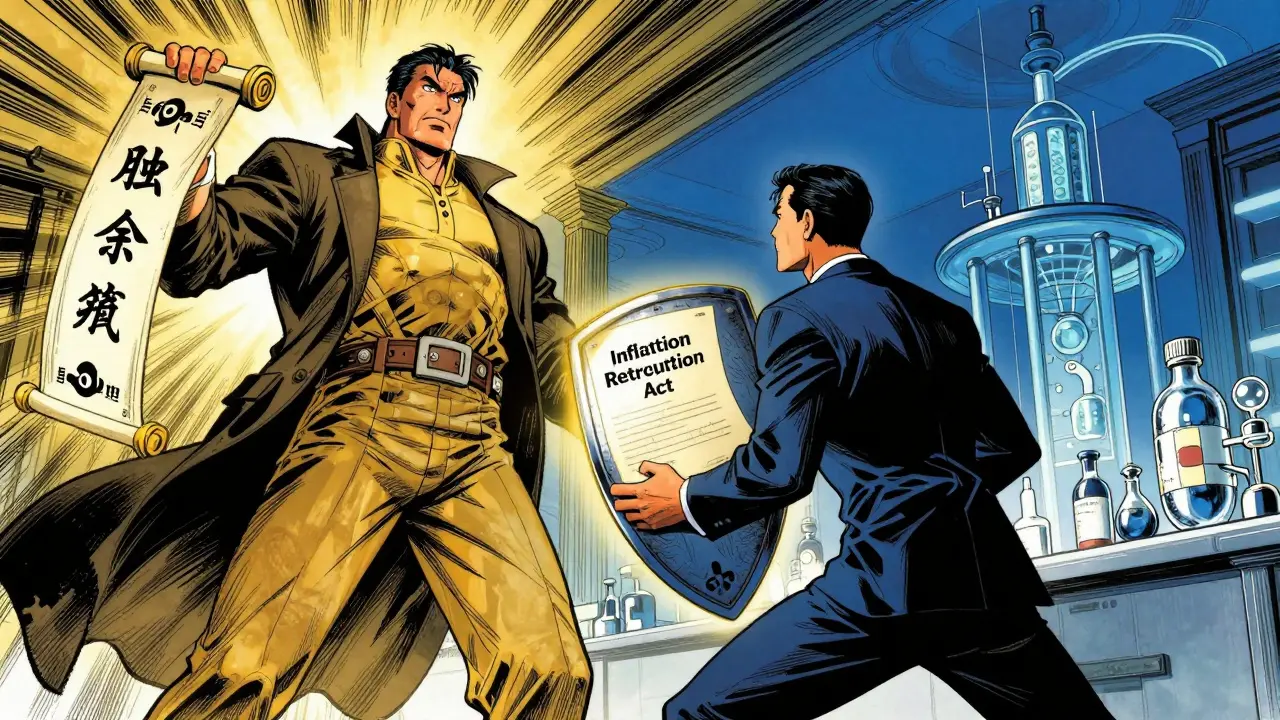
For decades, the US government operated under a strange rule: the largest healthcare buyer in the country, Medicare, was legally banned from negotiating the price of prescription drugs. This meant that while private insurers could haggle for better deals, the federal government essentially took whatever price pharmaceutical companies offered. That changed with the Inflation Reduction Act is a 2022 federal law that finally grants Medicare the authority to negotiate prices for some of the most expensive prescription drugs in the US.
If you use Medicare or are helping a family member navigate their costs, you've probably heard about "negotiated prices" but might be wondering how this actually affects your wallet. Starting January 1, 2026, the first set of negotiated prices officially kicks in. We aren't talking about a tiny coupon; some of these drugs are seeing discounts between 38% and 79% compared to what the government used to pay.
The Mechanics of the Negotiation Process
The government doesn't just pick a number out of a hat. The Centers for Medicare & Medicaid Services (CMS) follows a strict, high-stakes playbook. It starts with CMS sending an initial offer to a drug manufacturer. This offer isn't random; it's based on clinical evidence, how many people use the drug, and whether there are cheaper therapeutic alternatives available.
Once the manufacturer gets the offer, they have exactly 30 days to hit back with a counteroffer. This isn't a casual email exchange-it's a series of formal meetings. For the first round of drugs, CMS held exactly three negotiation meetings with each company. If they can't agree, the process ends with a written final offer. The goal is to reach what the law calls a Maximum Fair Price (MFP). Think of the MFP as the absolute ceiling; the price cannot go above this limit, which is calculated based on the drug's actual market value and weighted enrollment data.
Which Drugs Actually Get Discounted?
Not every pill in your cabinet is eligible for this. To prevent the government from stifling new research, there is a "waiting period" before a drug can be negotiated. Small-molecule drugs (the typical pills) must be on the market for at least 7 years, and biologics (more complex, often injectable drugs) must be around for 11 years. This creates a "cliff effect" where a drug is expensive for a decade and then suddenly becomes eligible for negotiation.
For the 2026 launch, 10 specific high-cost drugs were chosen because they represent a massive chunk of Medicare spending. For example, Eliquis, a common blood thinner, was a primary target because it alone cost Medicare billions. Other notable drugs in the first cohort include Jardiance and Xarelto. As we move forward, the list expands: 15 drugs in 2027, another 15 in 2028, and 20 drugs every year after that.
| Feature | Old System (Pre-2022) | New System (IRA Program) |
|---|---|---|
| Federal Negotiation | Legally prohibited | Authorized for high-spend drugs |
| Price Setting | Manufacturer-led list prices | Maximum Fair Price (MFP) |
| Role of Insurers | Private plans negotiated rebates | CMS negotiates directly with makers |
| Cost Impact | High federal expenditure | Estimated $98.5B+ savings (2022-2031) |
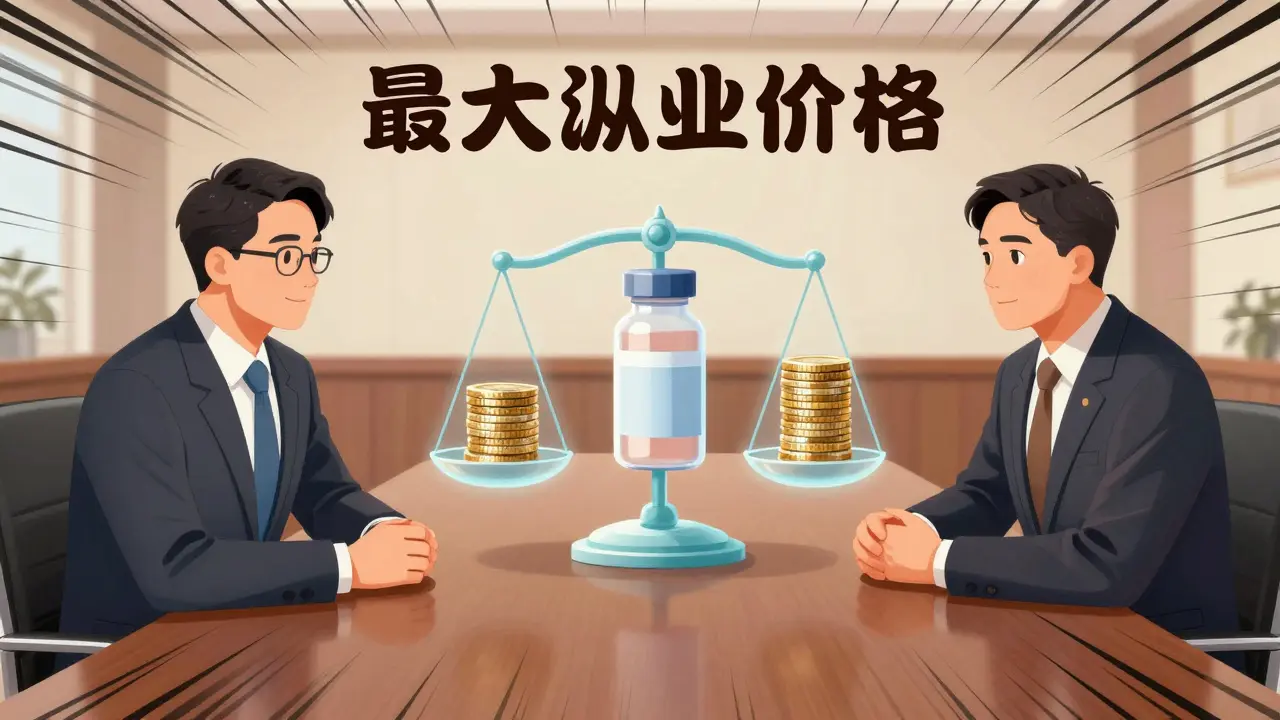
How Insurer Discounts and Rebates Differ
It's easy to confuse "negotiated prices" with the rebates private insurance companies have always used. In the old way of doing things, Medicare Part D relied on private insurance plans to negotiate. These plans would get a rebate-basically a cash-back deal-after the drug was sold. However, the patient might still see a high list price on their pharmacy bill.
The new system is different because it attacks the list price itself. By establishing an MFP, the government lowers the baseline. This can lead to "spillover effects." When the government forces a lower price for Medicare, private insurers often use that as leverage to demand lower prices for their own members. This means the benefits of Medicare's negotiations could eventually trickle down to people with employer-sponsored insurance too.
The Impact on Patients and Doctors
For the average person, this should mean lower out-of-pocket costs, especially for those in the "donut hole" (the coverage gap). However, it's not all sunshine. Some patient advocacy groups, like the Arthritis Foundation, worry about "therapeutic substitution." This happens when a plan encourages you to switch to a cheaper, negotiated drug rather than the one your doctor specifically prefers for your unique condition.
Doctors are also feeling the pinch, particularly with Medicare Part B drugs (those administered in a clinic). Usually, doctors are reimbursed based on the Average Sales Price plus 6%. When the price drops to an MFP, that 6% is based on a smaller number. Some medical groups estimate this could reduce practice revenue by over a billion dollars annually. While the drug is cheaper for the patient, the clinic making the administration might see a dip in income.
Potential Pitfalls and Industry Pushback
Pharmaceutical companies aren't exactly thrilled. Groups like PhRMA argue that if the government slashes prices, there's less money to invest in the next generation of cures. They've claimed that innovation could drop by billions. However, government auditors have called these numbers exaggerated. The real tension lies in the legal battles; several drug makers have sued the government, claiming the process is unconstitutional. So far, courts have largely sided with the government, but the legal drama continues.
Another challenge is the rise of Biosimilars. These are essentially "generic" versions of complex biologic drugs. If a biosimilar enters the market and gains enough traction, the original drug might no longer be considered "single-source," which could potentially remove it from the negotiation list. It's a complex game of cat-and-mouse between the FDA's approval process and CMS's pricing list.
When will I actually see lower drug prices?
The first set of negotiated prices for the 10 selected drugs takes effect on January 1, 2026. You will see the impact during your 2026 pharmacy visits if you are taking one of those specific medications.
Will this limit my access to certain medications?
Not directly, but it may change which drugs your insurance plan prefers. Plans might move non-negotiated, expensive drugs to a higher "tier," making them more costly, and encourage you to use the newly negotiated, cheaper alternatives.
Does this apply to all Medicare drugs?
No. It only applies to high-expenditure, single-source drugs that lack generic or biosimilar competition. Most drugs are still priced through the traditional market and private insurer negotiations.
What is the "Maximum Fair Price"?
The MFP is the ceiling price that CMS and the drug manufacturer agree upon during negotiations. It is calculated based on factors like the drug's effectiveness, the cost of producing it, and what other countries pay for similar treatments.
Why is this different from generic drugs?
Generics are cheap because multiple companies compete to sell the same drug. These negotiations are for "single-source" drugs where one company has a monopoly. The government is essentially creating a price drop for drugs that don't have natural competition yet.
Next Steps for Beneficiaries
If you're on a Medicare plan, the most important thing you can do is review your formulary during the Open Enrollment period in late 2025. Look specifically for the drugs that were part of the first negotiation cycle. If your medication is on that list, you might see a significant drop in your co-pay starting in January 2026.
For those using Part B drugs administered at a doctor's office, keep an eye on your provider. Some clinics might change how they stock medications or which brands they prefer based on the new reimbursement rates. Don't be afraid to ask your doctor if a negotiated price alternative is available and if it's a good clinical fit for your health needs.



Seems like a fair move to finally stop the madness of just paying whatever the pharma giants demand.
It is about time!!! The sheer lack of transparency in drug pricing has been a disaster for seniors... truly a mess!!!
Oh honey, it's just precious that people think a few discounts will fix a broken system. I've always said the current infrastructure is practically primitive, and this is just a tiny band-aid on a gaping wound. It's almost cute that we're celebrating this as a victory when it's clearly just a political stunt to look good for the next cycle. Honestly, the naive optimism here is just staggering. I can't even imagine being this thrilled about a 2026 rollout when the industry will have found ten other ways to hike prices by then. It's just such a quaint little dream. Truly.
The point about therapeutic substitution is really the critical part here. If the insurance companies start pushing patients toward
The premise that government intervention fosters a more equitable marketplace is an intellectual fallacy. One must acknowledge that the artificial suppression of prices inevitably leads to a stagnation of innovation, as the incentive for risk-taking is surgically removed from the equation. It is an exercise in mediocrity.
Y'all really think this is about helping people? Wake up! This is just a shell game. The big wigs are just moving the money around to hide the real scams. They'll probably just invent a new 'administrative fee' to steal the savings back. It's all a rigged game played by the suits in DC and the labs! Total circus!
I wonder if this will actually make my monthly costs go down or if the insurance companies will just find a way to keep the money? :)
It's a step in the right direction for those who've been struggling with these costs in silence.
The Maximum Fair Price mechanism provides a structured approach to cost containment that had been missing from the federal procurement strategy for far too long.
Hope this brings peace to the families who worry about medicine costs. Every small bit of help is a blessing for a better world! 😊
I am very moveed by the idea that we can finally lower costs. It is a real struggle for so many peopel in my hometown to afford these basic medcines. The throught of a 79% discount is almost too much to believe, it is truly dramatic how high the prices were before!
Finally, America is acting like a superpower. Stop letting pharma fleece us!
This is basically an optimization of the ROI for public health spending. High-spend drugs are the main bottleneck here.
Honestly, this whole vibe is just a wild rollercoaster of corporate greed and government red tape. It's a total trip that we've waited this long to just... talk about the price? Just wild.