You grab your morning coffee before taking your pills. It’s a routine that feels harmless, maybe even helpful to wake up your system. But for millions of people, this simple habit is quietly sabotaging their treatment plans or putting them at risk of dangerous side effects. Caffeine and medication interactions are not just theoretical warnings in a patient brochure; they are real, measurable chemical clashes that can turn a life-saving dose into a health hazard.
We often think of caffeine as just a pick-me-up. In reality, it is a potent drug. It blocks adenosine receptors in your brain and liver, changing how your body processes other substances. When you mix it with prescription drugs, the results can range from reduced effectiveness to severe toxicity. Understanding these dynamics isn’t about giving up your favorite brew entirely-it’s about timing, dosage, and knowing which combinations are strictly off-limits.
The Science Behind the Clash: How Caffeine Affects Drug Metabolism
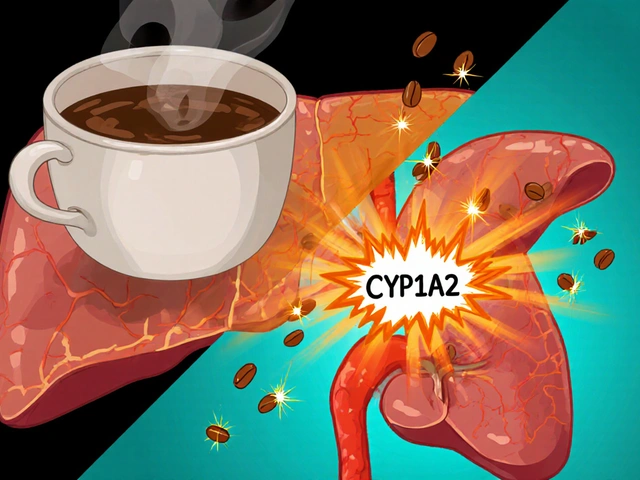
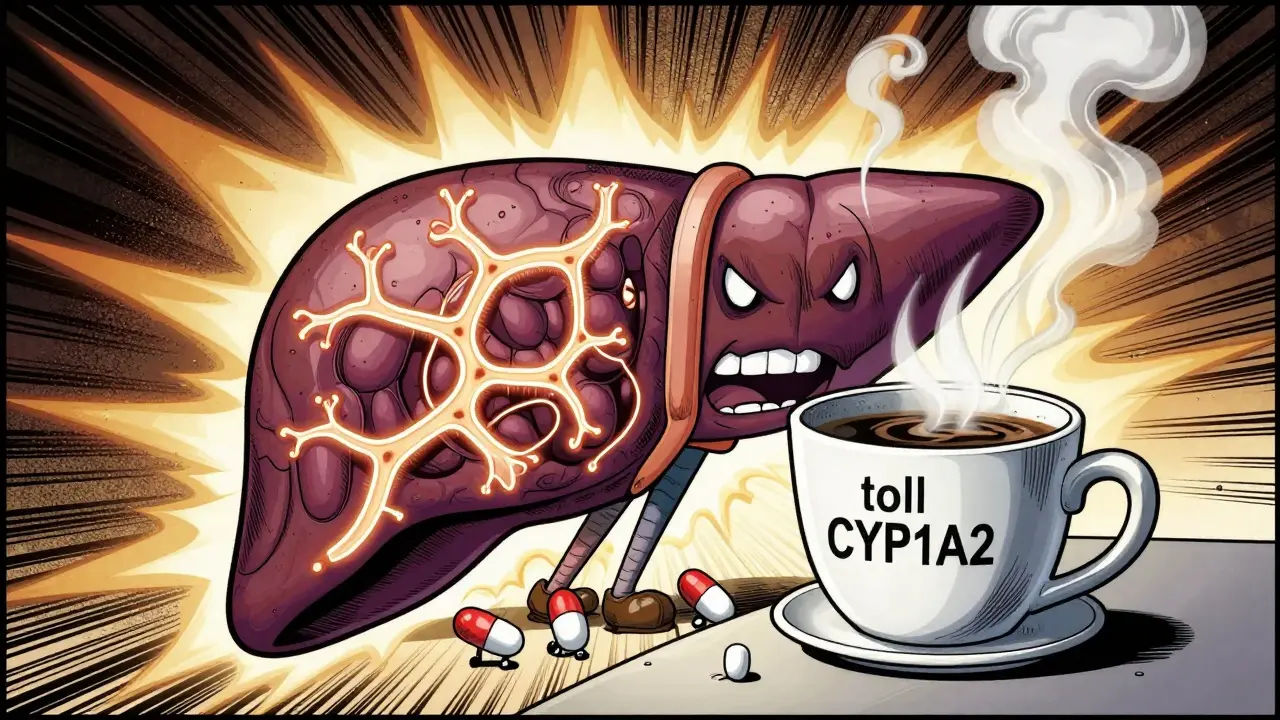
To understand why caffeine interferes with meds, you have to look at what happens inside your liver. Your liver uses enzymes to break down drugs so your body can use or eliminate them. One of the most important enzyme families is called cytochrome P450, specifically the CYP1A2 enzyme. This enzyme handles about 10% of all clinically used drugs.
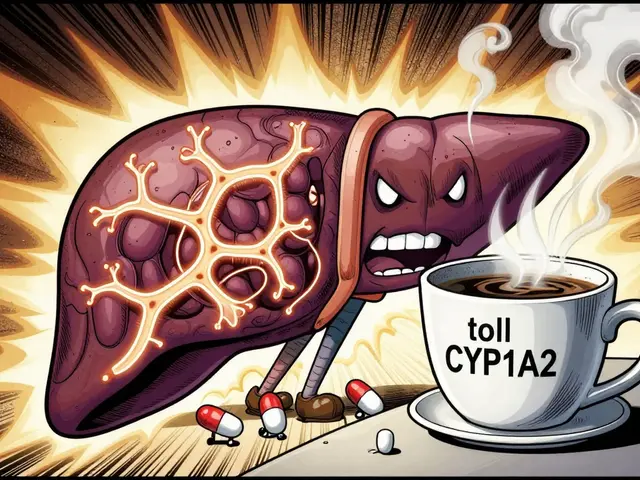
Caffeine acts as a competitive inhibitor. Imagine CYP1A2 is a toll booth on a highway. Drugs are cars trying to get through to be processed. Caffeine shows up and parks right in front of the booth, blocking the way. Because the enzyme is busy dealing with caffeine, it cannot process your medication efficiently. This leads to two main problems:
- Increased Drug Levels: If the drug isn't broken down fast enough, it builds up in your blood. This can lead to toxicity. For example, if you take asthma medication like theophylline, caffeine can increase its blood levels by 15-20%, potentially causing nausea, rapid heartbeat, or even seizures.
- Decreased Drug Absorption: Sometimes caffeine changes the acidity or movement of your stomach, preventing the drug from being absorbed into your bloodstream in the first place. This means the drug simply doesn't work.
Your genetic makeup also plays a role here. The speed at which you metabolize caffeine depends on your genes, particularly those controlling the CYP1A2 enzyme. Some people are "fast metabolizers" who clear caffeine quickly, while others are "slow metabolizers." If you are a slow metabolizer, the window for interaction is much wider, meaning caffeine stays in your system longer and interferes with medications for more hours after consumption.
High-Risk Medications: What You Must Avoid Mixing with Caffeine
Not all interactions are created equal. Some are minor annoyances; others are medical emergencies. Based on current clinical data from institutions like the Mayo Clinic and University Hospitals, we can categorize certain medications as high-risk when combined with caffeine.
| Medication Class | Specific Drug Examples | Interaction Mechanism | Potential Consequence |
|---|---|---|---|
| Anticoagulants (Blood Thinners) | Warfarin (Coumadin) | Caffeine inhibits CYP1A2, slowing warfarin breakdown. | INR levels rise by 15-25%, significantly increasing bleeding risk. |
| Thyroid Hormones | Levothyroxine (Synthroid) | Coffee compounds bind to the hormone in the gut. | Absorption drops by 25-55%, leading to uncontrolled thyroid levels. |
| Cardiac Stress Test Agents | Adenosine, Dipyridamole | Caffeine blocks the same receptors these drugs target. | Test efficacy drops by 70-90%, requiring rescheduling or higher doses. |
| Bronchodilators | Theophylline | Shared metabolic pathway causes accumulation. | Risk of tachycardia, tremors, and seizures due to toxic levels. |
| Decongestants | Pseudoephedrine | Additive stimulant effect on the cardiovascular system. | Heart rate spikes by 20-30 bpm; risk of hypertensive crisis. |
If you are taking any of these medications, you need to treat caffeine not as a beverage, but as a variable in your treatment plan. Ignoring these interactions can lead to hospital visits. For instance, a study involving warfarin patients found that 41% experienced dangerous INR fluctuations when consuming more than 200 mg of caffeine daily, with some requiring emergency care for bleeding complications.
The Timing Trap: Why "With Breakfast" Might Be Wrong
Many patients assume that taking medication with food buffers the stomach or helps absorption. With caffeine, the opposite is often true. The issue is rarely the caffeine molecule itself, but rather the matrix of coffee-the acids, oils, and polyphenols-that physically interferes with drug uptake.
Consider levothyroxine, the standard treatment for hypothyroidism. It requires an acidic environment and an empty stomach for optimal absorption. Coffee, even decaf, contains compounds that bind to the hormone, rendering much of it useless. Clinical guidelines now recommend a strict separation protocol:
- Take levothyroxine with water only upon waking.
- Wait at least 60 minutes before consuming coffee, tea, or caffeinated soda.
- Monitor TSH levels every 6 weeks during stabilization to ensure the new timing is working.
Similarly, calcium-channel blockers like verapamil, used for high blood pressure, see a 25-30% reduction in effectiveness when taken with coffee. The recommendation here is to consume coffee at least two hours before or after your dose. This gap allows the drug to be absorbed without competition from caffeine-induced changes in intestinal absorption rates.
Energy Drinks vs. Coffee: The Hidden Danger Multiplier
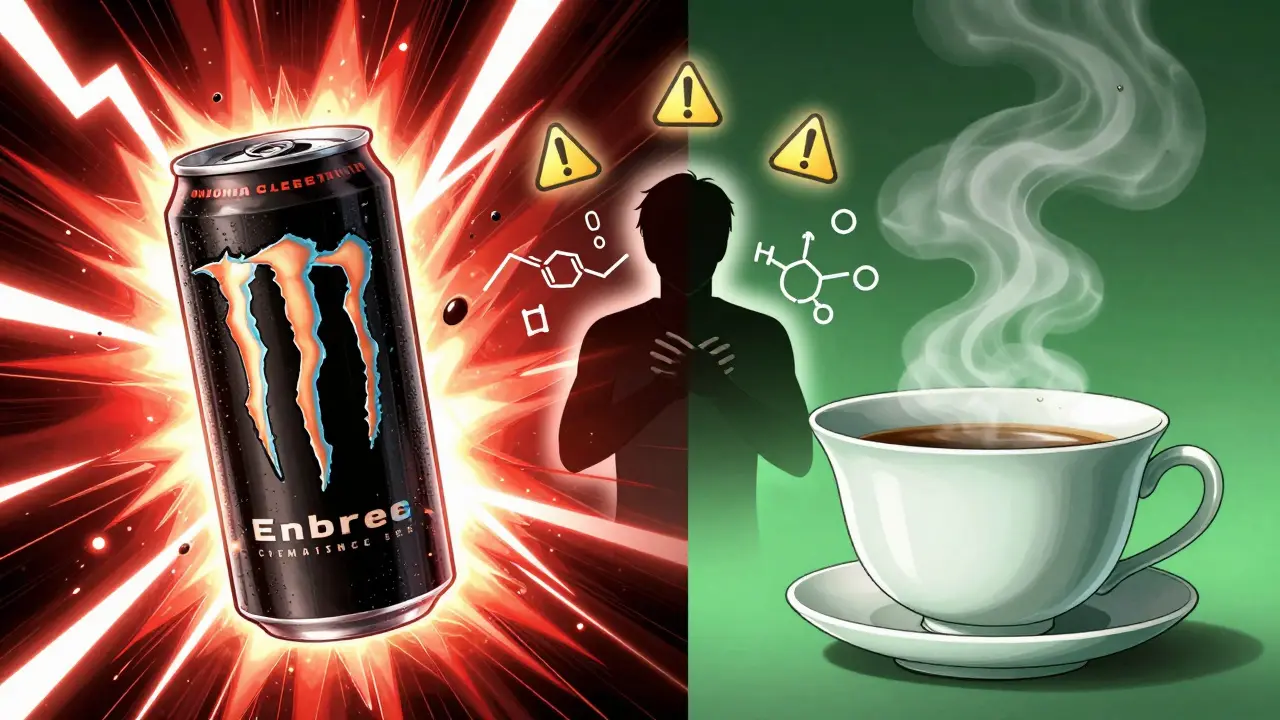
If black coffee is risky with certain meds, energy drinks are exponentially more dangerous. An average energy drink contains between 80 mg and 300 mg of caffeine per serving-often delivered in a single gulp rather than sipped over an hour. This rapid spike in blood caffeine concentration overwhelms the liver's ability to manage interactions smoothly.
But caffeine isn't the only ingredient. Energy drinks frequently contain taurine, ginseng, guarana, and high amounts of sugar. These additives have their own pharmacological effects. Taurine, for example, can affect heart rhythm, while ginseng may interact with blood thinners independently of caffeine. When you combine these with prescription medications, you create a chaotic chemical environment.
The FDA has noted a 37% increase in adverse event reports related to caffeine-medication interactions between 2020 and 2024, with energy drinks accounting for 68% of serious cases. For patients on antidepressants, stimulants, or heart medications, energy drinks are essentially a gamble with your physiology. The variability in caffeine content across brands means you never truly know how much stimulant you are ingesting, making dose management impossible.
Practical Strategies for Managing Caffeine and Meds
You don’t necessarily have to quit caffeine cold turkey, but you do need to become strategic. Here is a practical framework for managing these interactions safely:
- Consistency is Key: If you are on warfarin or similar drugs, sudden changes in caffeine intake are dangerous. Do not go from zero caffeine to four cups a day, nor vice versa. Keep your daily intake stable so your doctor can adjust your medication dosage accordingly.
- Read the Label: Many over-the-counter pain relievers and cold medicines contain hidden caffeine. Excedrin, for instance, includes caffeine to enhance pain relief. Combining this with your morning coffee and prescription meds can easily push you over the safe limit of 400 mg/day.
- Use Water as a Buffer: Always take oral medications with a full glass of plain water. Wait 30 to 60 minutes before introducing any other substance, including coffee, juice, or grapefruit.
- Know Your Genetics: If you feel jittery or anxious after a single cup of coffee, you might be a slow metabolizer. In this case, your risk for drug interactions is higher because caffeine lingers in your system longer. Discuss pharmacogenomic testing with your provider if you are on complex polypharmacy regimens.
- Ask Your Pharmacist: Pharmacists are trained to screen for specific high-risk combinations. Before starting a new medication, ask explicitly: "Does this drug interact with caffeine?" They can check databases that flag interactions like the one between bupropion and caffeine (which is generally low risk) versus theophylline and caffeine (high risk).
When to Seek Immediate Help
While many interactions are subtle, some present with acute symptoms that require immediate attention. If you are combining caffeine with medications and experience any of the following, seek medical help:
- Sudden, severe headache or confusion (signs of hypertensive crisis).
- Unusual bruising, bleeding gums, or blood in urine/stool (signs of anticoagulant toxicity).
- Rapid, irregular, or pounding heartbeat (tachycardia).
- Tremors, muscle twitching, or seizures (signs of stimulant overdose or theophylline toxicity).
- Extreme anxiety, panic attacks, or insomnia that disrupts daily function.
These symptoms indicate that the balance between your medication and caffeine has tipped into danger territory. Do not wait for your next scheduled appointment. Contact your healthcare provider or visit an urgent care facility.
Can I drink decaf coffee with my medications?
Decaf coffee still contains small amounts of caffeine (2-5 mg per cup), but more importantly, it retains the acids and polyphenols that interfere with drug absorption. For medications like levothyroxine, decaf is still problematic if taken simultaneously. It is best to maintain the same 60-minute waiting period with decaf as you would with regular coffee.
How long does caffeine stay in my system?
In healthy adults, the half-life of caffeine ranges from 1.5 to 9.5 hours. This means it takes that long for your body to eliminate half of the consumed caffeine. Factors like pregnancy, liver disease, and certain medications can extend this half-life significantly, keeping caffeine active in your system for much longer and prolonging interaction risks.
Is green tea safer than coffee regarding drug interactions?
Green tea contains less caffeine than coffee, but it also contains catechins and other compounds that can affect drug metabolism. While the risk is generally lower than with strong coffee, it is not zero. If you are on sensitive medications like warfarin or beta-blockers, consult your doctor before adding large amounts of green tea to your routine.
Do herbal supplements interact with caffeine?
Yes. Supplements like St. John's Wort, ginseng, and ephedra can interact with caffeine. Ephedra, in particular, is banned in many countries because combining it with caffeine drastically increases the risk of stroke and heart attack. Always disclose all supplements to your healthcare provider.
What is the maximum safe amount of caffeine per day?
The FDA suggests up to 400 milligrams per day is safe for most healthy adults. However, if you are taking interacting medications, your safe limit may be much lower. For example, patients on theophylline are often advised to limit caffeine to under 100 mg per day. Individual tolerance varies based on genetics and health status.