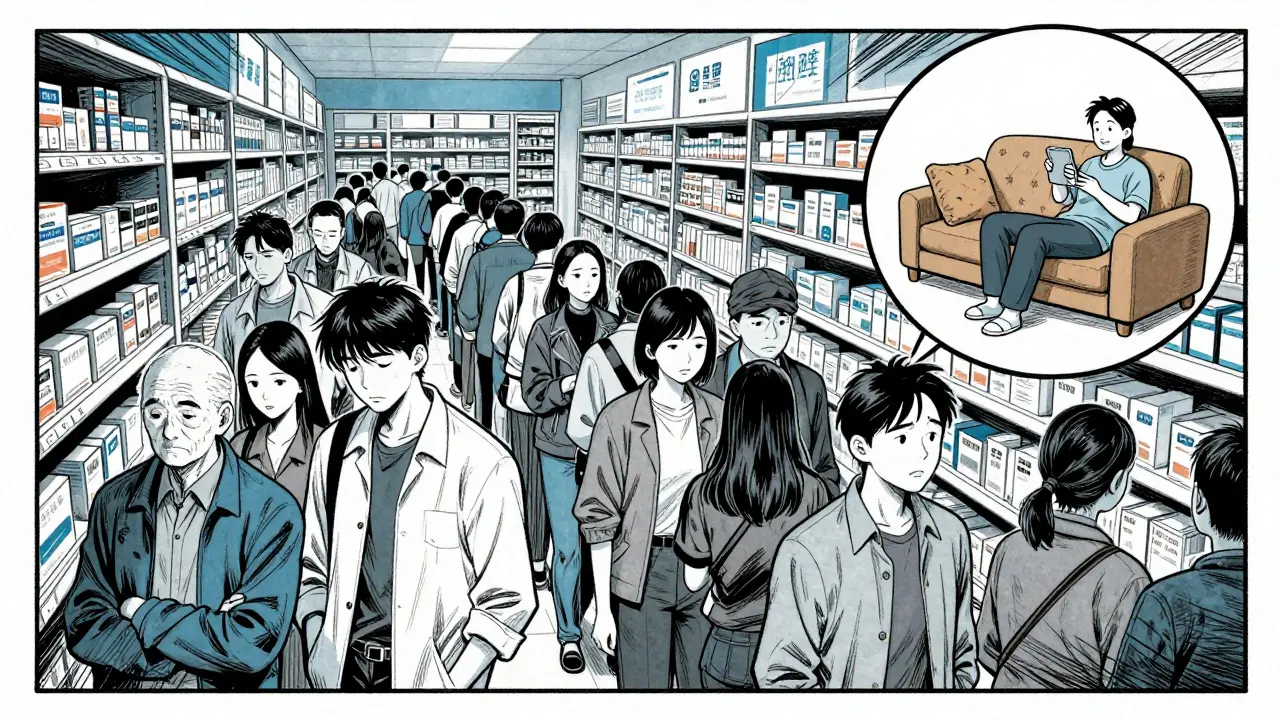
Imagine never having to stand in a crowded pharmacy line again. For millions of people managing daily health needs, that convenience is already a reality. Mail-order pharmacy is a service that delivers prescription medications directly to your home, typically in 90-day supplies. It’s not just about skipping the drive; it’s about creating a system that keeps you healthy by making it easier to stay on top of your meds.
If you take medication for high blood pressure, diabetes, or cholesterol, this guide will show you exactly how to switch, save money, and improve your medication adherence. We’ll break down who qualifies, what gets delivered, and how to avoid common pitfalls like running out of pills before your next shipment arrives.
Why Switch to Home Delivery?
The biggest reason people choose mail-order isn’t just laziness-it’s consistency. When you fill prescriptions at a local retail pharmacy, you usually get a 30-day supply. That means you have to remember to refill three times a month. Life gets busy. You forget. The gap widens. Your health suffers.
Medication adherence is the extent to which a patient takes their medication as prescribed by their doctor. Data from Blue Cross NC shows a stark difference: patients using 90-day mail-order prescriptions have an 82% adherence rate. Those sticking to 30-day retail refills drop to just 52%. That 30-point gap can mean the difference between stable blood sugar levels and an emergency room visit.
Then there’s the cost. Most insurance plans charge you two copays for a 90-day mail-order supply instead of three. If your copay is $10, you’re saving $10 every month. Over a year, that’s $120 back in your pocket. For brand-name drugs, mail-order pharmacies often negotiate discounts 4-7 percentage points better than retail stores, potentially saving you $150 to $300 annually.
Who Is This Service For?
Not every pill belongs in a mailbox. Mail-order services are designed for maintenance medications-drugs you take every day for chronic conditions. Think statins for cholesterol, metformin for diabetes, or lisinopril for hypertension. These are stable regimens where you know exactly what you need and when you need it.
However, mail-order is generally not suitable for:
- Acute medications: Antibiotics for a sudden infection or painkillers for a broken leg need immediate access. Retail pharmacies remain the best choice here.
- Controlled substances: Due to strict federal regulations, most mail-order pharmacies cannot dispense opioids, benzodiazepines, or other controlled substances.
- Temperature-sensitive biologics: While some services use specialized cooling packs, many complex injectables require in-person handling and monitoring.
If you have mobility issues, live in a "pharmacy desert" (an area with limited access to healthcare providers), or simply hate waiting in lines, mail-order is likely a perfect fit. According to industry data, 42% of Medicare beneficiaries and 38% of patients with chronic conditions currently use these services.
How to Get Started: A Step-by-Step Guide
Setting up your account is straightforward, but timing is everything. Here is the process to ensure a smooth transition without any gaps in your treatment.
- Check Your Insurance Coverage: Log into your health plan portal or call the number on your card. Ask specifically if they offer a preferred mail-order pharmacy. Most major plans include this benefit at no extra cost. Services like Express Scripts, CVS Caremark, and OptumRx dominate the market, so your insurer likely partners with one of them.
- Confirm Eligible Medications: Review your current list. Identify which drugs are maintenance medications suitable for 90-day fills. Keep acute prescriptions at your local pharmacy.
- Transfer Your Prescriptions: You can do this online or by phone. The new pharmacy contacts your old one to pull the records. This transfer process typically takes 3 to 5 business days.
- Place Your First Order: Once transferred, log into the portal to authorize your first 90-day supply. Ensure your shipping address is correct and that someone will be home to receive the package, or specify a safe drop-off location.
- Set Up Auto-Refill: This is crucial. Enable automatic refills so the pharmacy ships your next order 10-14 days before you run out. You can still cancel or modify orders during this window if needed.
Managing Your Supply and Timing
The shift from 30-day to 90-day cycles changes how you think about inventory. With retail, you might panic-buy when you have five pills left. With mail-order, you need a longer horizon.
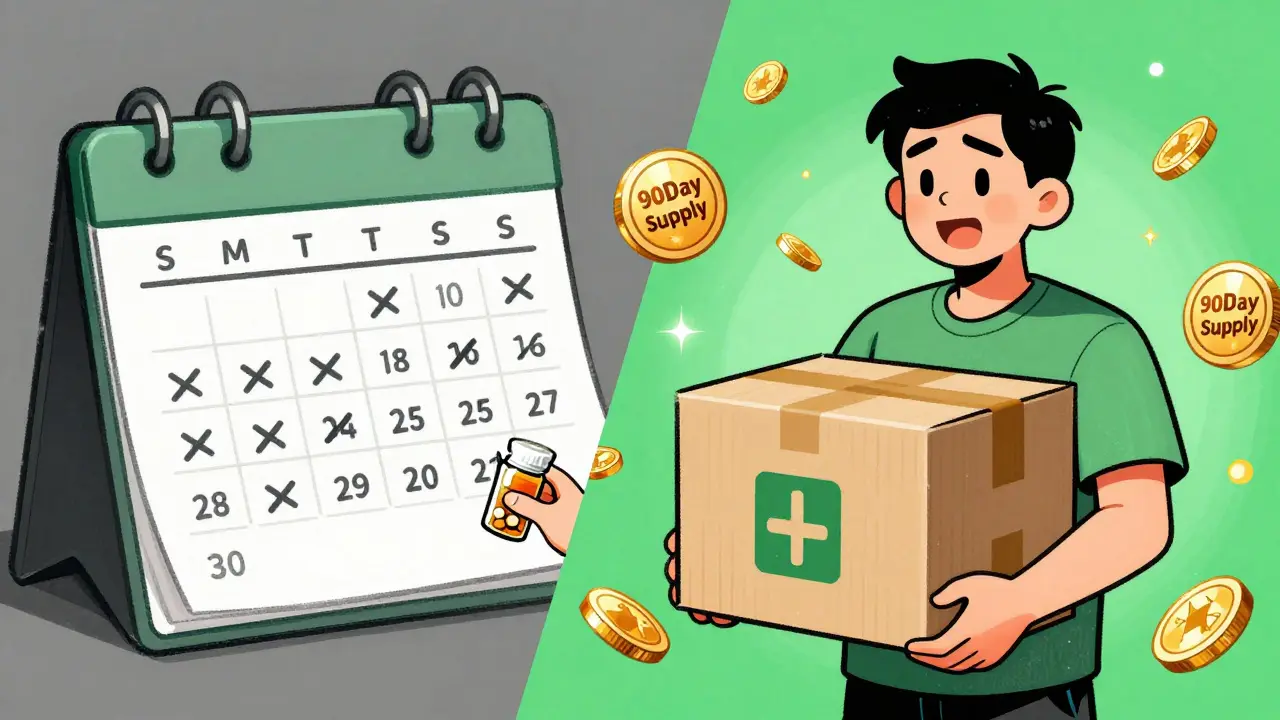
Standard delivery takes 3 to 5 business days. Some premium services offer next-day delivery for urgent adjustments, but standard shipping is the norm. To avoid running out, set a calendar reminder for 14 days after each delivery. Check your portal to confirm the next shipment is scheduled. If you travel frequently, adjust your auto-refill dates accordingly. Don’t wait until the last minute; processing delays happen.
What if you need to change your dosage? Call the pharmacist immediately. They can hold the pending shipment, update your profile, and send a corrected order. However, frequent changes suggest your regimen isn’t stable yet, which might indicate you should stick to a local pharmacy for now.
Comparison: Mail-Order vs. Retail Pharmacy
| Feature | Mail-Order Pharmacy | Retail Pharmacy |
|---|---|---|
| Supply Duration | Typically 90 days | Typically 30 days |
| Cost Savings | High (2-3 copays saved/month) | Low (Full copay per refill) |
| Adherence Rate | 82% | 52% |
| Delivery Time | 3-5 business days | Immediate pickup |
| Best For | Chronic conditions, stable meds | Acute illnesses, new prescriptions |
| Personal Interaction | Limited (Phone/Chat support) | High (Face-to-face counseling) |
Notice the trade-off: you gain time and money but lose immediate access and personal interaction. If you value chatting with your pharmacist about side effects, keep a local relationship for counseling while using mail-order for the bulk of your pills.
Common Pitfalls and How to Avoid Them
Even with a great system, things can go wrong. Here are the most common issues users face and how to handle them.
Lost or Damaged Packages: About 1.2% of shipments experience transit issues. Inspect your box upon arrival. If the seal is broken or the medication looks damaged, contact customer service immediately. Take photos of the damage. Reputable services will replace the order quickly.
Syncing Multiple Medications: If you take five different drugs, receiving five separate boxes is annoying. Ask your mail-order pharmacy if they offer synchronized delivery. Many large providers can align all your 90-day supplies to arrive in one shipment, simplifying your routine.
Travel Disruptions: Going on vacation? Pause your auto-refill or request an early shipment. Do not let your meds pile up at your door while you’re away. Most portals allow you to pause deliveries with a few clicks.
The Future of Home Delivery
This space is evolving fast. In 2026, we’re seeing more integration with telehealth. Some insurers now bundle virtual doctor visits with direct mail-order fulfillment. AI tools are also being used to predict when you might miss a dose, sending proactive reminders via text or app notifications. Companies like UnitedHealthcare report a 17% reduction in medication lapses using these predictive systems.
For those in rural areas, drone delivery pilots are expanding, promising even faster turnaround times. But for now, the core value remains the same: simplicity. By removing the friction of travel and waiting, mail-order pharmacy turns medication management from a chore into a background task.
Does mail-order pharmacy cost more than retail?
No, it usually costs less. Most insurance plans charge only two copays for a 90-day mail-order supply instead of three. Additionally, mail-order pharmacies often secure better discount rates on brand-name drugs, saving patients $150-$300 annually.
Can I get antibiotics through mail-order pharmacy?
Generally, no. Mail-order is designed for chronic maintenance medications. Acute prescriptions like antibiotics for infections require immediate use and are best filled at a local retail pharmacy for instant pickup.
How long does delivery take?
Standard delivery typically takes 3 to 5 business days. Some services offer expedited next-day options for urgent needs, but planning ahead with auto-refills is recommended to avoid delays.
Are controlled substances available via mail-order?
Most mail-order pharmacies do not dispense controlled substances such as opioids or benzodiazepines due to strict federal and state regulations. These must be picked up in person at a licensed retail pharmacy.
What happens if my package is lost?
If your package is lost or damaged, contact the pharmacy’s customer service immediately. Provide tracking details and photos of any damage. Reputable providers will expedite a replacement shipment at no extra cost.
Can I sync multiple prescriptions to arrive together?
Yes, many major mail-order pharmacies offer synchronized delivery. This service aligns all your eligible 90-day prescriptions to arrive in a single shipment, reducing clutter and simplifying management.