
Have you ever felt like your digestive system is rebelling against you? You eat a normal meal, but instead of feeling satisfied, you’re left bloated, gassy, and uncomfortable. If this sounds familiar, you might be dealing with Small Intestinal Bacterial Overgrowth, commonly known as SIBO. It is a condition where too many bacteria colonize the small intestine, leading to fermentation of food before it can be properly absorbed. While the large intestine is meant to host trillions of bacteria, the small intestine should remain relatively sterile. When that balance tips, symptoms flare up.
Diagnosing SIBO isn’t straightforward. For decades, doctors relied on invasive procedures, but today, most diagnoses happen through non-invasive breath tests. Yet, these tests are controversial. Are they accurate enough? Should you trust them? And once diagnosed, what actually works for treatment? This guide breaks down the science, the testing methods, and the treatment options so you can make informed decisions about your gut health.
Understanding Small Intestinal Bacterial Overgrowth (SIBO)
To understand SIBO, you first need to visualize your digestive tract. The small intestine is designed for absorption, not fermentation. Under normal conditions, bacterial counts in the jejunum (the middle part of the small intestine) stay below 10^5 colony-forming units per milliliter (CFU/mL). When counts exceed this threshold, we call it SIBO.
This overgrowth doesn’t just happen randomly. It usually stems from a breakdown in the body’s natural defense mechanisms. Think of the migrating motor complex (MMC) as a housekeeper that sweeps undigested food and bacteria out of the small intestine between meals. If the MMC slows down-due to conditions like gastroparesis or diabetes-bacteria linger and multiply. Other risk factors include:
- Anatomical changes: Surgery, such as gastric bypass, can create pockets where bacteria hide.
- Low stomach acid: Medications like proton pump inhibitors (PPIs) reduce acid, which normally kills ingested bacteria. Studies show PPI use increases SIBO risk by 2-3 times.
- Chronic diseases: Conditions like cirrhosis or inflammatory bowel disease (IBD) disrupt gut motility.
- Irritable Bowel Syndrome (IBS): There is significant overlap here. Between 30% and 85% of IBS patients may have SIBO, depending on how strictly it is diagnosed.
When bacteria overgrow, they ferment carbohydrates that should have been absorbed by your body. This process produces gases-primarily hydrogen and methane-which cause bloating, distension, and altered bowel habits. Some people experience diarrhea (hydrogen-dominant), while others suffer from constipation (methane-dominant).
The Gold Standard vs. Breath Tests: How SIBO Is Diagnosed
Historically, the only way to definitively diagnose SIBO was through an upper endoscopy. During this procedure, a doctor inserts a tube into the small intestine and collects fluid samples. If the bacterial count exceeds 10^5 CFU/mL, the diagnosis is confirmed. However, this method is invasive, expensive ($1,500-$2,500), and prone to contamination. Only major academic centers typically offer it, and even then, results can vary due to inconsistent collection protocols.
Because of these limitations, most gastroenterologists now rely on breath tests. These tests measure the amount of hydrogen and methane gas you exhale after consuming a sugar solution. The logic is simple: if bacteria are present in the small intestine, they will ferment the sugar quickly, releasing gas that enters your bloodstream and is exhaled through your lungs.
There are two main types of breath tests: the Lactulose Breath Test (LBT) and the Glucose Breath Test (GBT).
| Feature | Lactulose Breath Test (LBT) | Glucose Breath Test (GBT) |
|---|---|---|
| Sugar Used | 10g Lactulose | 10g Glucose |
| Absorption Speed | Slow (reaches entire small intestine) | Fast (absorbed in proximal small intestine) |
| Sensitivity | ~62.3% | ~46.0% |
| Specificity | ~70.6% | ~83.2% |
| Best For | Distal small intestine overgrowth | Proximal small intestine overgrowth; fewer false positives |
| Cost | $150 - $300 | $150 - $300 |
The lactulose test is more sensitive because lactulose isn’t absorbed well, so it travels further down the gut. However, this also means it can produce false positives if you have rapid transit time. The glucose test is more specific but might miss bacteria located deeper in the small intestine. A 2019 meta-analysis published in the *Journal of Neurogastroenterology and Motility* highlighted these trade-offs, noting that while breath tests are convenient, their accuracy varies significantly.

Preparing for Your Breath Test: Avoiding False Results
If your doctor orders a breath test, preparation is critical. A poorly prepared patient leads to inconclusive results, wasting time and money. Here is what you need to do to ensure accuracy:
- Fasting: You must fast for exactly 12 hours before the test. No food, no gum, and no smoking. Even water intake should be limited to small sips.
- Medication Pause: Stop antibiotics at least four weeks prior. Antibiotics kill bacteria, which could mask the overgrowth. Also, avoid prokinetics and laxatives for seven days before the test, as they alter gut motility.
- Dietary Restrictions: Follow a low-fiber diet for 24-48 hours before testing. Avoid beans, lentils, cruciferous vegetables, and complex carbohydrates. These foods feed bacteria and can skew baseline gas levels.
- Oral Hygiene: Brush your teeth before the test, but do not use mouthwash. Mouthwashes often contain alcohol or chlorhexidine, which can kill oral bacteria that contribute to baseline readings.
During the test, you will drink a sweet solution (either glucose or lactulose dissolved in water) and blow into a collection bag every 15-20 minutes for 90-120 minutes. It sounds tedious, but it’s necessary to track how gas production changes over time.
A positive result is generally defined as a rise of 20 parts per million (ppm) in hydrogen gas or 10 ppm in methane gas above your baseline level within the first 120 minutes. However, interpretation is tricky. Some labs use different thresholds, leading to confusion among patients and doctors alike.
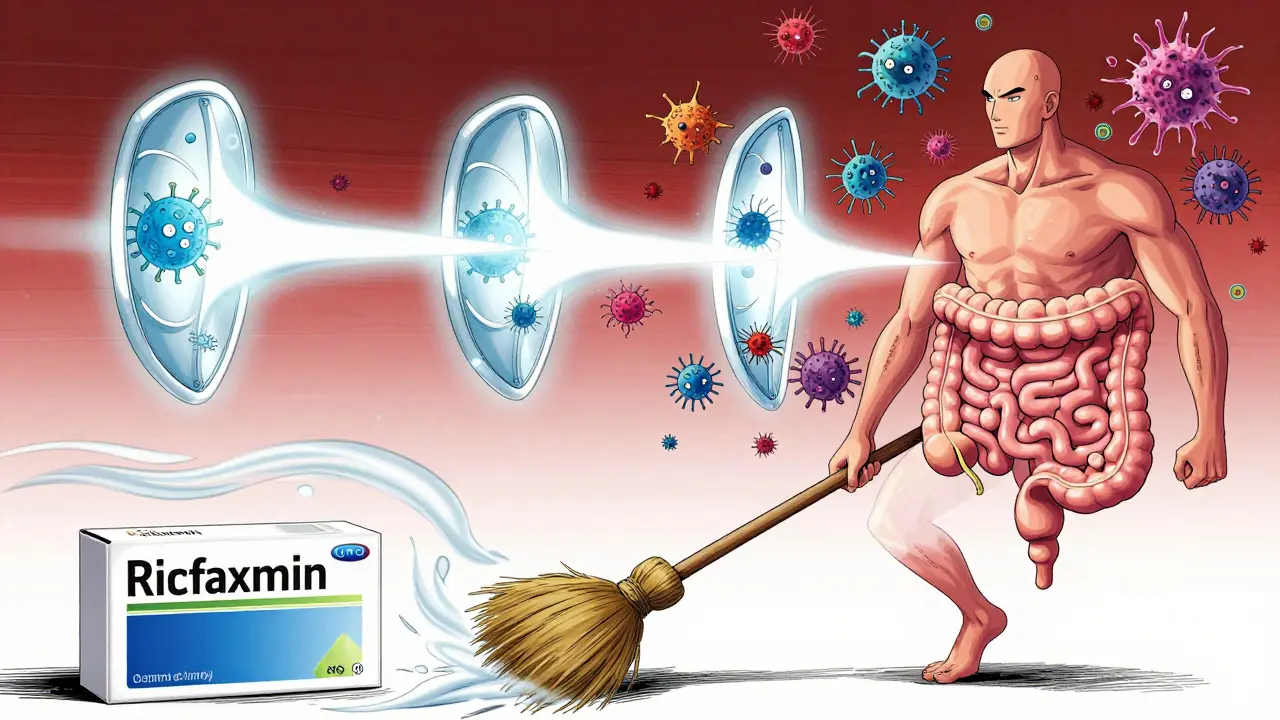
Treatment Options: Antibiotics and Beyond
Once diagnosed, the goal is to reduce the bacterial load and restore normal gut function. The first line of defense is usually antibiotics. Unlike traditional antibiotics that affect the whole body, some medications target the gut specifically.
Rifaximin: The Go-To Antibiotic
Rifaximin is a non-absorbable antibiotic that stays in the gut to kill bacteria without entering the bloodstream. It is the most prescribed drug for SIBO, particularly for hydrogen-dominant cases. The standard dose is 1,200 mg daily for 10-14 days. Clinical trials show response rates between 40% and 65%. Because it isn’t absorbed systemically, side effects are minimal compared to broad-spectrum antibiotics.
Treating Methane-Dominant SIBO (IMO)
If your breath test shows high methane levels, you likely have Intestinal Methanogen Overgrowth (IMO). Methane-producing organisms (archaea) are tougher to kill. Rifaximin alone often fails here. Instead, doctors typically prescribe a combination of rifaximin and neomycin. Neomycin is another antibiotic that targets methanogens effectively. Some newer studies suggest adding bismuth subsalicylate to improve outcomes, but this remains under investigation.
Prokinetics: Preventing Recurrence
Killing the bacteria is only half the battle. SIBO has a high recurrence rate-over 40% within nine months. Why? Because the underlying cause (like poor motility) hasn’t been fixed. This is where prokinetics come in. These medications stimulate the migrating motor complex to keep the small intestine clean between meals. Common options include low-dose erythromycin or prucalopride. Taking a prokinetic for several months after antibiotic treatment can significantly reduce relapse.
Dietary Management
Diet alone cannot cure SIBO, but it can manage symptoms while you undergo treatment. Two popular diets are the Low FODMAP diet and the Specific Carbohydrate Diet (SCD). Both restrict certain carbohydrates that feed bacteria. However, these diets are restrictive and should not be long-term solutions. Work with a registered dietitian to reintroduce foods gradually once symptoms improve.
Controversies and Future Directions
SIBO diagnosis is not without its critics. Dr. Eamonn Quigley, a prominent gastroenterologist, argues that breath tests are merely screening tools, not definitive diagnostics. He points out that false positives occur in up to 15-20% of cases due to rapid transit or non-hydrogen-producing bacteria. On the other hand, Dr. Mark Pimentel supports breath testing as the most practical tool available, acknowledging its imperfections but emphasizing its utility in clinical practice.
New technologies are emerging. Intraluminal gas sampling and next-generation sequencing (NGS) are being developed to identify specific bacterial species directly from stool or breath samples. These methods promise higher accuracy but are currently limited to research settings. Until then, breath tests remain the standard of care for most patients.
As awareness grows, so does the market. The global SIBO diagnostics market is projected to reach $310.4 million by 2028. More clinics are offering specialized testing, and insurance coverage is slowly improving. However, variability in interpretation criteria persists. Always choose a reputable laboratory and discuss your results with a knowledgeable healthcare provider.
How accurate is the SIBO breath test?
The accuracy varies. The lactulose breath test has a sensitivity of about 62% and specificity of 71%, meaning it misses some cases and flags some healthy people. The glucose breath test is more specific (83%) but less sensitive (46%). False negatives can occur if you don't produce hydrogen gas, affecting 15-20% of the population. Always interpret results alongside your symptoms.
Can I take probiotics for SIBO?
Probiotics are controversial in SIBO. Adding more bacteria to an already overgrown gut might worsen symptoms like bloating and gas. Some strains, like Saccharomyces boulardii (a yeast), may help, but bacterial probiotics should be used cautiously and only under medical supervision.
Why do I get bloated immediately after eating?
Immediate bloating suggests that bacteria in your small intestine are fermenting food as soon as it arrives. This prevents proper nutrient absorption and produces gas rapidly. It is a hallmark symptom of SIBO, especially hydrogen-dominant type.
Is SIBO permanent?
No, SIBO is treatable. However, it has a high recurrence rate (over 40% within 9 months) if the underlying cause, such as slow gut motility, is not addressed. Long-term management often involves periodic antibiotic courses and prokinetic therapy.
What is the difference between hydrogen and methane SIBO?
Hydrogen-dominant SIBO is associated with diarrhea and is treated primarily with rifaximin. Methane-dominant SIBO (now called IMO) is linked to constipation and requires combination therapy, typically rifaximin plus neomycin, because methane producers are archaea, not bacteria, and are harder to eradicate.