If you’ve had a rash that won’t go away-itchy, red, flaky skin on your hands, neck, or ears-you might not just be sensitive to soap or dry air. You could have contact allergy, a delayed immune reaction triggered by everyday items like jewelry, perfumes, or even your shampoo. Unlike immediate allergies (like peanut or pollen reactions), contact allergies don’t show up right away. They take days. That’s why so many people suffer for years without knowing why. The only reliable way to find out what’s causing it? Patch testing.
What Patch Testing Actually Does
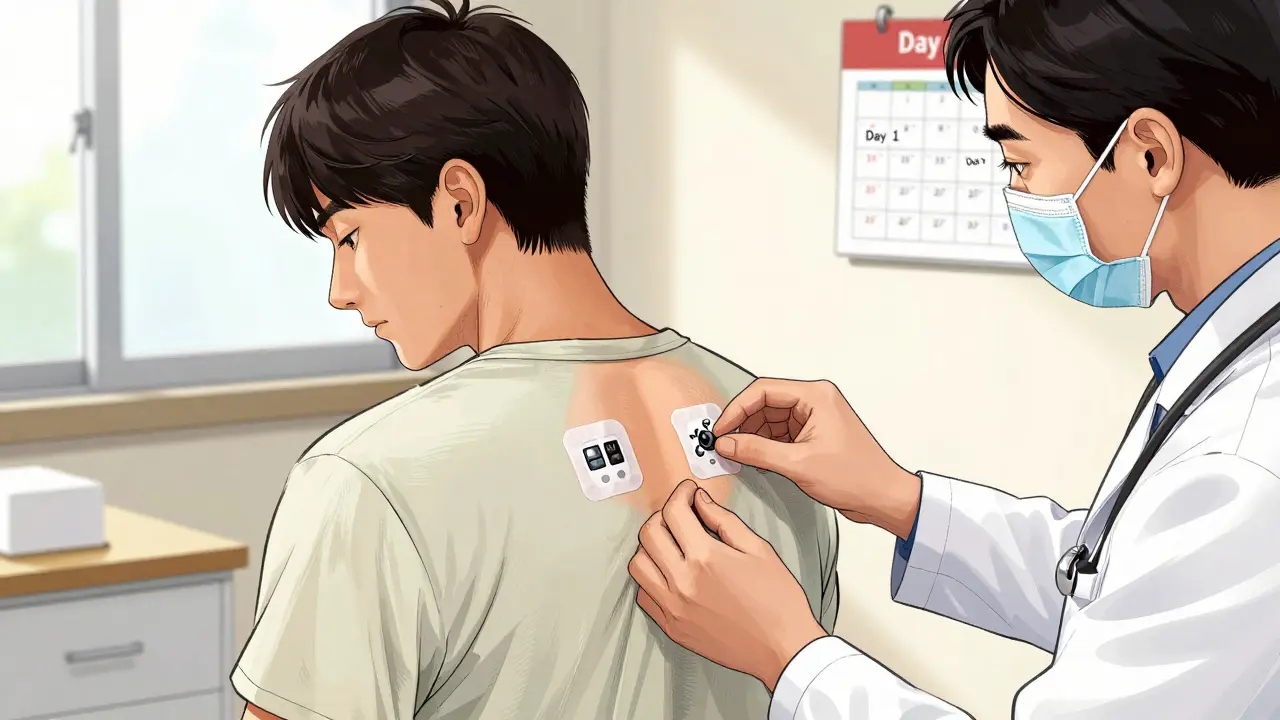
Patch testing isn’t a quick prick or a blood draw. It’s a slow, careful process designed to catch the sneaky kind of allergy that hides in your daily routine. Tiny amounts of common allergens-like nickel in your watchband, cobalt in your blue jeans, or fragrance in your lotion-are taped to your back. You wear them for 48 hours. Then, a dermatologist checks for reactions. Sometimes, they check again at 72 or even 96 hours. Why? Because allergic contact dermatitis is a T-cell response. It doesn’t happen fast. It builds. And if you miss the window, you miss the diagnosis.This isn’t guesswork. It’s science. The method was developed in the 1930s, but today’s standards are based on decades of global research. The North American Contact Dermatitis Group uses 80 tested allergens. The European series includes even more. And when it comes to fragrance? You can’t just test the mixes. You need to test the individual chemicals too.
Why Metals Are the Biggest Culprits
Nickel is the #1 trigger. In North America, nearly 1 in 5 people tested for contact allergy react to it. Cobalt and chromium aren’t far behind. These metals aren’t just in jewelry. They’re in belt buckles, zippers, phone cases, eyeglass frames, and even some dental fillings. A nurse in Durban who kept getting eczema on her hands? Turns out, her surgical instruments had nickel plating. Once she switched to nickel-free tools, her skin cleared up completely.That’s the power of patch testing: it turns vague symptoms into specific answers. And those answers lead to real change. Studies show that when people avoid the allergens found through patch testing, 60 to 80% of them see their rash disappear entirely. No more steroid creams. No more guessing.
Fragrance Allergy Is More Common Than You Think
Fragrance isn’t just about perfume. It’s in laundry detergent, body wash, deodorant, baby wipes, and even “unscented” products. That’s because many so-called unscented items still contain masking fragrances to cover up chemical smells. And here’s the kicker: testing only for the two standard fragrance mixes (FM I and FM II) misses up to 15% of cases. Why? Because newer allergens like lyral, hydroxycitronellal, and farnesol aren’t in those mixes anymore. They were removed due to instability-but people are still reacting to them.That’s why comprehensive testing now includes at least 15 individual fragrance chemicals. The European baseline series updated in early 2024 now tests for 32 fragrance allergens. The North American series added 8 new ones in 2023. If your dermatologist only uses the basic fragrance mixes, you’re being under-tested. And if you’re still itchy after treatment, that’s probably why.
How the Test Works-Step by Step
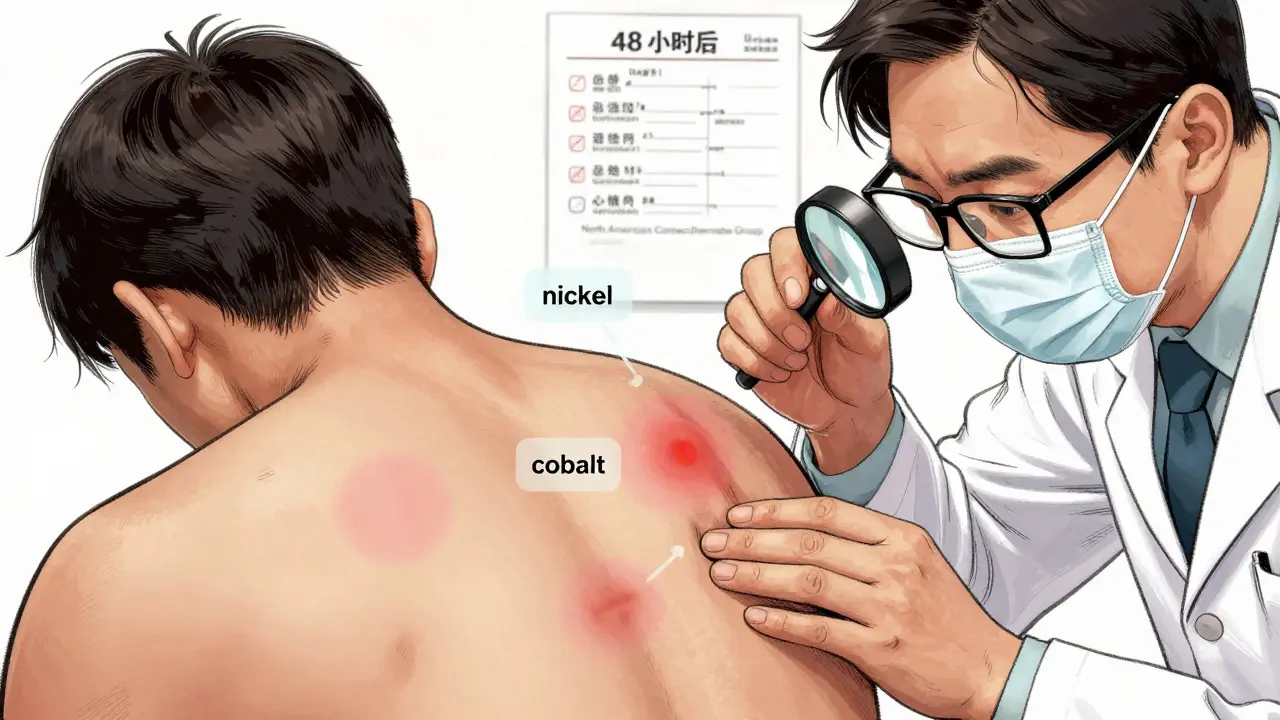
It’s not complicated, but it requires patience. Here’s what actually happens:- Day 1 (Monday): Application - You sit in a clinic for 30 to 45 minutes while small patches containing allergens are taped to your upper back. No needles. No pain. Just sticky tape.
- Days 2-3 (Tuesday-Wednesday): Wait - You can’t get the patches wet. No showers, swimming, or sweating. You wear loose cotton shirts. No tight bras or backpacks that rub. You avoid bending over too much-patches can come loose.
- Day 3 (Wednesday): First Reading - The patches are removed. The dermatologist checks for redness, bumps, or blisters. Some reactions are subtle. A faint pink circle might mean nothing-or it might be nickel.
- Day 4-5 (Thursday-Friday): Final Reading - Some reactions take longer. A second reading at 72 or 96 hours catches what was missed earlier. Reactions are graded from negative to extreme. A (+++) means you’re allergic. A (+) might be a false alarm.
False positives happen in 5-10% of cases. That’s why it’s critical to have a board-certified dermatologist who specializes in patch testing interpret the results. A general practitioner might misread a reaction. A specialist knows the difference between an allergic response and an irritant burn.
What Happens After the Test?
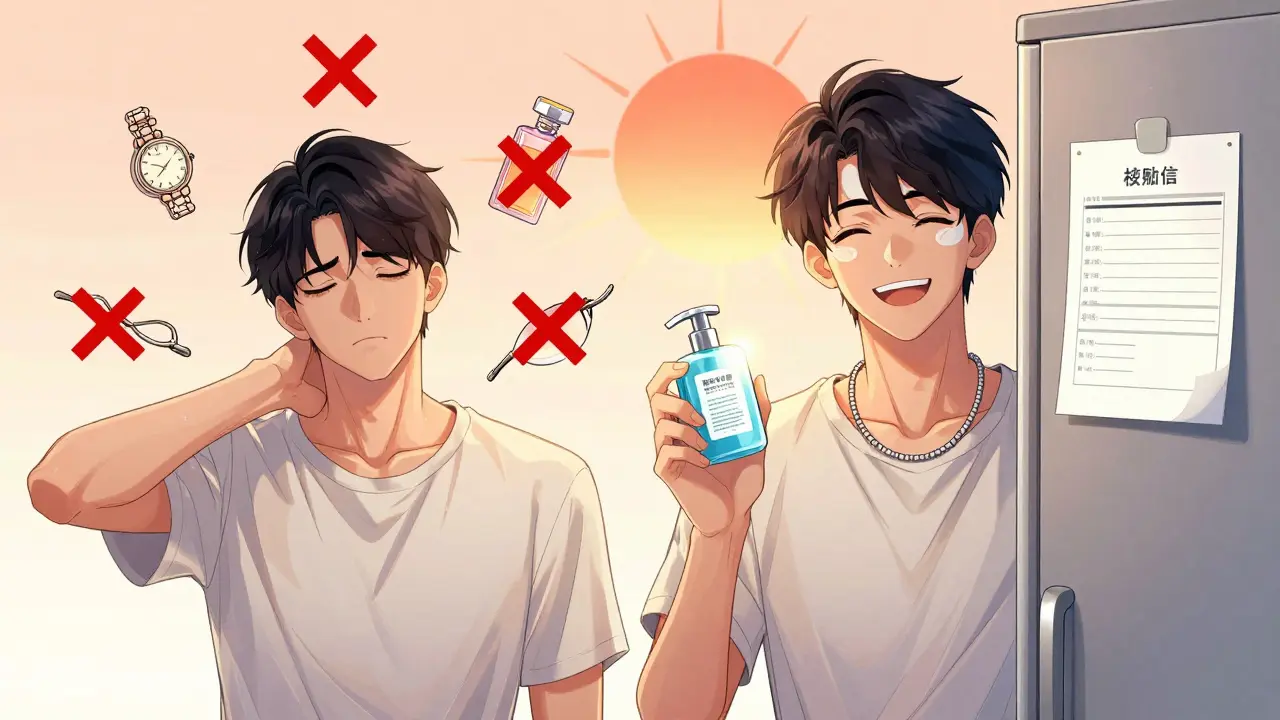
Finding the allergen is only half the battle. The real win is avoiding it. Once you know you’re allergic to nickel, you stop wearing cheap jewelry. You choose stainless steel or titanium. You check product labels for cobalt or chromium. For fragrance, you learn to read ingredient lists: “parfum,” “fragrance,” “essential oil,” “aroma”-these are all red flags. Even “natural” doesn’t mean safe. Balsam of Peru, found in cinnamon and citrus, is a top allergen.Some people get overwhelmed. They think they can’t use anything. But that’s not true. Once you know your triggers, you can shop smarter. There are fragrance-free brands. Nickel-free jewelry lines. Dermatologist-recommended soaps. You don’t have to live in a bubble. You just need to know what to avoid.
Why Other Tests Don’t Work
Blood tests? They’re useless for contact allergies. Lymphocyte transformation tests (LTT) have only 60-70% sensitivity. They’re not standardized. Skin prick tests? Those detect immediate allergies, like hay fever. Contact allergies are delayed. Only patch testing catches them.Some clinics offer “use testing”-you apply your own lotion or shampoo to your arm and wait. But that’s unreliable. Concentrations aren’t controlled. You might get an irritant reaction and think it’s allergy. Or you might miss it entirely. Patch testing uses standardized concentrations proven over decades to trigger real allergic responses without causing false positives.
Real People, Real Results
On Reddit’s r/dermatology, people share stories like: “After 7 years of hand eczema, patch testing found I was allergic to fragrance in my laundry detergent. Switched brands. My hands haven’t cracked since.” Another: “I thought my rash was stress. Turns out, it was nickel from my bra clasp. Bought a silicone-free bra. Gone in two weeks.”On RealSelf, 87% of users say the test was “worth it,” even though the 48-hour no-shower rule is brutal. The biggest complaint? False negatives. About 1 in 5 people get a negative result but still react to something. That’s often because they didn’t get the full test. If you’re still itchy, ask: Did they test the individual fragrance chemicals? Did they use the extended series?
Who Should Get Tested?
You should consider patch testing if:- Your rash lasts more than 2 weeks despite treatment
- You have eczema that keeps coming back in the same spots
- You’ve tried avoiding common irritants (soaps, detergents) and nothing helps
- You work with metals (nurses, mechanics, jewelers)
- You use a lot of skincare, perfume, or hair products
It’s not for everyone. If you have active, oozing eczema, you might need to wait until it’s calmer. If you’re on high-dose steroids, that can suppress results. But if you’ve been stuck in a cycle of rashes and creams, patch testing is your next step.
The Future of Patch Testing
Research is moving fast. A 2024 study in the British Journal of Dermatology showed early success with peptide-based testing for metal allergies-potentially faster, less invasive. But for now, patch testing remains the gold standard. The market is growing. Over 5.7 million tests are done in the U.S. every year. And with more fragrances being added to cosmetics, the need is only increasing.What’s next? Better labeling. The EU already requires 26 fragrance allergens to be listed if present above tiny amounts. The U.S. FDA is considering similar rules. But until then, you have to read labels like a detective. Patch testing gives you the key.
If you’ve been dealing with stubborn skin irritation, don’t keep guessing. Don’t blame your skin. Don’t assume it’s stress. Get tested. The answer might be in a patch on your back.
How long does patch testing take?
Patch testing requires three visits over one week. The first visit is for applying the patches (30-45 minutes). The second is at 48 hours for an initial reading (20-30 minutes). The final reading is usually at 72 to 96 hours (15-20 minutes). Some clinics may schedule a fourth visit at 7 days if a delayed reaction is suspected.
Is patch testing painful?
No. The patches are taped to your back with a gentle adhesive. There are no needles or injections. You might feel slight itching or burning if you have a positive reaction, but the application itself is painless. The discomfort comes later, if you’re allergic, but it’s usually mild.
Can I shower during patch testing?
No. You must keep the test area completely dry for 48 hours. Most clinics require you to avoid showers, swimming, sweating, and even heavy rain. You’ll be given instructions to sponge bathe below the waist and pat the area dry gently. If a patch falls off, call your clinic immediately-it can affect your results.
What if my patch test is negative but I still have a rash?
A negative result doesn’t always mean you’re not allergic. You might have been tested with an incomplete panel-especially if fragrance chemicals weren’t fully included. Some allergens aren’t in standard series. Others, like certain plant extracts or preservatives, may need custom testing. If your rash persists, ask your dermatologist about extended testing or use testing under supervision.
Are there side effects from patch testing?
The most common side effect is temporary redness or itching at the test site. In rare cases, a strong reaction can cause blistering, which usually heals without scarring. False positives (irritant reactions) occur in 5-10% of tests but are distinguishable by trained specialists. Serious reactions are extremely rare.
How accurate is patch testing?
Patch testing is the most accurate method for diagnosing contact allergy, with a specificity of 95-98% and sensitivity of 85-90%. This means it correctly identifies allergic reactions in nearly all cases and rarely gives false positives. It’s far more reliable than blood tests or self-diagnosis.
Can children get patch tested?
Yes, but it’s less common. Children under 12 rarely have enough exposure to trigger contact allergies. However, if a child has chronic eczema that doesn’t respond to standard treatment, especially on the face or hands, patch testing may be recommended. The process is the same, but smaller patches and fewer allergens are used.
Do I need to stop using topical steroids before patch testing?
Yes. Topical steroids can suppress your skin’s immune response and lead to false negatives. Most clinics ask you to stop using steroid creams on your back for at least 2 weeks before testing. Oral steroids may require a longer break. Always check with your dermatologist for specific instructions.






Just had my patch test last month after 5 years of chronic hand eczema. Turns out I was allergic to cobalt in my phone case and fragrance in my hand soap. I switched to a silicone case and CeraVe soap-my skin hasn’t been this calm since college. Seriously, if you’ve been told it’s ‘just dry skin’ and nothing’s working, get tested. It’s not a luxury-it’s a necessity. The 48-hour no-shower rule sucks, but it’s worth every second.
And yes, they tested all 32 fragrance allergens. Don’t let them skip the extended panel. You’re not overreacting-you’re just finally being heard.
Let’s be real: patch testing is a $500 gamble with a 20% false negative rate. The ‘gold standard’ is just a marketing term. Most dermatologists use outdated panels, and even the ‘extended’ ones miss emerging allergens like tetramethylacetyldihydrocyclopentadiene. I’ve seen people test negative and still react to their shampoo. The real problem? The industry doesn’t want to standardize because it’d mean more liability.
Also, ‘nickel is #1’? That’s only true in populations with high jewelry exposure. In industrial settings, chromates and formaldehyde are bigger culprits. Your data is cherry-picked.
YOU ARE NOT ALONE. I was told for years it was stress. Turns out my bra clasp had nickel. I bought a $12 silicone-free bra from a small Etsy shop and my skin cleared up in 10 days. Stop blaming yourself. Stop using steroids like they’re magic. Get tested. It’s not expensive if you have insurance. And if you don’t, ask about sliding scale clinics. You deserve to feel normal again.
It is imperative to underscore the methodological rigor inherent in contemporary patch testing protocols, which are grounded in evidence-based dermatological frameworks established by the North American Contact Dermatitis Group and the European Surveillance System on Contact Allergies. The application of standardized allergen concentrations, calibrated via double-blind, placebo-controlled trials over a 40-year longitudinal dataset, ensures a specificity exceeding 95%.
Furthermore, the inclusion of non-volatile fragrance allergens such as hydroxycitronellal and farnesol-despite their instability in commercial formulations-represents a paradigmatic advancement in allergen detection. The failure to implement the full 32-chemical fragrance panel constitutes a clinically significant deviation from the ICDRG guidelines and may be construed as substandard care.
There is something profoundly human in how we ignore the body’s quiet signals until they scream. We blame stress, dry air, aging-anything but the truth: that our environment has become a minefield of invisible irritants. Nickel in our jeans, fragrance in our ‘unscented’ detergent, cobalt in our tools. We live in a world that tells us to endure, to push through, to be strong.
But patch testing doesn’t ask for strength. It asks for attention. For the courage to stop blaming yourself and start asking: ‘What am I touching?’ It’s not just a test. It’s a quiet revolution against the assumption that discomfort is normal. And maybe, just maybe, that’s the most radical thing we can do these days.
So you’re telling me the reason I’ve had a rash since 2018 is because my phone case has nickel? And I just need to buy a new one? That’s it? No magic cream, no diet change, no detox? I feel like I’ve been sold a scam. Why didn’t my dermatologist say this sooner? Why is this not common knowledge? This feels like a $700 ‘aha’ moment for people who can afford it. Meanwhile, the rest of us are still scrubbing our hands raw with antibacterial soap.
Studies show 60-80% improvement? That’s a statistical mirage. The cohort selection bias is glaring-only patients who persistently return to dermatologists are tested. The majority of people with contact dermatitis never get tested. They self-manage, disengage, or resign themselves to chronic irritation. The ‘success rate’ is inflated by publication bias and clinic cherry-picking.
Also, the ‘no-shower’ rule is a logistical nightmare for shift workers, parents, or anyone without a private bathroom. The system assumes privilege. Patch testing is not accessible. It’s a luxury diagnostic.
So I did the patch test. Negative. Still itchy. Then I realized my ‘natural’ shampoo had balsam of peru. Which wasn’t even on the panel. 😑
Also, my dermatologist said ‘maybe try a different brand’ like I’m a toddler. I’m 34. I’ve read the ingredients. I need more than that.
Also also: why is it so hard to find nickel-free earrings that don’t look like they’re from 1998? 🤡
In Nigeria, we have a saying: ‘The skin remembers what the mind forgets.’ Many of us don’t have access to patch testing, but we’ve always known-what you wear, what you wash with, what you touch-it all leaves a mark. My grandmother used to rub aloe and shea butter on rashes. It didn’t cure, but it honored the body’s signals.
What I wish more Western clinics understood: this isn’t just about allergens. It’s about trust. People need to feel believed. The test is powerful, but the listening before it? That’s the medicine too.
Bro I got tested last year. Negative. Still broke out every time I touched my girlfriend’s perfume. Then I found out she uses ‘Dior Sauvage’-which has 17 fragrance chemicals that aren’t even listed on the bottle. I broke up with her. Not because of the perfume. Because she lied about it being ‘clean.’
Also, my mom cried when I told her I can’t wear her gold necklace. She said ‘but it’s family.’ I said ‘I can’t be family if I’m itching like a dog.’
Y’all really need to stop normalizing this pain.