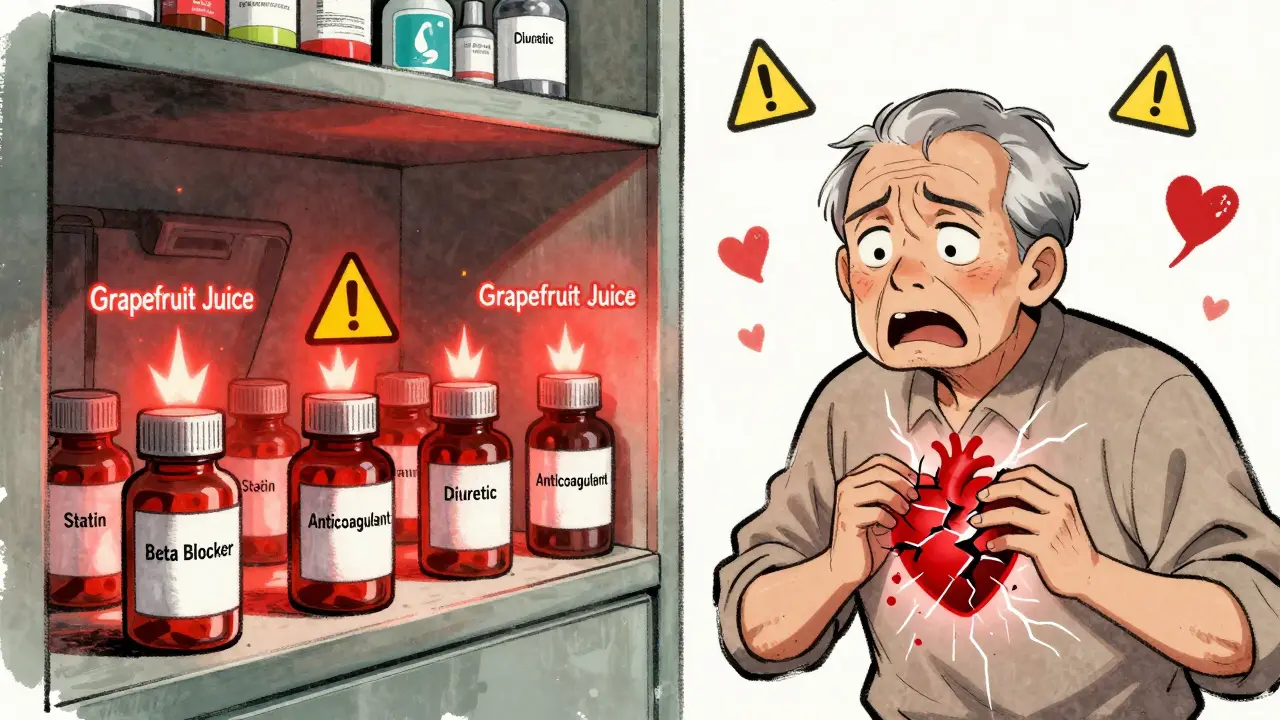
When you’re managing heart disease, taking multiple medications is often unavoidable. But what happens when those pills don’t just work together-they fight each other? Many people don’t realize that mixing heart drugs can be as dangerous as skipping them. A 2019 study found that 77.41% of heart patients in one hospital were on at least two drugs that could dangerously interact. That’s not rare. It’s the norm.
Why Mixing Heart Medications Is Riskier Than You Think
Your heart doesn’t just need one or two drugs. It often needs five, six, or more: a beta blocker for blood pressure, a statin for cholesterol, a diuretic for fluid, an anticoagulant to prevent clots, and maybe an antidepressant too. Each one does its job. But when they’re stacked together, their chemical pathways collide. The problem isn’t just about side effects. It’s about control. Some drugs make others work too hard. Others make them useless. The result? Blood pressure spikes, heart rhythm crashes, or muscles breaking down without warning. A landmark study in Circulation showed that people taking four heart medications have a 38% chance of a dangerous interaction. If you’re on seven or more? That jumps to 82%. That’s not a small risk. That’s a medical emergency waiting to happen.Unsafe Combinations You Must Avoid
Some drug pairs are outright dangerous. They’re not just ‘be careful’-they’re ‘don’t even think about it.’- Grapefruit juice and statins: Even one quart a day can block how your body breaks down cholesterol drugs like atorvastatin or simvastatin. That causes statin levels to soar. Result? Muscle damage, kidney failure, and in rare cases, death. The FDA says this isn’t theoretical-it’s happened.
- St. John’s wort and heart drugs: This popular supplement for mood swings speeds up how fast your liver clears out medications like beta blockers and blood thinners. Suddenly, your drug isn’t working. Your blood pressure climbs. Your heart races. And you don’t know why.
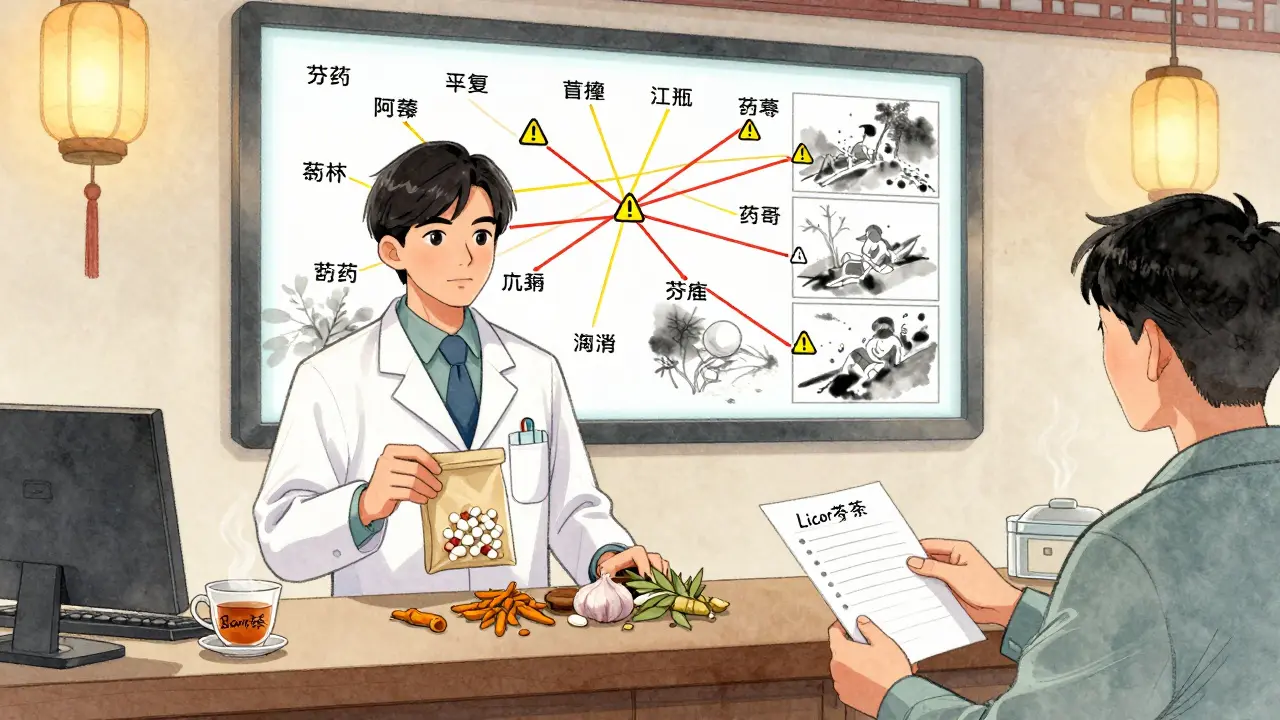
- Black licorice and blood pressure meds: Natural doesn’t mean safe. Licorice contains glycyrrhizin, which can raise blood pressure and lower potassium. When paired with calcium channel blockers or diuretics, it can trigger dangerous heart rhythms or kidney stress.
- Alcohol and heart meds: Alcohol doesn’t just add calories. It messes with how your liver processes nearly every heart drug. It can make blood pressure meds ineffective, spike your heart rate, and increase bleeding risk if you’re on warfarin or rivaroxaban. The National Institute on Alcohol Abuse and Alcoholism lists over 150 medications that react badly with alcohol-most of them for heart conditions.
- NSAIDs like ibuprofen and blood pressure drugs: Taking Advil for a headache while on lisinopril? You’re canceling out the benefit. NSAIDs reduce kidney blood flow, making blood pressure meds less effective. They also increase bleeding risk when mixed with anticoagulants.
The Hidden Dangers in Your Medicine Cabinet
It’s not just prescriptions. Over-the-counter stuff can be just as risky.- Antacids: Tums or Pepcid can block absorption of heart drugs like digoxin or thyroid meds. Take them at the same time? Your medication might as well be water.
- First-gen antihistamines: Benadryl (diphenhydramine) can cause QT prolongation-a dangerous heart rhythm problem. That’s especially risky if you’re already on amiodarone or sotalol.
- Decongestants: Sudafed (pseudoephedrine) is a hidden blood pressure booster. If you’re on a beta blocker, it can make your heart work harder, raise your pulse, and spike your pressure.
- Herbal supplements: Turmeric, garlic, ginseng, and fish oil can thin your blood. When combined with warfarin or aspirin, they can cause internal bleeding. Even if you think it’s “natural,” your body doesn’t care.
Who’s at the Highest Risk?
It’s not just older people. But they’re the most vulnerable. About 92% of older adults with cancer take multiple medications. The same is true for heart patients. One study found that 40% of high-risk drug interaction cases were in people over 65. Why? Because they’re more likely to have diabetes, kidney disease, depression, and arthritis-all requiring more pills. But age isn’t the only factor. People with kidney or liver problems metabolize drugs slower. That means even normal doses can build up to toxic levels. And if you’re on more than five drugs? You’re in the danger zone.How to Protect Yourself
You can’t stop taking your meds. But you can stop letting them hurt you.- Use one pharmacy: All your prescriptions-prescription, OTC, supplements-should go through the same place. Pharmacies have software that flags interactions. But only if they see everything.
- Do a brown bag review: Every six months, dump all your meds into a bag. Bring it to your doctor or pharmacist. Include vitamins, herbal teas, and CBD. Don’t assume they know what you’re taking.
- Keep a written list: Update it after every appointment. Include the dose, why you take it, and when. Give a copy to your primary doctor and your cardiologist.
- Ask: ‘Is this still necessary?’: Many people stay on drugs long after they’re needed. A 2022 study showed patients resist stopping meds because they fear their doctor is giving up on them. That’s not true. Deprescribing is smart medicine.
- Check for alternatives: If you’re on a statin and love grapefruit, ask if rosuvastatin is an option. It’s less affected by grapefruit. If you’re on a beta blocker and need a cold remedy, ask for a non-decongestant option.
What Your Doctor Should Be Doing
Doctors rely on electronic systems to catch interactions. But here’s the truth: those systems miss 23% of dangerous combinations. Why? Because they don’t know your liver function, your kidney numbers, or your exact diet. That’s why you need to be the expert on your own body. Don’t wait for your doctor to catch it. Bring up your list. Say: “I’m on these. Is this safe together?” The American Heart Association says heart failure patients often get five or more drugs. That’s not a mistake. It’s a trap. And the only way out is awareness.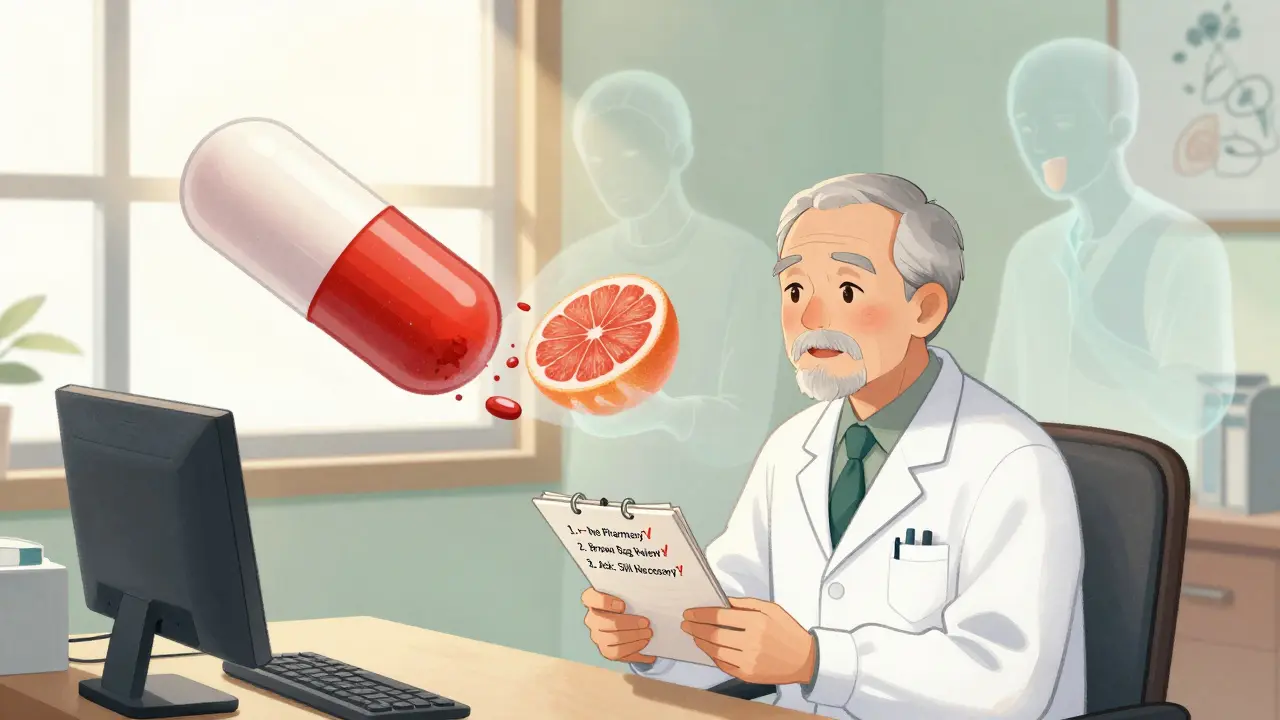
What’s Next for Heart Drug Safety?
The FDA is investing in pharmacogenomics-testing your genes to see how you’ll react to drugs. Some people have a genetic variant that makes them process statins dangerously slow. Others break down blood thinners too fast. Soon, a simple blood test might tell your doctor exactly what dose you need. But that’s years away. Right now, the best tool you have is your own voice. Don’t assume your meds are safe just because your doctor prescribed them. Don’t think supplements are harmless because they’re sold next to candy bars. And don’t ignore that weird muscle ache, sudden dizziness, or irregular heartbeat. It might not be aging. It might be your pills talking to each other.Frequently Asked Questions
Can I take ibuprofen with my blood pressure medication?
It’s not recommended. Ibuprofen and other NSAIDs can reduce the effectiveness of blood pressure drugs like lisinopril or losartan. They also increase the risk of kidney damage and bleeding, especially if you’re on a blood thinner. Use acetaminophen instead for pain relief, but never exceed 3,000 mg per day.
Is it safe to drink grapefruit juice with any heart medication?
No-not if you’re taking a statin like simvastatin, atorvastatin, or lovastatin. Grapefruit juice blocks an enzyme in your gut that breaks down these drugs, causing dangerous buildup. Even one glass a day can raise levels by 47%. Rosuvastatin and pravastatin are safer alternatives, but always check with your pharmacist.
Can I stop my heart meds if I feel fine?
Never stop without talking to your doctor. Feeling fine doesn’t mean your heart is healthy. Medications like beta blockers and ACE inhibitors prevent damage before symptoms appear. Stopping suddenly can cause rebound high blood pressure, chest pain, or even a heart attack.
Do herbal supplements really interact with heart drugs?
Yes, and often dangerously. St. John’s wort can make your blood thinner or beta blocker stop working. Garlic and ginseng can thin your blood too, raising bleeding risk with warfarin. Turmeric can interfere with blood pressure control. Always disclose every supplement-even if you think it’s harmless.
How do I know if I’m having a drug interaction?
Watch for new or worsening symptoms: unusual fatigue, muscle pain, dizziness, irregular heartbeat, swelling in legs, confusion, or unexplained bruising. These aren’t normal aging signs. They could mean your drugs are clashing. Call your doctor immediately if you notice any of these.


Man, I didn’t realize grapefruit juice could wreck my statins like that. I’ve been drinking it every morning since my diagnosis. Gonna switch to orange juice tonight.
Thanks for the heads-up.
Let’s be real - this isn’t about medicine. It’s about our entire healthcare system being designed to keep you sick and dependent. You’re told to take five pills, then another five because the first five broke your liver. And when you ask why, they hand you a pamphlet and a co-pay slip.
They don’t want you healed. They want you compliant. And if you’re not taking all the pills? You’re the problem, not the polypharmacy nightmare they created.
It is imperative to note that the pharmacokinetic interactions described herein are not merely theoretical but are empirically validated through clinical pharmacology studies. The cytochrome P450 3A4 enzyme inhibition by grapefruit furanocoumarins is a well-documented phenomenon, with plasma concentrations of simvastatin increasing by up to 15-fold. This is not a matter of opinion; it is a matter of biochemical fact.
Biggest tip I give my patients: write EVERYTHING down - even that turmeric tea you drink at night. I had a woman come in thinking her heart was acting up because of stress. Turned out she was taking garlic supplements + warfarin + lisinopril. No wonder she was bruising like a cartoon.
Pharmacist visits are free. Use them. They’re your secret weapon.
India here - we don’t have this problem because we don’t take 10 pills a day. We take one Ayurvedic powder and pray. Joking aside, my uncle took statins + aspirin + amlodipine and his muscles turned to jelly. He stopped everything and switched to yoga. Now he walks 10km daily. Maybe the real medicine is movement, not pills?
The statistic of 77.41% is misleading. It does not account for dosage, renal function, or duration of therapy. Many of these interactions are clinically insignificant at low doses. The real issue is patient non-compliance and poor follow-up. Blaming the drugs is easier than taking responsibility for your own health.
OMG I JUST REALIZED I’M TAKING ALL OF THESE 😭 I’M ON ST. JOHN’S WORT + STATIN + IBUPROFEN + BETA BLOCKER + BLOOD THINNER 😭 I’M GONNA DIE I KNOW IT 😭
WHY DID NO ONE TELL ME?? I’M SO SCARED 😭😭😭
MY PHARMACIST IS A TERRIBLE PERSON 😭
It’s fascinating how we’ve outsourced our bodily wisdom to pharmaceutical algorithms. We’ve created a medical paradigm where the body is seen as a machine that breaks down when you don’t feed it enough pills - rather than a system that can heal if given the right conditions.
What if the real problem isn’t drug interactions, but the assumption that we need so many drugs in the first place? We treat symptoms like enemies, not signals. We don’t ask why the heart is struggling - we just throw more chemicals at it and call it progress.
Maybe the most dangerous combination isn’t on the chart. Maybe it’s the belief that medicine can fix everything without changing lifestyle, diet, or emotional stress. We’ve turned healing into a transaction. And now we’re paying the price - in muscle pain, kidney failure, and quiet panic at 3 a.m.
Listen up. You want to survive this? Stop being passive. You think your doctor knows what you’re taking? No. They see a list of 10 meds and assume you’re compliant. You’re not. You’re taking half the statin because it gives you cramps. You’re skipping the diuretic because you don’t wanna pee every hour. You’re popping Advil like candy. That’s not compliance. That’s self-sabotage.
Go to the pharmacy. Bring your whole damn bag. Ask them to run the interaction checker. Do it every six months. Not because it’s nice. Because if you don’t, you’re playing Russian roulette with your heart. And your life isn’t a gamble. It’s your only one.
Stop waiting for permission. You’re the CEO of your body. Act like it.
Okay so i just read this and i literally almost threw my phone across the room because i realized i’ve been drinking grapefruit juice with my atorvastatin for 3 years and i’ve had this weird muscle ache for 8 months and i thought it was just ‘getting old’
AND NOW I’M SCARED TO SLEEP
my doctor never told me this
my pharmacist never told me this
my mom told me grapefruit is healthy
WHY IS NO ONE TELLING US THIS
MY HEART IS GOING TO KILL ME
and i just spent $12 on a bottle of supplements that probably make it worse
someone please tell me i’m not gonna die before breakfast
Thank you for writing this. I’ve been so scared to ask my doctor if I can cut back on anything. I feel like if I say ‘I think I’m taking too many pills’ they’ll think I’m being difficult. But this made me feel like it’s okay to ask. I’m bringing my brown bag next week. I’m so glad I found this.
My dad’s on 9 meds. He doesn’t even remember what half of them are for. I started a shared Google doc with his doctors, his pharmacist, and me. We track doses, side effects, and notes. It’s not glamorous, but it’s saved his life twice already. If you’re juggling more than 5 pills, get someone on your team. You don’t have to do this alone.
Interesting how this article ignores the fact that in countries with universal healthcare, drug interactions are monitored systematically. In the U.S., we’re left to fend for ourselves because profit > prevention. The real danger isn’t the pills - it’s a system that treats your health like a commodity. Maybe the real solution isn’t more education. Maybe it’s not having to pay $800 a month for pills in the first place.
YESSSSS this is why I’m all about PHARMACOGENOMIC TESTING 💪🏽 I got mine done last year - turns out I’m a CYP2C19 poor metabolizer so my clopidogrel was useless. Switched to ticagrelor and my cardiologist was like ‘we should’ve done this 2 years ago.’
Stop guessing. Get tested. Your genes know your body better than your doctor’s algorithm. 🧬❤️🩹
Wait, I just checked my bottle - I’m on rosuvastatin. So grapefruit’s okay? Or is that a myth too?
Anyone know?