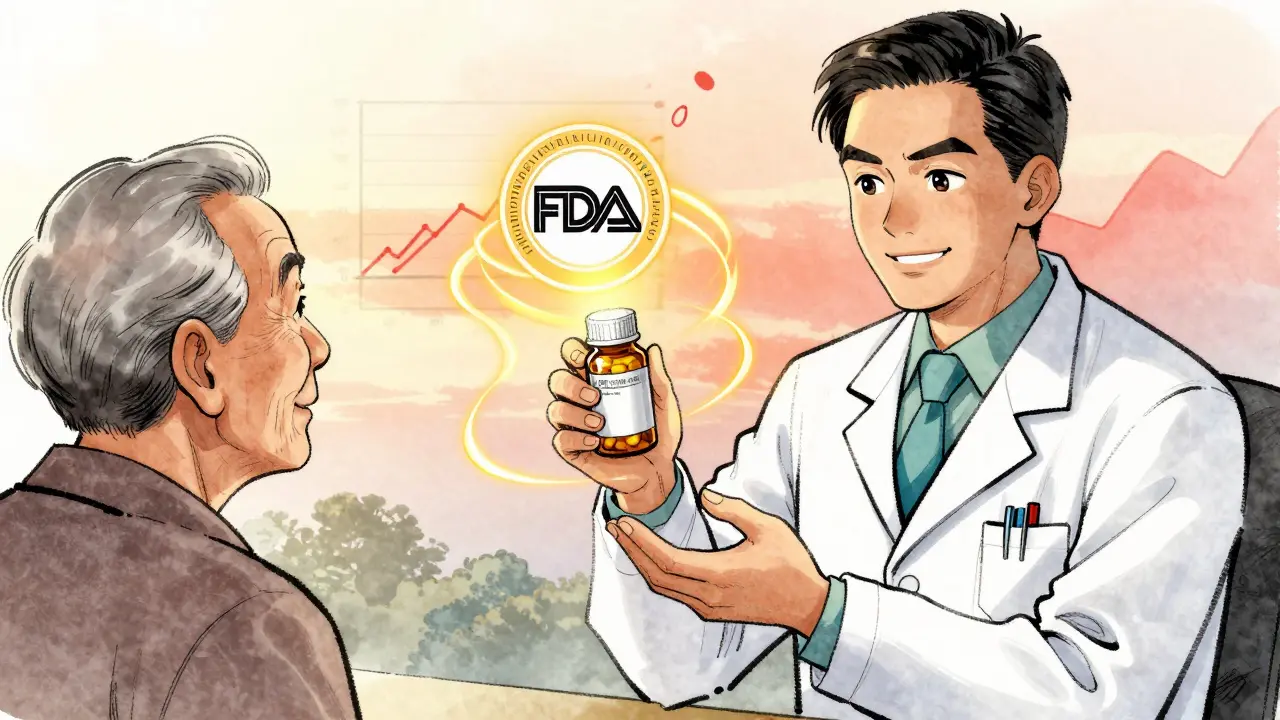
When you pick up a prescription, you might see two options: the familiar brand-name drug or a much cheaper generic. Many people wonder-does the generic really work the same? Is it safe? Or are you just saving money at the cost of your health? The answer isn’t simple, but the research gives us a clear picture.
What Does It Mean for a Generic Drug to Be Effective?
Generic drugs aren’t copies in the way a photocopy is a copy. They must contain the exact same active ingredient, in the same strength, and delivered the same way-as a pill, injection, or inhaler-as the brand-name version. The U.S. Food and Drug Administration (FDA) requires manufacturers to prove bioequivalence. That means the generic drug must enter your bloodstream at the same rate and to the same extent as the brand-name drug.
To prove this, companies run studies with 24 to 36 healthy volunteers. These are crossover trials: half take the brand first, then the generic; the other half do the reverse. Researchers measure two key things: the maximum concentration of the drug in the blood (Cmax) and how much of the drug is absorbed over time (AUC). The FDA’s rule is strict: the 90% confidence interval for the ratio between generic and brand must fall between 80% and 125%. That’s not a wide gap-it’s a tight window designed to ensure clinical equivalence.
What Do Large-Scale Studies Say?
One of the most comprehensive analyses came from Austria in 2020, published in Scientific Reports. Researchers tracked nearly all insured patients over five years, comparing outcomes for 17 chronic conditions-like high blood pressure, diabetes, and depression-using either brand-name or generic drugs. After adjusting for age, income, and other factors, patients on generics had lower death rates in 10 out of the 17 drugs. For 11 of them, there were fewer major heart events. The five-year survival rate for those on generics was 82.7%, compared to 79.8% for brand-name users.
In the U.S., a 2019 study in PLoS ONE looked at 3.5 million patients taking common medications: amlodipine for blood pressure, glipizide for diabetes, alendronate for osteoporosis, and antidepressants like escitalopram. The results? No difference in hospitalizations, heart attacks, or control of symptoms. In fact, some generics-like amlodipine and amlodipine-benazepril-were linked to slightly lower cardiovascular risk. That’s not a fluke. It’s consistent with data from the FDA, which reviewed over 2,000 bioequivalence studies between 1996 and 2007 and found no meaningful differences in effectiveness.
Are There Exceptions? Yes-But They’re Rare
Not all drugs are created equal in how they behave in the body. Some have what’s called a narrow therapeutic index. That means even a tiny change in blood levels can make the drug ineffective-or dangerous. Examples include levothyroxine (for thyroid), warfarin (a blood thinner), phenytoin and lamotrigine (for seizures), and cyclosporine (for organ transplants).
For these drugs, switching between generic versions-even ones approved by the FDA-can sometimes cause problems. A 2023 study in Epilepsia found that patients switching between different generic versions of levetiracetam had an 18% higher chance of seizure recurrence. In another case, a patient on generic levofloxacin kept having infections until switching back to the brand-name version. Pharmacists and doctors know this. That’s why, for these drugs, prescribers often write “dispense as written” on the prescription.
The FDA acknowledges this. Their Orange Book lists generics as “A-rated” (therapeutically equivalent) or “B-rated” (possible differences). For narrow index drugs, many doctors stick with one manufacturer’s version-brand or generic-and avoid switching unless absolutely necessary.
Why Do Some Patients Say Generics Don’t Work?
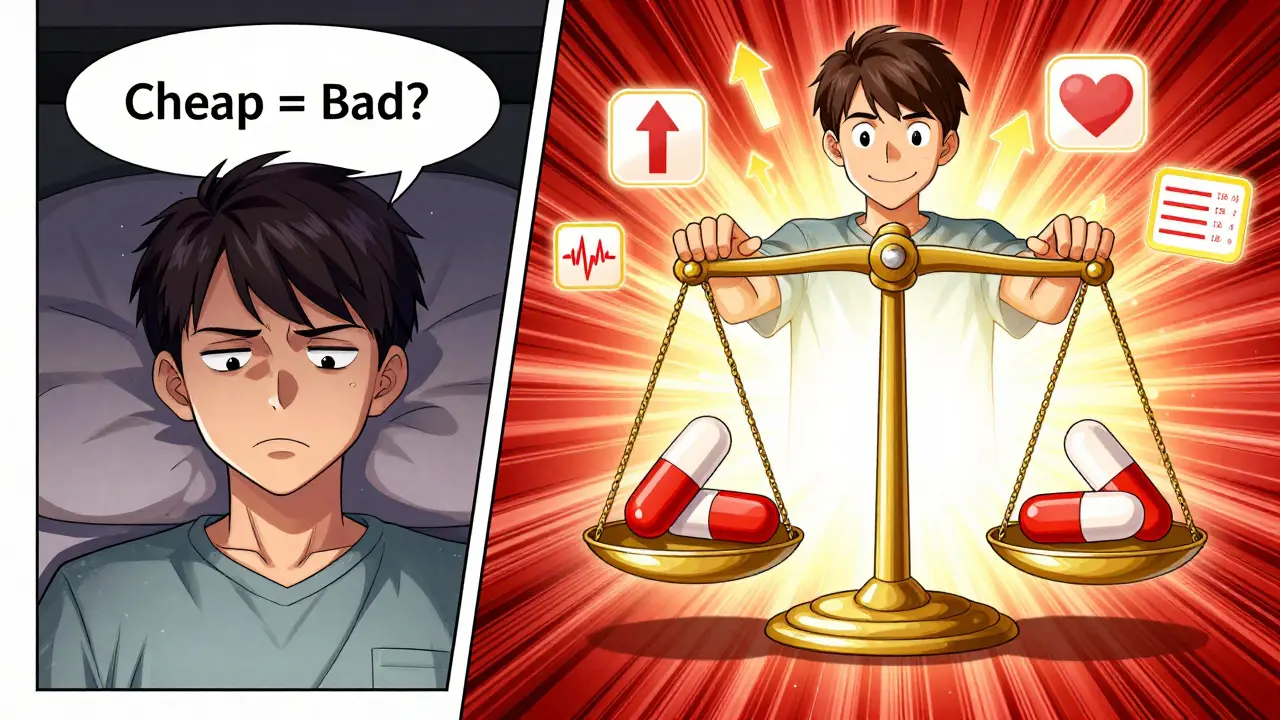
If the science says generics work the same, why do some people swear they feel worse on them? The answer isn’t always the drug. It’s often the perception.
A 2013 study by Gallelli found that 30% of patients reported no change, 30% felt better, 10% had side effects, and 30% stopped taking the drug because they believed it wasn’t working. That last group? Many were reacting to the stigma around generics-thinking “cheap” meant “inferior.”
But real-world experiences are mixed. On Reddit, users report switching between generic levothyroxine brands and seeing their TSH levels jump up or down. One person tried three different generics before finding one that stabilized their thyroid. In pharmacy forums, neurologists describe breakthrough seizures after switching generic antiepileptics-even when the FDA says they’re bioequivalent.
Here’s the key: inactive ingredients matter. Fillers, dyes, and coatings can affect how quickly a pill dissolves. For most people, this doesn’t matter. But for someone with a sensitive digestive system, a different filler might cause bloating or nausea. That’s not the drug failing-it’s the body reacting to something else in the pill.
What Do Patients and Doctors Really Think?
Surveys show most people are fine with generics. A 2021 Medicare survey found 68% of seniors on generic heart meds reported no difference in effectiveness. GoodRx reviews show 78% of users say generics are just as effective as brand names. The Generic Pharmaceutical Association found that 87% of physicians trust generics overall.
But specialists? They’re more cautious. Cardiologists, neurologists, and endocrinologists often prefer sticking with one version-brand or generic-once they find what works. They’re not against generics. They’re against unnecessary switches. One endocrinologist told a patient: “If your thyroid levels are stable on Synthroid, don’t switch. If you’re on a generic and your TSH is perfect, keep it.”
Pharmacists report that 42% of patients express concerns about generic quality. That’s not because generics are unsafe-it’s because they’re not well explained. Most pharmacy handouts focus on cost savings. Few mention the science behind bioequivalence. Education helps. When patients understand that the FDA requires the same active ingredient and the same absorption rate, trust grows.
How Are Generics Made and Regulated?
Generics aren’t made in shady labs. Most are produced by large, regulated manufacturers-some of the same companies that make brand-name drugs. The FDA inspects every manufacturing site, whether it’s for brand or generic. In 2021, a valsartan recall affected multiple generic brands due to impurities. That wasn’t a failure of the generic system-it was proof the system worked. The FDA caught the problem and pulled the batch.
The approval process is rigorous. A generic company doesn’t just copy a pill. They must reverse-engineer it, test it, and prove it behaves identically in the body. The FDA reviews every study. They don’t approve generics because they’re cheaper. They approve them because they meet the same standards.

What About Cost and Savings?
Generics save money-big time. They cost, on average, 80% to 85% less than brand-name drugs. In 2022, 90% of all prescriptions filled in the U.S. were generics. But they made up only 23% of total drug spending. From 2012 to 2021, generics saved the U.S. healthcare system $612 billion. Medicare saved $1.67 trillion from 2006 to 2020 just by using generics.
That’s not just a number. That’s a mother choosing between her blood pressure pill and her child’s school supplies. That’s an elderly man not skipping his diabetes meds because he can’t afford the brand. Generics aren’t just a policy win-they’re a lifeline.
What’s Changing Now?
The FDA is updating its rules for complex generics-like inhalers, topical creams, and extended-release pills. These are harder to copy because the delivery system matters as much as the drug. By 2025, the FDA plans to require more real-world testing for these products.
Meanwhile, global regulators like the European Medicines Agency are confirming the same results: 98.3% of approved generics are therapeutically equivalent. The data isn’t changing. The understanding is just getting deeper.
Bottom Line: Should You Take Generics?
For the vast majority of medications-antibiotics, blood pressure pills, antidepressants, statins-generics are just as safe and effective as brand names. The science is clear. The savings are huge. The risks are minimal.
For drugs with a narrow therapeutic index-thyroid, seizure, or blood thinner meds-stick with the same version. If your doctor or pharmacist recommends a switch, ask: “Is this a generic I’ve taken before? Have others had issues with this one?” Don’t assume all generics are the same. But don’t assume they’re worse, either.
Don’t let fear or myths keep you from a drug that works. Generics aren’t second-rate. They’re science-backed, FDA-approved, and life-saving. The only thing different is the price tag-and that’s a difference that matters.





Generic bioequivalence thresholds (80-125%) are statistically sound, but clinical equivalence isn't just about AUC and Cmax. Inert ingredients matter for gut-sensitive patients. I've seen TSH levels swing 30% after switching levothyroxine generics-FDA-approved, but not patient-optimized.
I used to think generics were just cheaper versions but after my dad switched from brand name blood pressure med to generic and his numbers stayed perfect for two years, I changed my mind. The science checks out. We just need better education so people don't panic when the pill looks different.
Why are we even debating this? America spends too much on pharma because of corporate greed. India makes 40% of the world's generics-clean, regulated, effective. If you're still scared of generics, you're paying for brand marketing, not medicine. Wake up.
My aunt was on warfarin for years. Switched generics twice, INR went haywire. Third time, they locked her on the original generic brand-stayed stable. It's not that generics don't work. It's that some people's bodies are picky. Doctors need to track this better.
So let me get this straight-we're spending billions on brand-name drugs because people think the pill looks fancier? Bro. The active ingredient is the same. The FDA doesn't play games. If your headache goes away on a $2 generic instead of a $50 brand, congrats-you just won life.
Consider the metaphysics of the pill. The molecule is identical, yes-but the soul of the medicine? The intention behind its manufacture? The cultural weight of the brand versus the anonymous generic? We reduce human health to bioequivalence metrics, yet we are beings who feel, who fear, who associate color and shape with safety. Is it the drug that fails-or our collective anxiety made manifest in a trembling hand and a skipped dose?
OMG YES!!! I switched to generic escitalopram and thought I was going crazy-felt like I was drowning in fog for two weeks... then realized it was the new filler!! Switched back to the old generic brand-boom-back to normal. It's not the drug, it's the dye or the coating!! Why don't pharmacies tell you this??
Generics are fine. But if you're a lazy system that pushes them without monitoring, you're just cutting corners and calling it progress. Stop pretending cost savings = better care. Some patients need consistency. End of story.
My mom took generic metformin for 5 years. No issues. But when they switched her to a new batch, she got dizzy. We went back to the old one. Same active ingredient. Different filler. Simple.
Wait, so if the FDA says generics are equivalent, why do some neurologists refuse to switch patients on seizure meds? Is it just caution-or is there something the studies miss? I'm not saying generics are bad, but maybe the 80-125% window isn't enough for brain chemistry. Food for thought.
Generics are the quiet heroes of modern medicine-the unglamorous, unbranded, unsponsored workhorses that keep the system from collapsing under its own greed. They don’t have glossy ads or celebrity endorsements. Just science. Just pills. Just survival. And yet-we still whisper about them like they’re second-class citizens. What a sad, stupid, capitalist irony.
Look-I’ve been on the same generic thyroid med for 8 years. My TSH is perfect. My energy is back. My doctor didn’t even mention the switch. That’s the point. For 90% of us, it works. Stop overcomplicating it. The system isn’t perfect-but it’s not broken either.
As a pharmacist, I see patients panic every time their prescription looks different. We need better handouts. Not just ‘saves you money.’ We need: ‘Same active ingredient. Same absorption. FDA-approved. Same results.’ Simple. Clear. Human.