
When you're breastfeeding, every pill, injection, or cream you take doesn't just affect you-it can reach your baby through your milk. It’s a reality that worries many new mothers: is this medication safe for my child? The truth is, most drugs are. But knowing which ones are, and which ones aren’t, isn’t something you should guess at. It’s science-and it’s clearer than most people realize.
How Medications Get Into Breast Milk
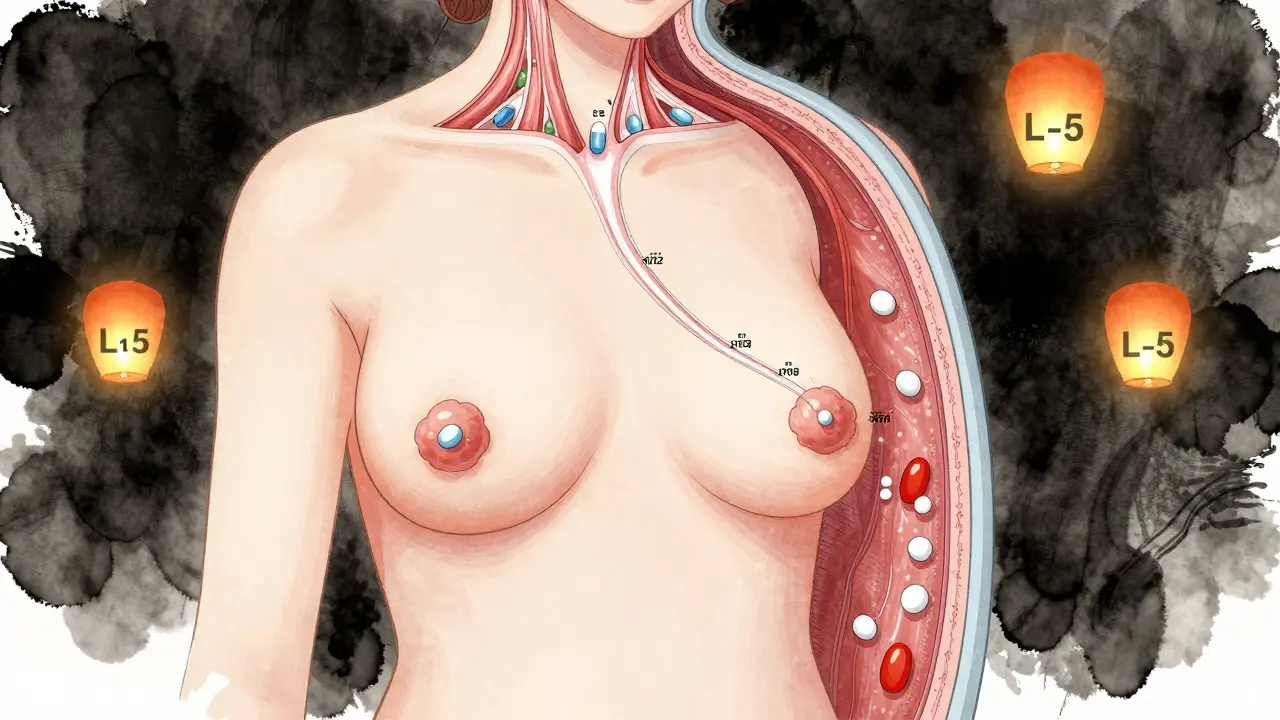
Medications don’t magically appear in breast milk. They travel from your bloodstream, through the cells lining your milk-producing glands, and into the milk itself. This happens mostly by passive diffusion-meaning drugs move from areas of higher concentration (your blood) to lower concentration (your milk). But not all drugs do this equally. The key factors that determine how much of a drug ends up in your milk are simple:- Molecular weight: Drugs under 200 daltons slip through easily. Most common medications fall under this limit.
- Lipid solubility: Fatty drugs like antidepressants or sedatives cross more readily than water-soluble ones.
- Protein binding: If a drug is tightly bound to proteins in your blood (over 90%), it can’t easily enter milk. That’s why drugs like warfarin or aspirin in low doses are low risk.
- Half-life: The longer a drug stays in your system, the more chance it has to build up in milk. Short-acting drugs are safer.
There’s also something called ion trapping. Because breast milk is slightly more acidic than your blood, weakly basic drugs-like some antidepressants or antihistamines-can get pulled into milk and stay there. This can make their concentration in milk two to ten times higher than in your blood. But even then, the actual amount reaching your baby is often tiny.
In the first few days after birth, when your body is producing colostrum, the gaps between milk cells are wider. That means more drugs can pass through. But here’s the catch: you’re only making about 30-60 mL of colostrum a day. Your baby isn’t drinking enough to get a meaningful dose. By day five, when mature milk comes in, those gaps close, and milk volume increases-but so does your baby’s ability to process small amounts of drugs.
What’s Safe? The L1-L5 System Explained
Dr. Thomas Hale, a leading expert in lactation pharmacology, created the most trusted system for classifying drugs during breastfeeding. It’s called the L1-L5 scale:- L1: Safest - Drugs like acetaminophen, ibuprofen, and most penicillins. No adverse effects reported in infants.
- L2: Probably Safe - Drugs like sertraline, fluoxetine, and amoxicillin. Limited data, but no major concerns.
- L3: Possibly Risky - Drugs like lithium, certain anticonvulsants, or benzodiazepines. May need monitoring or timing adjustments.
- L4: Possibly Hazardous - Drugs like cyclosporine or chemotherapy agents. Use only if benefits clearly outweigh risks.
- L5: Contraindicated - Drugs like radioactive iodine, bromocriptine, or certain cancer drugs. Avoid completely.
Here’s the big takeaway: over 90% of commonly prescribed medications fall into L1 or L2. That means the vast majority of prescriptions you get while breastfeeding are fine. The American Academy of Pediatrics confirmed this in their 2013 report: “The vast majority of medications are compatible with breastfeeding.” And according to Dr. Ruth Lawrence, a pioneer in the field, fewer than 1% of medications require you to stop nursing.
The Most Common Medications and What We Know
Let’s look at what mothers actually take-and what the data says about safety.- Analgesics: Acetaminophen and ibuprofen are L1. They’re safe, even for newborns. Avoid aspirin in high doses-it can cause Reye’s syndrome in infants.
- Antibiotics: Penicillins, cephalosporins, and azithromycin are all L1. Even clindamycin and metronidazole (L2) are considered safe with no need to interrupt feeding.
- Psychotropics: Sertraline (Zoloft) is the go-to antidepressant for breastfeeding moms. It has the lowest transfer rate among SSRIs. Fluoxetine (Prozac) has a long half-life and can build up in babies-so it’s L2, not L1. Lamotrigine for epilepsy is also well-studied and safe.
- Thyroid meds: Levothyroxine is L1. Your baby needs thyroid hormone too-and you’re giving it to them naturally.
- Birth control: Progestin-only pills are safe. Estrogen-containing contraceptives can reduce milk supply, so avoid them in the first few months.
What about opioids? Codeine and tramadol are risky because some people metabolize them into morphine faster than normal. This can lead to dangerous levels in breast milk. Oxycodone and hydrocodone are L3-use the lowest dose for the shortest time. Always watch your baby for excessive sleepiness, poor feeding, or breathing problems.
How to Minimize Your Baby’s Exposure
Even when a drug is safe, you can reduce exposure even further. Here’s how:- Time your doses. Take your medication right after you breastfeed, not before. That gives your body time to clear the drug before the next feeding.
- Use the shortest half-life option. If you have a choice between two drugs, pick the one that leaves your system faster.
- Choose low-dose, low-absorption options. For example, topical creams (like hydrocortisone) are safer than pills-unless you’re applying them to your nipple.
- Avoid long-acting or extended-release formulas. They keep drug levels high for longer, increasing the chance of infant exposure.
- Monitor your baby. Watch for unusual sleepiness, fussiness, poor feeding, or rash. Most reactions are mild and stop when you stop the drug.
For mothers taking daily meds, timing matters. If you take a pill once a day, take it after the evening feeding. That’s when your baby sleeps the longest. If you take it three times a day, take it right after each feeding.
Reliable Resources You Can Trust
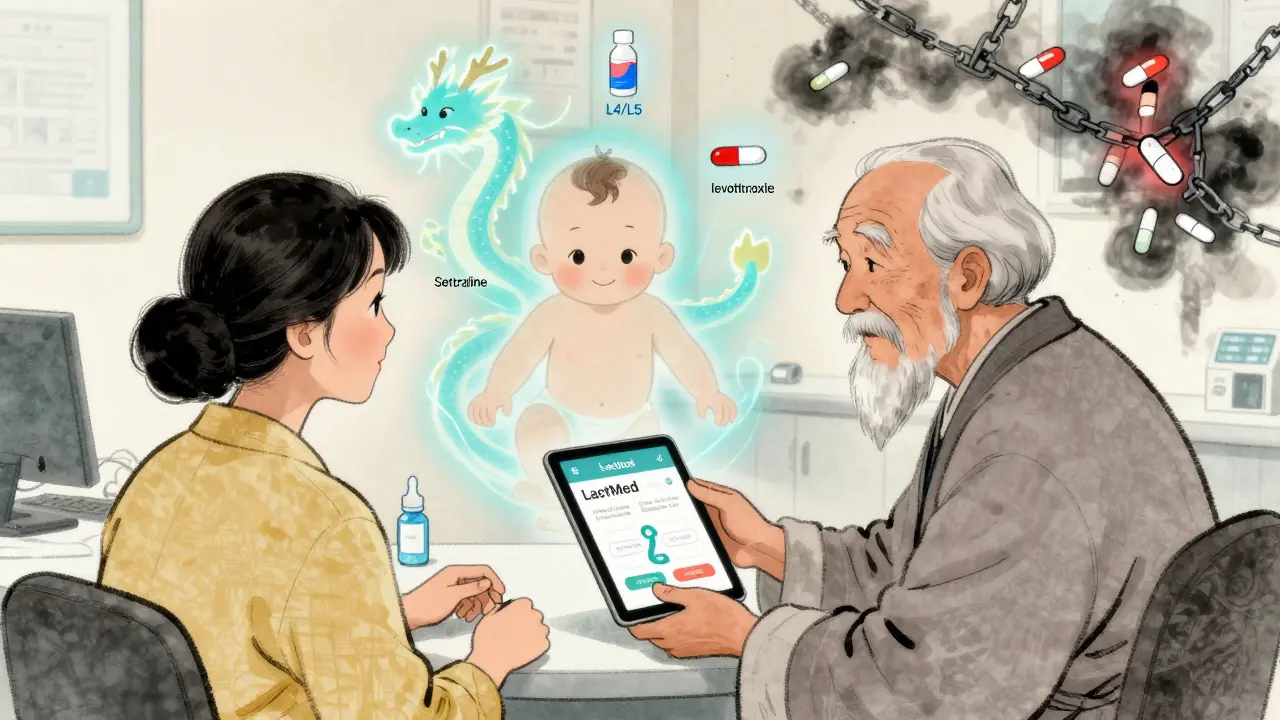
Don’t rely on Google or advice from well-meaning friends. Use science-backed tools:- LactMed (NIH): Free, online, updated daily. Covers over 4,000 drugs, 3,500 with infant exposure data. Used by over 1.2 million people a year. It’s technical, but you can search by drug name and get clear risk ratings.
- Medications and Mothers’ Milk by Dr. Hale: The gold standard for clinicians. Uses the L1-L5 system and gives practical advice. Updated every two years.
- MotherToBaby: A free service by OTIS. Call or chat with specialists who answer breastfeeding medication questions. They handle 15,000 inquiries a year.
- LactMed On-the-Go app: A mobile version of LactMed. Downloaded over 45,000 times since 2023. Great for quick checks at the pharmacy or doctor’s office.
Many doctors don’t know these resources exist. A 2021 survey of 500 lactation consultants found that 78% saw at least one mother per month who was wrongly told to stop breastfeeding because of a medication. That’s not just sad-it’s preventable.
What About Herbal Supplements and CBD?
LactMed now includes over 350 herbal products and 200 dietary supplements. But here’s the problem: most haven’t been studied in breastfeeding women. St. John’s Wort? It can cause irritability and colic in babies. Chamomile? Safe in tea, but concentrated extracts? Unknown. CBD? No data on long-term effects. The FDA doesn’t regulate supplements the way it does drugs. If you’re taking them, assume they’re risky until proven otherwise.What’s Changing in the Next Few Years
The field is moving fast. In 2022, the FDA urged drug makers to include breastfeeding women in clinical trials. Right now, only 12 of the 85 FDA-approved biologics (like Humira or Enbrel) have enough data to be considered safe. That’s changing. The InfantRisk Center’s MilkLab study has measured actual drug levels in breast milk from over 1,250 mothers. They’ve published 15 papers since 2018. And by 2030, experts predict we’ll be using genetic testing to predict exactly how much of a drug your baby will get-based on your DNA. That’s personalized breastfeeding pharmacology.For now, the message is simple: don’t stop breastfeeding because you’re on medication. Talk to your doctor. Check LactMed. Use the right timing. And remember-your baby gets more from your milk than just nutrients. They get protection, comfort, and connection. That’s worth protecting.
Can I take painkillers while breastfeeding?
Yes. Acetaminophen and ibuprofen are both classified as L1-safest for breastfeeding. They pass into milk in tiny amounts and are safe for newborns. Avoid aspirin in high doses or long-term use, as it can affect your baby’s blood and stomach. Always use the lowest effective dose for the shortest time.
Is it safe to take antidepressants while breastfeeding?
Yes, many are. Sertraline is the most studied and preferred option-it has very low transfer into milk and no reported side effects in infants. Fluoxetine is also safe but has a long half-life, so it can build up in your baby’s system. Avoid paroxetine and citalopram unless necessary. Always monitor your baby for sleepiness or irritability. The benefits of treating your depression usually outweigh the minimal risks.
Do antibiotics affect my baby’s gut health?
Some antibiotics can cause loose stools or diaper rash in babies, but this is usually mild and temporary. Penicillins and cephalosporins are L1 and don’t significantly alter gut flora. Even metronidazole and clindamycin (L2) are considered safe. If your baby develops diarrhea, it’s more likely from the infection you’re treating than the antibiotic. Probiotics may help, but aren’t always needed.
Should I pump and dump after taking medication?
Almost never. Pumping and dumping doesn’t speed up drug clearance from your body-it just removes milk that already contains the drug. The drug leaves your system through your liver and kidneys, not your breasts. Unless you’re on a drug that’s L4 or L5 (which are rare), there’s no benefit to dumping. Timing your dose after feeding is far more effective.
What if I need a medication that’s not safe for breastfeeding?
If a medication is L4 or L5, your doctor can often switch you to a safer alternative. For example, if you need an anticoagulant, warfarin is safe (L1) while heparin is even safer. If no alternative exists, temporary interruption of breastfeeding may be recommended-but this is rare. In most cases, you can still breastfeed with careful monitoring. Never stop without talking to a specialist or using LactMed first.






OMG I was so scared to take my Zoloft after my baby was born 😭 I thought I had to quit breastfeeding... then I found LactMed and cried happy tears. Sertraline is L1?? YES. I’m still nursing my 10-month-old and my mental health is stable. You’re not a bad mom for needing help. 💕
Oh please. This is all Big Pharma propaganda. If drugs were really safe, why do they hide the long-term studies? My cousin’s kid developed autism after she took ibuprofen while nursing. Coincidence? I think not. 🤔
They’re lying. The FDA knows these drugs cause ADHD and autism but they don’t want you to know. I saw a whistleblower video on Telegram - they’re flushing our babies’ brains with chemicals through breast milk. 🚨 I stopped nursing after 3 days. My baby’s fine now. 😷
Just to clarify - molecular weight under 200 Da = easier transfer, but that doesn’t mean high infant dose. Plasma protein binding >90% = negligible milk transfer. Also, ion trapping affects weak bases like fluoxetine more than sertraline. LactMed’s data is gold - always cross-check with the InfantRisk Center. No guesswork.
i just wanted to say… you’re doing amazing. even if you’re scared, even if you’re tired, even if you’re on meds - you’re still giving your baby the BEST. i nursed my twins while on antidepressants and they’re both 12 now and thriving. you got this. ❤️
So let me get this straight - you’re telling me it’s safe to take antidepressants while breastfeeding but we’re not allowed to know the full toxicology? This is classic. They suppress the data. The WHO has been compromised. You think your baby’s fine? Wait till he’s 8 and can’t focus in school. I told my sister not to nurse after SSRIs - she listened. Her kid’s a genius now.
Medication is a crutch for modern motherhood. Nature didn’t design women to be chemically dependent while nursing. You think your serotonin levels are your own? They’re being manipulated by corporations who profit from your guilt. Stop taking pills. Eat clean. Meditate. Breastfeed without chemicals. That’s real motherhood.
My OB told me to stop nursing when I was prescribed amoxicillin. I went to LactMed myself and laughed. L1! I’m so glad I didn’t listen. My daughter’s 3 and has never had an ear infection. Trust the science, not the doctor who Googled it 5 minutes before your appointment 😅
Wait, so you’re saying CBD is risky but ibuprofen is fine? But CBD is natural, right? I’m confused. I took CBD oil while nursing and my baby slept 8 hours straight. Isn’t that good? Maybe the L-scale is outdated. Maybe we need a new system.
This is such a helpful breakdown. I’m a new mom on levothyroxine and was terrified. Seeing it’s L1 made me feel so much better. I also started timing my doses after night feed - game changer. My baby’s sleeping better and I’m not anxious anymore. Thank you for sharing this!
so i took tramadol for 3 days after c-section and my baby was like a zombie 😴 i didn’t know it was risky. now i know to avoid it. thanks for the heads up. also… pump and dump is a myth? mind blown. i’ve been dumping for weeks 😅
Thank you for this comprehensive and calm explanation. In my country, many mothers are told to stop breastfeeding unnecessarily. This kind of evidence-based information is rare and deeply appreciated. The L1-L5 system is a gift to new parents. May more doctors learn from it.
CBD IS A CURE ALL 😍 I took it for anxiety and my baby smiled more! The government hides this because they make money off antidepressants 💊💸 I’m not scared anymore. I’m a rebel mom now. 🌿👶 #FreeTheMilk
my sister was told to stop nursing because of her blood pressure med. she found lactmed, switched to labetalol (l1), and kept going. her kid’s now 5 and in kindergarten. don’t let anyone scare you. you know your body. check the data. fight for your milk.
It’s not about whether the drug passes into milk - it’s about whether the infant’s immature liver can metabolize it. Most mothers don’t understand pharmacokinetics. That’s why they panic. The real issue is the lack of education. The system is broken. We need mandatory lactation pharmacology in med school. Not just for OBs - for all doctors.