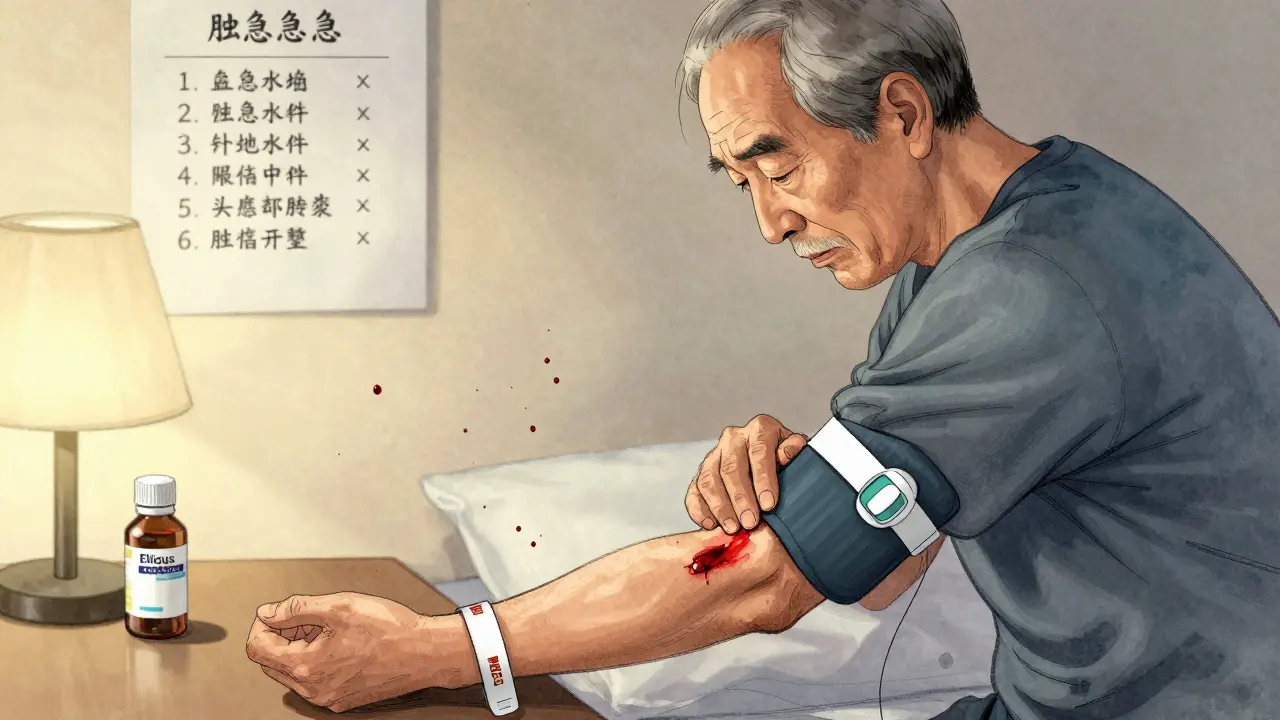
Blood Thinner Emergency Checker
Check Your Bleeding Symptoms
This tool helps you determine if your symptoms require immediate emergency care. Based on clinical guidelines for blood thinners like warfarin, Eliquis, Xarelto, and others.
Results will appear here
After checking your symptoms, this area will show whether you need emergency care
Taking a blood thinner can feel like walking a tightrope. On one side, you’re protected from deadly clots that could cause a stroke or heart attack. On the other, you’re at higher risk for bleeding - sometimes in ways that seem harmless but could be dangerous. The key isn’t to avoid bleeding altogether - that’s impossible. It’s to know when to act and when to wait.
What Blood Thinners Do - and What They Don’t
Blood thinners, also called anticoagulants, don’t actually make your blood thinner. They slow down the clotting process. Common ones include warfarin (Coumadin), apixaban (Eliquis), rivaroxaban (Xarelto), dabigatran (Pradaxa), and heparin. These drugs are prescribed for conditions like atrial fibrillation, deep vein thrombosis, or after a pulmonary embolism. Studies show they cut stroke risk by 60-70% in people with atrial fibrillation. But every time you take one, you’re trading a small risk of clotting for a slightly higher risk of bleeding.That trade-off is why so many people panic at the first sign of a nosebleed or a bruise. But here’s the truth: most bleeding from blood thinners isn’t an emergency. About 52% of ER visits by people on anticoagulants are for what doctors call “nuisance bleeding” - minor cuts that take longer to stop, occasional nosebleeds, or bleeding gums. These are annoying, not life-threatening. The real danger comes when bleeding can’t be controlled - or when it’s happening inside your body where you can’t see it.
When Bleeding Is an Emergency
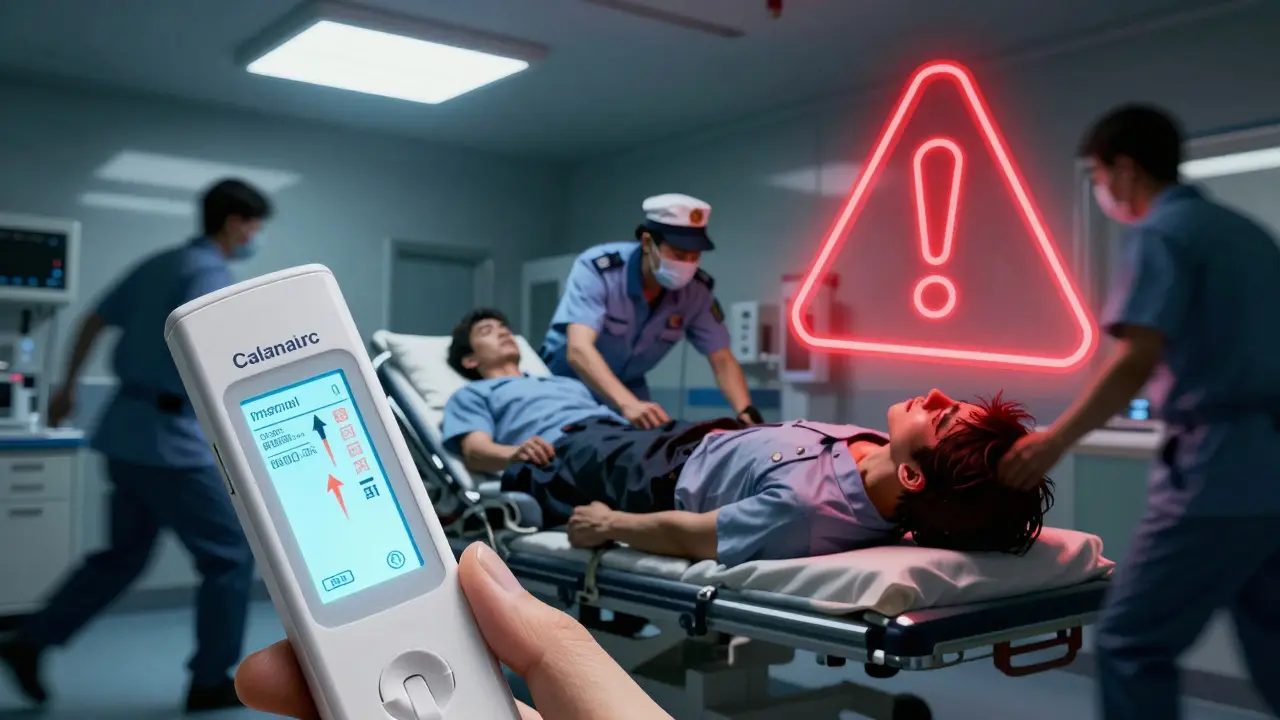
If you’re on a blood thinner, these signs mean you need to go to the ER right now:- **Vomiting blood** or coughing up blood - bright red or dark, coffee-ground-like material
- **Blood in your urine** - pink, red, or brown color
- **Black, tarry stools** - this means bleeding in your stomach or intestines
- **A nosebleed that lasts more than 30 minutes** despite firm pressure
- **A head injury**, even if you feel fine - internal bleeding in the brain can take hours to show symptoms
- **Sudden, severe back or abdominal pain** - could signal bleeding behind the abdomen
- **Dizziness, fainting, or extreme fatigue** - signs your body is losing too much blood
- **Shortness of breath or chest pain** - could mean bleeding into the lungs or heart area
- **Unexplained swelling or pain in a joint** - bleeding into the joint space
These aren’t guesses. They’re red flags backed by clinical data. For example, intracranial bleeding - bleeding in the brain - happens in 0.2-0.5% of blood thinner users each year. But when it does, the death rate is 40-50%. And it doesn’t always come with a headache. Sometimes, it just shows up as confusion, weakness on one side, or trouble speaking.
What to Do During Minor Bleeding
Not every cut or nosebleed needs an ambulance. Here’s how to handle the common stuff safely at home:- **For cuts**: Apply firm, direct pressure for at least 10 minutes - no peeking. Elevate the area. Don’t use hydrogen peroxide or alcohol; they delay healing.
- **For nosebleeds**: Pinch the soft part of your nose (not the bridge) and lean slightly forward. Hold for 10-15 minutes. If it’s still bleeding after 30 minutes, go to the ER.
- **For gums**: Bite down on a damp tea bag. The tannins help clotting. Avoid rinsing or spitting for an hour.
- **For bruising**: Apply ice and rest. Large, unexplained bruises - especially if they grow or hurt - should be checked.
Most minor bleeding stops within 5-7 minutes with proper pressure. In someone not on blood thinners, it usually stops in 2-3 minutes. That extra time doesn’t mean something’s wrong - it means the medication is working. But if pressure doesn’t help after 15 minutes, don’t wait. Call 911 or go to the ER.
Why Stopping Your Medication Is Riskier Than the Bleeding
A lot of people panic when they bleed and stop their blood thinner on their own. That’s one of the biggest mistakes you can make.Research from the Michigan Anticoagulation Quality Improvement Initiative shows that 68% of patients who stopped their medication after minor bleeding had a clot-related event - like a stroke or pulmonary embolism - within 30 days. In contrast, only 12% of those who kept taking their drug under medical supervision had the same problem.
The European Heart Journal found that stopping your blood thinner for even a few days can increase your stroke risk by 300% in the first week. Your body starts forming clots again within 24-48 hours of skipping a dose. That’s faster than most people realize.
If you’re worried about bleeding, call your doctor. Don’t stop. Your provider can adjust your dose, check your blood levels, or give you tips to reduce bleeding without stopping the drug entirely.
New Tools Are Making Bleeding Safer
The good news? There are better tools now to manage bleeding emergencies.Andexanet alfa (Andexxa) is a reversal agent approved in 2023 that can stop bleeding from apixaban and rivaroxaban in under an hour - down from 3-4 hours before. It’s not a magic fix, but it’s a game-changer in the ER.
Another drug, ciraparantag, is in late-stage trials and could reverse all types of blood thinners - even heparin and warfarin - within minutes. If approved in 2024 as expected, it could become standard in emergency rooms by 2026.
Also, point-of-care coagulation tests are becoming more common. These quick blood tests tell doctors exactly how thin your blood is in 10 minutes. That means you get the right treatment faster, not just a guess.

What You Can Do Now
You don’t have to live in fear. Here’s what to do today:- **Know your drug**: Is it warfarin, Eliquis, Xarelto? Each has different risks and reversal options.
- **Have a plan**: Talk to your doctor about what bleeding looks like for you. Write it down. Keep it in your wallet or phone.
- **Carry a medical card**: List your medication, dose, and emergency contact. Some pharmacies offer free cards.
- **Use telehealth**: If you’re unsure, call your anticoagulation clinic or primary care provider. Many now offer 24/7 advice lines. You might avoid an ER visit entirely.
- **Track your symptoms**: Keep a simple log - when you bled, how long it lasted, what you did. It helps your doctor spot patterns.
Studies show patients who get structured education reduce unnecessary ER visits by 37% and stay on their medication 33% longer. Knowledge isn’t just power - it’s protection.
Real Stories, Real Lessons
One user on Reddit, u/BloodThinnerAnxiety, went to the ER three times for nosebleeds that lasted 12-15 minutes. After talking to their doctor, they learned how to manage them at home - and stopped going. Another, u/ClotSurvivor, stopped their blood thinner after a bad cut. Two weeks later, they had a pulmonary embolism. “Don’t be like me,” they wrote.These aren’t rare cases. A 2023 survey of over 1,200 people on blood thinners found that 61% had visited the ER for bleeding concerns - and 43% of those turned out to be non-emergencies. Most could’ve been handled with a phone call.
It’s not about being brave. It’s about being smart. Bleeding doesn’t always mean disaster. But ignoring the real danger signs? That’s when things go wrong.
Can I still take aspirin or ibuprofen while on a blood thinner?
No - not without talking to your doctor. Aspirin and ibuprofen can increase bleeding risk even further. Even occasional use can be dangerous. Acetaminophen (Tylenol) is usually safer for pain relief, but always check with your provider first.
How long should I apply pressure to a cut?
At least 10 minutes - no peeking. Many people check after 3 or 5 minutes and think it’s not working. But clotting takes time, especially on blood thinners. Keep pressure firm and steady. If it’s still bleeding after 15 minutes, go to the ER.
Is it normal to bruise easily on blood thinners?
Yes - mild bruising is common. About 25-30% of people on anticoagulants notice more bruising. But if bruises are large, painful, appear without injury, or keep growing, get them checked. That could signal internal bleeding.
Should I get a medical ID bracelet?
Yes - especially if you’re on warfarin or have a history of bleeding. In an emergency, paramedics and ER staff need to know you’re on a blood thinner immediately. A simple bracelet can save your life.
Can I drink alcohol while on blood thinners?
Moderation is key. Heavy drinking increases bleeding risk and can interfere with how warfarin works. For most people, one drink a day is fine - but check with your doctor. If you’re on DOACs like Eliquis or Xarelto, alcohol is less risky, but still not recommended in large amounts.
What should I do if I fall and hit my head?
Go to the ER - even if you feel fine. Internal bleeding in the brain can take 24-72 hours to show symptoms. Symptoms might be subtle: confusion, dizziness, nausea, or trouble speaking. Don’t wait. Get scanned.
Can I still have dental work or surgery?
Yes - but you need to plan ahead. Never stop your blood thinner without your doctor’s approval. Many procedures can be done safely with your medication still on board. Your doctor and dentist should coordinate care. For major surgery, they might temporarily switch you to a shorter-acting drug.


so i bled outta my nose for 12 mins last week and panicked like a drama queen... turned out it was just dry air and my dumbass didn’t know to pinch the soft part. thanks for this.
the part about not stopping your anticoagulant even when you’re bruising like a rainbow? i wish i’d known that 3 years ago. i stopped warfarin after a gum bleed and ended up with a PE. don’t be me. your doctor’s phone number is better than your fear.
OMG YES 🙌 i’ve been on Xarelto for 2 years and now i carry a little card in my wallet with my med, dose, and doc’s number. my mom even made me a cute one with a cat on it 😸 and guess what? i haven’t gone to the ER once this year. knowledge is power, y’all! you got this!! 💪❤️
the data on intracranial bleeding rates and reversal agents is solid. the real win here is how the article distinguishes between nuisance bleeding and true emergencies. too many people treat every spot of blood like a death sentence. this gives clarity without fearmongering.
lol at people who stop their meds after a nosebleed. you think your body’s gonna be chill for 2 days without anticoagulation? nah. clots don’t care about your anxiety. they just show up uninvited and wreck your life. i’ve seen it. don’t be the guy who texts his doc ‘is this normal?’ after 5 mins of bleeding. wait 15. then call.
you people are so naive. this article sounds like a drug company ad. andexxa? ciraparantag? they’re not magic. they’re expensive, rare, and only in big hospitals. meanwhile, your grandma’s bleeding out in rural Ohio with no access to any of this. this isn’t ‘smart’-it’s privilege disguised as advice.
as an american who’s lived in 5 countries, i can tell you: this is the most balanced, evidence-based guide i’ve ever read on anticoagulants. europeans are still stuck in the warfarin dark ages. we’ve got reversal agents, point-of-care tests, and 24/7 anticoag clinics. this is what healthcare SHOULD look like. stop complaining about cost-start advocating for access.
in india, we don’t have access to Andexxa or ciraparantag... we use tranexamic acid, pressure, and prayer. but still, the advice here is gold: don’t stop meds, know your signs, carry a card. my uncle survived a GI bleed because he had his med list in his pocket. simple things save lives.
you are not alone. i was terrified too. but i learned. i carry my card. i know my signs. i call my clinic before i call 911. and now, i help others do the same. you can do this. one day at a time. you are strong. 💕
bruising like a potato sack? yeah. been on Eliquis 4 years. stopped caring after the 3rd time i looked like i lost a fight with a blender. if it doesn’t hurt or grow, it’s just the price of not having a stroke. peace.
THIS IS WHY AMERICA IS CRUMBLING. they give you a drug that makes you bleed like a stuck pig, then tell you to ‘just know the signs’-but no one’s paying for the ER visits, the reversal drugs, the insurance battles. they want you to be a hero while they profit. wake up. this isn’t empowerment. it’s exploitation.