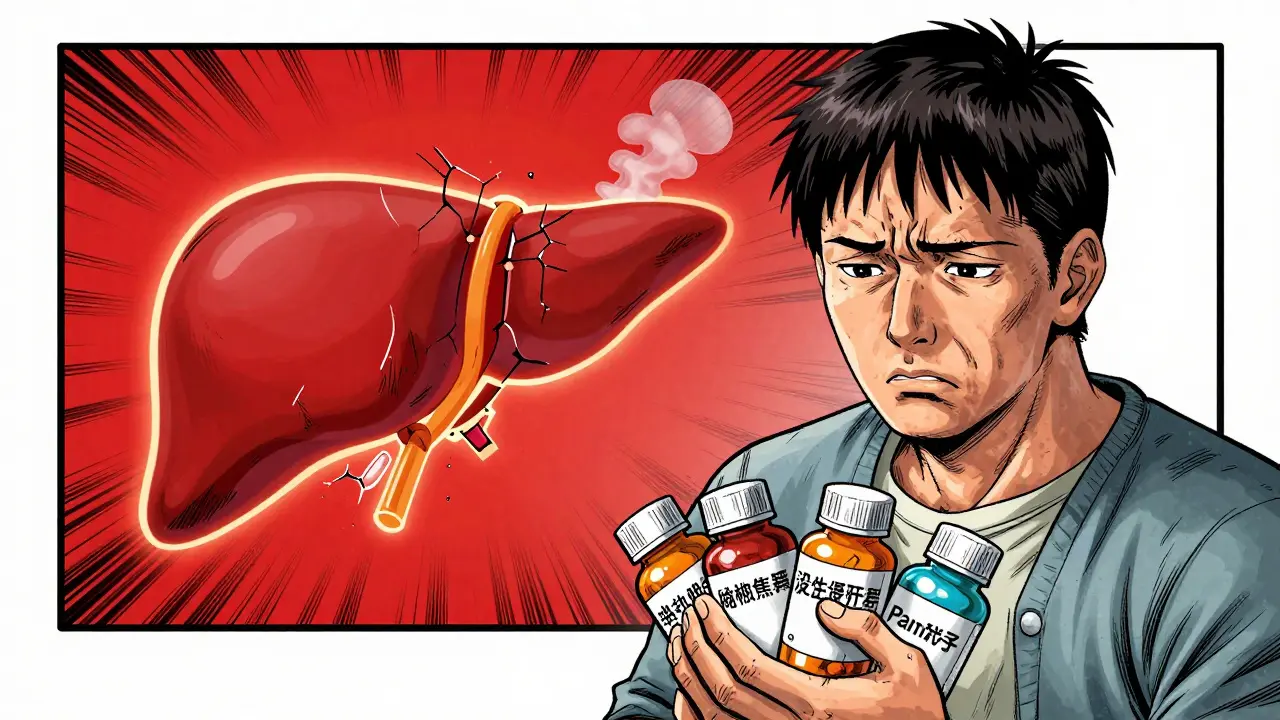
Every year, more than 1.3 million people in the U.S. end up in the emergency room because of mistakes with their medications. Many of these cases aren’t accidents-they’re the result of myths people believe are true. You’ve probably heard them: "OTC meds are harmless," "If one pill helps, two will help more," or "I can stop my antibiotics once I feel better." These ideas sound reasonable. But they’re dangerous. And they’re wrong.
Myth: Over-the-Counter Medications Are Completely Safe
You don’t need a prescription for acetaminophen, ibuprofen, or cold medicine. That doesn’t mean they’re harmless. In fact, acetaminophen (the active ingredient in Tylenol) is the leading cause of acute liver failure in the U.S. The FDA lowered the recommended daily limit to 3,000 mg in 2011 after realizing how many people were accidentally overdosing. That’s just eight extra-strength tablets. Many people don’t realize that acetaminophen is also in dozens of cold and flu products. Taking a painkiller and a nighttime cold remedy together can easily push you past the safe limit-without you even knowing it.
Each year, about 56,000 emergency room visits, 26,000 hospitalizations, and 500 deaths are tied to acetaminophen overdose. It’s not rare. It’s predictable. And it’s preventable. The key? Always read the label. Check every medicine you take for acetaminophen. If it’s listed, count it toward your daily total. Never assume "OTC" means "safe to take however much you want."
Myth: If One Pill Works, Taking More Will Work Better
It makes sense intuitively. If a 200 mg ibuprofen tablet reduces your headache, wouldn’t 400 mg do it faster? No. And it’s not just about wasted money-it’s about real harm. Taking more than 1,200 mg of ibuprofen in 24 hours increases your risk of stomach bleeding by 4.5 times, according to a 2017 study in JAMA Internal Medicine. That’s not a small risk. It’s life-threatening.
The same goes for other pain relievers. Naproxen, aspirin, even combination products like Excedrin-each has a hard ceiling. Exceeding it doesn’t give you better results. It just increases your chance of ulcers, kidney damage, or internal bleeding. Doctors don’t set dose limits as suggestions. They’re based on years of clinical trials, toxicity studies, and real-world outcomes. More isn’t better. It’s riskier.
Myth: You Can Stop Taking Medication Once You Feel Better
This is one of the most common-and deadliest-myths, especially with antibiotics. If you’re on a 10-day course for a sinus infection and you start feeling fine after day three, it’s tempting to toss the rest. But here’s what happens: the bacteria that made you sick aren’t all gone. The strongest ones survive. And now they’re stronger. That’s how antibiotic-resistant superbugs form.
The CDC reports that 30% of antibiotic prescriptions are stopped early. That’s contributing to 35,000 deaths in the U.S. each year from drug-resistant infections. It’s not just antibiotics, either. Blood pressure pills, antidepressants, thyroid meds-stopping them too soon can cause your condition to come back worse. Your body doesn’t know you feel better. It only knows what’s in your bloodstream. If you stop the medicine, the disease comes back. Always finish the full course unless your doctor tells you otherwise.

Myth: Natural or Herbal Products Are Always Safe
"It’s natural," people say. "So it can’t hurt." But natural doesn’t mean safe. St. John’s Wort, a popular herbal remedy for mild depression, can cut the effectiveness of birth control pills by up to 33%. That means unintended pregnancy. Ginkgo biloba, taken for memory, can increase bleeding risk by 50% if you’re on warfarin (Coumadin). Even garlic supplements can thin your blood and interfere with surgery.
The FDA doesn’t regulate herbal products the same way it does prescription or OTC drugs. That means no standard dosing, no proof of purity, and no safety testing for interactions. A 2022 survey by the National Center for Complementary and Integrative Health found that 65% of supplement users believe these products are completely safe. That’s a dangerous assumption. Always tell your pharmacist or doctor what herbs or supplements you’re taking-even if you think they’re harmless.
Myth: Mixing Alcohol with Prescription Medications Is Safe if Done Responsibly
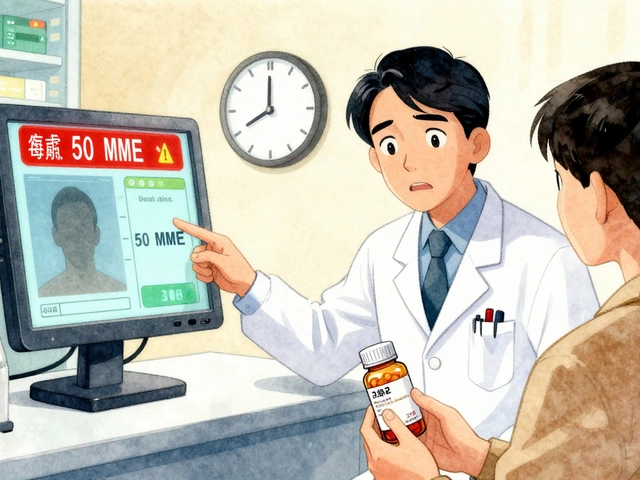
"I just have one glass of wine." That’s what people say. But alcohol doesn’t play nice with many medications. With opioids like oxycodone or hydrocodone, mixing even a small amount of alcohol increases the risk of respiratory depression-your breathing slows down to dangerous levels-by up to 800%. That’s not a typo. That’s 8 times more dangerous.
Alcohol also intensifies the sedative effects of anxiety meds, sleep aids, and even some antihistamines. It can spike your blood pressure when you’re on certain heart medications. And with metronidazole (an antibiotic), alcohol causes severe nausea, vomiting, and rapid heartbeat. The FDA and CDC both warn: if your medication label says "avoid alcohol," don’t test it. One drink can be enough. There’s no safe amount when it’s mixed with the wrong drug.
What Actually Works: Proven Ways to Stay Safe
Knowing the myths is only half the battle. The other half is knowing what to do instead. Here are five practical steps that actually reduce medication errors:
- Do a brown bag review. Every six months, bring every pill, capsule, patch, and supplement you take to your doctor or pharmacist. This includes vitamins, OTC drugs, and herbal teas. Studies show this cuts medication mistakes by 63%.
- Use one pharmacy. If you use multiple pharmacies, they can’t see what else you’re taking. One pharmacy means one full record. They’ll catch dangerous interactions before you even walk out the door.
- Ask for the "Teach-Back" method. After your pharmacist explains your meds, ask them to let you explain it back in your own words. If you can’t say it clearly, they’ll re-explain. This boosts understanding from 42% to 89%.
- Set reminders. Use your phone or a pill organizer. Missing doses is a major reason meds fail. Apps like Medisafe have cut dosing errors by 37% in real-world use.
- Know the 5 Rights. Right patient, right drug, right dose, right route, right time. Before you take any pill, ask: Is this mine? Is it the right one? Is it the right amount? Am I swallowing it? Is it the right time?
Generics Are Just as Good as Brand Names
Many people avoid generic drugs because they think they’re weaker or lower quality. That’s false. The FDA requires generics to have the same active ingredient, strength, dosage form, and route of administration as the brand name. They must be 80-125% bioequivalent-meaning they work the same way in your body. The only differences are in inactive ingredients like color or filler. Those don’t affect how the drug works.
Generic drugs save patients billions each year. And they’re just as safe. A 2023 review by the American Pharmacists Association found no difference in side effects or effectiveness between generics and brand-name drugs across 120 common medications. If your doctor prescribes a generic, take it. You’re not getting second-best-you’re getting the same medicine at a lower price.
What’s Changing in 2026
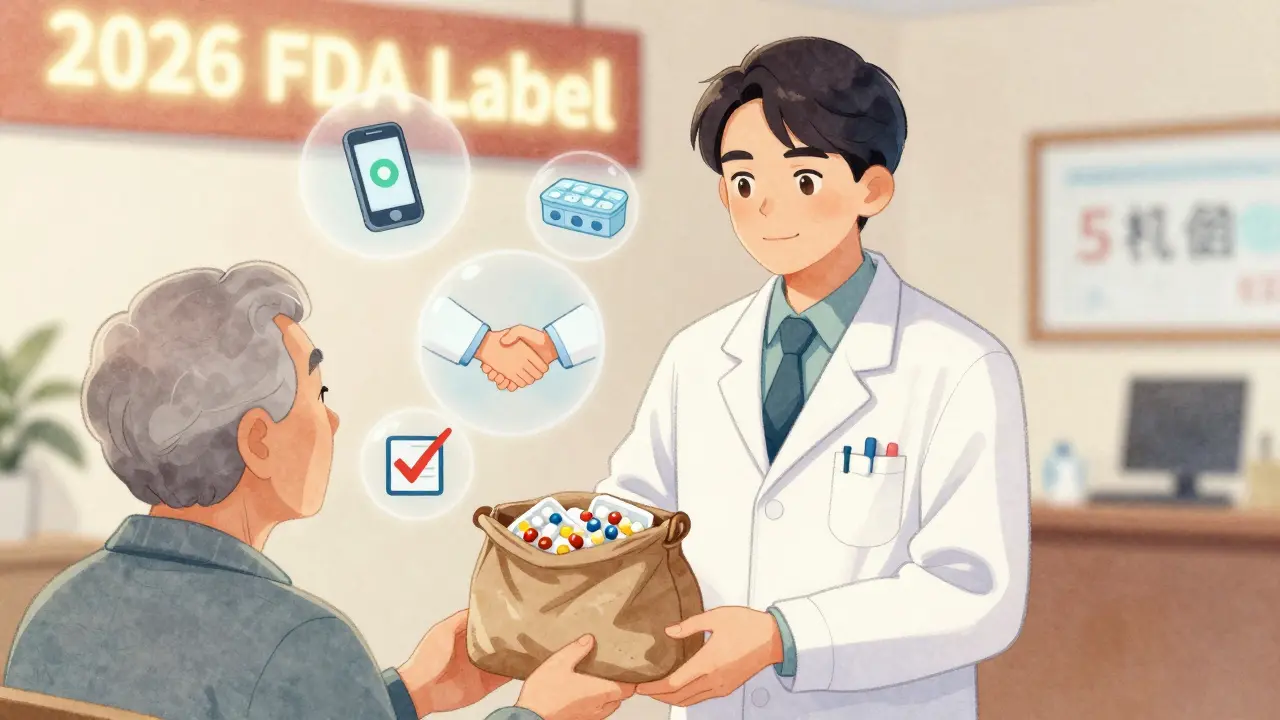
Medication safety isn’t standing still. In 2024, the FDA issued new guidance requiring clearer overdose warnings on acetaminophen packaging. By 2026, these labels will include bold text, icons, and step-by-step instructions on how to avoid liver damage. That’s a direct response to the 56,000 ER visits caused each year.
Pharmacies are also rolling out AI-powered tools. Amazon Pharmacy’s "Ask a Pharmacist" feature has answered over 1.2 million questions since 2023, with 94% of users saying it cleared up their confusion. Apps like Medisafe now alert users if they’re about to take two drugs that shouldn’t be mixed. And Medicare Part D plans now require pharmacists to review five key medication myths during annual medication checks-reaching 15 million seniors each year.
These aren’t just tech upgrades. They’re life-saving changes. And they’re working. Between 2015 and 2022, targeted myth-busting campaigns reduced preventable medication errors by 28%, according to the Institute for Safe Medication Practices.
Final Thought: Your Meds Are Not a Guessing Game
Medication safety isn’t about being perfect. It’s about being informed. You don’t need to memorize every drug interaction. But you do need to ask questions. You need to speak up when something doesn’t make sense. You need to know that "natural" doesn’t mean safe, that "OTC" doesn’t mean harmless, and that stopping your meds early isn’t a shortcut-it’s a risk.
The numbers don’t lie. Millions of people are hurt every year because of myths they believed. You don’t have to be one of them. Take five minutes today. Look at your pill bottles. Write down what you’re taking. Ask your pharmacist one question. That’s all it takes to stay safe.


OTC meds aren't harmless? Shocking. Next you'll tell me water can kill you if you drink too much. At least this article has decent data, though I'd appreciate fewer exclamation points and more citations.
My aunt took 12 Tylenol because she thought it was "just a headache"-she’s on a liver transplant list now. Don’t be her. Read the label. Always. This isn’t advice-it’s survival.
Let me break this down simply: your body doesn’t care if something is "natural" or "over-the-counter." It only reacts to what’s in it. If you’re taking multiple meds, even vitamins, you’re playing Russian roulette with your liver. I’ve seen too many people ignore this. Please, for your own sake-keep a list. Talk to your pharmacist. No shame in asking. Better safe than sorry.
They’re lying to you. The FDA? Big Pharma? They don’t want you to know the truth. Acetaminophen is banned in 37 countries. Why? Because it’s poison. And they’re hiding it behind "scientific studies" paid for by the same companies selling it. You think your "pharmacist" is helping you? Nah. They’re just the sales rep in a white coat. 🤡
So taking two pills instead of one is a myth? What’s next? The sky isn’t blue? Maybe if you stop taking meds entirely, you’ll stop needing them. Just sayin’.
Stop taking meds early = dumb. End of story.
So… we’re supposed to trust the FDA, who approved OxyContin… and now they’re suddenly our moral compass? And generics? Sure, they’re "bioequivalent"… until they’re not. I’ve had two different generics for the same drug-one made me dizzy, the other made me feel like a zombie. So… yeah. "Same active ingredient" my ass.
Thank you for this. I just started my first round of antibiotics and was about to quit after 3 days because I felt fine. Now I’m not. I saved my pills and wrote down every med I take in a notebook. 🙌 I’ll be bringing it to my next appt. This stuff matters.
I used to mix wine with my blood pressure med-didn’t think it mattered. Then my doctor sat me down and showed me the chart: alcohol + lisinopril = risk of fainting, falls, ER trips. I stopped. No drama. Just smarter. Thanks for the reminder that small changes save lives.
It is both tragic and predictable that such basic medical literacy remains so scarce in the general population. The notion that one can intuitively understand pharmacology without professional guidance is not merely misguided-it is a public health failure of epic proportions. The statistics cited are not merely numbers; they are the accumulated weight of preventable human suffering. The five practical steps outlined are not suggestions-they are the bare minimum of civic responsibility when one ingests substances that alter physiology. One does not drive a car without a license; one should not ingest pharmaceuticals without due diligence. The onus is not on the manufacturer to protect the ignorant-it is on the individual to become informed. And yet, here we are. The irony is not lost on those who have spent decades in the medical field: the greatest danger is not the drug-it is the belief that one knows better than the science.