Understanding the Difference Between Side Effects and True Allergies
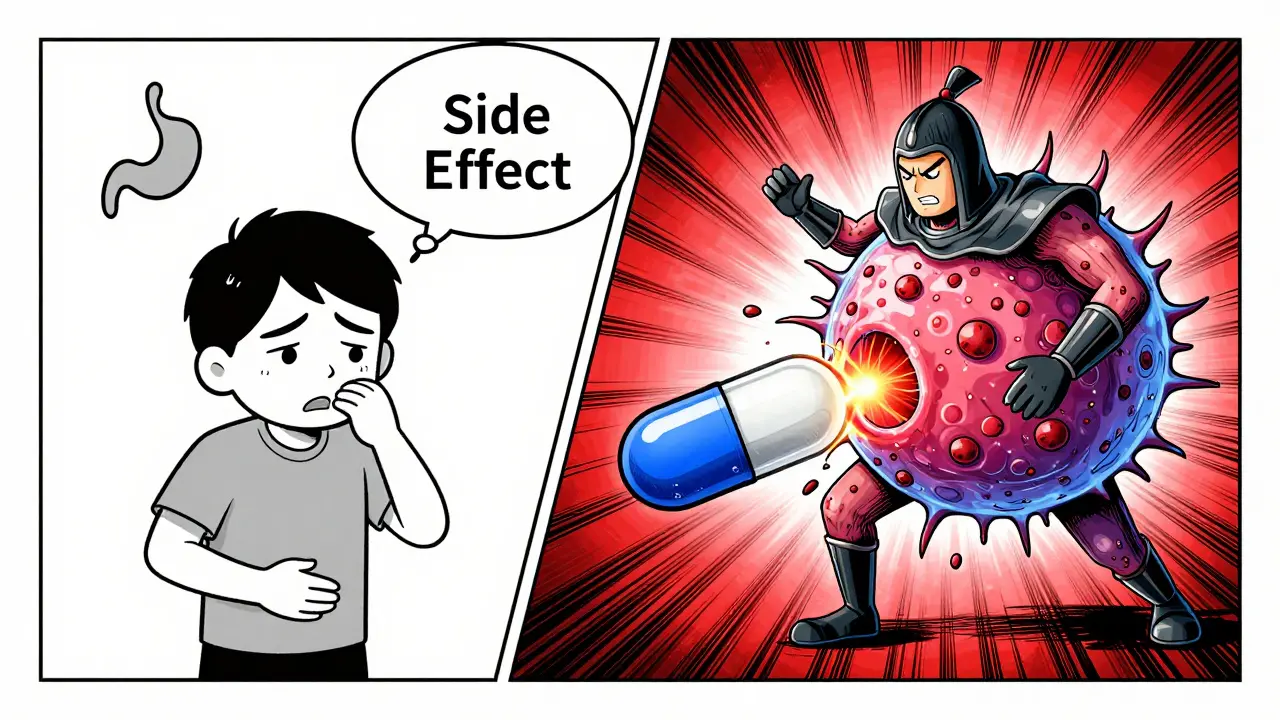
It is startling to realize that most people who believe they have a medication allergy actually do not. In fact, less than 10% of adverse reactions to drugs are true immune-mediated allergies. The rest are side effects or intolerances. This distinction matters because mislabeling a simple stomach upset as an allergy can lead to dangerous treatment choices later in life.
A true drug allergy involves your immune system mistakenly identifying a harmless substance in a medication as a threat. Your body produces antibodies, such as IgE, to fight it. This triggers symptoms like hives, swelling, difficulty breathing, or anaphylaxis. On the other hand, a side effect might be nausea, diarrhea, or a mild headache. These are unpleasant but not life-threatening.
The confusion often starts early. Many patients report being "allergic" to penicillin based on a rash they had as children. Recent studies indicate that many people outgrow this allergy over time. According to data from the Centers for Disease Control and Prevention (CDC), up to 95% of patients labeled as penicillin-allergic can safely receive the drug after proper evaluation. Understanding this difference is the first step toward safer healthcare.
Why Accurate Documentation Matters More Than You Think
Your medical record is only as good as the information inside it. When a doctor writes "penicillin allergy" without details, every future provider assumes you cannot take any beta-lactam antibiotics. This leads to a cascade of problems. You might receive broader-spectrum antibiotics, which are more expensive and contribute to antibiotic resistance.
The National Institute for Health and Care Excellence (NICE) guidelines mandate specific documentation protocols. Providers should record:
- The generic and proprietary name of the suspected drug.
- A detailed description of the reaction (e.g., hives vs. nausea).
- The indication for the drug.
- The exact date and time of the reaction.
- The number of doses taken before the reaction.
- The route of administration.
- Specific drugs or classes to avoid.
Without these details, you risk receiving suboptimal care. For example, if you had a rash but no breathing issues, you might still be able to take certain related antibiotics. But if your chart just says "allergy," doctors will avoid them entirely. This inaccurate documentation leads to higher odds of receiving broad-spectrum antibiotics, which increases the risk of Clostridium difficile infection by 26%, according to research from Massachusetts General Hospital.
Diagnostic Methods: Skin Testing and Oral Challenges
If you suspect a drug allergy, you need proof. Guessing is dangerous. The gold standard for diagnosis involves skin testing and oral challenges under medical supervision. These tests help determine if your immune system truly reacts to the drug.
Skin testing uses major determinants like benzylpenicilloyl polylysine injection. Doctors inject small amounts of the drug into your skin. If a wheal forms, it suggests an IgE-mediated allergy. Minor determinant precursors like benzylpenicillin G are also used. This process is precise and helps rule out false positives.
If skin tests are negative, doctors may proceed with an oral challenge. You take increasing doses of the drug while being monitored. If you tolerate the full dose without reaction, you are likely not allergic. This method has high success rates. In a 2021 study, 95.7% of patients with reported penicillin allergy tolerated the drug after evaluation. This means nearly all of them could safely use penicillin again.
These diagnostics are critical. They prevent unnecessary avoidance of effective treatments. They also reduce healthcare costs. Mislabeling contributes to $1.2 billion in additional annual healthcare costs in the United States alone.

Finding Safe Alternatives When Allergies Are Confirmed
What if you truly are allergic? You still need treatment. The key is finding safe alternatives that work for your condition. For penicillin allergies, common alternatives include:
- Macrolides: Such as azithromycin or clarithromycin.
- Fluoroquinolones: Such as levofloxacin or moxifloxacin.
- Tetracyclines: Such as doxycycline.
However, these alternatives have downsides. Azithromycin averages $25.99 for a five-day course, compared to $4.00 for penicillin. They also have broader spectra, which increases the risk of antibiotic resistance. Some patients experience different side effects, like gastrointestinal distress.
Cross-reactivity is another concern. People with confirmed IgE-mediated penicillin allergy have a low risk of cross-reactivity with third-generation cephalosporins like ceftriaxone. Previous assumptions suggested high cross-reactivity, but modern data shows this is rare. Still, caution is advised. Always consult an allergist before switching classes.
| Antibiotic Class | Common Examples | Average Cost (5-day course) | Key Risks |
|---|---|---|---|
| Macrolides | Azithromycin, Clarithromycin | $25.99 | Gastrointestinal issues, QT prolongation |
| Fluoroquinolones | Levofloxacin, Moxifloxacin | $30.00+ | Tendon rupture, nerve damage |
| Tetracyclines | Doxycycline | $15.00 | Sun sensitivity, tooth discoloration in children |
| Penicillins (if cleared) | Amoxicillin | $4.00 | Low risk if allergy ruled out |
Drug Desensitization: A Last Resort for Critical Cases
Sometimes, there is no alternative. For conditions like neurosyphilis or syphilis in pregnant women, penicillin is the only effective treatment. In these cases, drug desensitization becomes medically necessary.
Desensitization involves administering very small initial doses of the drug, followed by increasingly larger doses every 15-30 minutes. This process takes several hours or days. It must be done under strict medical supervision, typically in an inpatient setting. Success rates exceed 80% for penicillin when performed by experienced allergists.
This procedure temporarily makes your immune system tolerant to the drug. Once you stop taking it, the tolerance wears off. You would need desensitization again if you require the drug in the future. It is not a cure, but it saves lives in critical situations.
The Mayo Clinic emphasizes that desensitization should only be performed when medically necessary and by experts equipped to manage anaphylaxis. Do not attempt this at home. It is a high-risk procedure that requires immediate access to epinephrine and advanced life support.

Treating Acute Reactions: What to Do Immediately
If you experience an acute reaction, act fast. The first step is always to stop taking the offending medication. Then, assess your symptoms.
- Mild symptoms: Hives or itching. Antihistamines like diphenhydramine (Benadryl) can help.
- Moderate symptoms: Swelling or widespread rash. Corticosteroids administered orally or via injection may be needed.
- Severe symptoms: Difficulty breathing, throat tightness, drop in blood pressure. This is anaphylaxis. Use an epinephrine auto-injector immediately and call emergency services.
Epinephrine is the first-line treatment for anaphylaxis. It maintains blood pressure and supports breathing. Delaying treatment can be fatal. Always carry an epinephrine auto-injector if you have a history of severe reactions. Inform friends, family, and coworkers about how to use it.
After the reaction, see an allergist. Document the event thoroughly. Update your medical records. Carry a wallet card listing your specific allergies and reactions. This ensures consistent care across different healthcare systems.
Navigating Healthcare Systems and Record Fragmentation
One of the biggest challenges is fragmented medical records. A 2021 study found that 43% of drug allergy information was missing or inconsistent during care transitions. This happens when you switch doctors or hospitals.
To combat this, be proactive. Ask your providers to verify your allergy status at every visit. Bring your test results if you have been cleared. Use patient portals to review and correct your records. If your chart says "penicillin allergy" but you were cleared five years ago, request an update.
Standardized electronic health record templates are helping. They capture the seven required data points from NICE guidelines. However, adoption varies. Community hospitals are less likely to implement comprehensive programs than academic centers. You must advocate for yourself.
The American Academy of Allergy, Asthma & Immunology offers a "Find an Allergist" tool. It connects you with board-certified specialists. Consider seeing one if you have multiple reported allergies. They can streamline your testing and documentation.
The Future of Medication Allergy Management
The landscape is changing. The CDC updated its guidelines in 2022, expanding recommendations for outpatient skin testing. The American Academy of Allergy, Asthma & Immunology launched the "Choose Penicillin" initiative. Pilot programs show a 65% reduction in unnecessary alternative antibiotic use.
Federal discussions aim to standardize allergy documentation in electronic health records. By 2027, 50% of penicillin allergy evaluations may occur in primary care settings. This shift makes testing more accessible. It also reduces the burden on specialized clinics.
Economically, comprehensive management programs have a 3.5:1 return on investment within 18 months. Reduced antibiotic costs and shorter hospital stays drive this value. Improving evaluation could prevent 50,000 unnecessary broad-spectrum antibiotic courses annually in the United States.
As antibiotic resistance grows, accurate allergy labeling becomes even more critical. Every avoided penicillin dose contributes to the problem. By getting tested, you protect your health and public health.
How do I know if I'm truly allergic to a medication?
You cannot know for sure without medical testing. Symptoms like hives, swelling, or breathing difficulties suggest a true allergy. Side effects like nausea or headache are usually not allergic. See an allergist for skin testing and oral challenges to confirm.
Can I outgrow a penicillin allergy?
Yes, many people outgrow penicillin allergies over time. Studies show that up to 95% of patients labeled as allergic can safely take penicillin after proper evaluation. Regular re-testing is recommended if you have a documented allergy.
What are the risks of taking alternative antibiotics?
Alternative antibiotics like macrolides or fluoroquinolones are often more expensive and have broader spectra. This increases the risk of antibiotic resistance and side effects like Clostridium difficile infection. They may also cause different adverse reactions.
Is drug desensitization safe?
Drug desensitization is safe when performed by experienced allergists in monitored settings. Success rates exceed 80%. However, it carries risks of anaphylaxis and should only be used when no alternatives exist, such as in treating neurosyphilis.
How can I ensure my medical records are accurate?
Ask your providers to document specific reaction details, not just "allergy." Carry a wallet card with your verified allergies. Review your electronic health records regularly and request corrections if outdated information remains.
What should I do if I have a mild reaction to a new drug?
Stop taking the medication and contact your doctor. Mild reactions like rashes may not indicate a true allergy. Your doctor can advise whether you need antihistamines or further testing. Do not ignore symptoms.
Are cephalosporins safe for people with penicillin allergies?
For most people with confirmed IgE-mediated penicillin allergy, the risk of cross-reactivity with third-generation cephalosporins is low. However, caution is advised. Consult an allergist before using cephalosporins to assess individual risk.
Why is accurate allergy documentation important for public health?
Inaccurate documentation leads to unnecessary use of broad-spectrum antibiotics. This drives antibiotic resistance, making infections harder to treat. Correct labeling ensures appropriate use of narrow-spectrum drugs like penicillin, preserving their effectiveness.



I actually went through the whole skin testing process last year because my chart said I was allergic to penicillin since I was seven. It turns out I just had a stomach bug at the same time as my tonsillectomy. Getting cleared was such a relief, honestly. Now I can take amoxicillin for ear infections without needing those super expensive alternatives that wreck my gut.
Look, the clinical data on IgE-mediated responses is pretty clear-cut here. The issue isn't really the biology, it's the bureaucratic inertia in EHR systems. We are seeing a massive cascade of suboptimal therapeutic interventions because providers are too lazy to dig into the primary source documentation. It's a systemic failure of protocol adherence, plain and simple.
This is all part of the big pharma push to keep us dependent on their expensive drugs. They want you to believe you're allergic so they can sell you the $30 pills instead of the cheap ones. Don't let them trick you into trusting these 'allergists' who are just paid shills for the medical industrial complex. Wake up people.
I hate when doctors just write 'allergy' without details 😡 It happened to me with sulfa drugs and now I have to take antibiotics that make me throw up every single time. Why is our healthcare system so broken?? It's literally making us sick instead of helping us. So frustrating and scary when you need real help :(
You know what? You guys are all missing the point entirely. The real problem is that we've become a society of cowards who can't handle a little side effect. Nausea isn't an allergy, it's life. Stop whining about headaches and start building some actual resilience or we'll never get anywhere. Typical weak mindset.
omg this is so helpful!! i always thought i was allergic to penicillin but after reading this im gonna ask my doctor about getting tested. its crazy how many people just assume they cant take it. thanks for sharing this info, it makes me feel like i have more control over my health now! :)
I think this is a great reminder for everyone to check their records. It’s easy to forget old reactions from childhood. Taking the time to verify can save so much stress later on. Keep up the good work sharing these important health tips.
The lack of standardized documentation protocols within the current healthcare framework is an egregious oversight by regulatory bodies. It is imperative that all practitioners adhere strictly to the NICE guidelines to prevent such deleterious outcomes. This negligence is unacceptable.
Let us delve deeper into the epistemological crisis surrounding medical labeling. When we label a reaction as an 'allergy,' we are not merely describing a biological event; we are constructing a narrative identity for the patient that may not align with their physiological reality. The truth is often obscured by the convenience of binary categorization. We must question the very foundations of how we define adverse events. Is it truly an allergy, or is it a misinterpretation of the body's natural resistance mechanisms? The line between intolerance and immunity is blurred by ignorance and haste. One must consider the philosophical implications of being 'cleared.' Does one remain allergic in potentiality even if cured in act? These are the questions that keep me up at night, pondering the nature of medical truth.
Wow!!! That table comparing costs is super interesting!!! I had no idea azithromycin was so much more expensive than penicillin!!! It really shows why accurate testing matters for your wallet too!!! Thanks for breaking it down so clearly!!!!
The statistical correlation between inaccurate allergy documentation and the proliferation of multi-drug resistant organisms is unequivocal. The CDC's data indicates a direct causal link wherein the misuse of broad-spectrum antibiotics accelerates the evolutionary pressure on bacterial pathogens. This is not merely a clinical inconvenience; it is a public health catastrophe driven by administrative incompetence. The economic burden of $1.2 billion annually is a negligible fraction of the true cost when considering long-term morbidity and mortality rates associated with Clostridium difficile infections.