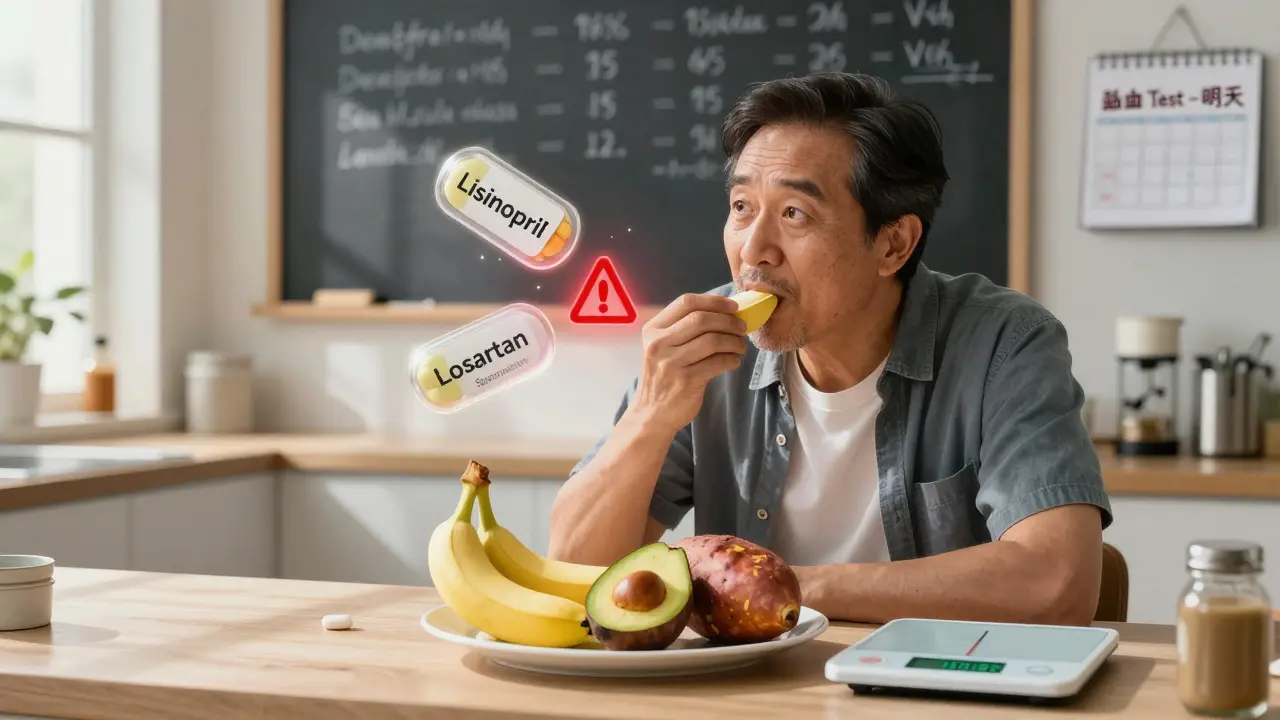
Many people take blood pressure medications to stay healthy, but few realize that what they eat can either help-or seriously hurt-their treatment. If you’re on ACE inhibitors, ARBs, or potassium-sparing diuretics, your diet isn’t just about calories anymore. It’s about potassium. Too little can keep your blood pressure high. Too much can stop your heart. And the line between safe and dangerous is thinner than most people think.
Why Potassium Matters for Blood Pressure
Potassium isn’t just another mineral. It’s a natural blood pressure lifter. When you eat enough of it, your body naturally pushes out extra sodium, which relaxes your blood vessel walls. Studies show that getting 3,500 to 5,000 mg of potassium daily can lower systolic blood pressure by over 5 mm Hg. That’s as good as adding a second pill-without the side effects.Dr. Paul Whelton, who helped shape the American Heart Association’s guidelines, says the effect is strongest in people who eat a lot of salt. For them, boosting potassium can drop systolic pressure by up to 7.2 mm Hg. That’s not minor. That’s the difference between needing two meds and maybe needing just one.
But here’s the catch: your body doesn’t store potassium well. You need to get it every day. And most people don’t. The average American eats only about 2,400 mg daily-less than half the recommended amount. That’s why so many still struggle with high blood pressure, even when they’re on meds.
The Medications That Change Everything
Not all blood pressure drugs play nice with potassium. Three types are the biggest players here:- ACE inhibitors (like lisinopril, enalapril)
- ARBs (like losartan, valsartan)
- Potassium-sparing diuretics (like spironolactone, eplerenone)
These drugs work by blocking hormones that cause blood vessels to tighten and kidneys to hold onto salt. But they also block the kidneys from getting rid of potassium. That’s great if you’re low. Dangerous if you’re already high.
One in three people on these meds ends up with elevated potassium levels within a few weeks of starting them. And if you’re over 65, have kidney trouble, or eat a lot of bananas and sweet potatoes? Your risk jumps even higher.
Which Foods Are High in Potassium?
You don’t need exotic superfoods. Everyday items pack serious potassium:- One medium banana: 422 mg
- One medium sweet potato: 542 mg
- One cup cooked spinach: 839 mg
- Three ounces of salmon: 534 mg
- One avocado: 975 mg
- One cup coconut water: 600 mg
- One cup white beans: 829 mg
These aren’t bad foods. They’re healthy. But if you’re on an ACE inhibitor and you start eating two avocados a day, plus a banana for breakfast, a spinach salad for lunch, and sweet potato fries for dinner? You’re playing Russian roulette with your heart.
Even salt substitutes can be risky. Many are made with potassium chloride. One-quarter teaspoon can add 250-700 mg of potassium. If you’re already on blood pressure meds and you’re trying to cut salt, you might be accidentally overloading your system.
What Happens When Potassium Gets Too High?
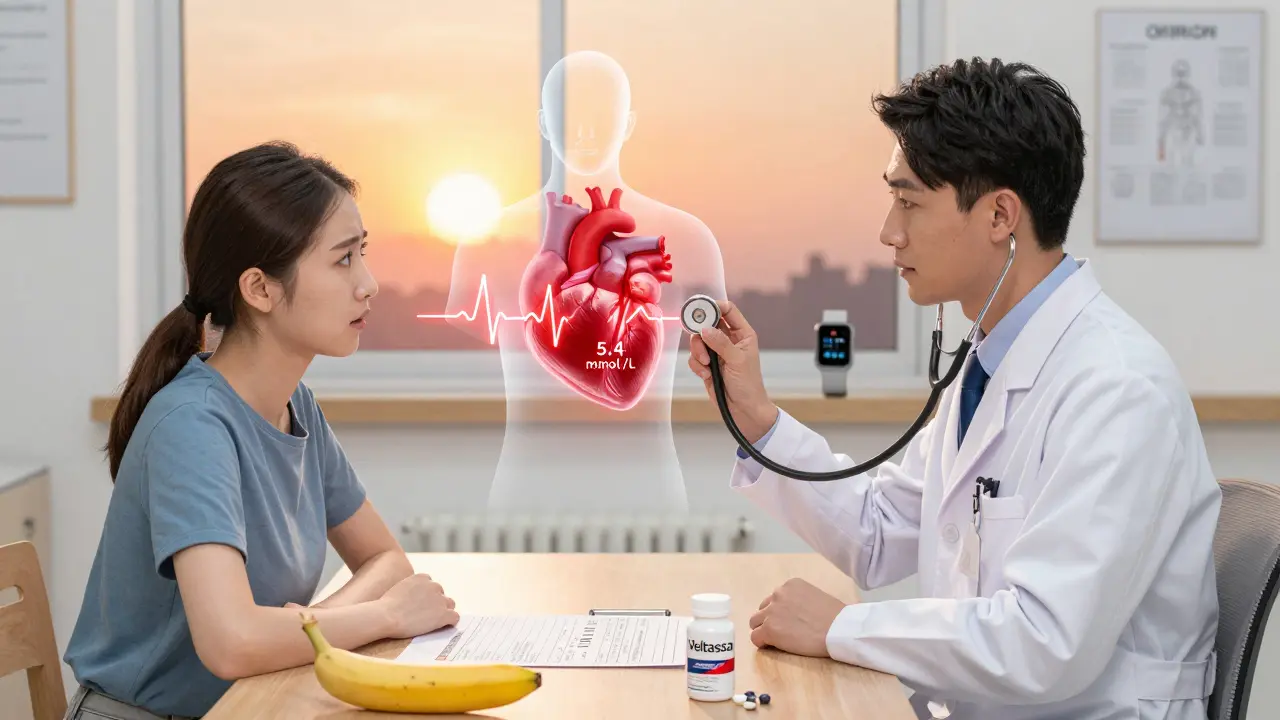
Serum potassium above 5.0 mmol/L is considered hyperkalemia. Above 6.0? That’s an emergency.At first, you might not feel anything. Or you might notice:
- Weakness in your arms or legs
- Numbness or tingling in your fingers
- Fluttering or racing heartbeat
- Nausea or dizziness
These aren’t just “feeling off” symptoms. They’re early signs your heart is starting to misfire. Severe hyperkalemia can trigger ventricular fibrillation-a deadly arrhythmia that stops your heart from pumping. It doesn’t come with warning bells. It just happens.
A 2023 study of 872 hypertension patients found that 19% had symptoms after ramping up potassium without medical advice. Seven percent ended up in the ER. That’s not rare. That’s common.
Is It Safe to Eat These Foods If I’m on Blood Pressure Meds?
Yes-but only if you’re monitored.A 2016 study followed hypertensive patients on ACE inhibitors who increased their potassium intake through food (not supplements) over four weeks. Their blood potassium stayed steady: 4.1, 4.3, then 4.2 mmol/L. No spikes. No danger.
Why? Because whole foods come with fiber, water, and other nutrients that slow absorption. Your body handles them differently than pills or powders.
That’s why potassium supplements are far more dangerous than food. A 2017 study found that 11% of kidney patients on daily potassium chloride supplements developed dangerous hyperkalemia-even without kidney failure. Food? Almost never.
The key is balance. You don’t need to avoid potassium. You need to know how much you’re getting and how your body reacts.
How to Stay Safe
Here’s what actually works:- Get a baseline blood test. Before you change your diet, ask your doctor to check your serum potassium. Normal is 3.5-5.0 mmol/L. Anything above 4.5? Be extra careful.
- Test again after 2-4 weeks. If you start eating more potassium-rich foods, retest. That’s when levels stabilize.
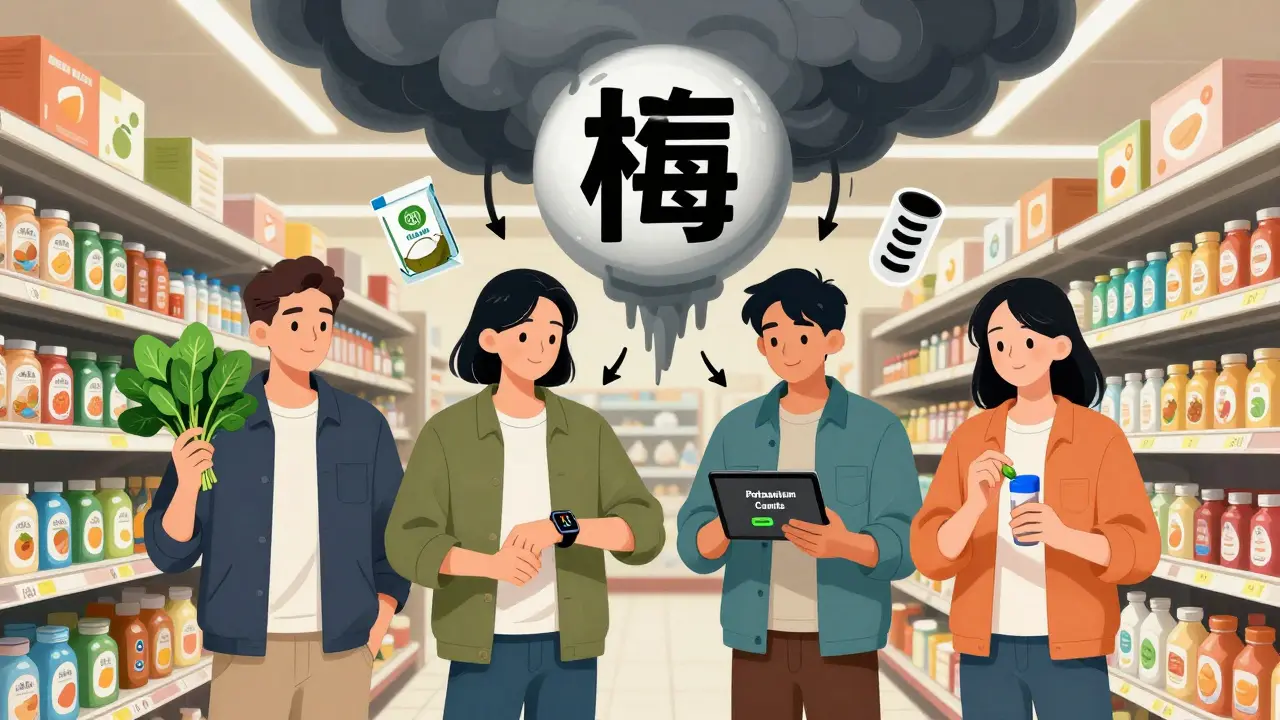
- Track your intake. Use an app like Cronometer or the National Kidney Foundation’s “Potassium Counts” app. It’s free, easy, and shows you exactly how much potassium you’re eating daily.
- Spread it out. Don’t eat five high-potassium foods in one meal. Have one at breakfast, one at lunch, one at dinner.
- Know your alternatives. Swap bananas for blueberries (114 mg per cup). Swap sweet potatoes for white rice (43 mg per cup). Swap spinach for iceberg lettuce (200 mg per cup). You still get nutrients-without the risk.
- Ask about timing. Some doctors recommend taking your ACE inhibitor at night and eating potassium-rich meals earlier in the day. It gives your kidneys time to process the load.
One Reddit user, u/HypertensionWarrior, shared: “I was eating three bananas a day on spironolactone. My potassium hit 5.4. My doctor told me to switch to apples and blueberries. Within two weeks, it dropped to 4.8. No side effects. No panic.”
Who’s at Highest Risk?
Not everyone needs to stress about this. But if you fall into one of these groups, you need to be extra vigilant:- Over age 65
- Have chronic kidney disease (eGFR under 60)
- Have diabetes
- Take more than one blood pressure med
- Are Black American (22% have low potassium intake, compared to 14% nationally)
Black Americans are 30% more likely to have high blood pressure-and part of that is tied to lower potassium intake. That’s why the AHA launched the “Power Up” campaign in early 2023: to help communities get the right foods, not just the right pills.
The New Tools Helping People Manage This
In 2023, the FDA approved a new drug called patiromer (brand name Veltassa). It’s a potassium binder. Think of it like a sponge for excess potassium in your gut. It lets people on RAAS inhibitors keep eating healthy foods without risking hyperkalemia. Clinical trials showed 89% of patients stayed in the safe range.And in 2024, a new smartwatch called Omron’s HeartGuide will start tracking potassium levels continuously. It’s not FDA-approved yet, but early tests show it’s accurate within 0.2 mmol/L. For people who need to stay on the edge of safety, this could be a game-changer.
What to Do Next
If you’re on blood pressure meds:- Don’t panic. Don’t quit your bananas.
- Do ask your doctor for a potassium test.
- Do track your food for a week using an app.
- Do talk about whether you need to swap out high-potassium foods.
Most people can eat a healthy, potassium-rich diet safely. But it’s not a free pass. It’s a partnership-with your food, your meds, and your doctor.
Can I eat bananas while taking lisinopril?
Yes, but in moderation. One banana a day is generally safe for most people on lisinopril with normal kidney function. But if you’re over 65, have kidney disease, or already have a potassium level above 4.5 mmol/L, even one banana a day might push you over the edge. Always get your levels checked before making dietary changes.
Do I need to stop eating spinach and sweet potatoes?
No. These are nutrient-dense foods that help lower blood pressure. The issue isn’t the food-it’s how much you eat and whether your body can handle it. If you’re on an ACE inhibitor or ARB, space them out across meals. Eat one serving per day, not three. And monitor your potassium levels every few weeks when you start eating them regularly.
Is potassium from supplements more dangerous than from food?
Yes, significantly. Supplements deliver a concentrated dose that your body can’t regulate as easily. A 2017 study found 11% of kidney patients on potassium chloride supplements developed dangerous hyperkalemia. No such risk was seen in people who got potassium from food. Stick to whole foods unless your doctor prescribes a supplement.
What if my potassium level is already high?
Don’t panic, but don’t ignore it. If your level is above 5.0 mmol/L, your doctor will likely ask you to cut back on high-potassium foods, avoid salt substitutes, and possibly adjust your medication. Some patients need a drug like patiromer (Veltassa) to bind excess potassium. Never reduce your meds on your own.
How often should I get my potassium checked?
If you’re starting a new blood pressure med or changing your diet, check at baseline, then again at 2 weeks and 4 weeks. After that, every 3-6 months is standard if you’re stable. If you have kidney disease or are over 65, your doctor may want checks every 3 months. Don’t wait for symptoms-they often come too late.


I swear, every time someone writes a post like this, it's just Big Pharma whispering in your ear to keep taking your pills. I went off lisinopril last year and started eating bananas like they're candy-three a day, sweet potatoes, avocado toast for breakfast, lunch, and dinner. My BP? Lower than my ex's excuses. My potassium? Perfect. My doctor? Fired. Sometimes the system just wants you scared so you keep paying.
Oh, so now we're supposed to be afraid of spinach? The same stuff that gave Popeye his strength? I mean, if we're gonna start treating food like a controlled substance, next they'll tell us not to breathe oxygen because it might 'interact' with our meds. I'm just here for the irony: a post about potassium is literally full of potassium-rich foods. The meta is strong with this one.
The fundamental flaw here is the conflation of bioavailability and pharmacokinetics... I mean, yes, whole-food potassium is 'better'-but that's a red herring. The real issue is the RAAS axis modulation and renal tubular handling of cations under ACEi/ARB pressure. You can't just 'spread it out' like it's a buffet-your nephrons aren't sentient. And don't get me started on 'potassium-sparing diuretics'-that's a misnomer. They're potassium-retaining agents. Semantics matter.
I appreciate the nuance in this post. Most people don’t realize potassium isn’t the villain-it’s the unmonitored synergy between diet, meds, and kidney function that’s the real threat. I’ve seen patients on spironolactone go from 4.1 to 6.3 in three weeks because they suddenly started drinking coconut water with every meal. It’s not about fear. It’s about awareness. Track. Test. Adjust. Simple. Not sexy. But life-saving.
This is what happens when Western medicine becomes a cult. You take your pills, you eat your 'healthy' foods, and you forget that real health comes from discipline, not apps. In India, we don't need Cronometer to tell us not to eat too many bananas. We just... don't. Our grandparents didn't have blood tests. They had wisdom. Maybe we should stop trusting algorithms and start trusting tradition.
Let me guess-this whole thing is a cover-up. The FDA approved Veltassa? That’s just a front for the pharmaceutical giants to make us buy another expensive drug so they can keep charging for the ‘solution’ to the problem they created by pushing these meds in the first place. And that smartwatch? It’s tracking your potassium… but who’s accessing the data? Who’s selling it? I’ve seen the documents. This isn’t medicine. It’s surveillance.
I find it deeply concerning, and I must say, profoundly troubling, that we’ve reached a point where the mere act of eating a banana has become a medical risk assessment... I mean, really, is this what progress looks like? We’ve moved from eating food to calculating millimoles per gram... I’ve been on lisinopril for eight years, and I’ve never once thought to measure my avocado intake... I suppose now I must become a nutritionist, a chemist, and a statistician... all before breakfast... It’s exhausting, isn’t it?
I’ve been thinking... what if potassium isn’t the problem? What if it’s the *fear* of potassium? The anxiety? The guilt? The way we’ve turned food into a moral equation-good vs. bad, safe vs. dangerous? We’ve turned the body into a machine that needs constant calibration. Maybe the real illness isn’t high BP... it’s the belief that we can’t trust our own bodies anymore. Maybe the cure is not more apps... but less obsession.
I’m British. We don’t do this. We don’t have apps. We don’t track our avocados. We just eat. If you’re on meds and you’re worried, go see your GP-not your phone. My uncle had hypertension for 40 years, ate bacon and beans every day, and died at 89. He didn’t know what a mmol/L was. He knew his tea was strong and his biscuits were buttery. That’s health. Not numbers. Not apps. Just life.