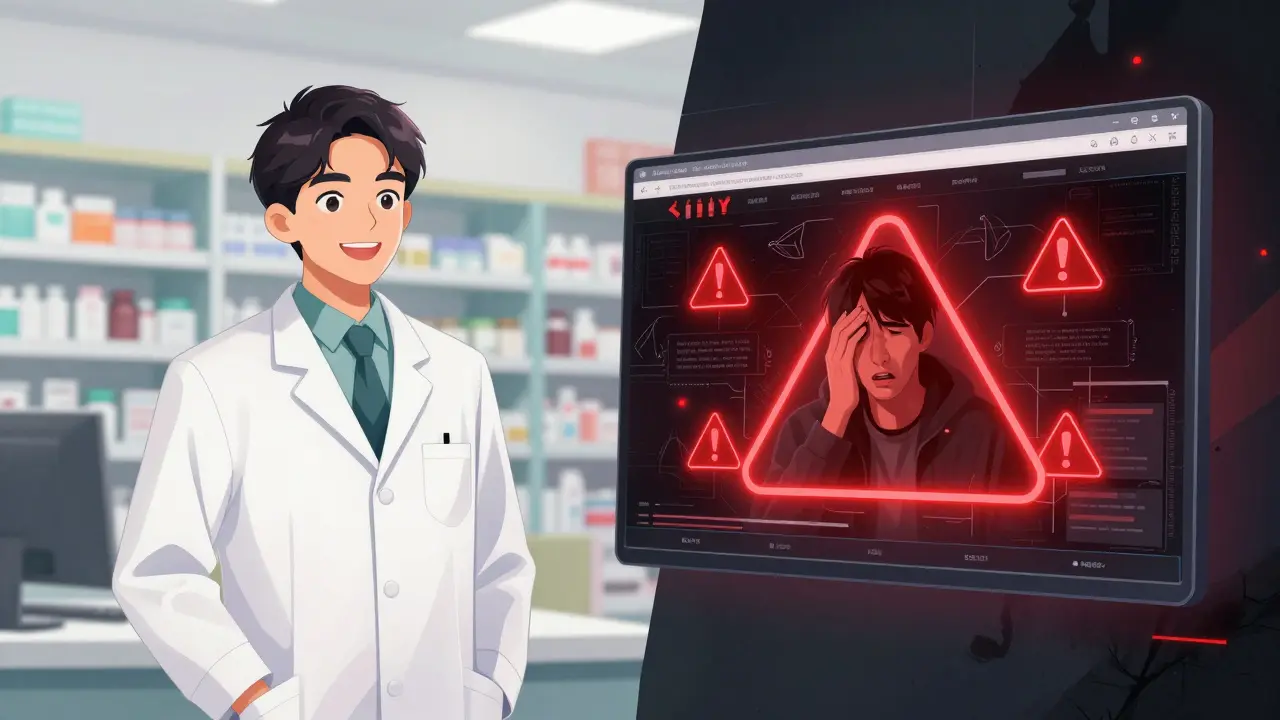
Buying medication might seem like a routine errand, but the rise of digital storefronts has made it surprisingly easy to stumble into a dangerous situation. Imagine paying for a life-saving prescription only to find out the pills are chalk or, worse, contaminated with toxic fillers. This isn't just a rare horror story; the FDA estimates that illegitimate pharmacy operations account for up to 3% of the massive U.S. prescription drug market. When you use an unverified source, you aren't just risking your money-you're gambling with your health.
| Feature | Legitimate Pharmacy | Red Flag Pharmacy |
|---|---|---|
| Prescription Requirement | Always requires a valid script | Offers meds without a prescription |
| Pharmacist Access | Available for consultation | No way to speak with a pro |
| Licensure | Verifiable via State Board/NABP | Claims accreditation but no proof |
| Pricing | Fair market value | "Too good to be true" discounts |
Why Licensure Actually Matters
A license isn't just a piece of paper on the wall; it's a guarantee that the establishment meets strict safety and professional standards. Licensed pharmacies is a regulated healthcare facility that operates under state-mandated frameworks to ensure medication safety, legal compliance, and pharmacist competence. To get that license, pharmacists have to pass grueling tests like the North American Pharmacist Licensure Examination (NAPLEX), where they need a minimum score of 75 out of 150 just to prove they know their stuff.
When a pharmacy skips this process, the risks skyrocket. According to data from the NABP, unlicensed operations are nearly five times more likely to dispense the wrong medication and over eight times more likely to be involved in the diversion of controlled substances. This is where counterfeit drugs enter the picture. Illegitimate pharmacies often distribute fake medications that look identical to the real thing but contain the wrong dosage or dangerous contaminants, turning a simple treatment into a medical emergency.
How to Spot a Fake Online Pharmacy
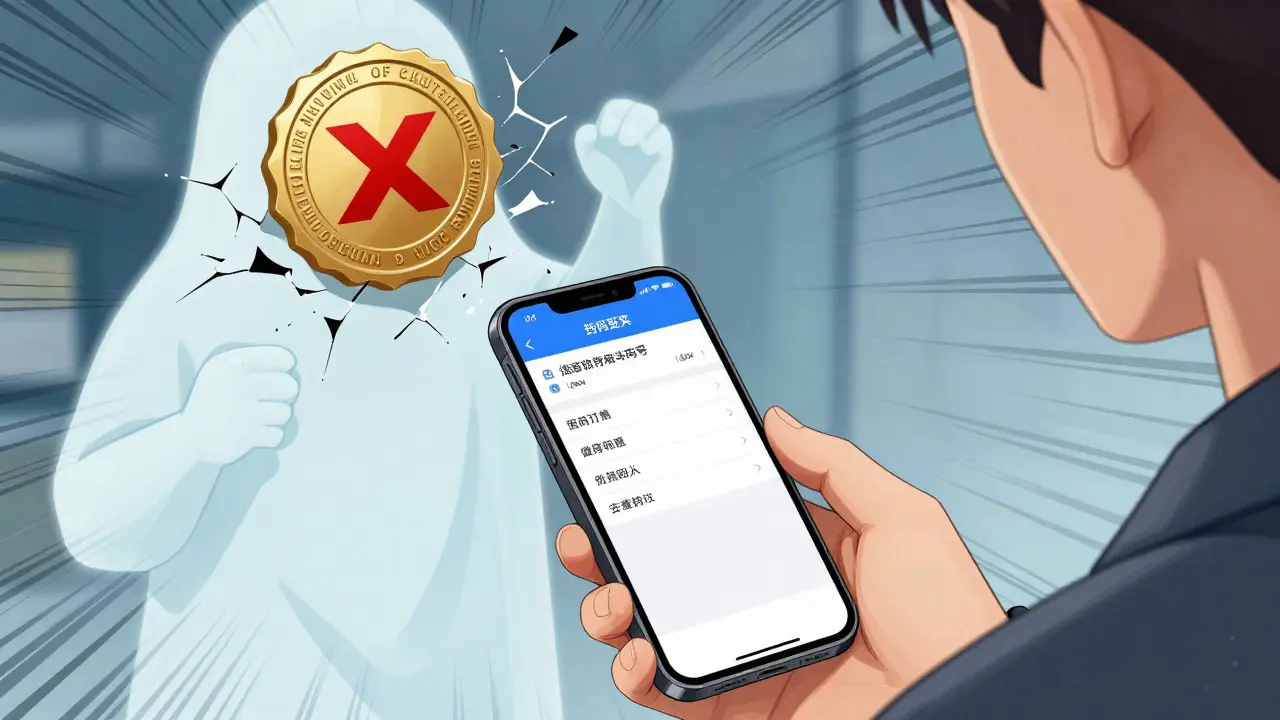
The digital landscape is the wild west of pharmaceuticals. One in four online medication sellers operates without a proper license. While some sites look professional, they often use fake seals of approval to trick you. For instance, a consumer recently lost $850 to a site that displayed a falsified accreditation seal that looked official but meant nothing.
To protect yourself, use the FDA's five-step verification logic. First, ask yourself: does this site require a prescription? If they're selling controlled substances or prescription-only meds without a script, walk away immediately. Second, check their physical presence. Use Google Maps Street View to see if the address listed is actually a pharmacy or just a random residential house or empty lot. Third, look for a way to talk to a pharmacist. In 45 states, having a pharmacist available for consultation is a legal requirement for a reason-you need a human expert to check for drug interactions.
The Tools for Professional Verification
If you want a definitive answer on whether a pharmacy is legit, you need to go to the source. Depending on where you are, there are a few gold-standard tools you can use.
NABP is the National Association of Boards of Pharmacy, a coordinating body for all state pharmacy regulatory authorities in the U.S. Their NABP Verify program provides real-time status updates by integrating directly with state board databases. While it's a powerful tool for professionals, consumers can also use the Verified Internet Pharmacy Practice Sites (VIPPS) program to ensure a website is safe.
For a more localized approach, state boards of pharmacy are your best bet. For example, if you're in California, the Board of Pharmacy has a portal where you can enter a license number. A pro tip here: don't include the prefix in the license number; just enter the digits. In states like Florida, this verification is completely free and instant through the Department of Health website, whereas other states might take up to 30 days to process a written request.
Navigating the Complexity of Multi-State Operations
It's getting more common for pharmacies to ship across state lines. This "telepharmacy" model adds a layer of complexity because the pharmacy must be licensed in every state where it does business. To handle this, many use the Verified Pharmacy Program (or VPP), which allows them to submit a single application for multi-state operations.
As a consumer, if you're ordering from an out-of-state pharmacy, check if they comply with local laws. For instance, as of 2024, pharmacies shipping to California residents must maintain a dedicated 800 number for pharmacist access and follow specific patient-centered labeling requirements. If they can't provide these, they might be cutting corners on their licensure.

Common Pitfalls in the Verification Process
Even when people try to verify their pharmacy, they often miss the red flags. Research shows the average person spends less than three minutes checking a pharmacy's legitimacy. This rush leads to a misunderstanding of license statuses. You might see terms like "inactive" or "administrative suspension" and assume everything is fine because the name is in the system. In reality, an administrative suspension means the pharmacy is legally barred from operating until specific issues are fixed.
Another trap is the "trustworthy look." A professional-looking website with stock photos of pharmacists doesn't equal a license. Always cross-reference the license number on an official government (.gov) or regulatory (.org) website. If the site only provides a link to its own "About Us" page to prove legitimacy, that's a major warning sign.
What should I do if I realize I bought meds from an unlicensed pharmacy?
Stop taking the medication immediately. Do not throw it away in the trash where others could find it, but do not consume any more of it. Contact your primary healthcare provider to explain the situation and ask for a legitimate replacement. You should also report the pharmacy to the FDA's Office of Criminal Investigations to help prevent others from being scammed.
Can I trust a pharmacy if it has a high rating on Trustpilot or Reddit?
User reviews are helpful for customer service insights, but they are not a substitute for legal licensure. Some illegitimate pharmacies use fake reviews or "shill" accounts to build trust. Always verify the pharmacy's license through a state board or the NABP regardless of how many five-star reviews they have.
Why do some pharmacies require a prescription while others don't?
Legitimate pharmacies follow the law, which requires a prescription to ensure a doctor has determined the medication is safe and necessary for your specific condition. Pharmacies that offer "prescription-free" versions of regulated drugs are operating illegally and are likely selling counterfeit or substandard products.
How do I find my pharmacy's license number?
Physical pharmacies usually display their license prominently in the store or near the prescription counter. For online pharmacies, the license number should be listed in their "About" section or footer. If it's not easily findable, simply ask their customer service for it; a legitimate pharmacy will provide it without hesitation.
Is an "active" status always a guarantee of safety?
An active status means the pharmacy has met the current legal and financial requirements to operate. However, you should also check for "disciplinary history" on the state board website. A pharmacy might be active but have several recent warnings for medication errors or safety violations, which is a signal to be cautious.
Next Steps for Safe Medication
If you're unsure about your current pharmacy, start by visiting your state's Board of Pharmacy website. Search for your pharmacy's name and check that the status is "Active" and that there are no major disciplinary actions. If you use an online service, verify it through the NABP's VIPPS program.
For those who prefer the convenience of digital tools, consider using a pharmacy that is integrated with your insurance's prescription benefit manager (PBM). Most major PBMs now require NABP Verify credentials for their network pharmacies, adding an extra layer of professional screening before the pharmacy even reaches your options list.


GOOD LORD! People have no idea how absolutely terrifying this is! I've seen cases where these fake pills literally cause permanent organ damage because they're laced with industrial solvents! It is a complete and utter nightmare out there! Please, for the love of everything, don't just trust a fancy website layout!
Whatever, most of these "red flags" are just bureaucratic hoops that don't actually mean the meds are better. I've bought from overseas sites that were way more reliable than my local CVS which messes up my dosage every other time anyway.
It's honestly a damn shame that we've let our borders get so porous and our systems so weak that we've got to spend our time checking if a pharmacy is actually in this country or some random hole in the wall overseas, because if we just focused on bringing all our manufacturing back to the US and stopped relying on these foreign imports we wouldn't have to worry about some scammer in another hemisphere selling us chalk pills while they laugh all the way to the bank with our hard-earned American dollars!
Um, hello? 🙄 Did we all just ignore the part about the fake seals of approval? I literally saw a site last month that had like five different "certified" badges that were just PNG files you could click through to a dead page! 😱 It's actually insane how people fall for this stuff! 💅
The intellectual laziness of the average consumer is truly breathtaking. You think a .gov site is the only way to verify? Please. If you actually had a baseline understanding of pharmaceutical supply chains, you'd know that the "legitimate" chains are often just as prone to logistical errors as the smaller outfits, making this entire distinction a bit of a facade for those who need a government hand to hold. Most of you are just terrified of a little risk while paying 400% markups for the privilege of "safety." It's honestly pathetic how easily you're steered by fear-mongering statistics.
It's an interesting tension between the need for systemic trust and individual autonomy. We want the convenience of the web, but we're realizing that trust is a currency that's being heavily inflated by bad actors. Just keep a mindful boundary between what is a deal and what is a danger.
One thing to add here for those using the state boards: if you find a disciplinary action, don't panic immediately, but do look at the date. A violation from ten years ago is very different from one that happened last month. Check if the issue was resolved or if it's a recurring pattern of negligence. Being proactive about your health is the best way to ensure a positive outcome!
I think it's important to remember that some people live in pharmacy deserts and have very few options, which is why they turn to online sources. While we must be cautious, we should also advocate for better access to affordable, licensed care for everyone, regardless of their zip code. It's all about finding that balance between safety and accessibility.
For those in regions where the NABP doesn't have a direct equivalent, I suggest looking for pharmacies that are accredited by a recognized national health authority. Always verify if the site has a physical address and a working phone number before placing any order. It's a simple step that filters out the most obvious scams.
The level of detail regarding the NAPLEX scoring is quite fascinating. It demonstrates the rigorous nature of the profession. I believe that by following these verification steps, we can collectively raise the standard of digital healthcare consumption and minimize the risks associated with counterfeit medications.