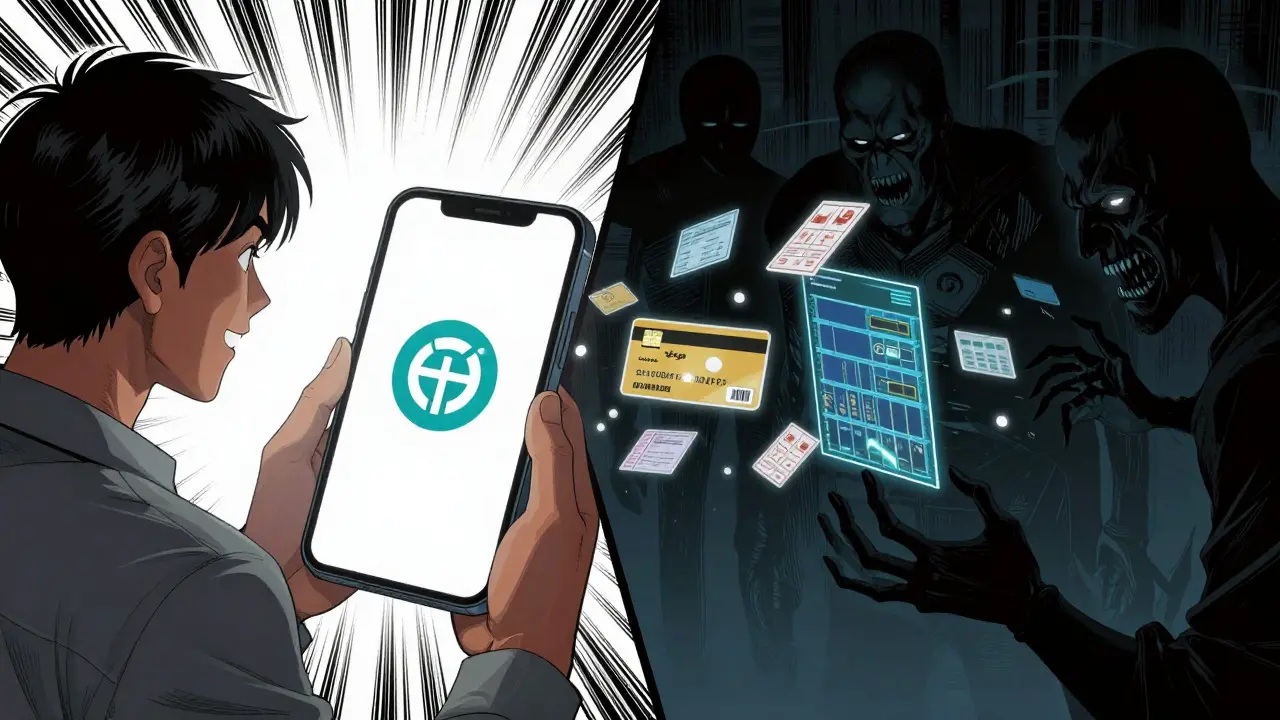
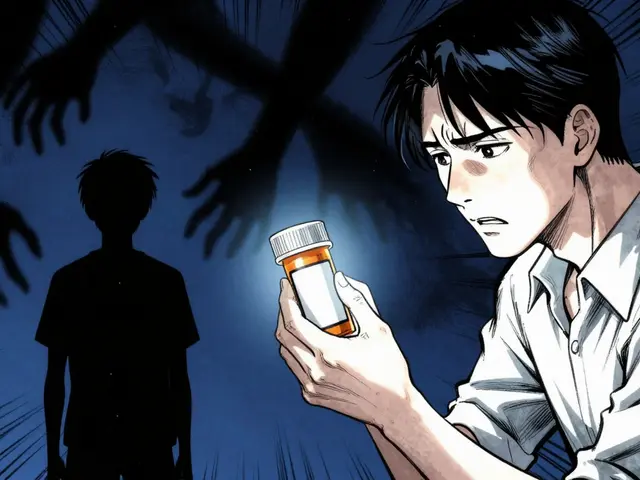
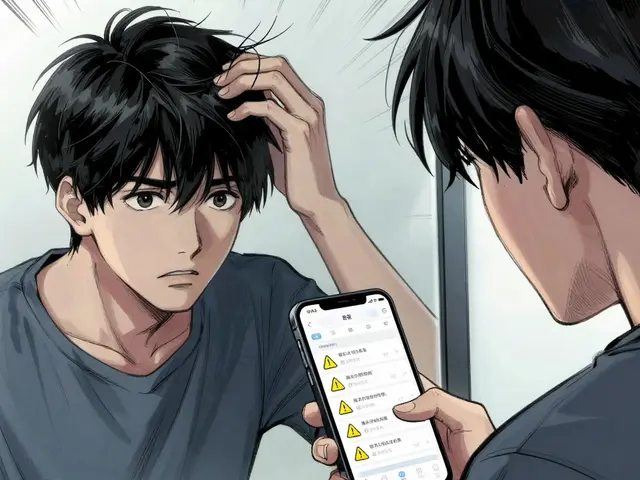
Imagine ordering your regular medication online, only to start receiving spam calls and targeted scam emails about your health conditions within 24 hours. It sounds like a nightmare, but for many, it's a reality. While the convenience of digital healthcare is great, a staggering 96% of websites selling prescription drugs online don't follow the laws meant to protect you. This isn't just about getting the wrong pill; it's about your most intimate data-your medical history, home address, and credit card details-being sold to the highest bidder.
The truth is, the gap between a legitimate digital pharmacy and a dangerous counterfeit is often invisible to the naked eye. You might see a professional-looking logo or a fake "trusted" badge, but behind the screen, your data could be leaking. To stay safe, you need to know exactly what a secure pharmacy looks like and how to spot the red flags before you hit "checkout." Here is how to navigate the digital pharmacy landscape without compromising your privacy.
Quick Wins for Digital Pharmacy Safety
- Check the URL: Look for the .pharmacy domain, which requires a rigorous 47-point verification process.
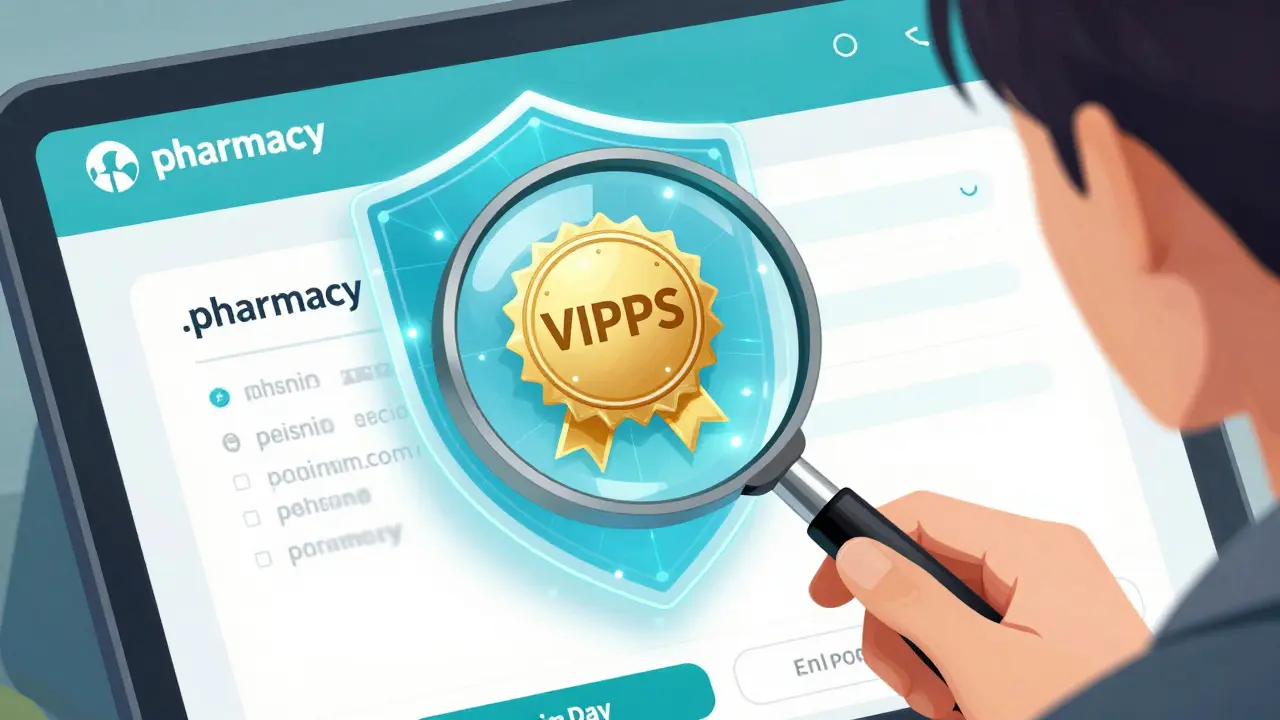
- Verify Accreditation: Look for the VIPPS seal; only a handful of pharmacies nationwide meet these strict standards.
- Demand a Prescription: If a site offers meds with "no prescription needed," it's a scam. Period.
- Use Secure Payments: Avoid payment methods that expose your full financial profile to the vendor.
How to Spot a Legitimate Online Pharmacy
Most people rely on a site "looking professional," but hackers are great at graphic design. To actually protect your online pharmacy security, you need to look for verifiable markers. A real pharmacy isn't afraid to show its credentials. They will provide a physical address and a verifiable license number that you can check against state boards.
One of the most reliable indicators is the .pharmacy Top-Level Domain. Unlike a .com or .net, which anyone can buy, the .pharmacy extension is managed by the National Association of Boards of Pharmacy (NABP). To get this domain, a pharmacy must prove it's licensed in every jurisdiction where it operates. If a site doesn't have this or a similar high-level verification, you're taking a massive risk with your data.
Another gold standard is the Verified Internet Pharmacy Practice Sites (VIPPS) accreditation. As of early 2025, only about 68 pharmacies nationwide hold this distinction. Why does it matter? Because VIPPS-accredited sites have a 98.7% compliance rate with privacy regulations, whereas non-accredited sites hover around a dismal 36.2%.
The Technical Side: What "Secure" Actually Means
When a pharmacy says they are "secure," they should be talking about specific technical standards. In the U.S., the baseline is the HIPAA Security Rule. This isn't just a suggestion; it's a federal mandate to protect electronic Protected Health Information (ePHI). If a company isn't HIPAA compliant, they are essentially leaving your medical records in an open folder.
Modern security requires more than just a password. Legitimate operators are now moving toward 256-bit AES encryption for data at rest and TLS 1.3 for data in transit. This means that even if a hacker intercepts your data, it's unreadable. Furthermore, secure sites use multi-factor authentication (MFA) for their staff, ensuring that a single leaked password doesn't give a stranger access to thousands of patient files.
| Feature | Verified (VIPPS/.pharmacy) | Non-Verified/Illegal Sites |
|---|---|---|
| Privacy Compliance Rate | ~98.7% | ~36.2% |
| Encryption Protocols | TLS 1.3 / 256-bit AES | Often missing or outdated |
| Prescription Requirement | Strictly Required | Often "No Prescription Needed" |
| Identity Verification | Government ID/Biometrics | Minimal or None |
Red Flags That Mean You Should Leave Immediately
You don't need to be a cybersecurity expert to spot a dangerous site. There are a few "smoking guns" that should make you close the tab instantly. First is the offer of medications without a prescription. This is a violation of the Ryan Haight Online Pharmacy Consumer Protection Act and a sign that the site is likely harvesting your data to sell to other scammers.
Second, be wary of sites that have a generic contact form but no physical address or phone number. If you can't find where they are actually located, they can't be held accountable when your data leaks. Third, watch out for "too good to be true" pricing. While saving money is great, extreme discounts often fund the data-harvesting operations that fuel pharmacy-related breaches.
Finally, be careful with your payment information. If a site asks for payment via unconventional methods-like wire transfers, cryptocurrency, or gift cards-run the other way. Legitimate pharmacies use secure, encrypted payment gateways that protect your financial details from the vendor themselves.

Your Data Protection Checklist
Before you enter your credit card or upload a photo of your prescription, run through this quick checklist to ensure you aren't handing your identity to a criminal.
- Check the Domain: Does it end in .pharmacy?
- Search for the Seal: Is there a clickable, verified VIPPS or NABP logo?
- Verify the License: Can you find their state pharmacy license number?
- Test the Process: Do they require a legitimate prescription from a licensed doctor?
- Review the Privacy Policy: Does it explicitly mention HIPAA compliance and how they handle your ePHI?
The Future of Digital Pharmacy Security
Regulations are tightening, which is good news for you. The Drug Enforcement Administration (DEA) has ramped up inspections and introduced new rules for telemedicine. For instance, pharmacists are now increasingly required to verify patient identities using government-issued IDs and biometrics before filling prescriptions for controlled substances. This adds a critical layer of security that prevents identity theft and prescription fraud.
We're also seeing a shift toward mandatory e-prescriptions. In places like New York, the move to all-digital prescriptions has significantly cut down on fraud. By removing the "paper trail" that can be forged, the system becomes more secure for both the patient and the provider. As the industry consolidates, the smaller, "fly-by-night" operations that ignore security protocols are being pushed out by larger, compliant entities that can afford the high cost of cybersecurity audits.
How can I tell if a pharmacy's verification seal is fake?
Many fake sites use graphics that look like official seals. To verify, don't just look at the image-click it. Legitimate seals usually link directly to the accrediting body's website (like NABP) to confirm the pharmacy's status in real-time. If the seal is just a static image that doesn't link anywhere, it's a major red flag.
What is the .pharmacy domain and why is it safer?
The .pharmacy domain is a restricted Top-Level Domain (TLD) managed by the National Association of Boards of Pharmacy. Unlike .com, any site using .pharmacy has undergone a 47-point verification process, including licensure checks and physical address verification, making it significantly safer than generic domains.
What happens if my data is leaked from an online pharmacy?
Leaked pharmacy data often leads to "medical identity theft." This can result in unsolicited marketing calls, targeted phishing emails referencing your medications, or even insurance fraud. If you suspect a breach, change your passwords immediately and monitor your insurance claims for any unauthorized prescriptions.
Is it safer to use a brick-and-mortar pharmacy for privacy?
Statistically, yes. Data shows physical pharmacies have much higher HIPAA compliance rates (around 94%) compared to online pharmacies (around 58%). However, using a VIPPS-accredited online pharmacy brings the security level very close to that of a physical location.
Do I need to provide a government ID for online prescriptions?
Yes, for many controlled substances, new DEA rules require pharmacists to verify your identity using government-issued ID or biometric verification. While it may seem like an extra hurdle, this is a security feature designed to prevent prescription fraud and protect your identity.


It is definitely worth highlighting that the VIPPS accreditation is a huge gold standard for anyone feeling overwhelmed by the options. If you are unsure, simply contacting your primary care physician to verify the pharmacy's legitimacy is a great additional step to ensure your health and data remain protected!
OH PLEASE!!! As if anyone actually reads these 'checklists' before clicking a shiny button!!! The sheer naivety of suggesting a .pharmacy domain is a magic shield is just... BEYOND COMICAL!!! People are lazy, the UI wins every time, and this advice is basically telling people to wear a seatbelt while driving off a cliff!!!
privacy is an illusion in the digital age. a .pharmacy domain is just branding. data leaks happen in banks too. utility over security
I think it's really helpful to break it down this way, though I wonder if there are free tools that can automatically scan for these seals so the user doesn't have to do the manual work every time. We should really push for more automated transparency in healthcare tech!
The preoccupation with HIPAA is almost quaint. Anyone with a basic understanding of how data brokerage works knows that 'compliance' is a legal baseline, not a security guarantee. It's adorable that this post thinks a few encryption standards will stop a determined adversary when the human element is always the weakest link.
Actually, the argument for .pharmacy domains is completely flawed because it assumes the NABP is some infallible deity of truth. I've seen plenty of 'verified' entities fail spectacularly. Why are we pretending that a restricted TLD solves the systemic failure of the pharmaceutical supply chain? It's just a layer of paint on a rotting fence and frankly, the obsession with these badges is just consumerist delusion at its finest.
This is absolutely terrifying! I cannot believe how vulnerable we are just for trying to get our medication. It is honestly heartbreaking to think that someone's most private medical struggles could be sold to a scammer just because of a fake logo! We need way more protection than this!
The sheer incompetence displayed in the current digital pharmacy landscape is utterly abhorrent. It is an absolute travesty that the burden of security is placed upon the patient rather than the providers. You have failed to mention the legal ramifications for these entities, which are virtually non-existent in practice. This is a systemic failure of the highest order and the lack of accountability is an insult to every citizen whose data has been compromised.